DD
MM
YYYY

PAGES

DD
MM
YYYY

spot_img

PAGES

Home Blog Page 6583

Towards Curbing Election Crises in Nigeria Through Radical Adjustments

0

From the look of things, there will be no election in Nigeria without bloodshed. Election has become a do-or-die affair in this country. No amount of publicity and peace talk can stop violence that accompanies Nigerian elections. In fact, in the near future, election may become synonymous to violence since there is no election without violence.

The recent conducted elections in Kogi and Bayelsa states did not disappoint the expectations of many Nigerians who knew there will massive disruption of the process. As news had it, there was a high level of violence, vote buying, voters’ inducement, intimidation and harassment. Speculation also had it people died and some ad hoc staff are missing.

One couldn’t help wondering why violence must accompany elections. A lot of people blame poverty for this but I believe this problem supersedes poverty and its related challenges. Why I believe so is because most of the thugs and disruptors are from average homes where they have good means of sustaining themselves. Some are even students from tertiary institutions, whose parents believed were in school not knowing they left their studies in search of thuggery jobs.

I believe the major cause of the high rate of violence in elections these days is the massive salary, allowances and other earnings received by our public office holders. These aspirants that cause troubles know that what they will make in a tenure as public officers, they cannot make in a life time in their private businesses. They see politics as the easiest way to climb the ladder of wealth without doing much work. For this, they do all within their power to get “juicy” positions even if it means sacrificing their fellow human beings.

Nigerians have been campaigning for peace during elections. Mothers have been told to hold their children so they don’t become politicians’ thugs. Youths have been appealed to, to desist from violence. Even political aspirants have promised they won’t instigate violence. Yet, the thing that cries still cries, as my people will say. For that I suggest radical adjustments to Nigerian political system as an approach to curbing election crisis.

THE WAY OUT

If the current administration truly wants to put a stop to election crisis, they should consider the following:

  1. Electronic Voting System

The world is going digital; and so Nigeria should follow suit. There is need to cast votes electronically. This method isn’t the one that makes use of special electronic voting machines, where voters converge in a place to cast their votes (since the thugs will also converge and harass voters and INEC officials). The method I’m suggesting is the one that will involve the electorates sitting down in their homes and casting their votes with their mobile phones.

This method may sound outrageous, but it used by private establishments. For example, Big Brother Naija uses this approach and they are very effective. So why won’t it be adopted for election of public office holders?

  1. Salary Slash

If political office holders have to struggle for minimum wage the same way civil servants do, I don’t think anybody will want to take up any position, even if his village people donated him to the federal government. But on a more serious note, there won’t be much struggle for offices if the salaries, allowances and other mouth-watering entitlements of Nigerian public officers were significantly reduced.

  1. Adjustments in Qualifications

I’m not concerned about the paper qualifications or educational certificates the person has. My concern here is what makes the person eligible to rule or lead us. If you will take time to meditate on what I’m going to say here, you will agree with me.

Have you noticed that most of the aspirants that have huge businesses in Nigeria do not instigate violence? Have you noticed that most of the people that cause problems are those that have nothing to lose if this country goes up in flames because of election-induced violence? I mean, have you noticed that the ones that took up offices when they were already rich don’t scramble for positions and they vacate offices without scuffle?

I won’t mention names because I believe their good names speak for them. Because of the good examples laid down by these people, I believe it will be better if one of the prerequisites for vying for any political office is the evidence of establishing a network of businesses and companies that have been contributing to the growth of the nation’s economy. It will also be better if those businesses and companies have been in existence in the country for not less than 10 years, and that they show signs of growth and development. If this is adopted, all the people taking up political positions will think of policies that will help their businesses, and consequently the nation’s economy to thrive. This approach will only see people that want to develop the country in public offices, and not those looking for ways of enriching their pockets.

  1. Single Tenure System

Of course, if you are a busy man, who was elected by your people to help them develop the nation, and they pay you peanuts for that, you couldn’t wait to leave office. But because so much money is paid to these officeholders, and more money paid when they leave, they don’t want to vacate seats for others. For example, look at our senate and you will see those who felt their people do not have any other good person that can represent them (I didn’t say anything o). But seriously, Nigeria needs to adopt a single tenure system for public offices.
Hate Speech: Nigerian Broadcasting Corporation (NBC) Mandated to Make New Rules

0
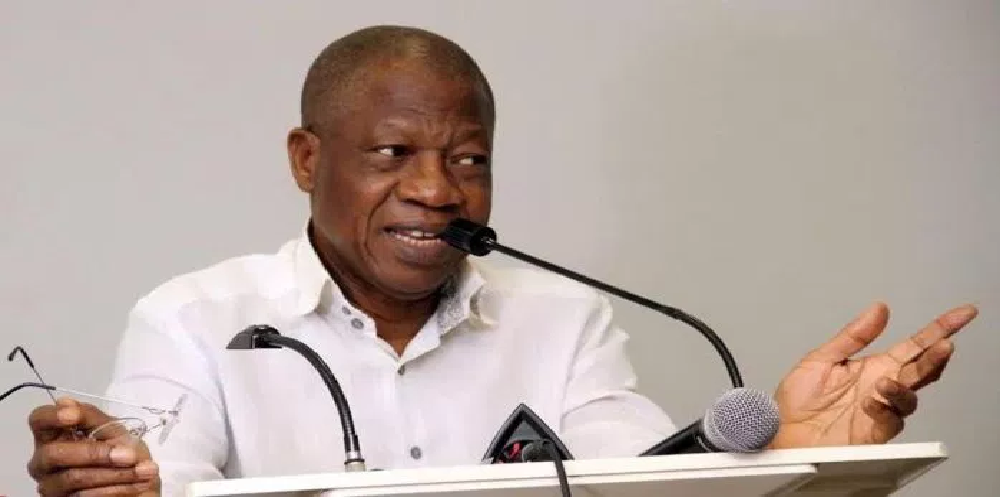
Lai Mohammed, Nigeria's minister of information

The Federal Government of Nigeria has directed the Nigerian Broadcasting Corporation (NBC) to formulate new regulations that will, among other things, keep the media industry competitive, NAN reported.

The directive came from the Minister of Information and Culture, Lai Mohammed, on Tuesday in Abuja, after receiving the report of the NBC Reform Implementation Committee which was chaired by prof. Armstrong Idachaba.

Mohammed said the new rules should protect the media industry from anti-competitive behaviors and stipulate adequate sanctions for anyone caught violating the rules. He also directed the NBC to make rules to regulate internet broadcast so that those who provide broadcast on the internet will do so with a sense of responsibility.

The Minister said the fines will be reviewed according to the directive given earlier by President Muhammadu Buhari, the Commission should amend the N500, 000 to N5 million for breaches relating to hate speeches, inciting comments and indecency. And willful repeat of infractions on three occasions after fine would attract suspension of license.

He also directed the Commission to upgrade breach of political comments relating to hate speeches and divisive comments to Class A offense in the broadcasting code. Mohammed said the Committee’s report will be used to facilitate the process of forwarding an Executive Bill for the consideration of the Federal Executive Council and further legislative action.

“The Bill will address the existing lacuna in the areas of the regulation of the internet, the ongoing Digital Switch over, Digital Access Fee, and insulation of the regulator from partisan politics.

“An important aspect of Mr. President’s approval for the reform of the NBC is in the area of the welfare of staff. I will therefore, be directing the NBC to commence work on an enhanced welfare package for the staffers of the Commission, with a view to implementing such as soon as possible.

“In this age of technology and the internet, a responsible and respectable broadcast industry regulator must be properly equipped. We shall therefore, commence the process for the acquisition of modern broadcast equipment for the Commission for the purpose of monitoring and enforcement.

“Similarly, government shall commence the process of beefing up the material, training and manpower needs of the Commission,” he said.

Government’s push to regulate media activities in Nigeria has stirred a lot of opposition, both locally and internationally. It is believed that press freedom has come under intense attack in the last four years, with many journalists locked up on charges bordering on treason and hate speech.

Earlier in the year, African Independent Television (AIT), was temporarily shut down because of its social programme called Kaaki Social, where the views of Nigerians are collated from social media and air on the channel. The government considered the views hate inciting and forced AIT to shut down the programme, even the Anchor, Ohimai Amaize, was forced to flee the country.

Ever since then, the Nigerian government has been unflinching in its determination to control what goes out in the media. Some journalists have been locked up for reporting what the government considers a threat to national security.

On November 12, the Hate Speech Prohibition Bill passed first reading at the plenary; the Bill is seeking to criminalize the offense with death as penalty. The Bill, sponsored by the Deputy Senate Whip, Senator Sabi Abdullahi, is seeking to establish agency for hate speech under the name, “National Commission for the Prohibition of Hate Speeches (Establishment etc.) Bill 2019.

When the bill was first presented to the 8th senate by Abdullahi, who was then the Spokesperson of the senate, it describes hate speech as “an offense committed when a person publishes, presents, produces, plays, provides, distributes and/or directs the performance of any material, written and/or visual, which is threatening, abusive or insulting words or behavior, commits an offense if such person intends thereby to stir up ethnic hatred, or having regard to all the circumstances, ethnic hatred is likely to be stirred up against any person or persons from such an ethnic group in Nigeria.

“A person subjects another to harassment on the basis of ethnicity for the purposes of this section where, on ethnic grounds, he unjustifiably engages in a conduct which has the purpose or effect of (a) violating that other person’s dignity or (b) creating an intimidating, hostile, degrading, humiliating of offensive environment for the person subjected to the harassment.” The 26 page bill highlighted hate speech among other things as offenses it seeks to make punitive.

Although the reintroduction of the bill has been met with fierce opposition that the senate even denied sponsoring the bill, the presidency appears to have a backup plan in case Abdullahi’s bill fails.

The Minister of Information and Culture, Lai Mohammed has maintained that there is no going back in the Executive’s quest to curb the media, even though the move has been described as a draconian clampdown on press freedom.

The concern being raised by many is that there are no codes stipulating what hate speech is, which leaves it to the discretion of the Executive or anyone in authority to determine. And that is considered a legalized way to suppress dissenting voices.

An instance given by the Socio-Economic Rights and Accountability Project (SERAP), is Agba Jalingo, a Cross River State journalist who made a report on the State Governor, Ben Ayade, and was charged with treason. The argument is that the bill, if passed, will enable highhandedness among public office holders, giving the room to suppress criticism.

Civil society groups and human rights activists have urged the senate to kill the bill and give attention to more important things.

Nigeria Customs Service’s Unwillingness to Use Scanners Amidst Smuggling Challenges

0

In October 2018, the European Union (EU) handed cargo scanners to Nigeria and Togo, just after the completion of the newly built Seme-Krake joint border.

Keti karlsen, the head of the EU delegation to Ecowas handed the machine to President Muhammadu Buhari and his Benin Republic counterpart, Patrice Talon, to facilitate easy and faster clearance of goods along the Seme-krake border.

The Seme Krake Joint Border Post (JBP) was facilitated by ECOWAS’ Road Transport and Transit Facilitation Programme, aimed at fostering regional trade through road infrastructure. The JBP defied the old norms to represent modern structures that will accommodate the current demographics of West African states. With its international standard, there is room for huge inflow of goods and services and intra-trade activities in the region.

But to many people’s worry, especially shippers, the Nigeria Custom Service (NCS) is yet to put the scanners to use. It’s been over a year now, and there is no plan to install the equipment.

Recently, the Nigerian Shippers Council (NSC) organized a stakeholders meeting over the border closure and the way forward. During the meeting, Bello Jibo, Head, Revenue for Seme Customs, acknowledged that the NCS has in its possession, two functional scanners at Seme Border.

“One scanner was provided by the Economic committee of West African States (ECOWAS) to us but we have not started using it. We are making use of the old scanner that we have. Though just recently, the old scanner had a downtime, but we are currently working on it,” he said.

Stakeholders’ concern about the functionality of the scanner stems from the recent events in the border, mainly the closure that has subjected goods and services to more scrutiny. Jibo did not give a reason why the scanner is not in use and that stirs curiosity.

Attention has been shifted to the seaports recently due to the closure of land borders. Hassan Bello, Executive Secretary of the NSC noted that there is an expectation of increase in activities at the seaport, a reason the Customs Service should be up and doing in the use of equipment to fast-track import and export activities through the seaport.

“We are having longer waiting days in the anchorage, and we need to put other ports into use. Customs needs to ensure that equipment like scanners are put into use as well to fast trade through quicker cargo clearance,” he said.

Jibo acknowledged that the scanners, when functional, have been instrumental to speedy processes of clearance of goods in the border. He said when goods are scanned and nothing wrong is detected in accordance with trade guidelines, the cargo would be passed without physical examination.

The concern about unutilized equipment goes beyond the Seme Krake border. It has been noted also that the mobile scanning equipment valued at $120 million, handed to the NSC by Destination Inspection (DI) service providers, have been laying in waste since five years now. Just like in other places, the Custom Service has refused to make use of the scanning equipment to the detriment of rapid clearing services.

It is reported that over 90 percent of all goods passing through Nigerian seaports and borders go through physical examination, a process that has resulted in congestion and slow service delivery.

The Managing Director, Gold-link Investment Limited, Tony Anakebe, said the slow pace of clearing activities in Nigerian ports has put other ports in West Africa ahead of Nigeria.

“This is why the process of clearing imported cargo at the Nigerian ports is currently the longest compared to clearing from other seaports in neighboring West African ports,” he said.

The NCS’ refusal to put the scanning equipment to use has been seen as deliberate. The physical examination of goods in Nigerian seaports has been fingered as the bane of transparency and congestion in ports among other things. In the wake of the border closure, experts called on the Federal Government of Nigeria to use gadgets in its fights against smuggling. Obviously, the acknowledgement of the Custom Service that scanners are not being used in the borders is only a confirmation of what many people have been saying – winning the war against smuggling depends more on efficient customs service.

To contain the porousness of Nigerian borders, the Nigeria Customs Service must learn to make use of security gadgets in their service delivery.

Moyosore Oyetunji on Transitional Experience of Retirees and Alternative Strategy for Pension as Source of Income

0
Alhaja Mujidat Moyosore Oyetunji

Whether you are a public or private worker, retirement is a must. “The statutory age of retirement of public officers is 60 years while it is 65 years for judicial officers and 70 for academic staff of universities. However, with the reform of the civil service decree No. 43 of 1988 retirement age has been put at 60 years or 35years in service whichever comes first.”

Evidences have shown that retirees usually seek out for alternative means of surviving after the retirement due to irregular meagre pension in the midst of ineffective policies and economic crises. Having understood these factors, Alhaja Mujidat Moyosore Oyetunji embarked on an entrepreneurial journey shortly after her retirement in the Lagos State Civil Service. Moyosore Oyetunji is a 56-year-old retired headteacher and an indigene of Iwo in Iwo local government of Osun state. She speaks of her journey so far and other issues on the nature of retirement and challenges of retirees in Nigeria.

Recently, you retired from the teaching service. How would you describe the 35 years journey? What were the successes and challenges being non-Lagosian?

All thanks to the almighty Allah who made the journey smoother. Being a non-Lagosian did not in any, pose any challenges as every citizen was given a free hand to do his or her work without any hindrance. To the glory of God almighty, I made an impact, a positive one for that matter which I am always happy remembering.

Now that you are out of the public service, what are you doing for a living, and how easy and profitable is it?

Before I retired, I had several things I intended to do, but I eventually opted for rental services because I have been doing it on a small scale before I left the service. Our rental services include party materials like big generator, canopy, chairs, tables, table and chair covers, gas cookers and cylinders chafing dishes, serving materials. We also have for rent, farm implements like diggers, cutlasses, wheelbarrow and so. It is advisable for an about to retire to venture into what he understands because retirement is very wild, if one dabbles into a terrain, he knows nothing about, that may be calamitous. I also sell pure water packing nylon because my husband is a pure water producer who patronises us and encourage his friends to do. To be truthful with myself, both businesses have not been bringing the expected profits, but it has been very encouraging as more and more people are being aware of our presence. I really thank God for the acceptance.

For more than 3 years I monitored you on Facebook. I discovered that you are active on Facebook, discussing national and family issues. What is the secret considering your position as a teacher in a public organisation?

Yes, my activities on the Facebook is borne out of the love I have for my country. Family, being the smallest unit of the society is where a child is moulded and prepared for the betterment of the nation, as a retired teacher, I see it as a responsibility to make use of what I to right the wrongs in the society. The prophet Muhammad says if we see something that is not right, we should correct it with our hands, if we cannot correct with our hands, we should correct it with our voice, if that isn’t still possible, then we can condemn with our minds. As a retired teacher, I have seen and had enough experience to make right some wrongs in the society if the society is prepared to adjust.

Tell us life as a civil servant and a retired citizen. Are there differences and similarities?

Seriously, there are differences between both lives. As a civil servant, it’s oga ta oga o ya alert must enter. But you are O Y O in business because as you lay your bed, so you will sleep on it. One good thing is that, if you do your duty diligent as a civil servant, you are bound to be successful in business because, Yoruba says, “Bi a se sise onise la ma se tara eni”.

What is your view about relying on pension as a retired worker?

Pension is not reliable except one will give his children and relatives problems. Someone who has retired since 2016 and who has not gotten his pension is bound to eat what he doesn’t like.

Your advice to potential retirees?

Honestly speaking, retirement is very wild and windy, until one gets to the stage, he never can understand. A potential retiree is even including the newly appointed person, it is important one start to prepare for his retirement right from the day he’s employed. Preparing for retirement includes marrying on time and planning one’s family. Among those things that kill a retiree prematurely is having underage children at the time of his retirement. It is very advisable to give the kids necessary equipment that will make them be self-reliant, education inclusive.

A house is necessary as it will be ridiculous for a retiree to be still living in a rented house. If possible, it is relaxing one retires to his village away from the hustle and bustle of the big cities. Then, as the time gets closer one needs to plan properly what he intends to do and how to go about it. Many of the retirees are having some terminal diseases which need to be catered for, there should be a plan on how to remain alive and healthy.

Anyone who is about to retire needs to be in cordial relationship with his people, particularly his spouse, children and siblings because definitely he will need them more. Like I said earlier, a potential retiree must not dabble into the business he knows close to nothing about as this may be dangerous. He must be careful as not to fall into the hands of the fraudulent people in search of what to do. Above all, a would-be retiree must be prayerful for guidance.

Time For Jumia To Semi-Divest Jumia Ecommerce and Focus on JumiaPay

1

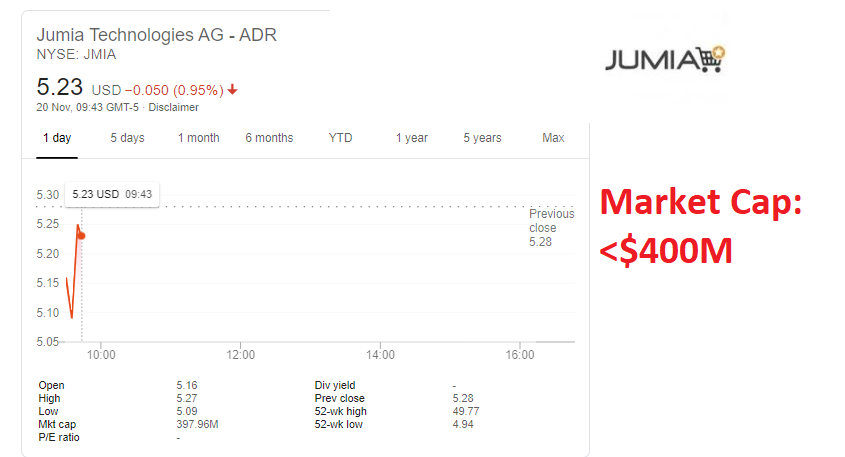
I said I would write this any day Jumia drops below $400 million on market cap. At the moment, my robot trackers have alerted me that Jumia is trading at $397 million in the New York Stock Exchange. It was close to $$4 billion in April 2019. Largely, Jumia has bled around $3.5 billion since April!

(We are analysts and learners; do not take this as mocking or attacking anyone. I have failed ventures starting from StartCrunch which cloned Kickstarter, the world’s leading crowdfunding site. The founder of Kickstarter was my roommate at TED Fellows camp. I did everything right except that trust in Nigeria was zero to give strangers money over the web! So, feel free to analyse my businesses.)

Now on Jumia, I think it needs to spinoff JumiaPay and sell Jumia, the ecommerce business to anyone that can buy. That disposal can happen at local level where Jumia Nigeria sells to a player in Nigeria while Jumia Kenya is sold to another company.

Once it has done that, it can focus on JumiaPay. Its deal with the buyers must include arrangement to power their payment systems for years. 

I have made tough calls in the past like when I told Konga to sell itself. And within a month, Konga sold itself. Jumia ecommerce is challenging,but JumiaPay is amazing and is the future. I do think it is better Jumia focuses on the payment business. Building a pan-African ecommerce business is hopeless until 2022 and markets are not patient to help Jumia at this moment.

My call to everyone is to stay out and wait until that inflection point arrives. Interestingly, the company that will unlock sub-Saharan Africa’s ecommerce (excluding South Africa) has not been started! (Note: Konga runs a hybrid commerce which is simply amazing and cannot be discussed in the same context as Jumia anymore. Also, while Instagram and Facebook are avenues to sell, they do not have leverageable factors to enable a brand build a top-brand ecommerce business. If you sell on Instagram, the shipping problem has not disappeared. So, while Facebook and Instagram could be major competitors to Jumia, they do not solve the marginal cost problem which Jumia continues to face.)

That is why ecommerce does not scale in Africa as the distribution cost does not marginally reduce as scale happens. Why that does not happen is because logistics is a physical component of the distribution cost, not a digital element, and cannot be reduced via codes online. In other words, ecommerce is nothing “electronic” when it comes to Africa; it remains an offline business because the marginal cost is dominated by offline logistics as we have no efficient postal system which startups can leverage for growth.

Spinoff : JumiaPay Is A Better Business Than Jumia


Konga Should Sell To Jumia