DD
MM
YYYY

PAGES

DD
MM
YYYY

spot_img

PAGES

Home Blog Page 6583

Causes of Incessant Increase of Illegal Adoption Homes in Nigeria

0

Growing up, I noticed that mothers were more protective of their daughters than their sons. The reason behind this was that girls were at risk of being sexually molested irrespective of their age. Then, boys as young as four or five years old could roam the streets and enter any house they like and their parents won’t be worried, except that they, the boys, may be knocked down by passing vehicles.

When I joined the motherhood club, I realised that boys have joined the number of those to be guarded. They have become even more vulnerable than girls. They face the danger of accidents, molestation and, above all, kidnapping.

When I gave birth to my first son, I was warned by many caring mothers to keep a close eye on him. I was made to understand that children (especially boys) from 0 – 5 years are the most vulnerable. This, I learnt, is because if they happened to fall into the hands of kidnappers recruited by illegal adoption outlets, they can easily adjust to their new ‘homes’ and also forget their parents. Apart from that, they may not really know their full identity and would therefore not be in a position to alert neighbours and authorities. But from what I can see right now, even older children are not safe.

In case you are wondering what I’m trying to explain here, I want to refresh your memory with the cases of missing children who were found in another state of the federation, where they were illegally adopted. If you noticed almost all of those missing children were within the age bracket I mentioned above.

Most of these children were stolen from their parents when they took them to public places. The majority of the cases heard indicated that these kidnappers prefer places of worship such as churches and mosques. I’ve also heard of how they broke into a house in the middle of the night and stole a 3-year old boy, who was fast asleep in the room he shared with his older sibling. They were able to get away with this act because the parents of this affected boy went to the hospital that night on an emergency call. This shows that even our homes are not safe for our children.

These people that kidnap these infants take them to other states to give them up for adoption to childless couples or those looking for children of a particular sex – especially male. I want to call your attention to the fact that most of these children, that is the fortunate ones, were found in the eastern part of the country – a lot of them in Anambra State (this is not coincidental as far as I can tell).

If we decide to trace the root cause of this inhuman act, we may end up opening a lot of cans of worms. But I’ll first want to point out that our culture and its preference for male children is a major cause. As I stated earlier, boys are at higher risk of being kidnapped and “sold” to other families because of their higher demands and higher cost. For instance, every Igbo childless couple that wants to adopt a child would prefer a male one first and would pay whatever it takes to have one. As a result, male children are sourced more than their girl counterparts.

Another major cause of this illegal and inhuman means of adoption is the bottlenecks and heavy conditions placed by legal adoption homes. These government owned homes do not make it easier for people to adopt children (have you ever wondered why there are should be so many children in orphanages while a lot of people are looking for children to adopt). From what I heard, if you want to adopt a child from government-managed or approved homes, you will drop your application and other required documents. Then, you will have to pay a huge amount of non-refundable fee (speculation has it that for girls, it is 500k and then 700k and above for boys). When you are done with the required procedures, you will be asked to wait for your turn because there are others before you. You may have to wait for years without any result (meanwhile a lot of teenagers are giving birth and killing their babies). The resultant effect of this is that either the couples resort to illegal adoption outlets or they bribe the government officials to hasten the adoption process.

Note that I’m not saying that people should go through illegal means to adopt children, I’m just making it known that inefficiency of government owned homes are encouraging these illegal ones to thrive. There is no childless couple that will want to mess up their reputation by adopting stolen children.

Then, the greatest factor that leads to this atrocity is lack of humanity in the quest for wealth (and children). If these “sellers” and “buyers” still have any atom of humanity in them, they would consider the agony the children and their parents will pass through before embarking on this devilish act. But because their focus was only on money, they dropped off the cloak of humanity in their bid to make money. I don’t believe that the situation of the country is the cause of this inhumanity. These people are just plain mean.

But, we won’t allow these atrocities to continue. We parents should do our own bit by taking care of our children when we are in public places. These kidnappers target mostly those infants left in the custody of very young minders. Parents should endeavour not to leave their infants with older children unless they or other trusted adults are there. They should be mindful of the helps and relations they leave their children with. Children should also not be left with strangers, even if those strangers look friendly. In short, parents should be vigilant and protective of their children.

As for those adopting these babies and infants, if caught, they should be made to face the music because they won’t say that they weren’t aware of how unlawful their method of adoption was. They should be punished alongside those that were linked to the kidnap and the sale of the children (I use the term “sale” because this cannot be considered as an adoption).

However, as the saying goes, “prevention is better than cure”. If all parents decide to take care of their children properly, these baby traffickers will be kicked out business in no distant time.

A Great Business Idea for Your Local Government Area in Nigeria

0
business idea, startup idea

Data everywhere Nigeria but not a single insight to drive decision making at local government level. Any entrepreneur that can build a model for one at local government area (LGA) level will win territories. That person will move this age of guesswork policy making into data-backed governance system. As they always say, you can only improve what you can measure! The acres of diamonds may be in the LGAs, not Abuja.

Developing Human Capital For The Future of Work in Nigeria

0

As Africa begins to prepare itself for the significant economic development in few years to come, a lot of people have released reports on why it is ludicrous preparing for such a time seeing some negative encounters at the moment.

While there are individuals who do not believe that Africa is about to get a position in the future of development, there are also a lot of individuals who not only believe but are also making big moves to position themselves for the future of work in Africa.

I would say if there is any time to believe in the future of Africa, it is now seeing the fast pace at which new discoveries are being made, and the fact that youths who make up a bigger percentage of the African labour force are struggling to catch up with global workforce trends.

However, are there any specific plans put in place to really help these youths right from the point of lack of information to the point of being fully developed with ideas and then supporting such ideas until it yields revenue and impact?

I would want to argue against that seeing what we have is the “everyone should hustle” narrative. The narrative that has been passed at this crucial stage is that youth should learn skills whichever way they can and also be hardworking, and not dabble into cybercrime.

What this narrative refuses to consider is that while some are desperately trying to implement the narrative, they still find it impossible because there are no systems in place to get this achieved.

For example, in many parts of Africa, there is a desire for many young people to get into technology fields. Like a young boy who wants to become a software developer but his mom, being a petty trader, sees value in him helping with the trade than to go learn a technology skill.

How does he engage in extra jobs in order to raise funds to get a laptop and how does he afford the high cost of the internet? How does he solve the problem of the need for a mentor?

Those are all things to worry about, isn’t it?

Personally, I have had this worry for a couple of months until I came across a unique start-up approach right at the heart of Osogbo, Osun State.

First, I would say that if there is any location to think of finding a solution, I would never consider Osogbo based on my perception of such location.  However, after a discussion with the founder, I realized this might be what Nigeria needs to solve our human capital problem.

Osogbo is a city where education is taken really seriously. However, what we call education in present-day Nigeria is a lot of outdated contents.

There’s also a lack of connection with the content of what is being taught and the reality of today’s workforce.

Now, don’t tell me these young ones will figure it out themselves. They could never because at first, they don’t understand the problem.

So this start-up which happens to be a combination of a co-working space and an incubation hub intends to do this through some practical approaches, and I must tell you, I find the approach to be interesting and could be effective.

We have a good number of individuals who have ideas but nobody to discuss them with and no environment to ensure that such ideas should be nurtured.

This incubation hub has some basic facilities that will ensure that such youths get some attention to their ideas.

Internet connectivity is a basic requirement, and there is unlimited internet service provided right there in the hub as well as the fact that electricity is not and will not be an issue.

What this environment does is that it enables unconventional learning, ensuring that anyone who comes into the centre, has no barrier to developing themselves. There are programs organized by this hub to develop individuals’ skills and modern approaches such as design thinking, use of digital skills and entrepreneurial development, to mention a few.

This space serves as an incubator where individuals are brought together to discuss local challenges and try to come up with unique solutions as they are guided through the start-up itself.

This is the future of learning –  Collaboration!

I have discussed this several times on how learning paths need to change from just sitting in class to take notes, then writing tests and exams to explore problems. Instead, we should be coming up with unique, practical solutions for these problems.

This is not just an asset to the state seeing there will be numerous local problems that will be turned into profitable businesses, but the fact that the youths emerging from here will be a great source of job openings to the state hence a reduction in unemployment.

Now imagine if this is replicated in different states as well. What Atunse Co-Working and Innovation Centre is doing is shifting how we see learning not just as a means to acquire professional knowledge from the western world, but that local problems be tackled from professional knowledge at the local level.

The centre also gives other start-ups the opportunity to maximize workspaces at minimal costs which will be very good for a few folks who want to run independent ideas or in groups.

Truth be told whenever I talk about the future of Africa or try to paint a picture in my mind about how Africa will develop, major cities like Lagos, Abuja, Port Harcourt are the major considerations seeing there is so much exposure in these locations.

However, seeing how this start-up is operating and their short and long term goals provide a glimpse of how Africa is really preparing itself for the future of work and how individuals just like the founder of this start-up are setting the pace for this ride down to getting Africa’s goal accomplished.

We Can Do More With Data

1

The amount of data that is created has risen and is still growing at a tremendous pace in recent times. Today, not only is data limitless, it is everywhere. Each day, an estimated 500 million tweets, 294 e-mails are sent and 4 petabytes of data are produced on Facebook. By 2020, it is estimated that 17mb of data will be created every second for every person on earth. These numbers are unquestionably massive, yet they keep rising. So, the problem is never obtaining the data, it is there, the problem is positioning data to good usage, to leverage upon it. Like a seer, with data, we can truly have clear projections into the future. 

Data is basically information still in its raw form. These could be images, ideas, numbers, symbols which are representation of certain objects, conditions, concepts or ideas. Results from census, inputs from registers, video feeds, call logs, observations and research are some of the major things that constitute data. However, data in its raw form cannot be understood on its own, statistical and analytical tools are needed to make meanings off of them. Data will help in gaining insights and providing up-to-date responses to issues, inform conclusions and support decisions.

Data gathering and analyzing is also rather something everyone does – from keeping a food roster in the home to keeping records that will influence a subsequent purchase. In fact, the use of data could be traced far back to paleolithic tribes who would mark notches into sticks and bones to kept track of activities and supplies. They could, for example, predict how long food will last by comparing the sticks and notches. This is a classical instance of the potentials data gathering and analyzing can have; making accurate or near-accurate predictions. 

The data is there, we need to begin to look to it. Research and results have continuously shown that usage of and innovation with data increases business opportunities, availability of knowledge and capital. The economies of nations are leveraging on economy driven by data. According to the European Commission, a data driven economy holds enormous potential and opportunities in various fields which cannot afford to be missed ranging from health, food security, climate, smart cities, intelligent transport systems and efficiency to energy.

The government, conglomerates and even the individual stand to gain from data optimization. The success of Netflix, the streaming platform, for example has been linked to their data-centric approach. Data from subscribers are collected, monitored and analyzed, they are then able to predict what customers will enjoy watching. 

A data centric economy will be revolutionary, it will bring about an growth in every sector of the economy. Of recent, Agricultural investments in Nigeria is experiencing an upward turn. Nigeria became the highest exporter of rice in Africa. Optimization of data can further increase food security, farmers’ productivity and farmers’ income. Data from sensors and earth observations could be deployed. In Uganda, for example, a programme run by the Netherlands-based Technical Center for Agriculture and Rural Cooperation (CTA) was designed to address the challenges faced by farmers.

They gave farmers tailored weather information as well as funding using weather mappings based on satellite data. The satellite data were also delivered location-specific advice to people peculiar to rain or dry seasons. Data could be used to help farmers avoid certain flood prone areas during rainy seasons. These could be replicated in Nigeria. 

A smart use of data also assists governments to optimize different modes of transportation. Route planning systems, traffic flows optimization have the ability to decrease traffic congestion. Of course, there is the ever-prevalent bad road menace, data collected via sensor GPS, social media, can prove extremely effective in making cities smarter and easing traffic congestion. 

Patients will also benefit from timely and appropriate care through the analyses of large clinical datasets which can result in the optimization of health care and cost effectiveness of new drugs and treatments. Matt Cockbill, head of IT and digital leadership practice at Berwick Partners once noted that ‘… high-value, full-stack data science roles will continue to reform and reshape the world around them…’. Today, not only is data reforming and reshaping the world, it continues to give us a whole new outlook on the world’s challenges and gives new and insightful perspective to its answers, yet, more can still be done with data.

Nigeria Orders Telcos to Stop Automatic Activation of Voicemail Services

0

The Ministry of Communication and Digital Economy has taken another swipe at Nigerian telcos, this time, over the automatic activation of voicemail services at the expense of subscribers. It has been one of the pills that Nigerian network users have to swallow in helpless silence.

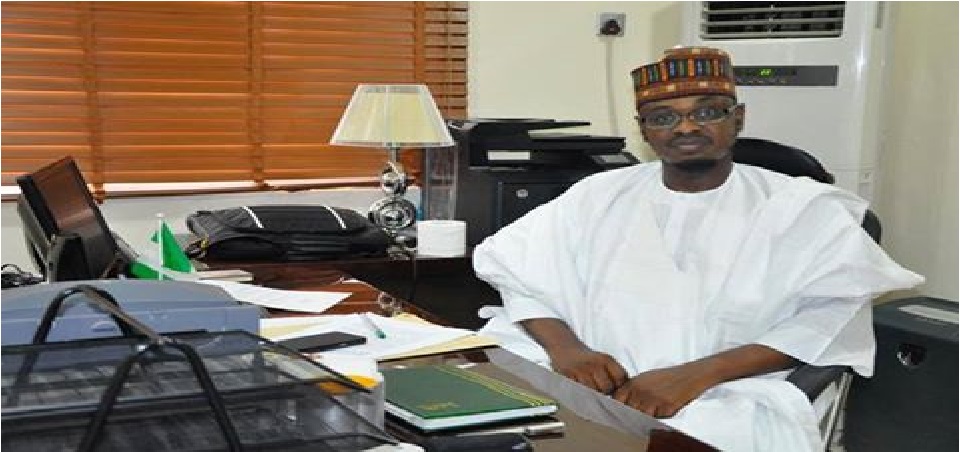
The Minister of Communication and Digital Economy, Dr. Isa Ali Pantimi, has thus, in a statement issued on Thursday, and was signed by the spokesperson of the Honorable Minister, Mrs. Uwa Suleiman, directed all the telcos to halt the practice of voicemail by default. The statement says:

“The attention of the Honourable Minister of Communication and Digital Economy, has been drawn to the latest trend of financial exploitation by Mobile Network Operators (MNOs) in the country, through the automatic activation of the voicemail service on their platforms. Based on recent reports reaching the office, the practice has gained momentum in recent times.

“The voicemail services should be accessed at the discretion of the subscriber and not by default. The Honourable Minister finds it worrisome and totally unacceptable that telecoms subscribers incur financial charges, for a service they are compelled to use by default. Voicemail is not a popular service among mobile phone users in Nigeria, coupled with the language challenge among rural dwellers, who mostly do not understand the language deployed by these networks.

“It is apparent, that the recent clampdown on the exploitative activities of some Mobile Network Operators in the country, has beamed the searchlight on the sector properly, and some unpatriotic elements in the system are devicing subtly, ingenious methods of defrauding Nigerians. The Federal Ministry of Communications and Digital Economy under the current leadership of Dr. Isa Ali Ibrahim (Pantimi), will neither overlook any acts, regardless of how subtle, that undermine the Anti-corruption Crusade of president Muhammadu Buhari GCFR, nor condone any attempt to defraud Nigerians and indeed, all subscribers.

“In the light of this, Dr. Pantimi has issued a broad policy directive to the sector regulator, Nigerian Communication Commission (NCC), to immediately ensure that issues regarding automatic voicemails are addressed on all existing phone lines and the subscribers given the option of accessing the service via an activation code. It is our collective responsibility to ensure that the rights of consumers are protected, while providing a conducive business environment for mobile network operators, in line with global best practice.”

Nigerians complain that telcos have been enjoying exploitative services with a full measure of impunity; the automatic voicemail is just one of the many of their sharp practices which are against the international best practices.

In many other countries, the choice of activating voicemails is solely the subscriber’s, the mobile network operators only provide you with the needed instruction to set up your voicemail. For instance, a Vodafone subscriber in Australia, who wishes to set up a voicemail has to do so following a few steps: Dial 121 and follow the instructions which will be the following: selecting a voice security code for checking messages from another phone, recording your name for your standard greeting, setting your time zone by selecting your state.

Once your voicemail is set up, you are required to stay on the line to personalize some of the options like switching your security code prompt on or off. You are further instructed on how to access your voicemail from your phone and from another phone, calling certain numbers with security code when you are accessing it from another phone.

This is an example of international best practices, but it is far from what is obtainable in Nigeria. As the communication minister noted, most Nigerian mobile phone users don’t know what voicemail is and they don’t care to know. Left to them, voicemail will never be activated. But they are the ones paying daily for it because it is on default, and will activate automatically once you try to reach unavailable subscriber.

The only warning comes in a monotone: “at the tone record your message.” Most of the people hearing that don’t really know what it means, in most cases, especially in the rural areas, they think the person they are calling have picked up, so they end up paying for the voicemail without knowing it. And the receiver will not be notified of any voicemail because he didn’t set up a voicemail and he doesn’t even know how to access it.

So the idea of voicemail by Nigerian telcos has been nothing but means of exploitation and Nigerians have been on the receiving end far too long.