Justice Rilawanu Aikawa of the Federal High Court sitting in Lagos has ordered all Nigerian banks not to accept the transaction of any Mastercard that has the logo of the National Identity Card Management Commission (NIMC) on it, due to ongoing rights’ infringement suit filed by Chams Plc, and Chams Consortium against the Singaporean financial company on August 28, 2019.
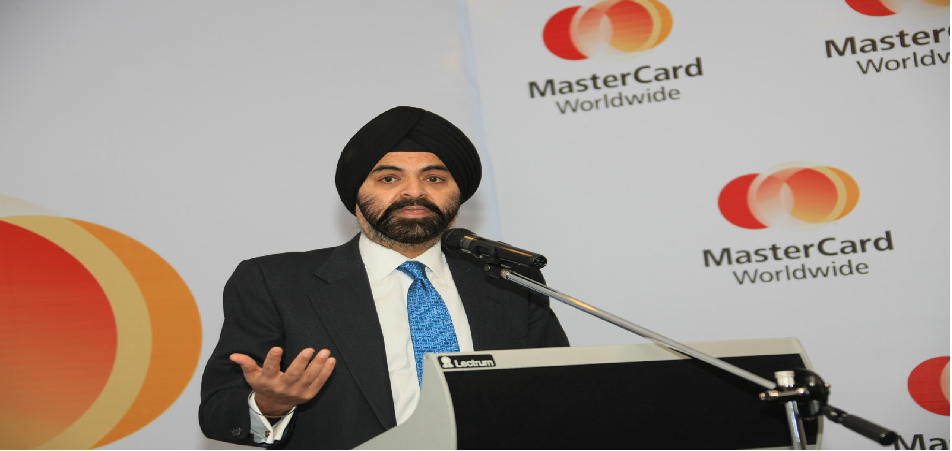
The suit which also has as defendants; Ajay Banga, president and CEO of Mastercard International, Omokehinde Ojomuyide, Country Representative of Mastercard in Nigeria, Daniel Monehin, the Staff of Mastercard, the NIMC, and 22 commercial banks, is making a claim of N114 billion (about $360 million) in damages.
The verdict reads: “An order of interim injunction restraining the defendants , whether acting by themselves or by their directors, officers, servants, agents, technical managers, or otherwise however from further manufacturing, producing, designing and or printing or authorizing the manufacturing, production, designing and or printing of any National Identity Card with Mastercard logo as described in paragraph 16 of the supporting affidavit in Exhibit CC9 pending the determination of the motion on notice filed.”
The N114 billion damage claim was divided to compensate for three categories of losses incurred by the claimant. The N84 billion is for special damages as a result of loss of expected revenue for years, N10 billion is for general damages of fraud perpetrated against Chams and Chams Consortium while N20 billion is inducing the breach and termination of the concessions awarded to the claimants by the 3rd defendant as a result of the fraudulent actions of the 1st and 2nd defendants.
The whole saga started in 2006, when the Federal Government opened bidding for the National ID project. Chams competed and emerged the winner, beating several other bidders to the National Identity Card (NIC) concession. Before and upon the execution of a concession agreement with NIMC, Chams Plc pursued the implementation of the NIC concession by incorporating Chams Consortium Ltd (CCL), a special purpose Vehicle (SPV) with the sole purpose of implementing the NIC concession.
The petition filed by Chams to the office of the Vice President explained where things went sour for MasterCard and CCL.
“Chams Plc holds majority shareholding in CCL. Chams Plc also invited MasterCard to work with the Chams group as one of its technical partners on the NIC concession. To our greatest surprise and disappointment, MasterCard went on to collude with our client (NIMC) to frustrate the concession won by Chams.
“MasterCard Asia/Pacific Pte Ltd (MasterCard) entered a Memorandum of Understanding (MoU) with Chams Plc by which the parties noted that they were considering working together to facilitate the issuance of identity cards to Nigerian citizens. On 18 November 2012, CCL also entered into a Customer Business Agreement (CBA), with MasterCard setting obligations of both parties. The CBA contained several clauses including non-disclosure and non-compete clauses.
“In the context of MasterCard/Chams Agreements, MasterCard was provided with a copy of the exclusive and confidential Concession Agreement granted to CCL. Over a period of many months, MasterCard worked closely with Chams on architecture of the National ID project designed by Chams. Chams exposed the entire architecture to MasterCard while working jointly to integrate MasterCard functionalities into the architecture of the National ID project. In the course of these developments, MasterCard received confidential information from Chams as contemplated under the CBA.
“CCL also formally introduced MasterCard to NIMC as its technical partner. Prior to this introduction, Mastercard and NIMC had no business relationships but each has existing relationship with CCL. CCL granted MasterCard access to NIMC as a signed-on partner under the concession agreement. Thereafter, MasterCard started having secret meetings with NIMC without informing, inviting, involving or updating Chams who brought them into the scene as partners.
“As a product of these meetings, MasterCard eventually entered into an agreement with NIMC to the exclusion of Chams Consortium, Chams Plc and Nextzon. This agreement was a direct breach of MasterCard’s CBA obligation not to compete with CCL or use any information disclosed under the CBA for purposes other than the CBA’s implementation.
“Following failed attempts to reason with MasterCard, we instructed our Nigerian lawyers, Olaniwun AJayi LP and UK lawyers, Allen & Overy LLP in June 2013 to take legal action against the clear breach of confidence and infidelity exhibited by MasterCard against Chams Plc and CCL. Because of MasterCard’s deep pockets and threats to outspend us in UK courts, we were persuaded to explore amicable settlement of our case against MasterCard. Our lawyers sent preliminary letters to MasterCard in that regard.
“Between April 2014 and till recently, we met with and wrote to the CEO, MasterCard worldwide on MasterCard’s breaches of obligation under their agreements with Chams. MasterCard always responded with the indifference of a huge multinational that believes it cannot be sued by a small local Nigerian company. MasterCard arrogantly told us that with their South African, Singaporean and American lawyers, they can outlast us, resource-wise, in courts.
“When we raised the issue of MasterCard’s underhand and sharp practices in cheating Nigeria and Chams, they threatened us again with court cases which they assured us we could not survive. All these were in disregard of public admissions made by MasterCard’s Country Representative, Omokehinde that Chams brought MasterCard into a deal MasterCard snatched. This assertion was also corroborated by Chris Onyemenam of NIMC, who publicly acknowledged that MasterCard’s Daniel Monehim did not disclose to NIMC that MasterCard had an agreement with chams before NIMC signed its illegal agreement with MasterCard. Based on the above, we held a meeting with the then Director General of NIMC, Chris Onyemenam, a concerned CBN Director, Walter Ahrey and the representative of MasterCard, Daniel Monehin in September 2013, at Hilton Abuja. DG NIMC, Chris Onyemenam, at that meeting asserted and confronted Daniel Monehin that MasterCard failed to disclose to NIMC the existence of the MasterCard/Chams agreements.
“Chris specifically asked Daniel Monehin and MasterCard to go resolve the betrayal issues with Chams, accusing Mastercard of subverting Nigeria and Chams. In show of remorse following Onyemenam’s accusation of MasterCard, an onerous draft of Technical Support Agreement (TSA) was sent by Daniel Monehin of MasterCard to Chams Plc for execution in December 2013, offering a paltry sum of US $500,000 against more than US $100 million CCL had invested on the National ID project. MasterCard, another giant multinational, was offering a poor Nigerian outfit peanut.”
It was based on the consideration of these events that the court made its ruling against MasterCard, NIMC and Nigerian banks. The Anton Piller order empowered the prosecuting counsel, Kemi Pinheiro SAN, Inspector General of Police (IG) or any officer not below the rank of Assistant Superintendent of police to search any of their premises, take into possession and remove any document relating to the said affidavit. They were also given orders to inspect, take photos and arrest anyone who is found to be contravening the orders of the court.
The whole event has been a defiant display of greed, conspiracy, rip-off and corruption. The NIMC was willing to betray a Nigerian company, and a multinational company like MasterCard could care less about its repute to play a dirty deal that betrays whatever integrity stands for. However, there is a lesson: Chams was able to lay a claim because there was an agreement signed by all the parties involved. Again, Chams, even though it took quite some time wobbling in the shadows of intimidation, did not cower to the financial muscle that MasterCard was flexing. So in business, sign agreements, document events, keep records, and do not be intimidated to approach the court when a party breached the rules.