DD
MM
YYYY

PAGES

DD
MM
YYYY

spot_img

PAGES

Home Blog Page 6588

Why Data Price Reduction In Nigeria May Not be Possible

0
Nigeria's minister of digital economy

The Minister of Communication and Digital Economy, Dr. Isa Ali Pantami, on Tuesday, reiterated Federal Government’s resolve to bring the cost of data down. He said his office has been flooded with complaints by consumers who decry the high cost of data and other sharp practices by network operators.

Read: Why Telecom Consumers Experience Early Data Depletion.

He therefore directed Nigerian Communication Commission (NCC), to work out modalities with network service providers and other stakeholders to see that the cost of data is reviewed downward.

“I am urging the management of NCC to work towards reducing the price of data in Nigeria. It is too costly and people are complaining every day.

“If you go to other countries, even countries that are not as largely populated as Nigeria, data prices are not this high.

“I am also a victim of some of the infractions that are so common in the industry. You load your data, but you barely used 20 percent of it and the entire data is wiped off.” The Minister said.

The issue of data price reduction has dragged on for some time now, and the Minister of Communication is no longer having any of it. He therefore issued 5 days ultimatum the Commission to put the saga to rest.

“The last time I commented on the issue of illegal data deduction… this is one of the issues that worry me badly today. Engr. Wakil was making a presentation on behalf of the Executive Vice Chairman, he tried to defend operators on one hand and the commission on the other, but I was not fully convinced with the explanation.

“Please go, sit down and review that issue. It is very important and I want to get your feedback with that report in the next five working days with the decision on it because the complaint from Nigerians are beyond what I can handle, as it is today, people are complaining.” He added.

Reacting to the marching order, the Chairman of ALTON, Engr. Gbenga Adebayo, told Daily Trust: “I don’t know how the government is going to achieve that data reduction in five days. Have they put into consideration the high cost of operating our businesses and the very harsh operating environment we are in”? He asked

“Why are they trying to muzzle the NCC and stampede it into doing what is unrealistic? Do they know that operators don’t just sit down and fix tariffs? They, with NCC rely on so many things before coming up with tariffs.

“We do not know under what circumstances the directive was given, and to be honest with you, we don’t know how that is going to be achieved. We have said it several times that when policies interfere with commercial matters, the industry will be jeopardized. Government needs to be careful not to whittle down the powers of the regulator.

“To arrive at prices, NCC normally conducts survey and research, and after all that, it will benchmark the country’s tariffs based on what is obtained in other jurisdictions,” he said.

The Cable UK’s Data figures compared according to regions in Africa varies in prices. In West Africa, Nigeria network operators sell 1GB for about $3.22 while you get the same amount of data in Chad for $23.3. In Cameroon it’s way cheaper at $1.7 while in Ivory Coast it costs $4.1 and $2.92 in Niger Republic.

In North Africa, 1GB can be obtain countries like Algeria, 1GB is sold for $5.15, Egypt $1.49, Libya, $4.87 and Sudan $0.6.

While in Southern Africa, 1GB goes for $11.2 in Namibia, $14.12 in Botswana and $7.19 in South Africa.

These varying figures show that there is no formula to determine the cost of data but each country uses infrastructure and market forces to determine the cost. And when it comes to infrastructure, Nigeria like many other African countries is way behind – a recipe for high cost of data.

For instance, the cost of fueling the generators powering network service masts in Nigeria is enough to influence the cost of data. And there is issue of vandalism that has become a norm that the operators are helplessly dealing with. And there is also the issue of Right of Way (ROW) that the Minister of communication himself acknowledged.

The NCC knows that these challenges exist and cannot force telcos to reduce the cost of data when the problems instigating it have not been fixed. That would be tantamount to forcing them to operate on loss which will have its own adverse effects.

The Ministry of Communication has a good intention by directing the NCC to protect the interest of subscribers, but it shouldn’t be at all cost because the interest of telcos needs to be protected too. Although the errors of telcos have become too many that they seem inexcusable, Dr. Pantimi acknowledged that they need help too:

“The way we pursue the mobile operators to do what is right, we should also protect their interest and resolve the challenges they face,” he said.

Providing them with the needed infrastructure will reduce the cost of operation and in turn, the cost of calls and data. So the federal government should play their role by providing basic infrastructure like electricity and security, and then watch market forces reduce the cost of telecommunication. If it doesn’t happen, then there will be basis for government to act on behalf of the people.


PoS Charges: NIPOST May Not Survive the Directive to Go Cashless

1

The Ministry of Communication and Digital Economy has directed the Nigerian Postal Service to stop all cash transactions with immediate effect. In a statement issued on Thursday by the Spokesperson of the Ministry, Mrs. Uwa Suleman, the Postmaster General was directed to ensure that NIPOST offices nationwide comply with the directive. The statement reads below:

“It has come to the attention of the Honourable Minister of Communication and Digital Economy, Dr. Ali Ibrahim (Pantami) FNCS FBCS FIIM that some unscrupulous elements, have been taking undue advantage of the cash payment system under the Nigerian Postal Services (NIPOST) to engage in corrupt practices.

“In line with anti-corruption agenda of president Muhammed Buhari GCFR, and the mandate of the Federal Ministry of Communication and Digital Economy, the Honourable Minister hereby directs the Post Master General, to with immediate effect; suspend all existing cash payment plans within its establishments nationwide. The Post Master General, is to ensure that all its offices revert to Point of Sales (PoS) and bank teller transactions immediately.

“The general public and all customers of NIPOST, are hereby encouraged to insist on Point of Sales (PoS) or bank teller transactions, when conducting a business with NIPOST. This directive is a temporary measure in the interim to tackle corruption, as we are currently working on fully automating the systems as a permanent solution to the challenge.

“In the same vein, Dr. Pantimi also directs the Post Master General, to immediately implement strategies that will bring an end to unnecessary delays in its service delivery to customers. The current trend of delays in postal services will not be condoned by the office of the Honourable Minister under whose purview, the supervision of NIPOST falls.

“The administration of president Muhammadu Buhari GCFR, and the Honourable Minister of Communication and Digital Economy are committed to protect the rights of all Nigerians and will not tolerate any acts of corruption under its watch.”

While the directive is being applauded, the newly introduced charges on  PoS transactions pose a challenge. It could be recalled that last month, the Central Bank of Nigeria (CBN) introduced N50 Stamp Duty Charge on PoS transactions, a decision that drew a lot of criticism from the general public.

The apathy toward the directive is growing with proportionate contagiousness and the cashless policy is bearing the brunt. Many have since then, learned to avoid PoS transactions. Human Rights Activist and Lawyer, Segun Awosanya tweeted:

“Any filling station that demands to take extra money from you because of PoS payment option should be resisted. Let them suck their fuel out. If you don’t resist this evil of policy somersault they will make slaves of you. First, they taxed us on cash deposit and withdrawal now PoS” .

In response to this tweet, another Twitter user, Onyekachi Nwachuya, tweeted: “Last Saturday, I was at Restopark filling station to refill my gas cylinder, and I was charged an extra N50 for PoS. I had to withdraw my card and pay in cash. So much for a government with a cashless policy yet milking you up with unwarranted transaction charges,” he said.

There is a report that filling stations in Abuja are no longer serving PoS due to customers’ unwillingness to pay the N50 stamp duty charge.

Now talk about NIPOST, and there will be a pathetic story of liquidation. The Nigerian people turned away from NIPOST and its services for a long time due to its inefficiencies. It was until recently that the government saw the need to revive its activities. Ever since then, the willingness of the people to patronize it has been going through coercion.

So the directive of the Ministry of Communication to the NIPOST is like a sword at the neck of a dying man. Not that the directive is not a good approach in solving the challenge of corruption therein; but it will hinder the needed patronage for the full revival of NIPOST.

There has been growing apathy toward CBN’s directives on cashless policy recently, and the newly introduced PoS charges has come to be one Nigerians seem not ready to accept. It is a stale that many Nigerian businesses are going to bear, and NIPOST appears to be the first victim: Unless the Stamp Duty Charge is lifted or the Ministry of Communication reverses its directive.

We Support Job Seekers To Become Independent And Have Careers – An interview with Ramat Adeniyi

0

There are many youths in Nigeria striving to make a change. Despite the economic hardship and uncertainties surrounding the future of the country, we still have many youths out there who are not willing to give up.

They say, ”When life knocks you down, you either stay down and accept defeat or get up and carry on.”

But it seems some of the youths are not ready to stay down, they are willing to stand up and give a fight. They are ready to challenge the status quo. While doing so, they are also bringing others along.

They say you don’t need to have it all to make a change, start with what you have. Start with what’s in your hands. Ramat is definitely starting with what’s  in her hands.

Here’s a brief chat we had a few days ago pertaining to her entrepreneurship journey and her new organization:

Can we get to know you better?

My name is Adeniyi Rahmotallahi Folashade. I am an entrepreneur in cakes and pastries industry, a content developer, and a social impact enthusiast. I am also the founder of the newly launched Minds’ Companion Initiative (MCI).

I would call you a business mogul with everything you have listed above. That inspires me when I see young minds making a change in this economic hardship. How did the entrepreneurship journey started?
Thank you, Chinedu!

It all started from trying to fulfill a passion. Passion leads all my endeavors in entrepreneurship. Business comes in the process of doing what I love and what gets me fulfilled. And that has been the secret behind my excellence.

From one of your responses above, I noticed you just launched your organization, MCI. Can you share more details about the organization, please?
Of course, I will gladly do.

The newly launched organization is Minds’ Companion Initiative. It’s a Non Government Organization that aimed to care for the well-being of youths through mentorship, charity and mental health advocacy. It addresses the sustainable development goal 3 and 11.

The foundation is a catalyst for positive change that believes in the power of impactful human connection in facilitating the well-being of youths towards maximizing their potential. The foundation’s operations will be on a project basis, and the first project will kick off soon.

That is quite interesting. What birthed this vision?
It is the willingness to help people, Chinedu.

I personally get joy and fulfillment from caring for the well-being of the people around me. I have been doing this for a long time with my close friends and relatives, ensuring everyone is making progress in life with my support,  encouragement and guidance. But now, I have decided to take it beyond my family and friends.

You said your foundation’s operation will be on a project basis, which will be kicking off soon. Can you shed more light on what the project will entail?
Minds’ Companion Initiative’s first project will be themed – “The Awakener”.

It is a 6 months mentorship program that involves formal mentor-to-mentee matching and proper follow-up. The goal of this project is to enable youth to maximize their potential and achieve more through a push in the right direction by a superior(mentor).

This looks like a project that will take a whole lot of expertise. How have you been able to pull them (expertise) together?
Yes, it requires some experts in different fields and I must admit that it has not been easy being a non-profit making project that needs experts at no cost. But God has been good.

We are putting things together. The Project Manager who is also a graduate of Project Management has good experience in the Mentorship Program, which makes her a good fit for the task.

As we continue to stay true with the goal of the project, I believe other things will fall in place as planned.

I need to add this, we need professionals that are willing to help people grow to join us as mentors because the number of mentors we get will help to determine the number of mentees we will bring on board.

That’s a great idea. I am one of the few who believes that women should also go into entrepreneurship. How do you think this is achievable in a continent like Africa?
Personally, I do not see obstacles in my way because I’m a woman. This is because I believe in myself and my vision irrespective of my gender.

Though society makes it seem impossible, it is very possible with the determination to get it done regardless of the challenges being faced with.

Our wonder women like Toyin F. Sanni, Dupe Akinsiun, Folorunsho Alakija, and many more who are our role models got there, we will get there too.

Definitely, you will get there because things are changing. Women are doing great exploits. The rate of unemployment is really alarming. We all can blame the government for all we can, but the truth is, everyone must take ownership. How do you think your organization will help young graduates to achieve this goal?
The first project of the organization which is “The Awakener” will go a long way in helping young graduates in their careers.

The project is aimed at maximizing their potential such that they will get to achieve what they are capable of, beyond mere desire.

For instance, someone that has strength in Fashion Designer business will be guided by a mentor towards getting into the industry, someone that studied Civil Engineering and want to major in construction will be guided on the necessary skill sets to acquire in order to achieve the goal. I believe this will greatly help our youths secure a means of livelihood.

That’s more like connecting the dots. Seems like a very good initiative. But how can they register for this upcoming event?
You couldn’t have said it better, Chinedu.

The applications link will be out in a few days. All interested youths should follow our social media pages. The information will be shared on our pages as soon as it is out.

Can you share your social media pages?
Instagram and twitter: @the_mci
Facebook: @themci1

Thank you, Ramat, for the chat. I wish you and your team an outstanding success in your upcoming project and career as well.
It’s my pleasure, Chinedu. Thank you for this amazing opportunity. Keep doing great work.

Understanding A Company And Business

0

Generally, a company will have different definitions based on the country it is operating. In Nigeria, a company can be loosely defined as a sole or voluntary association formed and organized under one control to carry on a business to make money. It can also be recognized as an entity that engages in business that adds value to the customer for money.  

In Nigeria, a company comes into existence when it is registered under the Companies and Allied Act 2004 and is able to fulfill requirements in terms of documentations such as Memorandum of Association, Article of Association, shareholders, directors, and share capital to be deemed as a legal association. 

In the eyes of the law, a company is an artificial legal person that has the right to acquire or dispose of any property, to enter into contracts in its own name, and to sue and be sued by others. The individual members may not be sued for actions performed by the company. As a separate legal entity, it implies that the company is responsible to repay creditors and to get sued for its deeds. On the other hand, the company is not liable to pay the personal debts of the members. Therefore, the company as a distinct entity is independent of its shareholders or people controlling it.

 As an artificial legal person, a company uses its common seal (with the name of the company engraved on it) as a substitute for its signature. Any document bearing the common seal of the company will be legally binding on the company.

Nevertheless, unlike non-registered business entities, the life of a company does not depend on the life of its shareholders, directors, or employees, it is rather a stable business organization.   Shareholders may come and go but the company remains and thrives as long as it follows the rules of engagement and has a stable business model.

Companies can be structured in different ways depending on the country it operates. However, the general structure in Nigeria is as follows; Sole proprietorship, Partnership, private limited liability,  public limited company, and corporation.

It is significant to note that all corporations are companies, but not all companies are corporations. The company is a much broader term than a corporation, and it encompasses a lot of different types of businesses. The key differences between a company and a corporation have to do with the complexity of the firm, so, for example, a sole proprietorship is a company, but it is not a corporation. In the same vein,  Partnerships, Limited Liability, and public companies could all be considered companies, but not corporations. Corporations are indeed entities unto themselves, separate and apart from the owners. The owners of a corporation are usually numerous stockholders and could divest themselves of stock in the corporation, without notice of their absence.

However, in all of the above scenarios, the business entity is connected to its owners and the way the Liability of companies is assumed by the owners and these can either be limited or unlimited depending on the type of company-operated and the country.

Consequently, a company may be limited by guarantee or limited by shares. In a company limited by shares, the liability of the shareholders is limited to the unpaid value of their shares. In a company limited by guarantee, the liability of the members is limited to the amount shareholders had agreed upon to contribute to the assets of the company in the event of it being wound up.

In all the key functions of these types of companies are to collect and remit the tax to the government, employ people and pay a dividend to shareholders. 

How Mazota Intends to feed Nigeria With Bold Visions on Agriculture

0
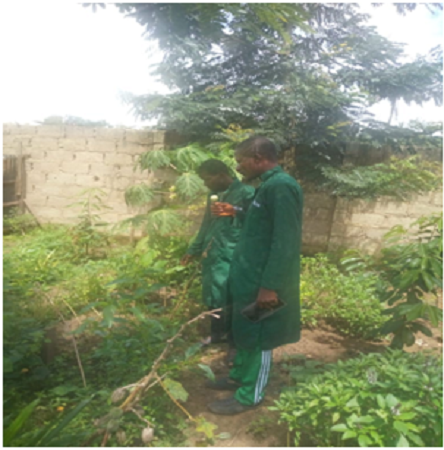
A demonstration of People must eat

When you encounter him, his body frame belies what his ambition is – he intends to feed the nation and to empower youths like himself. His belief is huge. His dreams are adventurous. He wants to help Nigeria and the rest of Africa achieve the Sustainable Development Goal  2 . He wants to end hunger through his trade – Agriculture and Agro business.

Welcome to the world of Ajibola Olaide Zakariyyah popularly known as Mazota. He is a graduate of Animal Production and Health at the Ladoke Akintola University of Technology, Ogbomosho.


Different Units of Mazota Agric Academy

Having picked more than a passing interest in the business of tilling the land and rearing animals, Mazota was throughout his stay in the university making money through consultancy and practical farming. However, his passion pushed him further when he registered his own agro-business company in 2016. This company is his special purpose vehicle to drive his agro consultancy job. Through this firm, he consults for both known and upcoming farmers in Osun and neighbouring states. Not only that, he empowered people, especially youth, in the different areas of agriculture. He teaches snailery, fishery, poultry, bee-keeping, animal husbandry and others to provide jobs for the teeming youth in the South West.  This has seen him partner with a number of youth focused organizations. Such partnership has resulted in empowerment for the beneficiaries.

The Osogbo-born agric-preneur said his venturing into agriculture is born out of his exposure to massive poverty of a large number of people in the country. He said, “ I am motivated by two things. One, by the exposure and knowledge of the practical life of a poor man and innocent masses. Two, I realized how important it is for human beings to prepare for the future.”  Mazota’s quest to empower at every available opportunity is tied to his watchword of living a purposeful life. He philosophized that “ the struggle to make money is insignificant when compared to what is needed to live a meaningful and purposeful life.”

The Horticultural Unit of the Mazota Agriculture Academy

As a 28-year old forward thinking agric business man, Mazota, thinks of the future as well as the present. He believes the Sustainable Development Goal 2 of Zero hunger could only be achieved if a radical way of teaching Agriculture is introduced into the Nigerian educational curriculum right from basic to tertiary level. This would ensure agric business is a way of life for all adult Nigerians.  With the availability of arable land across different parts of the country, Nigeria has no business with hunger. This prompted him to register an agriculture academy early 2019. He invested massively in the farm dedicated to teaching. The Agric-Academy is a registered complete agricultural school and a socio-economic empowerment institution housing over twenty different animal units, over thirty different crops and more than forty different horticultural plants (flowers). The aim was to teach and also expose students of various schools within and outside Osun state to agriculture in its practical terms. The different units are basically for excursion, training and research purposes –these are the three reasons for which Mazota Agric-Academy was established.

Mazota is as entrepreneurial as he is philosophical. When asked how he got his capital, the LAUTECH graduate drew insight from his mother’s sayings about money and the need. He stated, “Money would have been a problem but for the words of my mother who always prove to us that as significant as money is, yet it is not the first in our journey to greatness. This lesson has so far been a life-long lesson to me and it has always been my primary initial capital in all my doings.” Nevertheless, he admitted that his secondary initial capital was raised through charges from petty agro consultancy services rendered to some new and existing farmers in Osogbo. He has a big dream of his 3-year-old project in the next five years. He has multiple expectations on the extent of his business growth in the next five years. On this, he excitedly said “I see the business to have grown more wings to become a great agent in ending hunger, achieve food security and improved nutrition and promote sustainable agriculture, the second of the Sustainable Development Goals (SDGs) in Nigeria. He rested his huge dream on the high capacity of Agriculture to provide food security and abundant jobs for all Nigerians. He chipped in “Come to think of it, Nigeria has a population of over two hundred million people; all must eat to live!”

A demonstration of People must eat

His advice for the Nigerian youth and graduates generally was for them to rise above the present situation in the country to make life better for themselves despite the much complained about the failure of the political class. He said “the Nigerian education system, her economy and the fate of youth and graduates are three parallel lines whose probability of meeting is unfortunately zero. It is therefore of great importance for the youth or undergraduates to rise above this and tap God’s own resources around us as all of us cannot tap from the nation’s wealth of crude oil.” He concluded that agriculture is the way to go as youth could not afford to let the numerous resources keep wasting under their watch. He preached positive thinking, innovations and entrepreneurship as the three pillars of development Nigerian youth should key into.