DD
MM
YYYY

PAGES

DD
MM
YYYY

spot_img

PAGES

Home Blog Page 6599

The Nigerian Army’s Operation Positive Identification, To Identify Nigerians

0

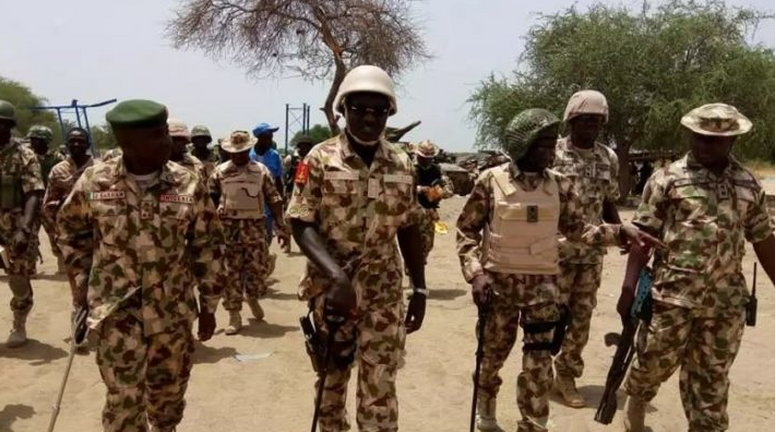
The proposed Operation Positive Identification by the Nigerian Army has become another row the country has to contend with. The Army says it is embarking on the operation in an effort to identify criminal elements operating within the country, and thus has issued the following ultimatum to the general public.

Effective from 1st November – 23rd December 2019

Residents shall witness a large number of security operatives on the roads

Operation Positive Identification (OPI) requires you move with valid means of identification – National identity card, voter registration card, drivers license etc.

Give additional time for routine movement and travel locations.

Dress responsibly.

With the above information, the Nigerian public has been warned to get ready for what is to come.

However, the development has not gone down well with the National Assembly who without hesitation registered its displeasure with the Army.

Members of the House of Representatives said on Tuesday that the exercise is illegal and outside the constitutional mandate of the Nigerian Army. They called it “an exercise in futility.”

The Minority Leader, Ndudi Elumelu, told the House that the exercise will trample on people’s fundamental rights to move around freely. He said it is more like imposing a state of emergency on the country through the back door.

The logic by the Army justifying the exercise has been the alleged inflow of foreigners into the country, which is believed to be contributing to the high rate of banditry and criminality.

But Elumelu argued that the security challenges in the country are not an excuse, if at all there should be an exercise like that, it should be pro people. Not something like this that will stir unrest and disrupt normal engagements of the people. He also pointed out that the Army infringed on the constitution of the federal republic by not acting according to the provision of the law that mandates it to get the approval of the House.

Another Rep. member, Tobe Okechukwu opined that an exercise like this should not be coming from the Army. He said it is the job of agencies, like the police, immigration and civil security agencies.

“When we are under attack in the Northeast, Northwest and other parts of the country, the Army wants to do operation positive identification which is not within their job description,” he said.

He added that the Army will be useful in the theatre of war and should be deployed therein, instead of engaging in an unfruitful practice that will disturb the general peace of the people. Moreover, the National Identity Management Commission (NIMC) has not been able to provide identity cards for Nigerians. So there is no moral ground for the Army to go about asking the people for identification.

Another Rep. Ahmed found it disgusting that upon all the security issues facing the country, the Army believes that operation positive identification will provide a solution.

He said “If our security chiefs are out of ideas, they should let Nigerians know, So that we get others to assist in the fight against insecurity.

“It takes my constituents about 14 hours to get home on a normal day. If we have to now include this identification, how many hours will they now spend on the way before getting home”?

Other implications of the exercise go beyond rural arrears. A lot of people in the urban places too don’t have means of identification. IDs come from jobs and many don’t have jobs, the story of national identity card remains the same everywhere. Drivers license is for those who need it.

So the concern of the National Assembly is that many Nigerians will get locked up or brutalized by the Army just because they don’t have means of identification, which is not their fault. Therefore, the House of Representatives unanimously adopted the motion mandating the House Committee on Army to interrogate the Chief of Army Staff, Lt Col. Burutai, in view of finding out the real motive behind Operation Positive Identification.

Join Me in Kampala Uganda As I Keynote Africa’s Largest Fintech Event

0

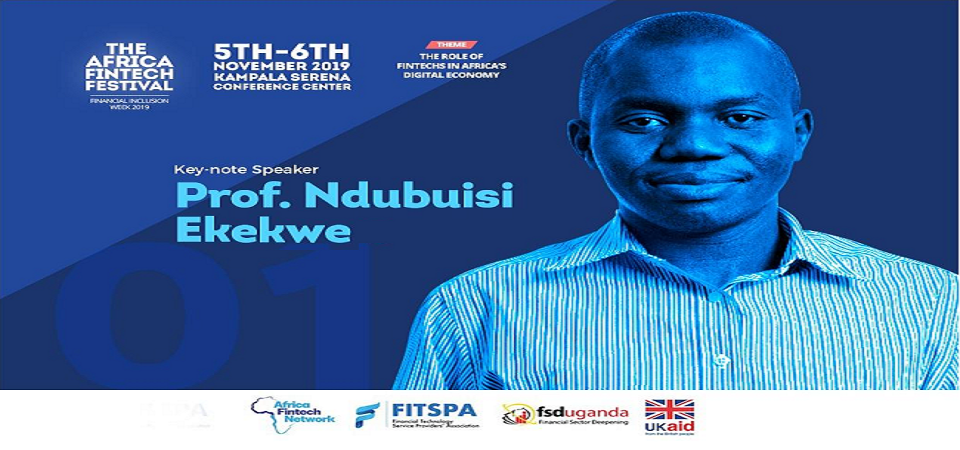
Join me next week in Kampala, Uganda, as I keynote the largest gathering in the fintech sector in Africa. Fintechs are a new species of entities and they are the new operating system of Africa’s economy.   Since the Tang Dynasty (A.D. 618-907) when the Chinese invented paper money, nothing has promised more opportunities and disruptions in finance than fintech. I will discuss the latent opportunities and where the redesigns are going.

I will be speaking on a topic I have titled “Fintech – Africa’s New Growth Operating System”. This keynote will examine the evolution of financial services and how financial services have reshaped kingdoms and empires, from the barter system through cowry to paper, and now the digitals! Yes, if supply chain powers commerce and industry, financial services drive supply chain because in the central nervous system of any economy, financial services are components of the bloodstream.

Africa is emerging with evolutionary redesigns which will become evident by 2022 when immersive connectivity and smartphone penetration will drive a new level of abundance in our continent. Financial services are already transformed as technology layers are anchoring new redesigns, enabling better efficiencies in the utilization of factors of production, across regions and markets. The end result is a new species of entities called fintech.

Fintech is a new operating system for Africa’s growth. Since the Tang Dynasty (A.D. 618-907) when the Chinese invented paper money, nothing has promised more opportunities and disruptions in finance than fintech. Technology RUNning financial services provided huge productivity gains for decades, but fintech living on a big network called the internet, will unlock new domains of value. That fintech will TRANSFORM financial services, fixing frictions in African trade and commerce, especially in this age of AfCFTA where borderless unification will engineer new shared prosperity and wellbeing.

Ndubuisi Ekekwe To Keynote the Africa Fintech Festival, Nov 2019 in Kampala, Uganda

Hammed Alabi Turned Down An Offer To Pursue His Dreams [An Interview]

2

A fresh graduate turned down an offer worth 100,000 naira per month to pursue his dreams. Everyone said he was crazy. In a country like Nigeria that has a low employment rate and a poor economy, it doesn’t seem like a good decision. What was the outcome of his decision? We will find out in the brief interview I had with him.

Can you briefly introduce yourself to the audience, please?
My name is Hammed Kayode Alabi. I am an Educator, SDGs Youth Champion and Peacemaker with over 12 years of experience in active citizenship and volunteering.

It’s good to have you here. We got connected on LinkedIn about two years ago, and I have been really impressed with your journey. What actually led you into that?
I think I just opened my LinkedIn account back then because I thought lecturers are the ones on LinkedIn until I was applying for the Atlas Corps Scholarship and I was told to include my LinkedIn link.

I went through my LinkedIn and I noticed it was empty. I updated it and started to engage. I have always thought that LinkedIn is for Professionals but people like you remind me that humans live on LinkedIn and I started to share my story, talked about my work and rally support for my work.

So for my journey, my background shaped me. Lost my mum at 7, my dad became unemployed, stayed out-of-school for sometime. My dad had to hawk Compact Disc to ensure I go to school. I also did some hawking too and during this time I engaged children whose conditions were worse than mine and that sparked my journey into the work that I do. With the belief that children in rural communities can be solutions to the problems that they face.

My mum died because she does not have access to quality health care. Those children can create solutions. They can change the circumstances they have inherited.

I’m sorry about your loss. Can you explain what you mean by “she didn’t have access to quality health care”?
Thank you so much! So she was being transferred from one hospital to another. So all those hospitals could not treat her. She was transferred to Kwara State for local treatment but eventually lost her life.

The truth is; for people who grew up in the slums such as Makoko, there is a limit to access to basic social services such as health, education and social protection systems.

I can imagine. In one of our discussions, you told me about turning down an offer that was worth 100,000 per month. What actually made you do that?
At that point, I was about to start my Initiative. It was already in the launch stage and I got this opportunity to work as an invigilator/security officer in Saudi Arabia with free accommodation and a lot of social benefits.

However, I didn’t go because I knew what I wanted. I am not willing to pursue a career in that area. More so, I will be there for 2 years, but my passion for my initiative was stronger. I was hungry to create change. It was an audacious decision and I am glad I took it.

Today we have empowered over 2500 children with 21st century skills, won U.S Consul General Award, won African Youth Essay Competition Award, and a lot more. I wouldn’t have done all these if I had left.

Today, I am currently going through a Paid Fellowship with a US-based organization and I wasn’t where I was.
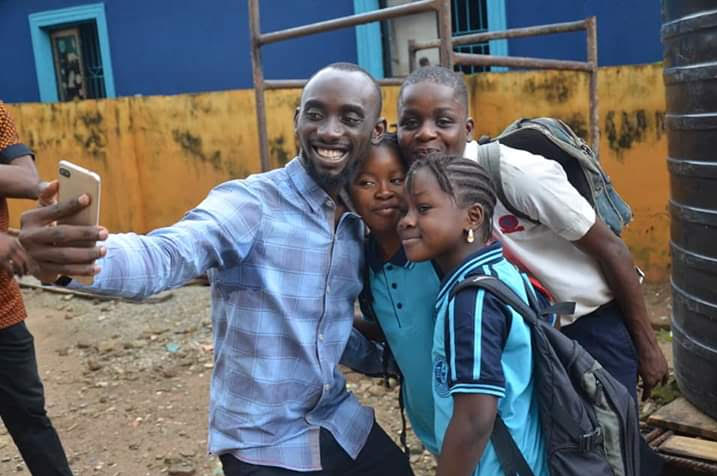
Big congratulations. During the time you made that decision, was life easy for you?
Thank you so much for the congratulations!

Yes, life wasn’t easy because, at that point, I had no job. Though I involved myself in lots of volunteering opportunities and was working in an oil palm factory. I would say I was underemployed. I can’t even buy things for myself and can’t help my family but I am grateful today.

Truth is if we can delay gratification, we cannot achieve greatness.

You are a role model to many young Nigerians out there, including me, can you share a roadmap to follow for many people who want to pursue your type of career?
First, it is not an easy ride.

Working in the development and non-profit space in Nigeria is difficult and serving humanity is what we do with the heart. I think it’s a decision you have to make and build your career through volunteering.

I have been volunteering for many years ago and I had developed skills in the process. So build the skills first and learn from people. So you don’t necessarily need to found a non-profit but you can join one and act as a programs officer or in other capacity, however, if you find a problem, you can create an initiative that fills the gap. And, don’t do it alone work with others. It’s only through collaboration we can create lasting change.

Your experience volunteering, leading a non-profit and those work that you do when you are not getting paid, will pay you when you start getting paid.

More so, develop your skills, take courses around development, non-profit management etc. You experience will create a pathway to work with a top international non-profit and position you as a consultant.

The rate of unemployment in the country is really alarming. What is your take on this?
For me, I think it’s high time the Government should focus on building the Human Capital in the country and this can only be harnessed through Education but the truth is – Education gets the minimal budget.

If you want to lift a country out of poverty, pay attention to Education, but if you want a country to remain poor, pay less attention to Education. Truth is; the education that we have makes people unemployable. So when children go to school, they become worse and that is where the problem is.

People graduate from University and cannot use Google doc, cannot create a free canva design, cannot negotiate, cannot write emails and write simple business proposal. We need to start promoting project based learning that prepares people for the workforce and the future of work.

Also, who do we learn from in school?

The government needs to focus on teachers’ training and pay equal attention to alternative learning such as vocational and 21st century ICT training.

Honestly, a mechanic who doesn’t go to school but have basic education earn better than a banker. This is the reason why we need to rethink our educational sector.

There are some skills we need to develop in school beyond reading and writing. However, if we can read, write and understand, we have all it takes to succeed.

You have actually left no stone unturned. But if I may ask, what can you say about the state of education in the nation?
I think right now; it’s below average as we currently have 10.5 million children who are currently out-of-school. It is reducing with Civil society organizations intervention but we need to do more. More so, teachers standard is low.

According to a research released by ESSPIN composite survey in 2014, it was revealed that out of over 19,000 public school teachers tested in states in Nigeria, only about 0.03% met the standard in analyzing children learning outcomes, utilizing effective pedagogies and major competencies in the use of learning technology.

Now we can see there is a problem. Many students go to school today and they do not learn. Truth is I have heard cries of students, and these are the cries of a failed society. The Education sector needs to be fixed.

Furthermore, when I traveled across marginalized communities last year, I saw schools without toilets, students learning in dilapidated buildings. Students in classroom without teachers. Students wandering around during school hours and some are not even in school at all. And if there is heavy downpour, students are drenched. Learning environment is poor.

The school, should be an oasis that protects the children. A place where they can be and breathe.

That’s really poor and I hope your voice would be heard soon. Where do you see yourself in the next five years?
In the next five years, I want to continue with my work at KLCI.

Expand to more communities and create unconventional design spaces where children in rural communities can co-create and design solutions.

I am also looking forward to deepen my knowledge in the Non-profit and Educational space. Deep dive into Global Educational policy and okay greater role in educational policy leveraging the youth demography.

More so, start a role to work with UNESCO or UNICEF.

How do you think the government can help your vision?
I think collaboration to equip students in secondary schools to acquire 21st-century skills needed in the 21st-century economy. This will serve as an alternative education and complement learning deficiency in schools.

Ultimately, giving young people like me voice to contribute to policy development through stakeholder engagement that includes young people working around Education.

I think a Youth Advisory on Education is a way to go, where young people who have knowledge of the 21st-century can share with the Government interventions that work and here, this is not just about me.

What would be your advice for the youths out there?
We need to define ourselves beyond the environment, we are the movers of the world and we should not limit ourselves.

We should go ahead to learn as much as we can. Take courses online, volunteer for social causes, intern even if you are not getting paid. Just keep developing your skills.

Truth is – premium has been placed on skills and if you don’t have those skills, you might likely not get some certain opportunities.

Also, we need to develop our writing skills, research, read and listen more. Some opportunities today are tied around this.

Search for  international opportunities, fellowships, scholarships. There is a lot you can get on opportunitydesk.org.

Attend seminars and masterclass and don’t be scared to dare. Start something..It could be volunteering, interning or starting a small business. Just start. Also build relationships and nurture it.


Thank you, Hammed for your time. Wishing you all the best for the future.
You are welcome! Thank you, and Tekedia, for the opportunity to tell my story.

OPay Takes OTrike To Enugu

0

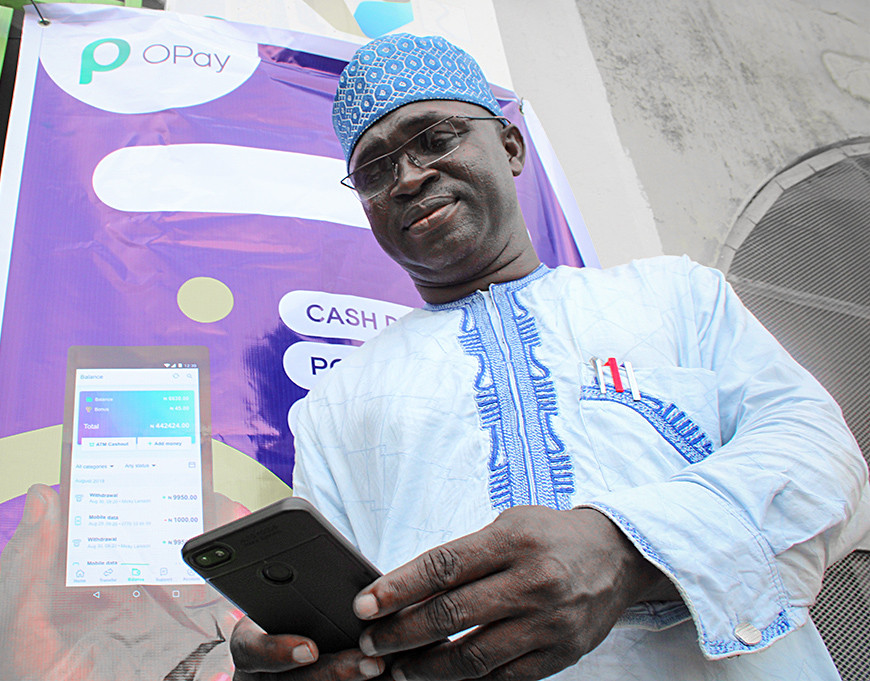
Opera Payment Transport System (Opay) continues to expand its transportation innovation across Nigeria. In Enugu, it has introduced an on-demand e-hailing tricycle service called OTrike. Following the pattern of other e-haling services, you can book a tricycle at the comfort of your home at affordable fare rate.

The introduction of this service came with an enticement of N100 per trip for the month of October, no matter where in the town you are going.

It’s a change in the system that tricycle operators in the state have welcomed with open arms and riders too found a sense of relief in the development.

Commenting on the launch of OTrike in the state, the Chairman, Enugu State Tricycle Riders Association, Mr. Benjamin Ikah, applauded the initiative but noted that the state government has introduced security numbers for tricycle operators in the state.

He said the recent introduction of security numbers has come as a way to minimize the tendency of crime, since it identifies riders and holds them accountable for their actions. He therefore urged those enrolled into the Opay-OTrike system to go any unit of Keke riders in the state to obtain their numbers.

“So we want every tricycle rider to go and get his own security number before the enforcement, which will result in impounding of tricycles at the end of three months,” he said.

The Permanent Secretary of the Enugu State Ministry of Transport, Mr. Ogbonna Idike, who graced the occasion of the launch, also praised Opay for transforming Keke riding services into a dignifying service in the state.

He noted that OTrike will provide a practical alternative to many graduates who have no jobs. He said the launch of OTrike is therefore seen as youth empowerment and job creation by the state government.

Saudi Aramco Is Worth $2 Trillion! – Hello NNPC Plc

4

Saudi Arabia’s Aramco, the world’s largest oil producer, will start trading in Saudi Arabia on December 11, according to the state broadcaster Al Arabiya. Aramco, valued at $2 trillion, plans to raise $100 billion through its offer of a 5% stake.

It aims to raise up to $100 billion from the IPO of a five percent stake of the company, based on a $2 trillion valuation. This valuation could make it the most valuable company in the world. This valuation would put Aramco at a staggering 400 percent greater than the current largest IPO of Ali Baba, which happened in 2014.

In September, Public Investment Fund (PIF) Governor and Aramco Chairman Yassir al-Rumayyan had said that the IPO would not be delayed and could occur anytime within the next 12 months.

The purpose of the IPO is to put Saudi Arabia on the fast track to diversifying its economy away from oil and transforming key sectors including mining, healthcare, and tourism in line with Vision 2030.

“If Aramco is not put for IPO, it means it will take us 40-50 years to develop the mining sector. It will take us 40 years until we develop the local product and it will take us long years to develop logistical services, just like we wasted 40 years in the past while trying to develop these sectors,” Crown Prince Mohammed bin Salman said in an interview broadcast on Al Arabiya back in 2017

Can Nigeria try this playbook to boost transparency in the energy sector? That will not happen because NNPC has no quantifiable value since NNPC is Nigeria! This was my conclusion when I tried to examine NNPC Plc: ‘That is the most unfortunate thing about Nigeria, and the reason why NNPC Staff, the Labour Union and students will say “HELL NO, DO NOT DO IT”’. Yet, there are many benefits for taking NNPC public. Some are:

  • Governance: Taking NNPC public will improve its governance especially if it is listed in a foreign exchange like London Stock Exchange and New York Exchange besides Nigerian Stock Exchange. That improved governance will help its impacts to the Nigerian people. I do think it will return higher value to Nigerians compared to what we get today. But there is risk: you do not want excessive market activism on a national corporation.

  • Liquidity in NSE: The Nigerian Stock Exchange will benefit with a listed NNPC. It will bring liquidity in the exchange. I promise you that NNPC Plc will bring many Nigerian retail investors back to the bourse.

  • Human Welfare: Through better governance and transparency, Nigerians will win through improved human welfare: yes, more money will be remitted and paid to the Nigerian people, on time.

  • Financials: The NNPC financial management will have higher discipline with severe implications, as deviating from standards can be considered a financial crime.

  • Capital Funding: NNPC and Nigeria will likely raise billions of dollars which can go a long way to finance important capital projects. An IPO by NNPC will bring liquidity to modernize our infrastructure. It will be a great moment in our history if the leadership utilizes the money well.

  • Profit-Center: In markets, NNPC will be managed as a profit-center where the leadership will be tasked to run it efficiently so that Nigeria and the investors will make money. Today, it is largely a cost-center with no meaningful balance sheet.

  • Investors Win: I do not have the total reserves of NNPC and the correct books to calculate how much profit it could make in a year, but I know that we could be looking in billions of dollars. Also, we need to know the present revenue and cost elements to model the profits.  But no matter what, NNPC makes money and investors will see glory. If they do not presently make money, no one will be talking of missed remittance into the Federation Account.

Of course, there are grave risks for trying just that for Nigeria as I noted. Saudi Arabia may be executing a game plan; it could be a great exit before that future of constrained oil arrives.  Just today, we are learning that weak oil prices have hit BP’s profits. Weather has also contributed to the lower profit, delivering a double whammy. BP reported a 41% drop in Q3 net profits.

NNPC Plc – Nigeria Should Take NNPC Public To Boost Transparency