DD
MM
YYYY

PAGES

DD
MM
YYYY

spot_img

PAGES

Home Blog Page 6603

Nigerian Restaurants Worldwide: A Research Agenda Part 2

0

Following up on my earlier post entitled Nigerian Restaurants Worldwide: A Research Agenda Part 1, my focus this time is on Dubai, the acclaimed preferred travel destination for Nigerians (aka Naija). 

Although there’s never any verifiable evidence of population numbers for this group, even the country’s population relies on estimates of anything between 170-200 million, various sources tend to suggest that there are at least about 5000 Nigerians resident in the United Arab Emirates (UAE) with most of them based in Dubai. This seems to exclude the number of Nigerians studying in the country.

UAE Population Infographics 2018 - FULL

My point now is this. If Nigerians really love their food that much, as I pointed out in my last post, are they really being served? And yes I ask this literally if you are wondering. 

I have posed a similar question many years ago in my 2007 paper on Nigerian Restaurants in London, which I have only recently tried to reconcptualise in a post highlighting  the challenges of African Caribbean restaurants in London 

Returning to the matter at hand, I am wondering just how Nigerian restaurants are faring in Dubai and its environs (e.g. Abu Dhabi, Sharjah and even Ajman)? 

Not very well I dare say. These emirates (or city states with the UAE) seem to be the forte of South Asians (notably India, Pakistan and Bangladesh). Going further down the pecking order and even from those areas geographically defined (the socio-political definition seems to be somewhat different as many of these nationals tend to see themselves as Arab) as African e.g. Comoros, Egypt, Morocco, Sudan and Tunisia. 

As for Nigerian restaurants, they seem to be operating at the lowest rungs of ambience. Sometimes one would wonder whether to tuck in at all after a site visit to places like the Gold Souk, Deira, Al Nahda and Al Sabkha (a small community between Al Rigga, Naif, Al Dhagaya and Al Buteen) in the Deira region of eastern Dubai.  

Is it really surprising that no “African” restaurant comes close in the top-10 listing. Not even the much celebrated KIZA that claims to be Pan-African (with Swahili undertones). Obviously not Nigerian!

Shall we try another one? Tribes?
Is that Nigerian, Kenyan or African? No one really knows, and that’s where the confusion lies:
Tribes is a fun, casual dining restaurant located in Mall of the Emirates and The Dubai Mall. The menu has been inspired by the amazing food and flavours of Africa, an extremely diverse continent, with numerous tribes, who not only speak different languages, they also have very different foods, which they prepare and serve to their family and friends with a lot of pride.
Still on the upmarket offerings, here’s another one, Africana Home, which claims the following history:
Africana Home restaurant is UAE’s first African kitchen.The Restaurant first opened it doors in 1993 to the delight of customers craving for tasty African Cuisine and has continued to provide a home away from home feeling.
Why is it that Nigerian restaurants continue to operate from one bed room apartments? I’m not making this up, I lived in the country for nearly a decade and besides this personal first-hand experience, you may wish to read the message of the Managing Director a notable player, Africana Home, whom I assume to be the founder below:

When I first came to the UAE, I was unused to the taste and flavor of the food, although many tried to be as hospitable as they could but a lot was lacking, I just couldn’t stand it, And so the Vision for Africana Home was birthed.

From a one bed room apartment, cooking for friends, colleges and neighbors , to a small restaurant space with just 3 employees, to a thriving chain of restaurants, we truly have come from humble beginning.

Regrettably, only a few seem to have transitioned from such “humble beginnings”, as numerous other Nigerian “restaurants” (deliberately in quotation marks) are still operating under the radar in the most squalid of conditions.

What’s more? Filipino restaurants have started making inroads in the country with the recent announcement by the Al Ahli Holding Group for a new chain of Filipino restaurants, Little Manila restaurant in September at Al Muraqqabat Street, Deira, offering a variety of Filipino dishes from Fruitas, Mochi Créme, Zagu to the popular dish Binalot, grilled meat and rice on banana leaves.

“The idea behind Little Manila was to give the third largest expat community in the GCC an exposure to experience the flavors of their home country while staying in the Middle East and to give them a chance to come together as a community to call a place their own.”
Ok, I must admit I have recent heard of Gbemi Giwa’s new health-orientated African restaurant, Catfish, which operates out of the Kitchen Nation incubator space in Business Bay, but is this really bespoke? Why are Nigerian restaurants in Dubai still very few and far between?

Wake up Naija! “Carrying last” has never been part of your DNA.

Ndubuisi Ekekwe Will Be Speaking in National Assembly Abuja on Nov 21

1

On Nov 21, 2019, I will be speaking in the National Assembly – the Nigerian parliament. You know in my speeches, I have been making a case that Nigeria MUST get to $3 trillion GDP by 2030 (from sub-$500 billion today) if we want to equilibrate on our population growth, and avert pockets of nano-conflicts. Behind the scenes, I have written roadmaps on how we can architect that redesign. This presentation is part of moving to the next phase as the committee I am working is bringing university vice chancellors, business leaders, public sector leaders, etc for a day to examine how to architect growth through industrial reforms.

My optimism in Nigeria is unbounded because we have a solid capability firmware to build an operating system of unconstrained growth which will be felt across industrial sectors! Just think about it: if you put liquidity velocity in all farmlands in Nigeria, you will reduce severe poverty by more than 29% overnight as assets which are dead will suddenly have value to serve the owners! 

Yes, those poor people in villages holding large farmlands will become richer. Doing that requires a new roadmap with technology under a governance system which the National Assembly must design and empower by law.

There needs to be new ways to use legislative policies to unlock latent opportunities and unleash growth in this economy.

Nigerian Banking Market Cap Paradox – Records Profits But Declining Market Caps

0
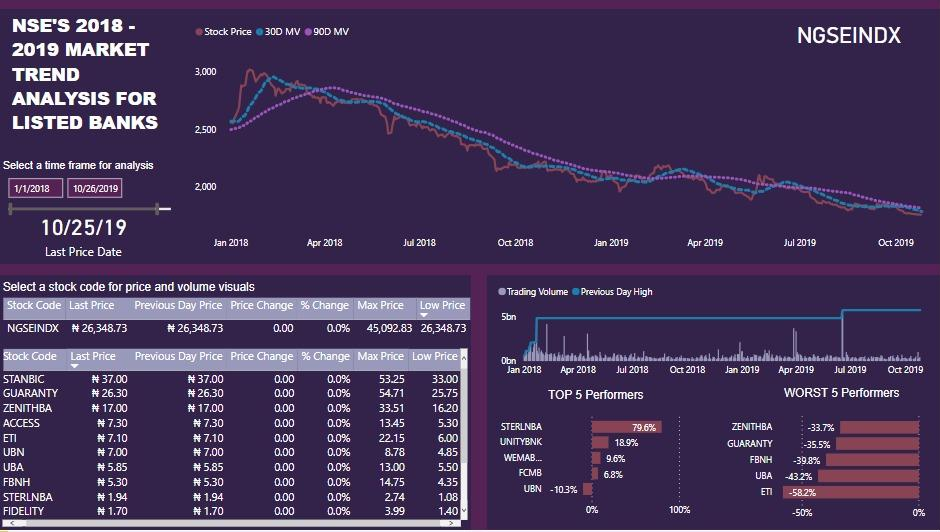
Nigeria stock exchange data (Source; Godbold, LinkedIn)

I wrote about the Nigerian Banking Market Cap Paradox a few days ago. This paradox is thus: banks continue to break revenue and profit records but are yet to see decent bumps in their market caps.

Our largest bank by market cap, GTBank, had fallen from N1.3 trillion to now N741 billion even in a time it has been declaring massive profits and growing revenues. Simply,  there is no reason why that should happen. But it is happening due to market perceptions. Look at those numbers; it is only in Nigeria that a bank will deliver such, and yet nothing great happens on its stock (see the figure). Tell me, if massive profits do not deliver the glory of market cap bumps, what will?

Godbold Promise on LinkedIn has done the real professional work needed on the numbers to understand what is happening here. Read his full thesis below.

After reading a post by Ndubuisi Ekekwe today, I decided to run a 2 year analysis using #powerbi on the Nigerian Stock Exchange index and also on all the banks listed in the Stock Exchange to really understand the stock price performance over a 2 year period.

The result of the Analysis are as follows;
*The NSE index sheds 16.2% in 2019 against 14.0% decline in 2018. The index started flattening from Feb 2018 after then the index hasn’t recovered, it has been flattening till date.

For the Tier 1 banks, almost all the Tier 1 banks lost price momentum YoY save Access Bank.

There performance is as follows:
* Gtb dips by 23.7% in 2019 against 9.2% decline in 2018.
*Access bank increased by 7.4% in 2019 against 23.9% decline in 2018.
*Zenith Bank dips by 26.2% in 2019 against 7.6% decline in 2018.
*UBA dips by 24.0% in 2019 against 22.3% decline in 2018.
* FBNH dips by 33.3% in 2019 against 6.8% increment in 2018.

It happens that all Tier 1 banks relatively performed poorly YoY and 4 of them were worst performers save Access Bank from Jan 2018 to 25th Oct 2019.

This analysis still leaves us with same question by Ndubuisi Ekekwe which is; despite large profit, why are these banks losing price momentum.

The link to the dashboard is in the comment…

On what is happening in the sector, here are some comments from the LinkedIn thread.

  1. One thing you should know is that investors are not only concerned about the huge positive numbers but also look inwards as to what’s contributing to those numbers. In a case where the drivers of the profit are not sustainable, then huge sell-offs will ensue and share price starts declining. Maybe you should check the financials and see if banks huge profits is as a result of an increase in SPREAD in their core business of financial intermediation or as a result of other factors investors feel that are not quite sustainable in the future. That maybe the only reason to justify why there’s a share price decline despite posting huge PBT on their comprehensive income statement.

  2. Very apt! There are so many factors beyond financial performance that should be considered. E.g. Corporate governance framework, including but not limited to, controls around the eported numbers & Risk Management procedures, country risk (political & market)- as investors aren’t only Nigerians etc.

  3. See, why an investor would buy MTN Nig shares and not Airtell or GTB is simply the same reason why an American investor would buy a Fitbit share now that Google has acquired the company and not before the acquisition. Last generation of investors invested based on the present state of the company… that was the generation where banks and other heavy assets companies did good, but this current investors are concerned about potentials, tomorrow’s state.

  4. I had postulated the arrival of MTN. Yet, it is not clear.


Nigeria stock exchange data (Source; Godbold, LinkedIn)

How The On Demand Economy Transforms Society – The Gojek Story

0

Gojek is South East  Asia’s leading on demand multi service and payment platform. It was founded in Indonesia in 2010 by Nadiem Makarim, Kevin Aluwi and Michaelangelo Moran, to fix the friction in the supply of ojek (motorcycle taxis) by their operators and demand (consumers), after noticing that riders would wait endlessly in Jakarta to get customers who would need their services. The founders leveraged aggregation construct  to connect drivers and riders in a convenient manner, and later used the double play strategy to add courier delivery services which later scaled to currently offer more than ten services, meeting the daily needs of Indonesians.

With over 3,000 employees running its operations in Indonesia, Vietnam, Singapore, Thailand and the Philippines, it is Indonesia’s first unicorn and startup company worth $10 billion. Gojek is the only company from South East Asia included in Fortune’s 50 Companies that Changed The World in 2017 and 2019.

As a homegrown startup it was able to be a category king by navigating local regulations and designed features into its app to suit local service providers and their consumers.

Gojek’s product line includes:

  • Go Pay: The fourth biggest ewallet service ranked behind Indonesia’s top lenders Bank Mandiri’s E-Money, Bank Central Asia’s Flazz and Telkomsel’s T-Cash. It controls about 30 percent of all electronic money transactions in Indonesia, leveraging innovation to deepen the National Cashless Policy by Indonesia’s Central Bank.
  • Go Ride: The pioneer motorcycle hailing service in Indonesia with more than 1 million drivers.
  • Go Car: Car hailing service.
  • Go BlueBird which enables its customers to hail BlueBird taxis in the Gojek app without fixed charges.
  • Go Food: Instant food delivery service with over 250,000 vendors across Indonesia
  • Go Food Festival: Go Food’s double play offline food court chain which sells food and beverages from its merchants and has opened in major cities in Indonesia, becoming the most networked food court chain concept in the country.
  • Go Mart which offers grocery shopping from supermarkets available on the Gojek app.
  • Go Shop allows customers to purchase goods from shops not listed in GoMart.
  • Go Send: On demand courier service to deliver items and documents with no distance limits within one delivery zone.
  • Go Box: On demand service for haulage of large items with pickup trucks, single axle trucks and single axle box trucks.
  • Go Tix: Offers entertainment ticket vending on the Gojek app.
  • Go Med: App based medical delivery service in partnership with Halo Doc.
  • Go Massage: On demand massage services
  • Go Glam: On demand personal hairstylist, nail care, waxing and facial services.
  • Go Auto: On demand autocare services
  • Go Pulsa: Phone airtime top up service which uses sister service provider Go Pay as only means of payment.
  • Go Bills: Allows its customers to pay PLN electricity bills, purchase PLN electricity tokens and pay B PJS insurance premium
  • Go Points offers  token for each transaction to Gojek users which they can redeem with rewards from the app.
  • Go Pertamina: An on demand fuel delivery in partnership with state owned oil company Pertamina to provide last mile delivery of fuel to consumers.
  • Go Play and Go Studio: This is it’s latest venture into provision of online video content and a streaming platform to its subscribers.

Gojek has over 3,000 employees including 210 engineers in its three headquarters in Jakarta, a data science lab in Singapore and an engineering team in India. It has begun an expansion programme across South East Asia which will increase its partnership network of over 1,000,000 riders, 125,000 Go food merchants and 30,000 Go Massage, Go Glam, Go Clean and Go Auto service professionals.

According to a recent research by Survei Angkatan Kerja Nasional 2016 Semester 1 Gambaran, the average income of full time driver partners on Gojek (3.48 million rupiah monthly) which is 1.25 times higher than the average minimum wage in Indonesia (2.8 million rupiah per month) while the average income of driver partners (3.31 million rupiah) is higher than the professional employees in general (3.10 million rupiah for those in the transportation sector, 2.34 million rupiah for employees in the industrial sector and 2.66 million rupiah for staff employees). Temasek Digital’s Youtube channel states that Gojek contributes (9.9 trillion rupiah $732million) annually to the Indonesian economy.

Due to the impact of Gojek on the daily livelihood of millions of Indonesians, it’s founding CEO Nadiem Makarim was recently appointed as Minister of Education and Culture by President Joko Widodo to help transform Indonesia to a knowledge economy by redesigning the learning process to inspire its young ones to evolve as critical thinkers with on demand skills to create similar success stories.

Considering the fact that Indonesia is an archipelago of about 17,000 islands, Gojek should introduce on demand ferry services to deepen access to transportation across the country. It should also collaborate with Lion Air for air ticketing services on its platform  and integrate diaspora remittance features into GoPay for Indonesians and citizens of other countries within its operations to send money for their loved ones and launch in Malaysia which has a tech savvy population, Brunei, Cambodia, Myanmar and Bangladesh within the next one year to serve the ASEAN and South Asian markets.

Innovators Are Using Technology To Deepen Affordable Housing in Nigeria

0

The real estate sector contributes between 30 to 70 percent of economic activities in the U.K, Canada and USA with investment in housing accounting for 15 to 35 percent of aggregate investment worldwide, creating jobs for about 10 percent of the global labour force.

In Nigeria, it accounts for only 3 percent of GDP.  Nigeria has a housing deficit of 17 million houses with an estimated 1 million units needed annually to cater for its housing paralysis.  Lack of affordable and accessible mortgage facilities have made home ownership elude millions of Nigerians.

The Land Use Decree enacted in 1978 which vests ownership of land under the sole control of state government for non resource land has not been reviewed 41 years later, while government policies on land and property acquisition have also discouraged huge investments to boost the sector.

Kaduna State Government in order to deepen access to affordable housing in the state passed the Mortgage and Foreclosure Law, and established Kaduna State Mortgage and Foreclosure Authority making it the first state in Nigeria to create a mechanism to resolve issue of default in the real estate industry. It is digitizing land documentation and titling to attract private sector investment.

Kaduna has established strategic partnerships with Sterling Bank to provide single digit interest mortgages to its citizens and Nigerian Mortgage Refinance Company as well as the Federal Mortgage Bank to jointly commit 3 billion naira for affordable mortgage.

These initiatives are aimed at enabling its citizens to buy houses and pay over 15 to 20 years with single digit interest rates.

Mixta Nigeria, a subsidiary of Pan African real estate developer Mixta Africa has introduced an innovative option to deepen home ownership for Nigerians. To save Nigerians the stress of buying land and due to financial constraints it is undeveloped after about four to five years, it is offering a buy home to rent policy which will give customers who would purchase homes from them and don’t wish to reside there an option of putting it for rent.

According to Kola Ashiru Balogun, CEO Mixta Nigeria once they get a commitment from an investor who buys into their scheme, they look out for tenant willing to rent the property and through this initiative in 2019, they have sold over a 100 units. Besides the returns on investment for the property owner, Mixta provides access to the National Housing Fund for anyone who buys into this initiative with only a down payment of 10 percent of the total value of the property required while the balance will be mortgaged and based on the number of years rent will be earned monthly by the landlord.

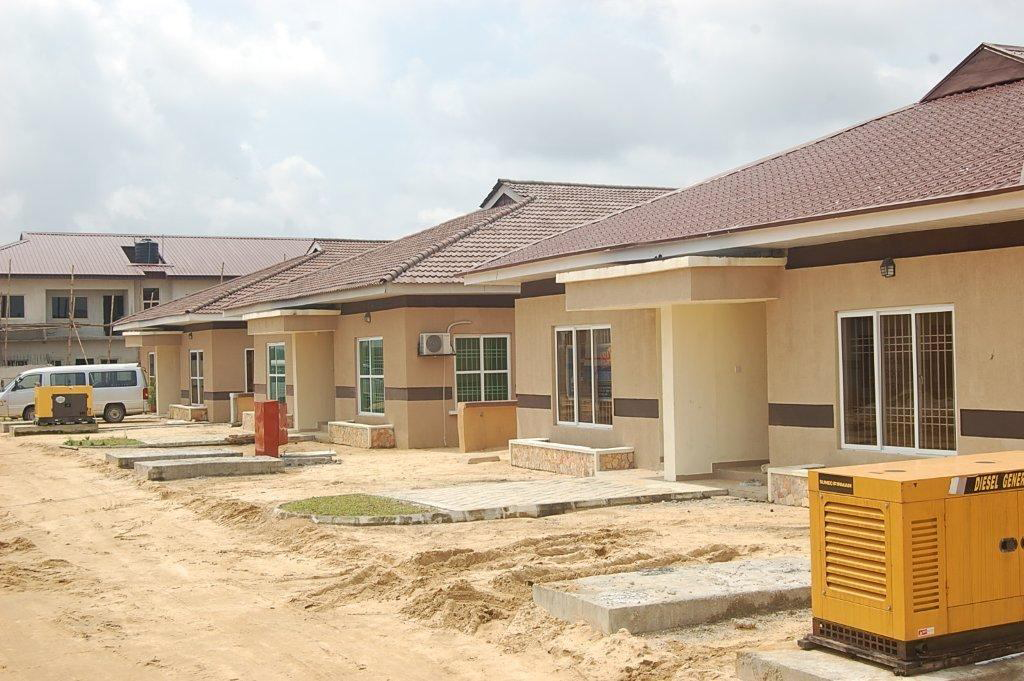
It has begun development of properties for the same value as the cost of land catering to different classes of people in Nigeria offering from 13.5 million naira for its Beachwood Park Estate in Lekki for a two bedroom terrace house, and 16 million naira for a three bedroom semi detached house, a game changer considering the average value of similar properties within that axis.

First Homes Africa, a startup wants to make it convenient for first time homeowners to own its 60,000 targeted apartments within four years through a rent to own policy that allows subscribers to save monthly for 15 months to own homes in any location of their choice.

It has created an ecosystem which comprises stakeholders in the housing sector value chain such as the government, insurance companies, property developers and builders, building materials manufacturers, and built environment professionals.

Utilizing technology tools such as cloud computing, big data, predictive analytics, artificial intelligence, mobile technology and social networks, it plans to redesign the housing industry by building houses to suite millennials eliminating the waste typically associated with housing design and development.

First Homes Africa should focus on delivering single room or self contained apartments at scale as there is a rising demand for this amongst its target market across the country due to low disposable income in Nigeria which has made young millennials prefer affordable housing options due to the harsh economic climate of the country. It should create a blockchain platform which will enable digital records of all its assets, home mortgages and payments, insurance for all parties in its network which will promote transparency and trust in delivering last mile home ownership for all Nigerians.