DD
MM
YYYY

PAGES

DD
MM
YYYY

spot_img

PAGES

Home Blog Page 6626

Three Awkward African Thinking

0

All my life in this wonderful continent called – Africa, there are three awkward thinking that I know:

  • A woman can not ask a man out
  • A woman can not marry a man she is older than
  • The stigma on women who have kids out of wedlock.

I was doing shopping in the mall today when I overheard two ladies having a discussion. From what I was able to eavesdrop, she was talking about a guy she admires but she could not make a move to approach the gentleman.

She told her friend, ”The guy is so cute. He gives me chills. I really wish I have the courage to walk up to him and express my feelings.”

But her friend cut in and said, ”Nne, don’t ever try it. This is Africa. A woman should never ask a man out unless she would end up being molested.”

It makes me wonder if it’s a crime for a woman to ask a man out. There is this norm that – it has to be a man asking a woman out. There is this mentality that any woman who asks a man out is cheap or desperate. But honestly, I don’t see anything wrong about it. It doesn’t matter who shoots the shot first, but how the shot was fired is what matters. Maybe I am thinking weird.

Africa is a continent that has so many cultures and traditions. Societal norms and beliefs rule our continent. The sad part of this is – these norms and beliefs are not facts. They are mere opinions of our great grandparents who felt it would help them in having a peaceful coexistence during their time.

Honestly, things have changed. The way they lived back then may not really work with the modern generation. Of course, we can’t neglect the ancient landmarks but at the same time, life is fast evolving. Things are changing every day.

Another thing I found quite interesting is – the age difference. There are many Africans who believe that man must be older than the woman. Yes, due to some physical attributes of the women. But, is it really important?

I have heard some ladies said, ”I can’t date a man younger than me. I can’t even imagine being with someone I am older than.”

There is one thing that I know, age is just a number. Age doesn’t define maturity. When it comes to choosing a partner, age doesn’t really matter. Maybe this has got to do with individual differences. I’ve been with some young men who are more mature and experienced than someone older.

Besides, there is no law that specifies that a woman must be younger. We all grew up with that mentality, maybe because it was written in the Bible that God created Adam before Eve. Who knows?

The last is the stigma on women that have kids out of wedlock. Some guys would easily give up on a lady when they know she has a child or children out of wedlock.

Many would accuse the lady of being wayward. But who are we to judge people?

Anyone can fall victim to mishaps. After all, we all make mistakes. Some people are lucky to come out unscathed while others may not be. Irrespective, everyone deserves a second chance.

In Africa, many single ladies feel like they’ve committed the worst crime when they give birth out of wedlock. Of course, I will never support having child/children out of wedlock, neither will I condemn anyone who falls into that trap.

I prefer to look through the lens of humanity. As humans, we could make some decisions or take some steps that may come back to hurt us, but that is not enough reason to be condemned or crucified.

Enough of castigating people in this category. Let them be. Having a child out of wedlock is enough burden to bear.

Africans need to stop judging them harshly. They deserve to be loved as well. We can’t judge anyone by his/her past. We should rather give them a helping hand to move forward.

After looking at these three things discussed above, I think we still have a long way to go.

We need to do away with some societal norms and ideologies that are discriminatory and isolating.

God bless Africa!
How to Reduce Fuel Tanker Explosions in Nigeria

0

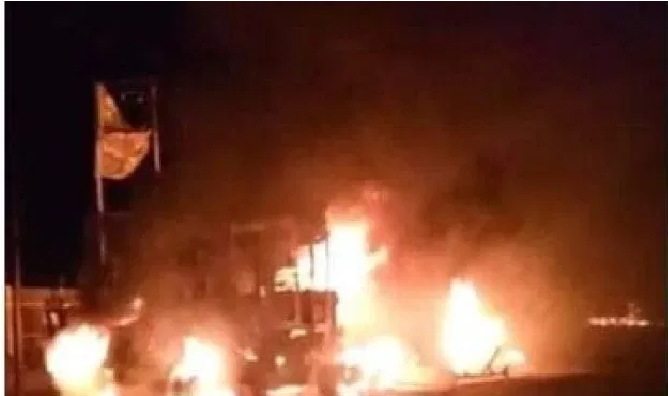
The news of the fuel tanker explosion that recently happened (on Wednesday, 16th October, 2019) in Onitsha spread like wildfire. I was on my way to Anambra State when I heard it. People were calling and checking on their loved ones. Gory pictures (both the authentic and the inauthentic ones) of the fire outbreak were circulating on every social media. It was indeed a day a lot of people won’t forget easily.

This morning, news filtered in that another tanker fell and exploded late in the night at Omagba area of Onitsha. Fortunately, this one was contained by the Anambra State Fire Service (thank God they have ‘water’ this time – if you know, you know).

Another incident like this happened in Onitsha sometime last year (or was it two years ago) at DMGS Roundabout (not too far from Onitsha Main Market). In this very incident, no life was lost but a lot of properties were destroyed because nearby buildings (including the ones housing some banks) and the filling station were affected.

This incident doesn’t happen only in Onitsha. We hear a lot of news about things like this happening in other parts of the country. We can’t continue like this; something needs to be done and done soon too. But it will be good to look at the causes of these tanker falls and explosions.

CAUSES OF TANKER EXPLOSION

We know that most of the cases of tanker explosion has to do with accidents (usually when they fall and spill their contents), but has anyone else asked why the tankers have to fall or have accidents in the first place (besides mechanical and electrical problems)? And why do we record so many casualties (for both properties and humans) during these explosions? Well, below are my two cents on this matter.

  1. Bad Roads: I started with this because that’s the first answer a lot of people will proffer when faced with this question. Yes, bad roads affect these vehicles, just as it affects other types of vehicles. I’ve seen many of them fall in places where there are deep potholes and ditches. This problem of bad roads needs to be tackled as soon as possible.
  2. Reckless Driving: Sometimes these drivers forget that they are driving long vehicles, and that the road is bad. Some of them drive as if they were under the influence of drugs. Note that they are not the only reckless drivers on the road: car and bus drivers also have their own problems. Reckless driving and over speeding contributes a lot to these explosion accidents.
  3. Disturbance by Law Enforcers: An article was published not quite long ago about police checkpoints on our roads and the problems they create. These police officers also target heavy duty vehicles, especially those loaded with goods. Most of the times, these tanker and trailer drivers, in a bid to avoid ‘settling’ these officers, accelerate their speed and swerve through the checkpoint obstructions in very dangerous manner. This type of maneuvering has led to a lot of disasters.
Fuel tanker explosion in Onitsha (Source: Vanguard)

I also want to make it known here that the police are not the only law enforcers that cause these problems. Sometimes, I see groups of young men on the highway that forcefully stop all these heavy trucks to collect money from them. I’ve asked and was told they are ‘special’ task force that monitor and collect passage allowance (or whatever they call it) from heavy duty vehicles. Well, anything is possible in Nigeria.

  1. Filling Stations in Residential Areas and Public Places: Do you know that tankers won’t be passing through residential areas if not because we have filling stations located there. I know more filling stations are springing up closer to our homes and markets because we have to run out to buy ‘fuel’ for our generators; but, are they supposed to be located in these places (especially near markets)?
  2. Disobedience to Road User Rules: I haven’t seen it stipulated but I know there is this rule that holds that heavy duty trucks and tankers shouldn’t be on the road until very late in the evening (or even at night). But I think this rule only works in the FCT. Right now, ‘small’ vehicles struggle through the bad roads with the ‘big’ ones during the daytime. If anything happens then, a lot of people will be affected.
  3. Wrong Packing: You know eh, all these long vehicle drivers always behave like they own the road. They can stop and park their vehicles wherever they want and no one can say or do anything about it. If the vehicle was parked for repair, it will be left there for hours or days. I don’t know why Road Safety doesn’t ‘see’ them.

Like I said earlier, these are the causes I know. I believe there are so many others; it is now left for us to voice them out and hope that the right authority hears them. However, I have a few suggestions on how to reduce the rate of tanker explosions.

HOW TO REDUCE THE CASUALTY RATE IN FUEL TANKER EXPLOSIONS

  • 1. Building filling stations near residential areas and public places should be discouraged.
  • 2. Heavy duty trucks and tankers should be discouraged from plying the roads during the day. Those police officers and other law enforcement agencies should do something about this.
  • 3. If heavy vehicles are to be allowed on the road during the day, a separate road should be provided for them (I believe this is possible).
  • 4. More fire service stations should be created and spread across the country (and they should please be ‘working’). I will also suggest that market authorities set up fire service stations within the market. They shouldn’t wait for government to provide everything (after all they are collecting money from traders, and sometimes buyers).
  • 5. Trailer parks should be provided and the heavy duty truck drivers compelled to park there. If you ask me, I will say that trailer parks should be owned and managed by the private sector. This will make it more effective.

Accidents can never be stopped, but they can be averted. We don’t have to wait for many tanker explosions to happen or for many more lives to be lost before something is done. The right time is now. Nigerians already have enough on their plate; they don’t need more right now.

The Radiation Effect Erupting From Our Screens

0

The rate at which we are irradiated from our exposure to various screens like liquid crystal display (LED), plasma, etc, are quite alarming and calls for urgent awareness and decisive methods to control them. Irrespective of the screens you are exposed to, when done for a long period of time, it poses a lot of health hazards for the immediate and long term .

The menace of this irradiation stems from our addictive behavior as we interface with these screens. Accessing your favorite screens first thing in the morning and late at midnight are bad examples of the timing to access them. Our devices have become  our romantic partners and we continually romance them throughout the day. Some cannot even do without watching their favorite TV Soaps and programmes that have become ubiquitous and have invaded our privacy.

This is what happens when an individual has been continually exposed to screen radiation. There is a build up process in the cell of the individual and it stiffens the component parts of our body system, especially the central nervous system. It prevents bacteria, viruses and pathogens in our body from performing their day to day activities unhindered. Even though this has not been subjected to clinical evaluation, it is common knowledge that this ultimately leads to various secretions in our body system.

In the event of the above occurring unhindered then various sorts of diseases are invited to take hold of the affected body. Examples are high blood pressure, sleep deprivation, migraine, low sexual drive, lack of appetite, etc . We all know that  not nipping this illnesses in the bud can make them to escalate to other dangerous ones .

Quick palliative measures that can forestall the spread of illnesses when we have undue exposure to technology includes drinking lots of water, eating fruits and eating a balanced diet .

Watch this space for the other parts of this article . We are planning a WhatsApp Seminar on how our lives are affected by technology, and how we can take charge now as working professionals.

Upper Iweka Blaze – Sort it Out! No Long Talking

0

I hadn’t intended to share another post this soon, but yesterday’s tragic incident at the commercial nerve centre is not one to be ignored.

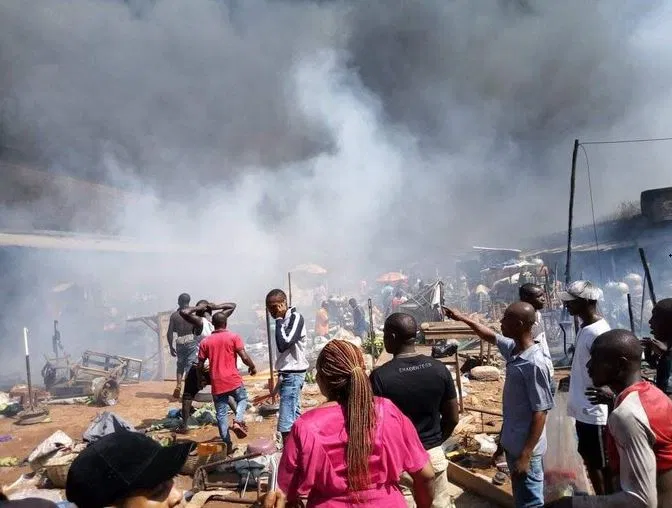
A loaded fuel tanker exploded at Upper Iweka, Onitsha and a vast portion of the area has been gutted by fire on Wednesday, 16 October 2019. According to an eyewitness, buildings and business premises close to the scene of the fire, extending to Ochanja Market were affected.

What’s more shocking, as captured by a resident and reported by TheCable, was that

“Many buildings are on fire and the firefighters are nowhere to be found…” 

I must reiterate as I did in my paper exploring 51 Iweka Road in particular, the fome of Nollywood (Nigerian Movie Industry):

“..Two cities Onitsha and Nnewi (which is more like a town) serve as the backbone of the economy of Anambra state. Onitsha, on the one hand, has strong trade links with many parts of the country and with
many overseas countries. Its market is described as the largest in West Africa. On the other hand, Nnewi, which is the second most economically vibrant centre after Onitsha, has virtually become the automobile spare parts market for the nation and a fast-growing industrial centre.

In the light of this tragic incident, and the accompanying “no response” from relevant authorities to tackle the blaze and prevent its spread, I am proposing that the least that can be done at this time is a fast-paced, two-pronged approach of rebuilding the commercial hub that has being “substituting for the State” (according to Deborah Brautigam), and ameliorating the losses of protagonists in this high drama. Breaking these into their component parts, it is only appropriate to undertake these two tasks as follows:

First, compensation for losses incurred (both financial and human).

Second, ring-fenced funding for reconstruction of the commercial hub. With strategies put in place to prevent recurrence of this tragedy.

Further Reading:

Brautigam, D. (1997) Substituting for the state: institutions and industrial development in Eastern Nigeria, World Development, 25(7), 1063–1080.

Madichie, N. O., & Nkamnebe, A. D. (2010). 51 Iweka Road (Onitsha, Nigeria): could this single African address redefine business cluster development? World Review of Entrepreneurship, Management and Sustainable Development6(3), 229-243.

The Scary Inflection Point on Nigeria’s Borrowing

3
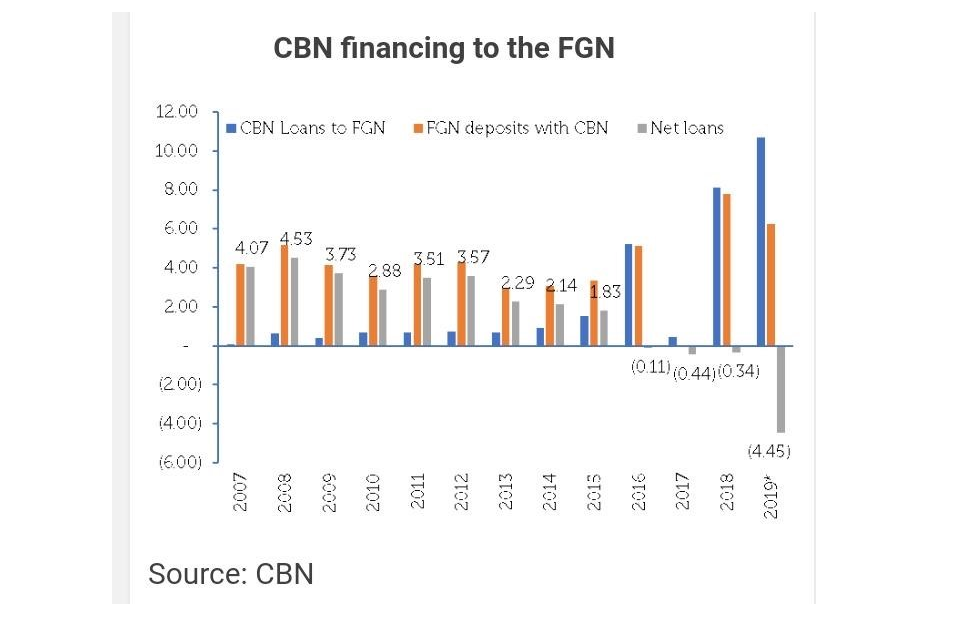
In trillions of Naira

This is the most consequential inflection point in all the plots in Nigeria which have been flipping recently. Simply, the next generation of Nigeria could be poorer than the current one if we do not reverse it urgently. Of course, I am not sure the current generation is doing amazingly fine! Do not make this a political thing (APC or PDP, Buhari or GEJ or OBJ) – see this as an entrepreneurial capitalism challenge.If Apple Corp is Nigerian, generating our national budget every 6 weeks on revenue (with the associated taxes), all these plots will align in phase.

Seriously, Nigeria is running out of luck with international market for borrowing, and the Central Bank of Nigeria (CBN) has been financing government. The 2016 recession caused massive dislocation and changed the equilibrium of things: the CBN loan to federal government of Nigeria (FGN) exceeded the FGN deposit with CBN. In 2019, the net loss is projected to hit N5 trillion. That is a very big number. You can say we are eating more than we can produce! You know the implication of that – you are stealing from the future. 

Interestingly, the FGN improved deposits,possibly because of the TSA implementation. Unfortunately, more money is going out as population continues to grow, faster than the economic growth. Also, you can blame the Boko Haram and other pockets of security issues for the massive spending.

Largely, what is happening here is that government cannot effectively borrow internationally. So, it relies on CBN to finance its spending. And CBN keeps selling treasury bills (TB) in the local market to sustain the party.

Pure and simple  – the party will end one day, and unless FGN gets improved tax receipts, the CBN playbook will derail the growth of critical sectors as the treasury bills financing is taking good money investors would have put in companies into the hands of government. That is a concern as CBN can make TB to return 20% annually (from sub-14% today) to keep making it exciting to investors.

Nigeria needs growth urgently to finance spending for its growing population. Otherwise, I am not sure how we can come out of this paralysis. I just hope they do not focus on more taxes alone to reconcile these net losses. The playbook must be growing the economy which will then activate more taxes!

In trillions of Naira