DD
MM
YYYY

PAGES

DD
MM
YYYY

spot_img

PAGES

Home Blog Page 6640

Mistakes Most Retirees Made While in Active Service

0

I’m not a retiree. In fact I’m still very far from that. But I know I’ll definitely retire one day; that’s a fact everyone knows. Most of all, I don’t want to be afraid to retire. This means I have to start now to plan for then. That way, it won’t hit me hard and choke me up.

I have met so many retirees and worked with and for some of them. I am also very close to a lot of them – my mother is one. I have seen those that retired satisfied and those that retired in agony. I know some that started processing their retirements early and those that did some ‘modifications’ to their files so that they can stay longer in active service. I have seen some that retired voluntarily and I have met those that were forced out of service. Indeed, retirement comes with a mixture of feelings and fear is at the middle of them.

Let’s be honest here, most people are afraid to retire. This is not because they don’t want to go home to rest and have time to do the things they never had time to do before. If you give a lot of workers the opportunity to stay home and receive their full salary, they will gladly grab it. So, workers are not afraid of retiring because they will stay home and become inactive; they are afraid because of the financial constraint that is attached to retirement.

To start with, most private sectors do not take care of the retirement benefits of their workers. The private establishments that do so were compelled by government to contribute towards their workers’ pension. But even at that, these workers know that their jobs can go at anytime and their contributory pension will be put on hold.

As for government workers, they know that when they leave active service, they may stay for months or years before their pensions start coming in. This has become a tradition that no one wants to query. The thought of staying for a long time without any income is quite scary. To avoid this, most workers keep tampering with some information in their files so that their retirement will be delayed. But that isn’t the solution to the problem.

If you consider that the pension paid to these retirees is too small, you may understand another reason workers are afraid of retirement. Someone whose salary couldn’t solve his financial needs will have a hard time adjusting to the pension, which is much lower than the salary. Just imagine the type of hardship the retiree and his family will pass through.

Anyway, I strongly believe that this hardship and suffering could be reduced if workers start early to plan for their retirement. It is actually the fault of any person who retires to hardship and hunger. I know that Nigerian economy isn’t good, but if others retired happy, you too can do so.

But most Nigerian workers make mistakes they pay for later in life. Those of us in active service need to learn the mistakes of some of these retirees – especially the unhappy ones – so we don’t make them.

Mistakes Made by Workers in Active Service
As I stated earlier, most workers who are uninformed make some mistakes which are detrimental to them as they retire. Below are the ones I know of:

a. Saving Cash: I don’t really want to talk about those that didn’t save at all. My concern here is about those that managed to save up something during their active service. Because of lack of proper guidance and information, most workers in active service leave their income as cash. For some reasons, they listen more to bankers who advise them to leave their money in fixed deposit. They show them some figures about compound interest and get these people confused. By the time they retire, they will only discover that cash is one thing – liquid. By then, it will be too late to invest it properly. In short, a large chunk of this savings is consumed while waiting for pension to start coming in.

Concerning this, I’ll call on experts to make out time to enlighten Nigerian workers – both those in the private and those in the public sector – on proper ways to invest their money for future use (our bankers are not helping us).

b. No Business Skills: I know that a lot of organisations, even government owned, do not allow their workers to engage in side hustle. Anyway, that is their own because when you retire into poverty they won’t be there to help. Well, what I want to state here is that most Nigerian workers are busy with their corporate lives that they never thought of learning a little bit of business skills. The only way they would have done this is by engaging in different side hustles, picking up one that interests them the most and then developing it. Since most of them didn’t do this when they were still young and strong, when they retire and start it, the whole thing becomes a flop.

So, my take on this is that workers, irrespective of what they are doing, should engage in side hustles that will sharpen their business skills. If possible, they should retire from service early so that they can develop this business very well before they get tired.

c. No Good Passive Source of Income: I know of some pensioners that bought so many shares during their active service. Well, we know what is happening in the stock exchange market these days. Anyway, the ones I know sold most of their shares during their ‘pension waiting’ period and used the proceeds to sort out family problems. Another form of passive income I can see our workers going into is estate. These workers hope to live by the rents and leases that come from their houses. But how many houses can a simple worker build? This might be a good source of income if there are enough houses and less troublesome tenants.

My take here is everyone should sit down and think of a passive source of income and start growing it now. Someone I know built a school when he was still in service (he was a banker). He employed people to manage it for him. Now that he has retired, he goes there to keep himself busy and still make money out of it. Those that can’t afford such a huge project should find other things. The truth is that most of us can’t think of one; so we need good recommendations from those that know.

d. Family Issues: The thing I want to point out here is about those that still give birth to children when they know they have less number of years in service. It is difficult to raise children with full salary, not to talk of with pension. People like this are so afraid of leaving service. They are usually the ones that continue to tamper with the documents in their files so that they don’t retire. I know there are some exceptional cases where people had delays with the coming of their children. In cases like this I believe parents would have planned for ways of raising the children. But I have seen those that have no reason giving birth late in life.

My take in this is that Nigerians need to think about population explosion when reproducing. They should also think and plan how to raise these children.

e. Non-Working Spouses: Of course when I say spouses here, I meant wives. I still don’t understand why some men encourage their wives not to work or find other sources of income. When it is time for him to retire, he will remember he’s the sole bread winner in the family. This can scare life out of them.

So, if your wife or partner isn’t working yet, encourage her. This will help you to plan better for your retirement.
What Shows That Am Rich? Nine Popular Investment Apps in Nigeria

2

What shows that am Rich? Richness is a blessing from above which is achieved by positive thinking, creativity, vision and hardworking for the particular agenda or project. Being rich or wealthy does not mean the money you have in a bank account or the car and cloth you are putting on.

Money does not make you rich and wealthy but it makes you to feel a little “big” of yourself. The word “money” simply means that any thing that is generally acceptable as  a means of payment for obligations.

Money is an errand boy to wealth because you can not achieve a particular project without involving money; you send the money to do a particular task for you. Which you can not do at that particular time.

Nowadays many Nigerians feel they are rich or wealthy when they see a particular huge amount of money in their accounts. That money in your account does not makes you rich and wealthy.

The money in your account is your messenger which may fail you at a particular spot and which may lead to the bankruptcy of the individual.

Many Nigerians are after money but they are not after on what to do with it or how to manage it, which can lead to a wealthy zone.

Being after money without looking for the source on how to manage it and utilize it, meaning that the individual is frustrated. The richest man on earth or in the word is not Jeff Bezos and family (U.S.), CEO, Amazon. Also,  the richest man in Africa is not, Aliko Dangote, a Nigerian businessman.

The richest man on earth is a man with vision

Now, you have a vision on how to get money but you don’t have a vision on how to manage the money, which means that you can be frustrated within a particular period of time. People will ask how can I manage money which can lead me to the wealthy zone?
  • Create a budget. …
  • Understand your expenses. …
  • Understand your income. …
  • Consolidate your debt. …
  • Slash or remove unnecessary expenses. …
  • Create an emergency fund. …
  • Save 10 to 15 percent for retirement. …
  • Review and understand your credit report.
  • But the main thing there is to save and savings can make you to achieve your dream
  • Now people will ask how can i save and the platform for saving money?
  • Record your expenses. The first step to start saving money is to figure out how much you spend. …
  • Budget for savings. …
  • Find ways you can cut your spending. …
  • Decide on your priorities. …
  • Pick the right tools. …
  • Make saving automatic. …
  • Watch your savings grow.

There are many platform on how to save money for future us.

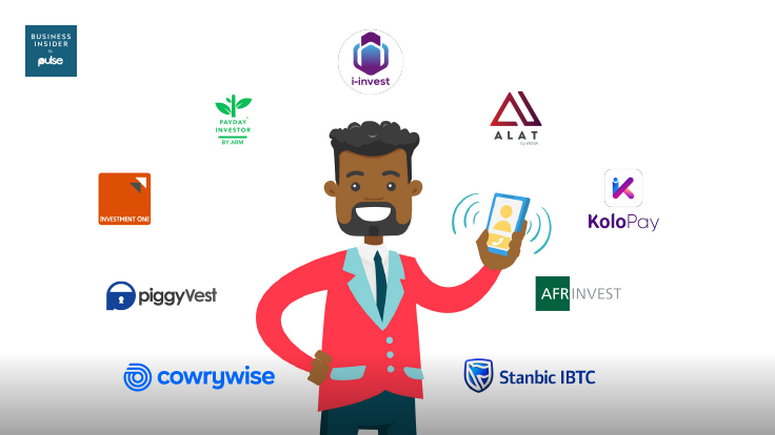
These are 9 popular investment apps in Nigeria that can make your money work for you. The mobile investment apps allow customers or investors to save money with the option of investing in some portfolios such as stocks, bonds, mutual funds, and the agric sector.

Investment apps are growing in Nigeria and millennials are embracing them, moving away from the traditional savings model or securities firms to financial technology-backed platforms. The aim of these applications is to offer a hassle-free investment experience. The mobile investment apps allow individuals – experts and beginners- to save money with the option of investing in securities such as stocks, bonds, mutual funds, and the Agric sector.

While stockbrokers are still available to execute trades on behalf of investors, these apps allow you to take control of trading with your phone. Due to the risk involved in trading securities, you are advised to consult an investment professional before parting with your money.

Whether you want to buy stock in banks, listed telcos, or insurance firms, a few taps on your phone screen can get you on your way.

1. CowryWise – For savings and investment.

CowryWise is a financial technology company that helps people save and invest through a mobile application.

Investment app in Nigeria - cowrywise (Michael Olafusi)

Investment app in Nigeria – cowrywise.
With CowryWise you can invest in low, medium and high-risk investments. Some of these investments include Nigerian EurobondMutual funds and other money market securities provided by third parties.
  • Saving interest: 10%
  • Investment interest – varies

2. PiggyVest formerly PiggyBank – for savings and investment

Advancing the old method of savings through piggy or native ‘kolo’, PiggyVest radicalises the form of saving in an online platform with an interest rate on it.

Investment app in Nigeria - Piggyvest

Investment app in Nigeria – Piggyvest
  • Saving interest: 10%
  • Investment interest – Savings, Mutual funds, and others

Investment One is part of GTB Asset Management wholly-owned subsidiary of Guaranty Trust Bank Plc (GTB).

Investment app in Nigeria - investment one (BellaNaija)

Investment app in Nigeria – investment one (BellaNaija)

Investment One offers distinctive business in financial services such as asset management, stockbroking, trust and pension fund management services, and others.

  • Interest rate: Varies
  • Investments: Savings, Investment banking, and private banking

4. Afrinvest (Afrinvestor) – Investment banking – Stocks, Bonds, and Treasury bills

Afrinvest focuses on West African markets with activities including investment banking, securities trading, asset management, and investment research.

investment apps in Nigeria - Afrinvestor (appadvice)

investment apps in Nigeria – Afrinvestor (appadvice)
  • Interest rate: Varies
  • Investments: Investment banking, Treasury bills

5. Wema Bank Alat

ALAT is a fully digital bank designed by one of Nigeria’s oldest banks, Wema Bank, to help people save more with certain interest rate. Alat.ng processing automated deposit from your account and allows you to earn as you save. Saving interest: 10% investments: Savings.

6. PayDay Investor – Savings

PayDay Investor is a product of ARM Investment Managers, a subsidiary of Asset & Resource Management Holding Company (ARM).

investment apps in Nigeria - PayDay investor

investment apps in Nigeria – PayDay Investor.

7. I-invest – Treasury bills 

I-invest is a pan African inter-brokerage service firm in partnership with Sterling Bank Plc. The platform helps both new and experienced investors match their investment maturities to their needs.

Investment apps in Nigeria i-invest

Investment apps in Nigeria i-invest

The platform also covers West African market with the risk-free treasury bills.

  • Interest rate: 8 – 11%
  • Investments: Treasury bills

8. Stanbic IBTC – financial services, pensions and wealth management products, and services.

Stanbic IBTC provides both local and foreign investors various investment packages such as pensions, wealth management products, real estate, traditional loan calls and financial services including mutual funds

Investment app in Nigeria - Stanbic IBTC pension app

Investment app in Nigeria – Stanbic IBTC pension app
  • Savings interest rate: varies
  • Investments: Financial services and pensions management.

9. Kolopay:  Kolopay helps you easily save little by little towards your goals and you get up to 10% interest,all for free. The platform is totally cashless.

More Taxes As Lagos State Wins “Consumption Tax” Case

0

The battle of consumption tax has been won, and Lagos State is the victor. The vanquished, hoteliers, event centers and restaurants are sober on the uncertainty the state’s victory will bring upon their businesses.

On the 3rd of October, the Federal High Court delivered its judgement on the case between The Registered Trustees of Hotel Owners and Managers Association of Lagos (RTHMAL), and the (defendants), the Attorney General of Lagos State and the Federal Inland Revenue Services.

The verdict reads that the Hotel Occupancy and Restaurant Consumption (HORC) law is legitimate and must be abided by.

The ruling was based on states’ right to legislate as supported by the second schedule to the constitution of the Federal Republic of Nigeria, which makes tax a residual issue that states can legislate on. Since it does not fall under the exclusive legislative list or the concurrent legislative list.

The schedule to the Taxes and Levies (Approved List for Collection) Act order of 2015, (as amended), includes hotel, restaurant or event center consumption tax as the taxes at the disposal of states to collect.

However, the judgement has thrown further anxiety upon those in the hospitality industry. At a time when businesses are feeling overburdened with multiple taxation in Lagos, experts believe that that the new 5% tax will do more harm than good.

Presently, there are over 24 taxes and levies payable to the states and federal government, and Lagos State is having a high stake. There is company tax, consumption tax, hotel license, personal income tax, parking permits, land use charge, radio and TV permit, wastewater request and VAT. etc.

Although the ruling restricts the Federal Inland Revenue Service (FIRS), from extracting VAT from restaurants, event centers and hotels, operators are worried that there will be little or nothing to show for the taxes collected by the state government.

Victor Edosomwan, founder and CEO of Vicwan Limited, a hospitality and lifestyle consulting firm said:

“The hotels have to provide their own power and evacuate sewage on their own; these should be provided by the government.”

The hospitality industry operators are also concerned that the recent development may likely put many out of business, especially the minor companies in the industry. Their fear is that additional cost to food and services will scare customers away in the business that is already experiencing low patronage.

The interpretation of the judgement also means that FIRS will stay away from VATs emanating from the hospitality industry under states.

Why Africa Is So Poor

0

I was having a conversation with a good friend, Apolline Adiju who lives in Sweden. We talked about poverty in Africa, especially in the way we eat. Mind you, in Africa, if a person eats with a piece of meat, they are regarded as a rich person. If he eats with fish, he belongs to the middle class. If he eats with an egg, he belongs to the lower class. And if he eats with nothing, he is poor.

Isn’t that ridiculous? Because we have all these things in excess. I often the word – Africa is rich. Africa is blessed. Africa is full of milk and honey.

”We often say that Africa is very rich every time but the proof of the facts is very questionable.” – Bruno Kongawoin.

In reality, a very large part of Africa is poor indeed. Even very, very poor. I delve into the cause of poverty in Africa despite having all the natural resources that are enough to make them compete with nations like America, China, Germany and many more developed nations.

Bruno said the poverty is above all “Intellectual“. It is this intellectual poverty that makes a country like Niger, perhaps the world’s largest producer of uranium, sorely lacking an energy industry.

This is rampant in Africa. A country like Nigeria exports raw materials like crude oil to other countries still, her citizens buy it expensive while the importing nation sells it cheaper to her citizens.

”It is this intellectual poverty that causes some African countries to export logs and to import furniture made from wood waste at a cost of gold.” – Bruno Kongawoin.

It is this intellectual poverty that pushes some Africans to the extreme of hostility or maintains a certain inferiority complex. Africans feel inferior when it comes to using their own products.

The evil of ignorance is so deep that today we Africans have become the first defenders of our alienation. From kindergarten, we are taught dogmatism and not to ask questions. A good student is the one who recites his lessons better.

We are therefore subjected to the thought of others. A lecturer will fail you if you don’t give him the answer according to his material or what he taught you in class. This is also common in our religious beliefs. Something I would save for another day.

For if you have all the riches of the world in your hands and you are intellectually limited, you will remain poor.” – Bruno Kongawoin.

Africa Wake Up!

The Copy Copy Style in our Educational System is NOT Helping Our Young People

0

The la cramme, la pour in our educational system has killed our graduates thinking and dynamism.

I once had a lecturer at the Federal Polytechnic Ede, Osun, who will tell you never to write down your ideas for him. He told us, ”when I ask you questions in the exam or quiz, give it back to me the way I have taught you. Give me back my note.”

That was really a disgusting teaching scope. Turning graduates into a photocopier machine. Graduates never bother reading to understand, instead, they read to master the notes, in order to give the answer back to the lecturers.

Education is meant to pass information and facilitate understanding for genuine application into real life problems. How do our graduates apply what they’ve learned when they were made to copy and paste?

The ability to think critically and act logically has been killed. Isn’t that the reason why we have graduates that would sit and wait for the government to provide everything they want?

Common, use your head! Look around you and see. There are many things around you that can help you find an income. Think! Think!! Think!!!

These have contributed immensely to the poverty rate in Africa. We are intellectually poor. But for one, most African Leaders, Teachers, Lecturers, Religious Leaders studied abroad, returning to the continent with Doctorate qualifications in many disciplines (political science, economics, finance etc…) but yet we’re incapable of solving our own problems. They simply can’t offer anything except for their selfish interests.

”The reluctance of many African regimes to unlearn archaic ideas that seem to keep Africa “stuck”, relearn innovative ideas and invite youthful forward thinkers to policy making sessions continue to keep Africa at a disadvantage.” – Nonye Aghanya.

Our lecturers acquire certificates overseas to oppress. That’s what we do best in Africa. We oppress ourselves with little affluence. That has actually made us more greedy. We want to acquire wealth for ourselves in order to be seen as relevant and an important figure. Whereas the main purpose of acquiring wealth is to lift others up.

Until we eradicate the copy copy mentality in our educational system that has affected our lifestyle, I don’t see Africa progressing in the nearest future.

Africa – Which way?