DD
MM
YYYY

PAGES

DD
MM
YYYY

spot_img

PAGES

Home Blog Page 6667

Nigerian Government Sets Up Committee for AMCON’s Debt Recovery

0

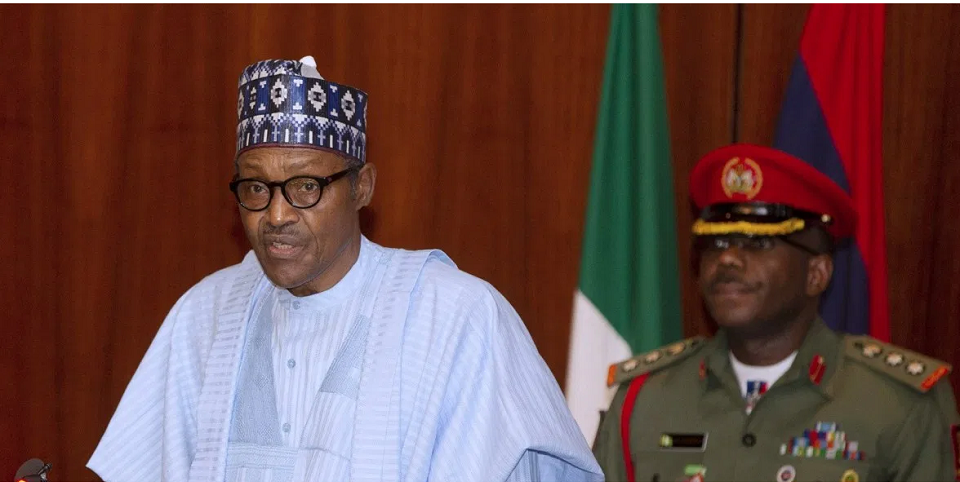
The Federal Government of Nigeria, through the office of the vice president, has set up an Inter-Agency task force on the 5 trillion naira Asset Management Corporation of Nigeria (AMCON)’s debt recovery. The office of the vice president announced on Tuesday.

This is coming a day after the Economic Management Team (EMT), headed by the vice president prof. Yomi Osinbajo was dissolved and the new Economic Advisory Council (EAC), was inaugurated.

It appears the vice president is taking a new role in the place of EMT, and it is on AMCON debt recovery. With the challenges that the government has encountered in its bid to recover from debtors the sum of 5 trillion naira, it’s obvious that the method used didn’t work, therefore, the idea of an Inter-Agency Committee was welcomed.

The Committee was tasked to turn the table around in what has been a difficult process that has seen debtors incessantly default in their payment obligations.

According to the statement issued by the office of the vice president: about 67% of the outstanding 5 trillion naira AMCON debt is said to be owed by just 20 individuals or entities.

The vice president charged the Committee to live up to its responsibilities, one of them, developing a workable timeline.

“One of the terms of reference is for the Committee to prepare a report, giving us a sense of what the timeline would be.” He said.

Under the chairmanship of the Chairman of the Independent Corrupt Practices and other related offences Commission (ICPC), prof. Bolaji Owasanoye, the Committee was charged to consider every lawful means in their quest for the debt recovery. Even if it means taking enforcement measures.

“I congratulate you on the very onerous task that has been set, to render this service. I know that, given the kind of individuals here, you will definitely turn this whole narrative around. So I wish you all very well.” The vice president encouraged.

Members of the Committee who are made up of the heads and representatives of financial agencies such as the AMCON, EFCC, NFIU, ICPC, CBN, NDIC and Federal Ministry of Justice, are expected to review the status of all debts in respect to AMCON, consider the practicality of recovery, work out a recovery strategy with specific timelines for completion.
The Importance of Tertiary Education in Nigeria

0
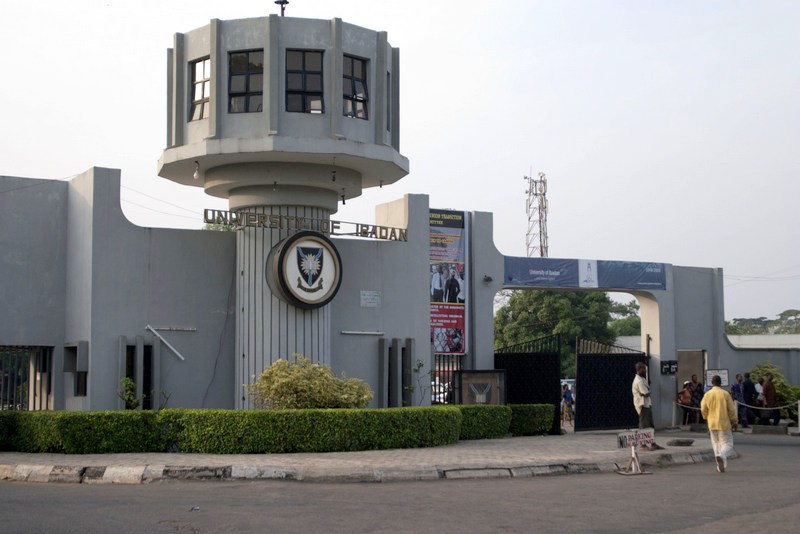
University of Ibadan, a federal university

There is this funny meme someone posted on his WhatsApp status, which showed that Bill Gates and Mark Zuckerberg ‘dropped’ out of school and made it big while a Nigerian dropped out and ended up a Lagos Danfo driver. This meme is quite hilarious but educating. If there is anything I understand from that meme, it is that Nigerians need to pass through higher institutions to be successful in their careers.

I know there are so many Nigerian mega millionaires that aren’t graduates. But most of our billionaires making waves today are all graduates. For instance Aliko Dangote, Mike Adenuga and Abdul Samad Rabiu are all university graduates. Even those that didn’t go to tertiary schools employ graduates to help them set up and manage their businesses. They know the importance of education and that’s why they don’t fill up their establishments with ‘dropouts’.

Nigerians need to change their mindsets about referring to foreign countries that don’t need degree qualifications to offer employments. They should understand that this is Nigeria, where certificates matter. We can’t change this overnight so we need to do whatever we can to sustain ourselves in the country. The only thing I can say that is gradually changing is that skills are becoming important too. So, very soon, certificates alone will not guarantee someone a job in Nigeria.

Besides, I don’t really know which of these countries encourage ‘lack’ of tertiary education because most of them that I know of seek for highly educated immigrants that will join their labour force. Some German universities even went as far as offering free tuition to international students just because they need more graduates to work in their system. So, I believe it is not true that developed countries of the world do not value tertiary education any more. But I believe they want skills in addition to certificates.

I am not saying that everybody must attend a university before becoming successful. What I am trying to point out here is that there is need to go further than secondary school education. Nigeria as it is today does not have enough in the curriculum for her secondary school leavers to acquire needed skills and knowledge that will pull them through their career path. Usually, the higher institutions are the places where Nigerians are introduced to life in the career world. So, if a person can’t make it to the university, he should try out polytechnics, monotechnics, colleges of education and certificate awarding specialised higher institutions. There are so many of them in this country (approved and fully accredited).

There are several reasons why people need to go to higher institutions. These include:

a. Learning from people’s experiences. This is actually very necessary. When you go to a tertiary institution, you will be exposed to both the mistakes and success of others. This means that you will have the opportunity of discovering and avoiding wrong decision makings. In other words, you will learn how to try out new paths towards success.

b. Deeper knowledge of your field. Of course, you will have an intense study into your area of specialization.

c. Acquisition of academic certificates. A lot of people will say that there is nothing in a higher school certificate. But that isn’t true because someone that has a post secondary school certificate can easily fall back on it when he needs to change his source of income. For example, if someone that is self-employed encounters some challenges in his business, he may decide to find a paid job with his certificate until he could sort himself out.

d. Greater advantage in job hunt. People that have higher certificates have added advantages when it comes to getting competitive jobs, especially if they have experience, desired skills and professional certificates.

e. Better status in the society. As far we know, Nigerian society respects knowledge. And the easiest way to showcase your knowledge is by obtaining certificates. In fact in Nigeria, the higher your certificate is, the greater your respect in the society will be.

f. You are an authority. If you happen not to study a course in the university or any other school of higher learning, people will not really trust your ideas and judgements on related matters. I always experience this anytime I discuss matters outside the boundary of the English language. If the discussion requires deeper knowledge about the concerned topic, I am always reminded that I’m going into an unknown zone even if I’m talking out of experience.

g. Healthier self-esteem. I know that if you have an argument with some that didn’t attend a higher institution, he will be quick to remind you that he won’t be intimidated by you because you went to school. I’ve also seen people that went to tertiary schools because they want to obtain certificate to boost their status in the society, not because they want to look for a corporate job or use the knowledge they gathered.

I know most of the reasons people do not continue to higher institutions after their secondary schools is because of fund or UTME ‘frustration’. I’ll advice people like this to attend part-time and weekend programmes in universities and other schools of higher learning. They can also try out National Open University of Nigeria (NOUN), which admits students without JAMB. They may have to look for jobs to keep them busy and help them sort their financial needs.

It is never too late to try. If you don’t have an added certificate to your SSCE, try to enrol into one school of higher learning this September, no matter what you do for a living. Trust me, it will do you a lot of good.

The Indomie Strategy Goes To Business School

2

I received some Thank You notes today from some MBA students somewhere in Africa. They informed me that they enjoyed the Indomie Strategy and how to defend competitive flanks. From The Art of War by Sun Tzu, we learn of the importance of protecting flanks, and by building moats through accumulated capabilities, we rule our markets and become category-kings.

No other company has demonstrated how to defeat Dangote Group in a direct business combat than Indomie maker. The competitive war, on noodles, was not evidently asymmetric, as Dangote Group usually wishes, nevertheless, the moats built by Indomie were enough to win Dangote Noodles, and then bought out the brand!

In this videocast, I explain how the makers of Indomie noodles used the same strategy Dangote Group had deployed across industrial sectors to defeat Dangote Noodles. The  accumulation of capability which Dangote Group uses to crush competitors did not work because Dufil Prima Foods (makers of Indomie) did the same thing from electricity generation to production, for its noodles business. With their vertically integrated business, there was no left efficiency which Dangote could exploit to improve quality and reduce price. At the end, an established brand won and Dangote Noodles could not dislodge the firm.

President Buhari Dissolves Investigation Panel Over Irregularities

0

President Buhari has dissolved the Special Presidential Investigation Panel for Recovery of Public Property, (SPIP) headed by Mr. Okoi Obono-Obla.

In a statement signed by his Special Adviser on Media and Communication, Femi Adesina, Buhari disclosed his decision to put an end to the controversial panel.

Vice President Yomi Osinbajo, in his capacity as the acting president,  set up SPIP in August 2017, and appointed a 4-man panel, which Obono-Obla, who was then the Special Adviser to the President on Anti-corruption, was the head.

Series of allegations of misconduct trailed the SPIP,  in just 2 months after inception, prompting the vice president to write the panel a cautionary letter.

The letter did nothing to cautionary effect as complain of anyhowness continued to dent the image of the panel, especially, the chairman himself, Obono-Obla.

The vice president became worried that the Panel was flouting every rule in which it was established upon through its activities despite his repeated cautions.

In November 2017, President Buhari ordered Obono-Obla to stop every operation in his capacity as the head of SPIP, as investigation has commenced into the alleged excesses of the Panel. In December 2018, the Ad-hoc Committee set up by the House of Representatives to investigate the allegations called for the prosecution of Obono-Obla.

In the report submitted by the Committee’s Chairman, Aliyu Pategi, Obono-Obla was indicted for forgery and abuse of office.

It was based on these developments that the usefulness of SPIP came into serious questions. And evidently, the presidency believes it has overstayed its essence.

Therefore, the Attorney General of the Federation and Minister of Justice has been directed to immediately take over all outstanding investigations and other activities of the SPIP.

Meanwhile, Obono-Obla is still under the investigation of Independent Corrupt Practices and other related offences Commission (ICPC), and President Buhari is looking forward to receive the report as soon as possible.

The Challenge Ahead for New UNGA President, Muhammad-Bande

0

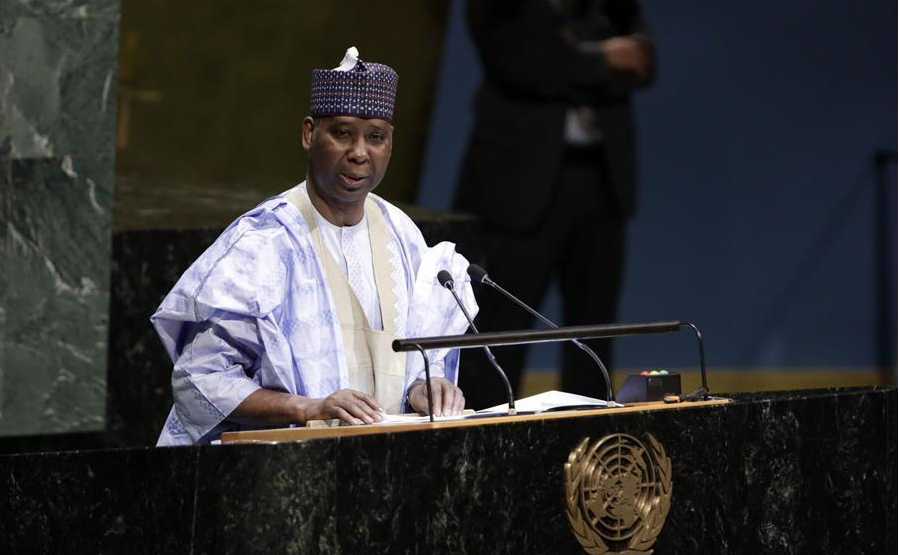
The United Nations General Assembly (UNGA) has a new president. His name is Prof. Tijjani Muhammad Bande, permanent representative of Nigeria to the United Nations (UN).

Prof. Bande received a B.Sc in Political Science from Ahmadu Bello University, in 1979, in Northern Nigeria. And he proceeded for his Masters at Boston University, USA, in 1981. In 1987, he bagged his Ph.D. in Political Science at the University of Toronto, Canada.

17 years into his academic career that started in 1980, at Usman Danfodiyo University, Sokoto Nigeria, he rose from a Graduate Assistant to a full professor.

It has been a score of success in his many fields of play, which didn’t stop when he became the permanent representative of Nigeria to the UN. He served as the Vice President of the General Assembly during the 71st session, and also as the Chairperson of the UN Special Committee on Peace keeping Operations (C34), and was a member of the Advisory Board of the UN Counter-Terrorism Center and the Chairperson of ECOWAS Group in 2018/19.

This is the man who has ascended the presidential seat of the United Nations General Assembly. But a lot of challenges await him, though members of the General Assembly believe he has the prodigy to handle them.

It’s been decades since many members of the UNGA began looking for a permanent seat at the United Nations Security Council (UNSC), pushing for reforms that will accommodate other members who seem qualified to take a seat.

Year after year, the negotiation for reform gets pushed over, irritating member countries who believe it’s long overdue. India, Germany, Japan and Brazil, all share the view of the need for reform. The opportunity for reform, based on Intergovernmental Negotiation (IGN), passed by in September following the inability of the preceding President, Maria Fernanda Espinosa, to bring members to a table of agreement.

As Muhammad Bande takes the baton, pressure beckons on him to pull resources together to effect the reform. India, who has criticized Co-Chairs of the IGN for exclusionary approach to the UNSC reforms, has expressed confidence that Muhammad Bande, being an African, will get the job done.

The general reform needed in the UN has been stalled by the inability of IGN to reach a workable consensus on the UNSC reforms: a fact Muhammad Bande acknowledged.

“Negotiations are continuing and they will continue. We will try to hasten those negotiations in the spirit of fairness and in the spirit that an organization 73 years later cannot continue to talk the same language that was spoken 50 – 70 years ago.” He said.

Africa is also pushing to have a permanent member representation in the UNSC, which has made the reform a global goal. But the UNGA President acknowledged that such a goal can only be attained when there is fairness.

“It is a consensus element involving Member States. Progress is being made, we will continue to push this and at some point we will get to the point where the Security Council will be more democratic and more efficient.” He said

He promised that the report of the IGN’s draft will be studied as he pushes to see if there could be compromise among Member States so that the differences could be minimized to the degree of a possible solution.

There are also the challenges of peace and security, hunger, health etc.

The Sustainable Development Goals (SDGs) for these challenges have been falling short. And there is need to double effort if they are to be attained.

For instance, the 2030, Zero Hunger SDG benchmark is far from being a reality. As a result of economic lapses around the world, especially in Africa and Asia. The number of people who go to bed hungry has increased from about 700 million last year to 820 million this year. The need to double up efforts to quell it has become a responsibility the UNGA has to take by spurring member countries to implement sustainable economic policies.