DD
MM
YYYY

PAGES

DD
MM
YYYY

spot_img

PAGES

Home Blog Page 6668

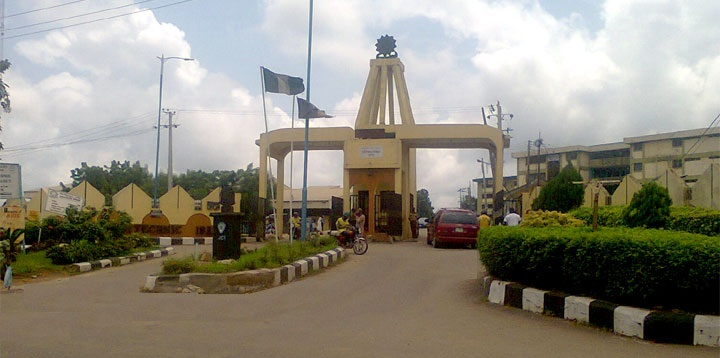
Governor Seyi Makinde Should Help Reduce Outrageous Tuition fees in Polytechnic Ibadan

0

If you think knowledge is too expensive, then try ignorance. This is an adage I’ve known right from my childhood days.

The fact remains – education is the common basis for everyone to acquire knowledge. Some of our parents who never had basic education often regret it. Some of them feel they were affected because of it, which has prompted many parents to do everything possible to see their child(ren) get basic education at least.

However, the cost of basic education is on the rise. It no longer looks affordable for many parents who are still struggling to eat at least one square meal per day.

Adeleke Lekan, a graduate of the Polytechnic Ibadan shared his concern about the increment in tuition fee.

”I finished from the Polytechnic Ibadan two years ago. Acquiring basic education is no longer easy for any parents out there. When I was in school, things were a little bit hard for me. As the first son who had little or no support, I promised myself a basic education at least.”

He continued, ”I do tell myself that, there is nothing with a beginning that doesn’t have an end.”

Adeleke further talked about the outrageous fee he paid to keep his dream alive.

”I remembered then, the school management threatened to deny any student still owing from writing quiz or exams. What will I do? I took my laptop and sold it in order to pay before the deadline.”

Adeleke felt it was unfair treatment from the management. This made him questioned if the management were deploying a system being used in primary and secondary schools.

The last straw that broke the camel’s back, Adeleke talked about the management of the Polytechnic Ibadan called for a PTA meeting, that is, the Parents and Teachers Association. This makes the whole thing looks like a secondary school in disguise.

Adeleke Lekan pleaded on behalf of the students who might be walking in his shoes at the institution by appealing to the management of the institution to be considerate.

”People are suffering out there. Many students do labor works before they could afford to pay for their tuition fee. Not everyone has a parent/guardian that is always there for them. I’m begging the management of the Polytechnic Ibadan to be considerate.”

The big question – Is it proper for the management of any higher institution to stop students from writing quiz/test or exam because they owe tuition fee?

I’m using this medium to beg the Oyo State Governor, Engineer Seyi Makinde, to help reduce the tuition fees at the Polytechnic Ibadan.

We all deserve a basic education at least.

Nigeria’s Mobility Sector Shows How to Adapt Silicon Valley’s Playbook

2

When Uber invented the modern ride-hailing, it was built on the construct that the operator of the asset is largely the owner of the asset. By doing that, the Uber business model stays asset-light since the vehicular assets are not in its balance sheet. In north America and western Europe, that model works just fine: there are people with cars, and they can put them on the streets to earn extra income.

But in the emerging economies like India and Nigeria where people (yes, potential drivers) do not have access to assets and do not own any, the Uber model struggles. That is why Ola, an India-based ride-hailing company, plans to acquire one million electric cars to pursue its mission. In short, companies like Ola will be the main car buyers, in most parts of Southeast Asia, in coming years, as ride-hailing continues to advance.

Then, when you come to Nigeria, you will notice that entities like Gokada and Max technically own (partially or otherwise) most motorbikes in their platform-fleet. The business model is to do“hire purchase” with the drivers who then pay over time for the assets. The drivers do not own the assets until they finish making the full amounts. Once that is done, the drivers can become owners of the assets. 

The hire purchase is a local adaptation to deal with supply paucity in an ecosystem where the drivers may not have the means to acquire assets. Sure, the companies carry the assets in their balance sheets, but without that in the playbook, there is no other option. Of course, they do claim assets-light because most will have a special purpose vehicle (SPV) for the financing of the assets. Yet, the African proverb notes that a bird that is perching on the anthill is still on the ground!

All Together

Open your mind as you examine any Silicon Valley playbook. The adaptation in the local ride-hailing domain has been critical to the promise in the mobility sector in the nation. Do same as you work in your sector.

It is important to understand that what Silicon Valley tech titans do in U.S. is different from their playbooks in Africa and other emerging regions. Google is a quasi-payment company in India even though it has none of such in U.S. Facebook is investing in connectivity systems in Africa  when in U.S., it was not an issue. Yes, for every new sign-up Facebook gets, Wall Street watches: IP address is IP address. .My point is that these U.S. firms are not doing them for charity, they have to become parallel ecosystems to pursue their missions.  Yes, they have to do things beyond that core mission which they have pursued in America because they do not have other entities helping them to fix the enabling frictions in emerging markets.

Remember – never start a company, rather, go out and solve a problem. If you understand that line, your mission will blossom.

Dump Your Silicon Valley Playbook!

Addressing the Primary Care Workload Crises in Nigeria

0

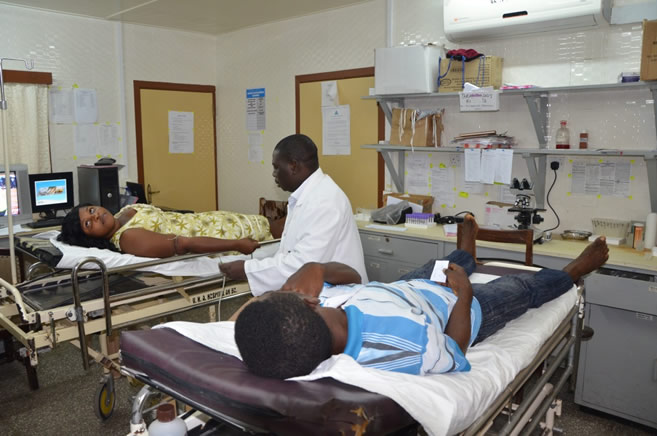
We are currently facing a primary healthcare crisis in Nigeria and speedy intervention is needed to enhance access to health care for our ever growing population.

The latest data from the World Health Organization (WHO) reveals that Nigeria’s physician-to-patient ratio is 4 doctors per 10,000 patients and patients often wait hours to be seen. In the US the ratio is 26 doctors per 10,000 people and 28 in the UK.

Nigeria repeatedly falls short on its 2001 commitment to spend at least 15% of its budget on health. Last year just 3.9% was allocated.

The Nigerian Medical Association (NMA) advised there are only 40,000 doctors in an estimated population of 196 million.

A WHO report by Uta Lehmann and David Sanders from the School of Public Health University of the Western Cape, says:

‘The use of community health workers has been identified as one strategy to address the growing shortage of health workers, particularly in low-income countries. Using community members to render certain basic health services to the communities they come from is a concept that has been around for at least 50 years. There have been innumerable experiences throughout the world with programmes ranging from largescale, national programmes to small-scale, community-based initiatives’ (Evidence and Information for Policy, Department of Human Resources for Health Geneva, January 2007)

Community health workers have the potential to enhance primary care access and quality, but remain underutilised in Nigeria.

It is common knowledge that we do not have trained physician associates or assistants in primary care facilities to support medical doctors in providing primary care services; rather what we have in some communities are quacks, people parading themselves as medical doctors with no medical qualification whatsoever.

But I don’t see any reason why we should not welcome the idea of training physician associates or assistants to fill in the gap for medical staff shortage, when other developing and developed countries that have better healthcare systems do have them.

In Nigeria we do not have enough doctors per population or geographical area, This is the time to train more community health care workers as this would help in the much needed awareness creation and community based interventions for  managing long term conditions, reducing childhood illnesses due to lack of immunisation. Trained birth attendants will also help reduce maternal mortality and community nursing care will reduce infant mortality.

In a typical medical centre in the UK for instance, healthcare assistants, advanced nurse practitioners, health trainers, clinical pharmacists or prescribers, work alongside doctors to provide patient centered care. This helps to reduce the work load on the doctors as these other clinicians and allied health workers have enough training and experience to manage long term conditions and participate in triage system.

In the UK, a lot of research has been done and there are calls to increase the health work force in the National Health Service (NHS) through the utilisation of community-based lay workers.

In Brazil, community health workers receive basic training in disease identification and monitoring, immunisation, screening and health promotion. They support patients with medication adherence and chronic disease monitoring and liaise proactively with doctors and practice nurses.

Community healthcare workforce could be utilised effectively in emergency care or first aid. In most public and private settings  in Nigeria, there are no ambulance or paramedic services; having well trained community first aid responders would go a long way to save lives in times of emergency for example; cardiac arrest, collapse, and respiratory distress. Having a health unit manned by well-trained first aid responders in all public places like markets, motor parks etc is highly essential.

Healthcare provision anywhere in the world is capital intensive but we can start from the basics; we can reduce the burden or costs in secondary healthcare provision especially in our public hospitals if we lay more emphasis on health promotion, patient health education and encourage people to engage in healthy living and self-care. 

Another important way we could ensure we have enough medical/healthcare practitioners to address the primary healthcare needs in Nigeria is to reduce the constant brain drain by retaining our health professionals post graduation.

The Federal Government invests a lot of funds in Government owned Universities to train medical/healthcare professionals, only for them to migrate after graduation to practice in other countries. If we are going to invest funds in medical/healthcare education for our doctors, pharmacists, nurses, optometrists etc we should create jobs as well so the Nigerian populace could benefit from their expertise.

Integrated healthcare practice at all levels is an efficient way of providing patient centered care where every member of the healthcare team contributes their own quota. Community healthcare workers are well placed to offer advice on healthy living and self-care in the language people of a specific demographic area would understand. Hypertension, Chronic Kidney Disease, Type 2 diabetes mellitus, malaria, HIV/AIDs are among the diseases that could be prevented or well managed through patient education and lifestyle modification.

The role of health education cannot be overemphasized. For instance, there is still some form of stigma around epilepsy in some areas in the country; where people who are epileptic are believed to be possessed by some sort of evil spirits, in an unfortunate event of epileptic fits in public places, patients are not well cared for and objects like spoon etc. are inserted into their mouths in the believe that it keeps the airways open, this could be a choking hazard and has made recovery time worse for some patient. Community healthcare workers could perfectly fill that gap of providing basic health education and public health enlightenment.

 Addressing the primary healthcare crises in Nigeria is no mean feat, but we need to look at the issue holistically, it involves a multifaceted, public/private partnership, but the Government has to lead on this through enacting relevant laws and provision of training programs, monitoring and evaluation etc.

I strongly believe a systematic integration of community health workers at scale could be an effective and a rapidly implementable approach to the current primary care workload crisis in Nigeria. 

‘Without health, life is not life; it is only a state of languor and suffering’.     

Francois Rabelais

The Sad Reality of The N30,000 Minimum Wage

0

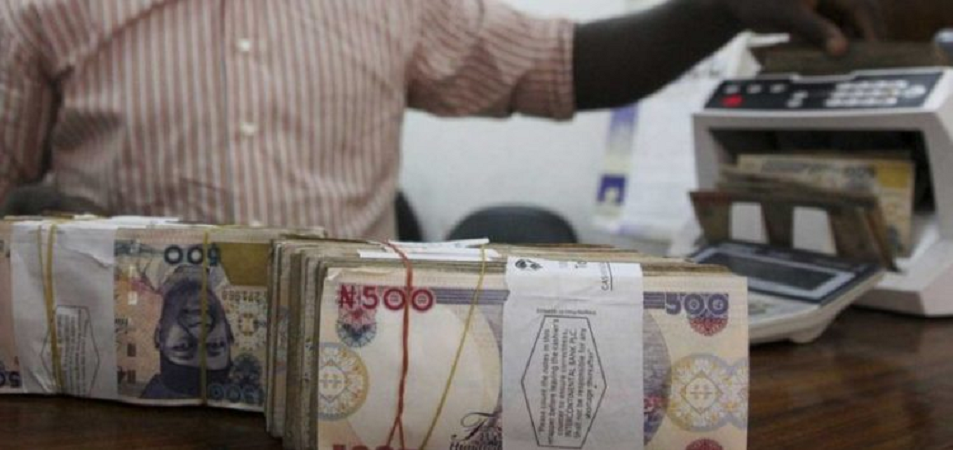
It was jubilation in Kaduna among workers. The Kaduna State Government has become the first state in Nigeria to implement the newly approved minimum wage. The hard won battle has been facing implementation hurdles in the 36 states, until Kaduna set the pace.

Minimum wage in Nigeria has been a mockery of livelihood:Minimum wage in Nigeria has been a mockery of livelihood: a life support system that has yielded economic hardship and income inequality.

The battle to increase the minimum wage from N18, 000 to N30, 000 took so long. And the hope of its implementation by states hangs on uncertainty. The governors had vehemently opposed the increment, stating that they can’t afford it. A true statement evident in their inability to pay N18, 000 wages.

So you know why it’s a cause for jubilation in Kaduna that the State Government has announced its decision to pay workers N30, 000, about $80 monthly. But while the people of Kaduna are rejoicing, workers in other states are salivating in hope. But if at all there is such a hope, it’s going to take a long while.

In 2017, the Federal Government (FG) provided extra-statutory bailout fund to states to the tune of N614 billion, due to the states’ inability to pay workers for long. To recover the loan as it was deemed, the FG adopted a reductionist approach to the states. That means, the fund will be deducted monthly from their Federation Account Allocation Committee (FAAC), quota.

The deduction has started, and some states are kicking that they have little left at their coffers after the deductions. According to the data published by the Nigerian Bureau of statistics (NBS), the deduction rate is so high for some states that they may not afford to pay salaries even at N18, 000.

The August deduction report is as follows:

  • Osun: 54%
  • Cross River: 30%
  • Lagos: 29%
  • Ogun: 26%
  • Zamfara: 22%
  • Plateau: 19%
  • Bauchi: 19%
  • Gombe: 18%
  • Imo: 16%
  • Oyo: 15%
  • Ekiti: 15%
  • Ondo: 13%
  • Kwara: 12%
  • Abia: 12%
  • Kogi: 11%
  • Niger: 11%
  • Edo: 10%
  • Adamawa: 10%

The rest of the states are hanging between 9 and 3 percent. However, it is not a good news to the hope of N30, 000 minimum wage. Some states like Kogi, are still borrowing from the FG to pay workers their N18, 000 salaries. In Abia State, the hope is so thin. Workers and pensioners are wailing in starvation.

So it certainly appears that states governments are sitting on a cliff of financial doom, and workers will continue to take the fall. Most of the states are heavily in debt and have little or no means of revenue generation apart from the FAAC. And the oil downturn has depleted the volume of their respective allocations.

Therefore, the option is to wait on the FAAC and choose what to do with it from the list of “most important” which wages is evidently not on. And you don’t talk about infrastructure yet it is reserved for the days of oil boom.

So the N30, 000 minimum wage remains a dream that may never come true in most states of Nigeria, because the reality depends on high oil prices.

As MIT Trains Nigeria’s Top Federal Civil Service Workers On “Radical Innovation”

3

Across motor parks, food joints and barber shops, Nigerians have postulated solutions to their national frictions. Yes, we know how to fix electricity, provide potable water, redesign schools, and upgrade our healthcare systems. Yet, come back next week, next month, and new year, you will be surprised -. nothing has happened. In this video, I explain why that is the issue, and how that can be fixed. Of course the news that Nigeria has engaged MIT, the celebrated American university, to teach top Federal Civil Service workers “Radical Innovation” adds new variables in the equation.

I hope this training is done in federal secretariat, and not in any of the top Abuja hotels. It would be magical for MIT experts to “experience” what happens when there is no electricity as workers pick their Bibles, Qurans and Facebook, waiting for 4 pm to save them from the bondage!

LBS, ABU, UNN, UI, FUTO, UDUS, UNICAL, etc – you must update your playbook. MIT just picked some millions one of you could have earned! We might have stopped importing milk – but that may not be the real battle in Nigeria. This nation needs to look inwards and give its institutions opportunities.

There were indications that the federal government has partnered with experts from a United States prestigious Massachusetts Institute of Technology (MIT) to train top Federal Civil Service workers on “Radical Innovation.”

[…]

She [Acting Head of the Civil Service of the Federation Dr. Folasade Yemi-Esan] said: “The urgent need to embrace innovation in the public sector can further be oppreciated when one puts in retrospect the rapid pace with which innovative technologies are being proliferated and deployed in private sector administration and which most organizations have leveraged to enhance their efficiency, transparency, performances and fortunes.

[…]

He [Prof. Bhaskar Pant, Executive Director, Professional Education at MIT] said: “We were invited by Office of Civil Service of the Federation and some individuals who had participated in our trainings and understand the trainings are relevant to Nigerian situation and society.

“We have trained a lot of private sectors around the world, and we realize that if governments want to be much more innovative, so we want to participate and help Nigeria bring innovative practices to public service.”