DD
MM
YYYY

PAGES

DD
MM
YYYY

spot_img

PAGES

Home Blog Page 6673

The Need To Harmonise All Bank Accounts Into A Single Debit Card In Nigeria

0

The introduction of the Automated Teller Machine (ATM) with the accompanying ATM Cards into the Nigerian banking industry has boosted service delivery by the banks and also brought about ease of access to customers’ account(s) domiciled in the different banks. Cash debits, deposits, transfers and Person to Person (P2P) lending are now transacted within a very short time unlike before.

The first ever ATM to be introduced into Nigerian banking industry was “Cash Point 24” by the now defunct Societe Generale Bank of Nigeria in 1990. This was later followed by “First Cash” introduced by the First Bank of Nigeria Limited in 1991. Today, there are over 12,000 (Twelve thousand ATMs in all bank branches across Nigeria. The boost that the introduction of the ATM has given to banking services is been unprecedented. With just the punch of a button, very important transactions are completed. This has also moved to the use of Point of Sale (POS) machines by business owners to enable ease of payment by their customers.

Added to that, the mobile/internet banking platforms also came in vogue. Transactions running into millions can be completed from the comfort of one’s home. The combined effect of these innovative banking services is that customers would not need to stand on long queues just to withdraw, deposit, transfer fund, buy airtime, subscribe for DSTV and other services or even request to know their account balance. Nigerians can still recall how hectic it used to be when the ATMs and other innovative banking service channels were not deployed by the banks. But the case is different today.

INTRODUCTION OF BANK VERIFICATION NUMBERS

This widespread acceptance of these FinTech services did not go without the activities of fraudsters using through these channels. However, to put these fraud activities on check, the Central Bank of Nigeria (CBN) on February 14, 2014 launched the Bank Verification Number (BVN) which a biometric capturing the vital data of all bank account users, as part of its overall strategy of ensuring effectiveness of the Know Your Customer (KYC) principles and the promotion of a safe, reliable and efficient payment system.

The BVN is a unique identification (ID) number which is issued to every bank customer upon enrolment and it is linked to every account the customer maintains in all banks in Nigeria. The bank customer’s information is stored in the Central Database which the Nigeria Inter-Bank Settlement System (NIBSS) is in charge of, thus enabling ease of identification of each bank customer.

According to the CBN Regulatory Framework for Bank Verification Number Operations and Watch-List, for the Nigerian Financial System, 2017 the key stakeholders in the operations of the BVN are the CBN, NIBSS, Deposit Money Banks (DMBs), Other Financial Institutions (OFIs) and Bank Customers. The overall consequence of this is that transactions initiated by a bank customer can be monitored from the Central Database and with that, acts amounting fraud on an account can easily be detected and escalated, and confirmed acts of fraud on a bank account would be flagged and placed on the Watch-List. The NIBSS maintains also an online Watch-List portal and provides an Application Programming Interface (API) to enable all banking institutions in Nigeria to integrate their systems to the BVN database for online validation of the Watch-List. The CBN, NIBSS, DMBs, and OFIs all have access to the BVN Central Database and the Watch-List.

A bank customer’s name on the BVN Central Database is the same in all accounts which the customer has in all other banks in Nigeria. The BVN operational process and procedure takes the form of: Enrolment ? Identification ? Verification and ? linking the customer’s unique ID to all related bank accounts in Nigeria. The customer’s unique ID generated after enrolment is used to link all his/her bank accounts, irrespective of which bank it is domiciled.

HARMONISATION OF ALL ACCOUNTS INTO A SINGLE ATM CARD

Flowing from the above, the questions which now beg for answers are:

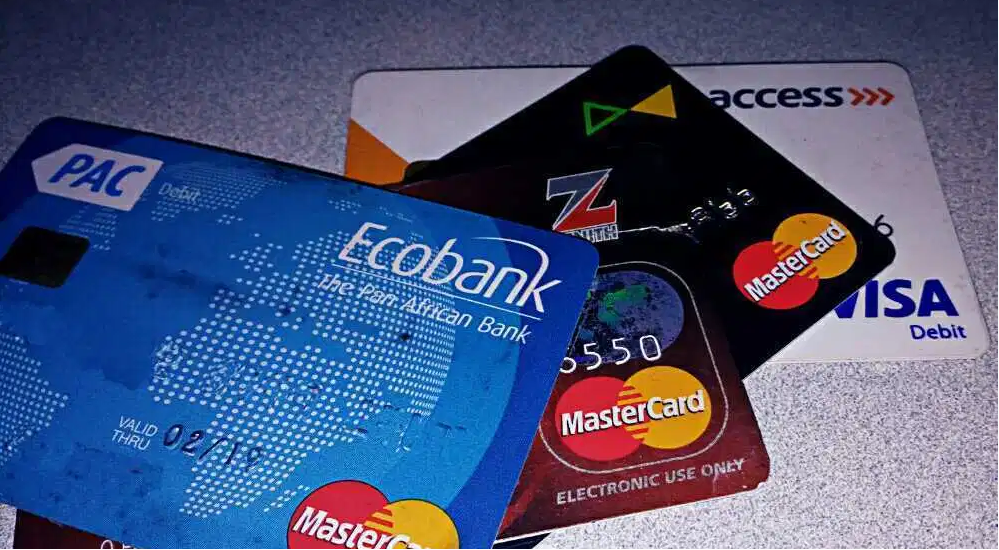
  1. Given the structure that has been put in place by the CBN in conjunction with all other stakeholders in the banking industry, what stops the CBN from ensuring that all bank customers’ accounts with different banks are integrated into a single ATM (debit) Card?
  1. Why would I have to have 4 to 5 ATM Cards all because I maintain 4 to 5 bank accounts with different banks in Nigeria? Or even different bank accounts domiciled in the same bank?

I do not think this is an impossible thing to be done, since the system in place can make that possible. If an individual’s BVN ID can be linked to all his/her bank accounts with different banks and in the same name, I do not see the reason why such individual should be having several ATM Cards when a single ATM Card can solve that problem. This is the desired change that FinTech is introducing into the banking service which should be embraced by the banks. Harmonising all the bank accounts into a single ATM Card also has the added advantage of enabling better tracking of transactions that go on in the banks from the Central Database.

Technology is fast changing service delivery in all sectors in the world, including the banking industry and the Nigeria banking industry should not be drawing back at point in time.

I call on the Central Bank of Nigeria, as the regulatory body in the banking sector, to consider enabling the harmonisation of all bank accounts into a single ATM Card. This would not change the role of the issuers, because bank customers still preference for Visa Card or Master Card. Whichever card the individual wants, the card issuers’ services would still be needed.


Nigeria’s Kuda Raises $1.6 million

2

Kuda, a digital microfinance bank in Nigeria, has raised $1.6 million pre-seed capital with participation from Startupbootcamp, Tolaram Group, and others. Kuda was founded in 2018 by Babs Ogundeyi and Musty Mustapha and was formerly known as Kudimoney. Ogundeyi was an ex-PwC auditor and a former special adviser on finance to the Nigerian Government while Mustapha was a software engineer at Stanbic Bank and holds a PhD, notes Ventureburn. Kuda is “designed for your smartphone, free of ridiculous charges and great at helping you budget, spend smartly and save more.”

Why this constant funding success in the Nigerian fintech sub-sector? Here is the answer – “According to research done by The Fletcher School and Mastercard Center for Inclusive Growth, of the $301 billion of funds flows from consumers to businesses in Nigeria, 98 percent is still based on cash.” Yes, lots of room to redesign cash-based payment in Nigeria.

The part-press release

If there’s anything I’ve relearned over and over in the many months of hard work leading up to today, it’s that people mean everything to a business and particularly to Kuda.

As all of us at Kuda HQ celebrate the announcement, I’m taking this time to appreciate the team of diverse and highly committed people who have brought our vision of a remarkable banking experience to life. This is only the beginning of our revolutionary journey of innovation.

My appreciation also extends to our backers — those who, with nothing more than faith in a promising concept and our wavering vision to make banking accessible to everyone, put their money behind us. Thank you for believing in Kuda unwaveringly. You made this possible, and we will continue to count on your support as we grow.

I reserve my special gratitude for everyone who bought into Kuda early, bugs included, and trusted us with their money by signing up and using the bank.

As we built the first version of Kuda, we weren’t sure how the public would react, so it’s thrilling to know that thousands of people have opened Kuda bank accounts ahead of our official launch. You all are the best. Please, keep your confidence in us and we’ll keep getting better for you.

We’ll use this money to launch out of beta later this year, our immediate priorities are continuous product improvement and excellent customer support, so the funds we’ve raised will be used to expand our software development and customer support teams and equip them with the best tools available.

It’s back to work for us, not like we ever stopped as we continue to build Kuda into Africa’s best bank.

Ways To Manage The Effects of Failure

0
Source: Titanium Success

No one wants to fail. In fact, wishing someone failure could cause a great fight and enmity between the two of you. People view it as a curse, a weakness, a sign of incompetency, and a lack. I could remember one of my bosses saying that teachers should do everything possible to make sure that students don’t fail because of the effects it will have on them. Failure is actually a no-no in everybody’s wish list.

Failure can play a lot of tricks on our emotions. It affects our mental, social, psychological, financial and even physical well-being. In this piece, we will look into its effects, advantages and how these effects can be managed.

Reactions to Failures

Before we go into effects of Failure, we need to see some of the ways we react to it.

a. Shock: The first feeling we have whenever we fail is shock. We always want to believe that what we saw or heard isn’t true. Some of us will even wipe our eyes, pinch ourselves or slap our faces to be sure we aren’t dreaming. Well, if the failure is real, welcome on board.

b. Rejection: Yes, that’s the second phase. You will automatically reject the result because you ‘know what you wrote.’ Don’t worry, we all know what we did and are so sure of how good we are. But we still failed. That’s life.

c. Suspicion and Blame: If you are man enough not to suspect foul play and point blaming fingers on the assessors, then I commot cap for you. But if you do, don’t worry, it is a natural thing to do.

d. Excuses: By the time you are done with blaming and suspecting foul play, and nobody believes you, you start making excuses on why you had to fail. This part is what we need to battle because you may end up not correcting whatever that made you fail in the first place.

e. Demonstration: When people feel that their failure wasn’t justified, they react by demonstrating and voicing out their grievances. This can come in various forms. Some people may decide to use the social media to blacklist their assessors; some may take to the streets to announce their grievances; some go to court; and then, some decide to destroy lives and properties. Most of the violence happening today is caused by mismanagement of the effects of failures.

Effects of Failure

As I stated earlier, failure can affect every aspect of our well-being. Below are some of the effects failures can have on us.

i. Anger and Hatred: Depends on who you are transferring these emotions to. If you are angry with yourself for not being good enough, that means you have realised where the problem is coming from, meaning that the solution isn’t farfetched. But if the anger is towards another person or thing, you then need to let go immediately. By the way, never hate yourself or anyone else because you failed.

ii. Despair and Helplessness: Sometimes failure can cause these. A lot of people lose hope when they fail while some see themselves as helpless. The result of these two feelings is self-pity, which the ‘victims’ use as a strategy to obtain understanding, pity and help from people.

iii. Demoralisation: Failure can demoralise people. It can cause people to limit their abilities by making them think they are not good enough to achieve a given task. This can make the person perform even poorer if given the task again or he will give up entirely.

iv. Anxiety: It will be difficult not to be afraid and nervous after failing, especially when facing the same task you flopped before. Mismanaging this fear and its accompanying nervousness can lead to further failures and possible destruction of the person’s ‘fighting spirit’.

Well, we have seen some of the effects failures can have on us. I believe most of us can identify with some, if not all of them. Anyway, we have to move on.

Advantages of Failures

I know a lot of us don’t want to know what is good about failure. But then if we look back into our lives, we can see how our failures and rejections became the propellers that got us to where we are. But, if you are still having difficulties reconciling with yourself because of you failed one or two tasks, make out time to reflect on what you will gain from allowing what life threw at you to lead you.

1. Failure gives us experiences. Do you know why organisations want to recruit people that have on-the-job experiences? Well, it is because they want people that have made mistakes and learnt from them. So, if you don’t fail, you won’t learn because failure is a teacher.

2. Failure sends us on further studies so we can acquire deeper knowledge. When you write a given test and you were told you aren’t good enough, what will you do? You go for further researches and studies, right? So, if you hadn’t failed, how will you have known those things you discovered when you carried out the researches and studies?

3. Failure helps us to improve. You know, when you fail, you have learnt one way something doesn’t work. This means you have to work on yourself, acquire more skills, create new ideas and do whatever you need to make sure you keep abreast of the current situation of things.

4. Failure teaches us humility. This function of failure is so strong. Start now to pay attention to people who feel they have it all worked out. No one will tell you they haven’t yet encountered failure because it will show in their character. I believe we know how humility can help us achieve success in life.

5. Failure teaches us humanity. This is so true. If you are lucky to have a boss or a mentor who has tasted failure, you will notice that they are more understanding and approachable. They can tolerate your own mistakes and patiently show you how to improve.

6. Failure teaches us to take things serious. Have you ever failed because you took the task for granted? Well that happens to me a lot. And whenever I fail because I was unserious, I always sit up in the next task. I sometimes tell myself that if I was able to scale through the task despite my laxity, maybe I will fail in a more serious task that will cost me so much.

7. Failure helps us to build better networks. This is very true. Failing usually means that either we don’t know or understand the task, or we are not good enough to perform it. In other words, we need people that will help us out. So, when we fail, we look for better contacts that can help us gain more knowledge and we drop those that are drawing us back.

We know it is not easy to accept that we are not good enough. The effects are involuntary and can cause more problems if not well handled. It takes knowledge and matured mind to be able to manage the effects and fears of further failure.

How to Manage the Effects of Failure

1. Willpower: You need to be strong so you can get up, dust yourself up and move on. You have to remember that no one will do this for you except you. Tell yourself it is ok to fail because you have found one way to fail and you are not going to take that path again.

2. Listen to Other’s Life Story: Someone once told me to read and listen to people’s success stories because their pains, joys, failures and strategies are embedded there. It will be good for you to read up the success stories of people you admire. This will help you realise that they too have failed but did not allow themselves to be weighed down by it.

3. Objective Assessment: One thing that works for me after failing is to find out why I failed. One of the ways I do this is by evaluating myself objectively to find out where I didn’t do well. To do this, I put myself in the position of the assessor and grade myself. I always come out with a better result after this. And believe me when I say that I never fail again when I go back to re-perform the task.

4. Ask Questions: When you don’t really understand why you failed, be humble enough to ask for the reasons you didn’t meet up. When the assessor truly sees that you asked because you wanted to improve, you will get the required answers.

5. Self Improvement: Finding out what the problem is isn’t enough. You need to work on yourself. Find out where you didn’t do well and improve on it.

6. Be in Control: Don’t allow anxiety to take the better part of you. It is ok to feel anxious when performing another task but try to be in control of your emotions so they don’t make things worse.

7. Keep Busy: In some cases, we need to keep ourselves busy so we don’t have to think so much about our failures. For example, if you failed an employment exam, don’t stop to lament about that, keep yourself busy preparing for other exams. But remember to follow step 1 – 6 above.

8. Stay Positive: Kindly stay away from negative people, who tell you how bad and corrupt the system is. Please, don’t blame anyone for your failure and don’t look for reasons to be angry because of it. Stay positive and learn from the lessons life is throwing at you.

Remember, life isn’t fair to anyone. Take whatever it throws your way and turn it to your advantage.

FUOYE Students vs Nigerian Police

0

What just happened at the Federal University, Oye-Ekitk (FUOYE)?

It was reported that the students were peacefully protesting against the poor power supply in the school environment. According to the report, it was a peaceful protest aimed at expressing their grievances, only to be stopped by the oncoming vehicles of the governor’s wife, Her Excellency, Mrs. Bisi Fayemi, the wife of Gov. Kayode Fayemi, who was in town for an empowerment programme.

As reported, the police fired shots at the students in an attempt to clear the road for the governor’s wife but ended up killing two students.

However, the police have quickly moved to deny the claims and rubbished the news that said two students were killed. Instead, the police accused the students of taking laws into their hands by trying to vandalize the vehicles that accompanied Her Excellency, Mrs. Bisi Fayemi.

Mr. Ikechukwu, a deputy superintendent of police, even claimed that a weapon was recovered from the protesting students.

The students were accused of blocking the road, which the police officers at the scene removed the blockade and dispersed the students peacefully. But the protecting students came back in masses to challenge Her Excellency.

Who do we believe in this scenario?

The students have reported that they lost two of their students in this ugly mayhem, while the police have denied and claimed the students were trying to cause panic and disrupt the peace in the state.

I hope our President, General Muhammadu Buhari, and the president of the National Association of Nigerian Students (NANS), will look into this matter and punish the parties involved. Considering that we are still healing from the xenophobic attack on our brothers and sisters in South Africa, students-and-police brouhaha is not something we want at this present moment.

We are tired of hearing unpleasant news in our country. The country is in a trying moment, enough of all this news about killings and shedding of blood. When are we ever going to be free from this?

We don’t want it anymore!

As A People

0

Recently, Africa mourned former President Robert Mugabe of Zimbabwe. His death at age 95 was surprisingly celebrated by Africans in negatives and positives. It’s assumed surprising since he fought for the liberation of his people from colonialism. His dedication and humanity, if I’m allowed to say, were considerably beautiful. Unfortunately, his heart was misguided and lacked the essence of its glow. He was, to me, the President that wanted to take his people higher: “Keep your Britain, I will keep my Zimbabwe”, he once said. He was like a little child with a great intent for a common good but suddenly captured by selfish motives or oppressiveness that no one else can quantify. That’s why Heidi Holland, a Mugabe Expert, would say that Mugabe “…is the wrong messenger with the right message”. 

His life as a son, brother, friend, father, husband, granddad, citizen and a president made me brood about US, Africa, and how our lives as a people have come to be. We started this growth, liberation as we like to call it on a round table of goodwill and became a continent that hates. What do we say then about Joseph Conrad that called Africa “a dark place”. Our light shone by Pan-Africanism and the need to intensify unity and uplift our people is becoming a shadow of spite and anger to one another. Our learnings, wisdom and mindset have become misunderstood. Our governments and people justify the dealings of corruption. Who we are and What we’ve become has dropped to a state of COPYCATISM.

Tare Munzara once said on a supposed Happy African Day;

“I still worry about Africa. We are slaves to Western and Eastern Brands and we do not cherish and love our own. We are not even in charge of our economies because we depend heavily on what happens in the East or West, Worse-off we still judge each other based on skin color because those from Northern Africa and even some in East Africa believe that they are not Africans and they do not integrate with the darker Africans. For centuries we are still being victimized by other races from other continents, because they despise our dark skin and think that we are lesser than them…

Xenophobia still lingers and some have the cold heart to kill their black African brothers and sisters and yet the people who owe them reparation and economic freedom are originally from the western countries. We still are held captive by our governments, who abuse our resources only to feed their pockets at the expense our crumbling nations. Why should we continue to suffer when we can apply Pan Africanism and Rise above the Western and Eastern Countries, but sadly we do not…”.

We, us, as a people, with our diversities cherished by the eyes of the same West and East, can build Africa more than now. Our lust for power resulting to greed and unrecognized Marxist system will demean our existence to ruins.

The desire to become more than we’ve been and the lack of contentment has drawn even the very starters of Pan-Africanism into blood-power thirsty maniacs. On Tuesday, the pain from Xenophobia and retaliations prompted the need to read through the concept of pan Africanism itself. And guess what! Gaddafi of Libya was a member of the movement. President Gaddafi also dedicated his time and energy to building a once united Africa. He said, which I had to raise my eyebrow to be convinced,

“I am satisfied that Africa is going along its historic and right road…One day it will become similar to the United States of America…We are approaching the formation of the African Authority, and each time we solve African problems and also move in the direction of peace and unity. We deal with problems step by step…”

Despite being an authoritative leader (commonly known to be a dictator), his last testament from his will blew my mind;

“Let the free people of the world know that we could have bargained over and sold out our cause in return for a personal secure and stable life. We received many offers to this effect but we chose to be at the vanguard of the confrontation as a badge of duty and honour.”

So, as a people, how would it be that we throw our privilege to be the United States of Africa.

That we have been sternly taught to live for ourselves and imbibe a racist heritage shouldn’t mean we walk in such manner. And yes, this is a persuasion. The brutal attacks on Tuesday from South Africa and Nigeria drew me to embrace more than empathy, I felt, like most Africans, betrayed and scorned by my own people.

Reading the role Nigeria played in the liberation of South Africa from the Apartheid system, I became afraid for the memories of South Africans. I wept for the state of their minds. Like Mandela said, if not misinterpreted;

“All of us know how stubbornly racism can cling to the mind and how deeply it can infect the human soul. Where it is sustained by the racial ordering of the material world, as is the case in our country, that stubbornness can multiply a hundred-fold.”

I don’t know what happened to the majority of Africans that they became Xenophobic. Out of frustration from this misunderstanding, Nigerians relentlessly blurted out their pain. I wept that night not just for the dead but the living South Africans. They are, like Sizwe Banzi, living a mysterious life. Their lives, their entire being and all there is has been invaded by the struggle of the system. Pathetically, they have become a people revenging from pain kept for generations.

It will forever remain an indelible blight on human history that the apartheid crime ever occurred. Future generations will surely ask: What error was made that this system established itself in the wake of the adoption of a universal declaration of human rights? It will forever remain an accusation and a challenge to all men and women of conscience that it took as long as it has before all of us stood up to say ‘enough is enough.’…Mandela

My pain for this state of Africa still remains till we become the United States of Africa. Our leaders that fought at the beginning, Kwame Nkrumah of Ghana, Robert Mugabe of Zimbabwe, Muhammed Gaddafi of Libya, and many more, the expected leaders whose accolades ought to continue whither on our lips because they started the race well and lost their rhythm.

MY LETTER TO OUR LEADERS

Dear Leaders,

As a faithful citizen of Africa with intent for growth, I commend you for your role in leadership. I know leadership requires courage, sacrifice, discipline and determination and I have committed my days to help the realization of a greater good.

Nevertheless, I beseech you not to be weary of this great good you have hope for. In due time, without concentrating on a misguided goal as our past leaders, you will reap a beautiful harvest.

We, as a people, desire to imitate your life and its outcome. I yearn for the peace that your leadership will possess. We love your diligence and relentlessness. You are blessed and graced to become equipped for this journey of leadership. For all that your hearts are blessed with selflessness and emotions to build, you will excel and emerge with good success,

God bless You all.

God bless Africa.

God bless Nigeria.

Hence, as Africans, siblings and family, let’s remain as a people. Let’s pray for South Africans and the effect of pain grudgingly kept for years. Let’s hope for their redemption and love to a degree of mercy for all men.

I leave you with a Life Defined.

There is still too much discord, hatred, division, conflict and violence in our world here at the beginning of the 21st century. A fundamental concern for others in our individual and community lives would go a long way in making the world the better place we so passionately dreamt of. … It is so easy to break down and destroy. The heroes are those who make peace and build. …-MANDELA

“Africa is one continent, one people, and one nation”- NKRUMAH