DD
MM
YYYY

PAGES

DD
MM
YYYY

spot_img

PAGES

Home Blog Page 6691

All Service Providers In Africa Should Be Giving Unlimited Data Plans

1

MTN and Airtel data plans are the last thing I would ever subscribe to.

Here’s my reason before you crucify me – it barely last three days. You can imagine, buying a data bundle worth 2000 naira and you can’t even use it for a week.

It makes me wonder – what exactly is the cost of data per kilobytes?

Being a writer, I leave my Internet connection on all day. Sometimes, I don’t even stay online browsing. Yet, I tend to pay more. I use Glo to browse at the moment and I can say, it’s a bit fair.

Airtel is worse than MTN. I bought a data bundle worth 2000 naira and it got exhausted in two days. Like seriously, I was in disbelief when I got a notification that my data had expired.

What exactly are we benefiting from these service providers?

I have a suggestion that could definitely work out. And that is – our service providers (MTN, 9Mobile, Glo and Airtel) should find a means to subsidize data plan.

Perhaps, give us unlimited data plan with a fee attached to it every month. This simply means – each network provider can charge, let’s say 5000 naira per month for unlimited access to the Internet.

Better still, they can offer two packages – one for mobile browsing and the other for those that use the computer to surf the net. Meaning if I want to browse on my system, I will subscribe for the system bundle and vice versa. Instead of offering a certain amount of money for different data bundle.

This idea is similar to DSTV monthly charges or BlackBerry subscription data plan. One of the reasons I miss BlackBerry. I’m very sure people do miss BlackBerry too.

If the network providers truly care about connecting people and not just about the profit, they should give their subscribers unlimited data bundle with a certain fee attached to it.

Nigerian government can also help by providing a wifi connection. Just like the PHCN monthly bills, we all can be paying that. And whosoever doesn’t pay, will be disconnected. It’s very simple.

The future of work environment is digital and it has started. However, the only barrier we Africans have to explore the digital space is the cost of the data plan.

Are our service providers ready to do this for us?

I don’t know but I am very confident that this idea is a win-win for both parties (service providers and users). Let’s hope that this article will reach all the decision-makers in these companies.

The Nigerian Independence Came Too Early

0

 “ The common man prays, ‘I want a cookie right now!’ And God responds, ‘If you’d listen to what I say, tomorrow it will bring you 100 cookies.”

– Criss Jami

The cloud is forming for the 59th Nigerian independence celebration. But it looks like the country is not free from both internal and external forces.

To write on this national issue posed to be an enormous task and risk for me. Indeed, I was not close to being a Nigerian by the time the sung heroes and unsung heroes of this Nation fought for our independence. Many would consider me unqualified to put into ink such an article as this; I considered it too. But I followed my heart rather than my momentary emotions. As from the time I was born, I’ve never witnessed a period where Nigerians weren’t complaining. We may want to give in, tagging it a “Nigerian syndrome” with complaints and impatience as its components.

This article is not to condescend the efforts of our National heroes – both the sung and unsung. I am just writing from my heart and to encourage everyone reading this to think through before taking crucial decisions. I know many articles will be written about this issue for eons. This article is not a fight for superiority. My views aren’t superior or inferior to anyone’s opinions. Yet, I’m inclined to my own opinions.

” In our common desire to win Independence, many VITAL problems were left unsolved. One of these outstanding problems was the creation of more states which would have provided a more lasting foundation for stability of the Federation of Nigeria… On reflection, Nigerian leaders have admitted that the British were right and they were wrong on this VITAL issue in hurrying to Independence without solving the problem of stability of the Federation. “

Adapted from The Struggle for One Nigeria ( Federal Ministry of Information, Lagos, 1967) page 3 in the book MY COMMAND By Gen. Olusegun Obasanjo

Seven years after independence, an article was released by the Ministry of Information and that is an excerpt from it. The Nigerian leaders conceded if we had waited for better, things would have been different 7 years after. They were only saying 7 years after then, but even now things would have been better after 59 years.

If the article released stated that the problems left unsolved were “just” problems, I think the room would have been guaranteed that sometimes we don’t see all the room until we move. But it stated that the problems left unsolved were “vital” problems. So the Nigerian car wasn’t in a good state before we gained our independence. A “regional” Nigeria was pushed for independence by the regional leaders who had self ambitions even though it was crystal clear the country was not in a stable state when Independence came. Let’s take a look at the state of the country before Independence.

Until 1990, the now Nigeria existed as a number of independent national states with different linguistic and cultural differences.

“Nigeria is a collection of independent native States, separated from one another… By great distances, by differences… And by ethnological, racial, tribal, political, social and religious barriers”

Sir Hugh Clifford

During the Second World War, about 1940, the country was divided into 4 administrative units : Colony of Lagos and the Northern, Eastern and Western provinces. This separateness was deepened by Sir Arthur Richard’s constitution of 1946. And with Macpherson’s constitution of 1951,the regional autonomy was increased. The country at that time was in a state of political instability and there was a possibility of 3 countries emerging from Nigeria; Lagos later joined western province.

Later, there were constitutional conferences of 1954, 1957, 1958, 1959 and 1960 which resulted in the 1960 Independence.

The failure to create more states in 1958 planted the most viable seed of anarchy into the evolution of the country.

This is a wonderful day, and it is all the more wonderful because we have awaited it with increasing impatience, compelled to watch one country after another overtaking us on the road when we had so nearly reached our goal.

Adapted from The Speech Declaring Nigeria’s Independence by Nigeria’s First Prime Minister Alhaji Sir Abubakar Tafawa Balewa – October 1, 1960

The center was weak. But the regional leaders had each fortified their regions. Tribalism and regionalism went viral in the political system of the country. The people fighting for independence were blindfolded by their regional power and forgot to harness a single Nigeria. Tribalism and regionalism were serving the opposite purpose of unity. The only united voice the leaders had was on Independence from the British.

Finally, the push for an independent 3 Nigeria was successful in 1960. The tribalism rode and it accumulated to the imbroglio that resulted in the 1967 civil war. The effect of the civil war as since then being a force pulling Nigeria to and from since then. The bad blood between the Eastern and Northern regions is still affecting the Nation till date. The great grand children of the Eastern leaders are still in the fight, bombing pipelines everyday. All these has crippled the Nigeria economy. A wait and creation of more states could have averted all these chaos.

No gainsaying that the European were not only exploiting our country for cheap labour and our resources, but it was this same people that encouraged us to actively use our hoe and cutlass. In order to facilitate the easy transport and processing of agricultural and mineral products, they built many infrastructure.

To aid communication, post offices and telecommunication facilities were built. At the same time, we started using money. They exploiting us but indirectly they were building us. A little stay with us could have made the infrastructure we are still struggling with today grew better. Even a blind person wouldn’t dispute the commanding lead of South Africa in Africa in all developmental areas. What was the cause? It is because of the prolonged White influences.

Until the 1960 Independence, the Nigeria economy was majored on agriculture. Independence came and agriculture was being gradually swept under the carpet. We found oil and forgot what even the European saw in us and came to exploit. The same instability that was not taken care of in 1960 led to 1967 civil war and that has posed major problems to the oil centered economy of ours. This same oil was one of the fundamental causes of the civil war. With oil production crippled, we are now turning back to agriculture.

Even the infrastructure left by the colonial masters was badly handled. It’s glaring we weren’t equipped to take over when the independence came. If we had waited a bit more, we could also have benefited what the United States of America and South Africa are enjoying now. We rushed and the political leaders fight was driven by their silent intention to take over the rulership of Nigeria and enforce their tribe upon the country. Why not sacrifice more and let them refine us more since they had the tools to do so and we didn’t? Why did we deceive ourselves into another form of slavery?

Except Botswana, no African country has since achieved anything near the world standard with the hands of the Europeans. South Africa isn’t near us in population, in amount of mineral resources yet, they better than us in every aspect and now they have the best economy in Africa. Now, South Africa is a dream nation for many Nigerians.

To say the Europeans exploited us will be to condescend the human nature of selfishness. They were helping us while achieving their self interests. Had they stayed longer, I’m confident things would have turned out better. Even though people who planted the seeds might not have really eaten from it but their great grand children wouldn’t be suffering now.

Ondo State’s LG Chairman Commissioned Four Vehicle Tyres

0

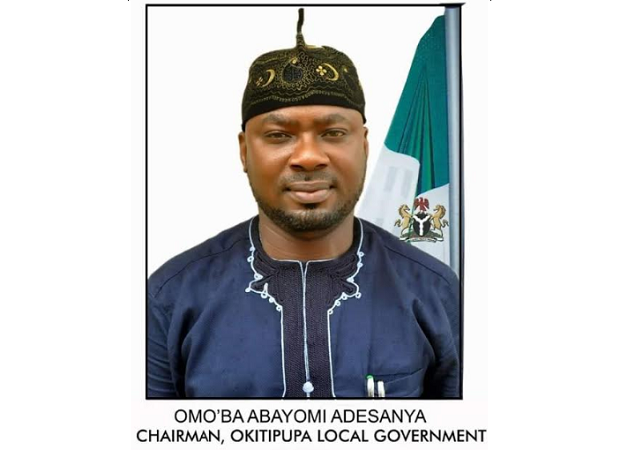
The chairman of Okitipupa Local Government Area, Omoba Abayomi Adesanya, has commissioned the four tyres he bought for a refurbished vehicle belonging to Okitipupa Local Government.

The pictures came live on his Facebook page with the explanation that the vehicle, a Hummer bus, has been abandoned for 7 years. So it’s a great feat that the bus was refurbished under his leadership, especially with brand new tyres.

Although he has taken the post down, but not before he came under heavy criticism for what many considered as a show of shame, questioning how buying brand new tyres translates to an act of leadership.

At a time when the Federal Government is set to separate LGs from States in the Federation Account Allocation Committee (FAAC), Nigerians are concerned that LG Chairpersons cannot be trusted with the huge sums that will remitted into LGs accounts.

Before now, LGs’ share of FAAC use to pass through the states. And in most cases, the states do withhold the fund, and disbursement, if there will be any at all, happens at the discretion of the Governors.

There have been clamour to separate the funds accordingly so that the three tiers of government can operate independently, as enshrined in the constitution. It is also believed that the coveted grassroots development lies on the ability of LGs to function as a tier of the government, by breaking free from the shackles of intimidating governors.

The only argument was that LG chairpersons need to be watched closely, otherwise, there will be little or nothing to show for the allocations they receive from FAAC.

The leadership newspaper has a week ago, reported that Abayomi Adesanya made appointment of 15 aides for the office of Okitipupa Local Government Chairman. A decision that was also criticized.

The Ganduje’s Best Governor Award

0

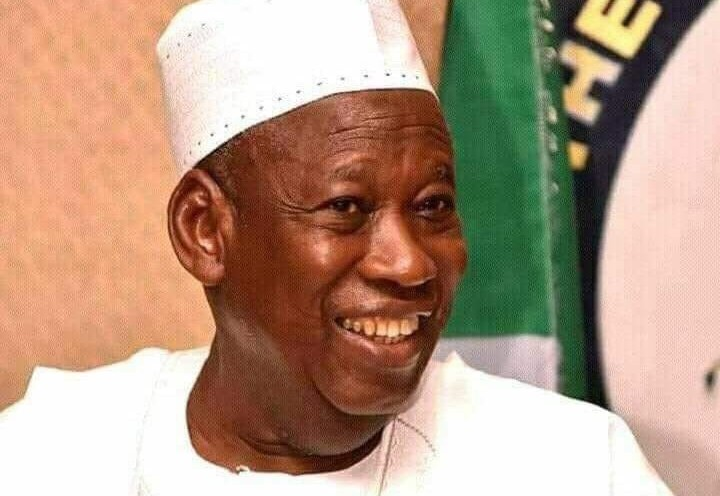
In the midst of corruption allegations, Kano State governor, Abdullahi Ganduje has been awarded the best governor in Nigeria for the first hundred days in office. The award was given to him by the African Democracy Assessment Network (ADAN), a pro-democracy group based in Senegal.

The regional coordinator of ADAN, Mr. Samson Theodore, said in a letter to the Kano State Government, that the group has decided to be rating governors at intervals based on their performances.

The group said after assessing how the governors have administered their stewardship, Abdullahi Ganduje has stood out in many sectors to be selected as the best.

“We carefully selected these areas, education, health, agriculture, security, economy, infrastructural development and politics, with concentration on supremacy of political party or parties as the case may be.” The group said.

In the area of education, Ganduje was highly rated as one of, if not the only Governor who has fast-tracked government policies to spur education through state owned schools. It could be recalled that Ganduje has earlier declared basic education, (primary and secondary schools) free and compulsory in Kano State.

And there is a plan by the Kano State Government to establish technical college of education for women, which is considered a very bold step in encouraging girl child education, especially in the education disadvantaged North.

ADAN also rated Ganduje by his effort to integrate Almajiri system of education to be curriculum based, with the inclusion of English and Mathematics. And the state has been working hard to find the best way to push children away from the streets to schools. In a country where over 13 million children are out of school, such efforts have been keenly observed and commended by many countries who were in the summit where the ratings were conducted.

“This strategy will definitely create more rooms for checkmating street begging and over dependence of Almajiri child on hopelessness and carelessness from the parents or guardians of Almajiri children. But with this integration, that also allows for improving their quality of life, many things will change for better.” The group added.

Ganduje was also rated high in the health sector for his effort in providing medical facilities for the state. His commitment to establish 400-bed medical centers in each headquarter of the newly created 4 emirates was a yardstick to rate him high in the health category. There is also the world class cancer center that has attracted a lot of encomiums, and further efforts by Kano State Government to curtail maternal morbidity through the expansion of health facilities to rural areas in the state.

The group also noticed the efforts of the Governor in combating insecurity in the state. They noted that cases of insecurity have drastically been minimized as Kano is recording low cases of kidnapping and banditry among other criminal threats prevalent in the North.

ADAN also gave Ganduje thump up in food security, noting that his agricultural policies will yield positive results that will quell hunger crisis in the state. The same goes to his fiscal policies that were termed friendly and open for all. In infrastructural development, the group noted the Dangi Interchange flyover, as a focal point of development that will ease movement in the state when completed.

“Ganduje is taking the state to greater heights of growth and development, in the areas of education, health, security, agriculture, environmental sanitation, provision of social amenities, among others.” ADAN applauded.

It was based on these achievements that he was awarded the best governor for the first 100 days in office.

What Early Investors Look for in Companies

3

In our contemporary time, there is one fundamental element that early stage investors look for as they evaluate companies: leverageable growth. Leverageable growth, unlike linear growth, is a type of growth that is largely infinite because the nexus upon which it happens is unbounded and unconstrained by marginal cost. In other words, this is the type of growth that when it begins nothing can stop it because the cost of growth is practically and marginally zero. It is the type of growth that can reach any part of the world!

For that environment to happen, the company needs to operate in a largely big sector with a lot of upscale which will allow the company to scale and grow. If the market is not big, even if the company has the necessary mechanics for growth, it cannot, because a ceiling exists which limits it. For example, making electric bulbs that can last for ten years but cost N200,000 per unit in Nigeria may be a great product but the size of the market for that type of bulb will limit its demand in Nigeria.

Yet growth goes beyond just selling products. It is about the way that product can sell after the initial fixed cost. Fixed cost is the core cost invested to create the product. After that, what matters is the marginal cost [yes, the variable cost is muted here] when growth models are developed. Marginal cost is the cost of producing an additional unit of a product. When that is close to near zero, it means the product can scale massively and can attract leverageable growth.

Interestingly, it is technology companies that exhibit this nature of having close to near zero marginal cost, and that is why they can grow exceedingly fast. Take some examples:

  • Once Uber app was created and the infrastructure running, the core fixed cost has been spent. What follows is marginal cost (i.e. distribution and transaction cost). That marginal cost is very low as Uber begins to add new customers to its ecosystems. Because that cost is very low, Uber can scale provided the market has room for it to scale.
  • Facebook connects people across the globe. The cost of this connection is close to zero at marginal cost level. The transaction cost is close to zero and because this connection happens on the web, the distribution cost is zero. Yes, Facebook marginal cost is zero and that means it is exceedingly scalable. I have put the scalable advantage of Facebook to be close to perfect because its product makes it unbounded by anything for growth.

It is important to understand that it is not only software companies that can exhibit this inherent scalability of near zero marginal cost. A company that makes very great microchips can indeed have a different domain of marginal cost. NVIDIA which makes exceedingly high-grade graphic processing microprocessors that power gaming, AI processing units and high-intense processing systems is a scalable company. Once the R&D on the chip has been done, the additional cost of making additional unit of the chip is practically zero. Silicon is largely free – it is sand. The real deal is building the intellectual property of that design. Mass producing it is not a problem.

The Basis of this Thinking

When Naspers, a South African company, made one of the most successful venture investments ever, it took a clear risk: invest in Tencent and hope it works out. And it did work out, generating billions of dollars for about $34 million the company had invested. Broadly, investors are looking at massive return and not linear return because the risk they are taking is also huge. These are people that know they can get linear returns in Treasury Bills or real estate but yet go ahead  to seek leverageable growth that can bring in multiples if things work out.

So when South Africa’s Naspers invested in China-based Tencent $34 million, it was making a huge call, in 2001. Today, that $34m berth is now worth $170 billion (with b), based on Tencent’s current market capitalization. Magically, Naspers is the 65th most valuable company in the world. That berth is perhaps the greatest investment in Africa.

All Together

So when you meet early stage investors, here are two questions you need to be ready to answer:

  • Do I have a business model that can generate leverageable growth? In other words, do I have a company that can scale with near-zero marginal cost?
  • Do I have a market that is big enough to enable that growth and scale to happen without a ceiling?

If your answers are YES and you can demonstrate that you can have the capabilities to execute the playbook, you will likely get the funding. Capabilities include technical, operational and other necessary skills required to run a business. Those capabilities do not need to be only you – here, investors will be looking at your team.