DD
MM
YYYY

PAGES

DD
MM
YYYY

spot_img

PAGES

Home Blog Page 6733

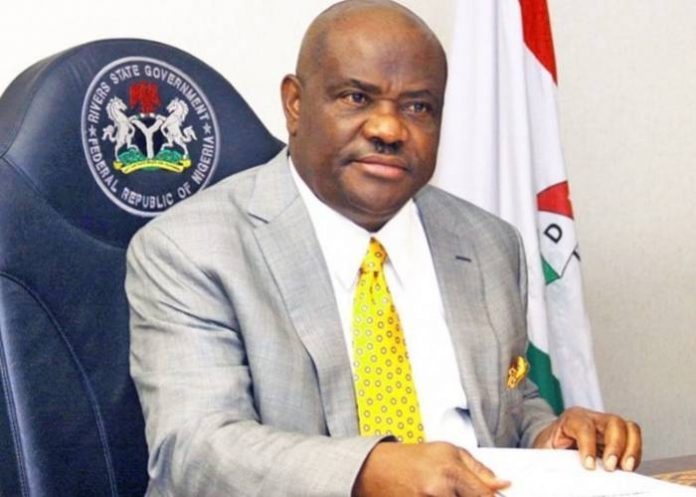
Governor Nyesom Wike Response On Alleged Demolition of Mosque

0

Two days ago, a video surfaced online alleging the demolition of a central mosque in Trans-Amadi, Port Harcourt by the Rivers State Government. With the help of many Nigerian news outlets, it rapidly went viral. Drawing attention and condemnation from many, especially Northerners.

It could be recalled that Governor Nyesom Wike of Rivers State was reported weeks ago, saying that Rivers State is a Christian state. He has also been vocal about his opposition to RUGA, vowing not to give a piece of land for that purpose.

These among other reasons have put him in the anti-north spotlight and escalated the allegation without giving room for his side of the story. However, the Governor issued a statement yesterday, refuting the allegation, saying it is a calculated political smear. 

Here is the full statement:

“I have received calls from several prominent Nigerians on the fake news being circulated online. I have come here with reporters and you can see there was no Mosque here. It is most unfortunate that fickle minded persons will claim that a Mosque was demolished at this place, when no Mosque existed here. The story was concocted by mischief makers to score cheap points. Some persons came here to erect illegal structure. There was no approval from the State Government for any structure to be erected here. The persons who started the foundation had already dragged the State Government to court on the disputed land. The Rivers State Government won the case. What they attempted to do was to start the illegal construction to tie the hands of the State Government. The Muslim Community in Rivers State should show me where a Mosque was demolished in the State. Do not allow yourselves to be used by politicians to peddle false stories against the Rivers State Government. The State Government operates within the rule of law. The State Government will not be distracted by the illegal circulation of fake reports. Several Mosques constructed on the approval of the State Government exist across Port Harcourt and other major towns in Rivers State, without the State Government demolishing them. The Government gave them notice not to do anything on the land. But they went ahead with the illegal foundation and relevant agency stopped them.”

A Twitter user, Chris Okpokiri, corroborated the Rivers State’s statement with his tweet:

“Yes, I stay and do business along Trans-Amadi, the acclaimed location of the Mosque. There has never been a mosque building there, it is just a fenced area where people go to pray. If they say the fence was pushed down that’s different, but saying a mosque was demolished is a lie.”

Nigeria Needs A National Reorientation 

0

Last week I saw a post by Chinedu Junior Ihekwoaba on LinkedIn. In the piece, he talked about the biggest challenge facing Nigeria and concluded it was the youths. While I agree with him that one of the biggest challenges Nigeria faces is her youths. I disagree because I believe there’s a bigger challenge for Nigeria than her youths, a challenge that engulfs all her children, and that’s the orientation/mentality of Nigerians. 

 This was my comment on the post 

You’re right because the youths are part of Nigeria’s problem, but it’s not just the youths it’s the citizens (youth and elders) as a whole. Don’t forget the youths grew up learning from one or two persons around them and from their environment. What did they learn? What did their environment thought them, directly or indirectly?

Even our so called elders ain’t taking the back position. They are at the forefront of sowing discord, disunity, tribal chauvinism, ethnical jingoism and religious intolerance. It is just normal the youths follow their lead. Remember, the Yorubas say – Esin t’osiwaju ni t’eyin wo s’are (literally, the leading horse is what the the followers emulate in running style).

Also, another Yoruba proverb says – Agba kin wa l’oja ki ori omo tuntun wo. Literally, we can’t have an elder in a place and the infant (you can say youth) would misposition his head. In other words, some level of discipline is expected from the young ones who have elders around them.

The question now is, the Nigerian youths are fast becoming a menace to Nigeria, What role are the Nigerian elders playing to correct things?

Therefore, for me, Nigerians, both young and old, are the biggest problem Nigeria faces. Or should I say the destitute mentality and orientation of Nigerians is the biggest problem Nigeria is facing.

Now to my point about our orientation/mentality being our biggest challenge in Nigeria. Two quotes come to mind.

The first is that of Daniel Ally. It goes thus

To change your reality, you must change your mentality.

While the second is an Islamic quote and goes thus – 

There’s a part of the body, if it’s okay the whole body is okay. If it’s sick, the whole body is sick. It’s the mind.

You see we are who we think we are. What builds in our mind becomes our thoughts, our thoughts become our words, our words become our actions, our actions become our habits, and our habits become us – our personality, mentality and being. So if we must do the right thing we must start by doing so in our minds.

The mentality of the average Nigerian sucks and stinks, and that’s why we are where we are – internet fraud and taking undue advantage of people (thinking we’re smart) but to mention a few.  How do we explain some of the happenings that occurred in our political sphere (the 8th Assembly comes to mind)? How do we explain the support some of us gave to a presidential aspirant that happily boasted he’s contesting to enrich his friends with the country’s assets? How do we explain the celebration of people convicted for stealing our wealth upon their return from jail? How do we explain security agents’ connivance with the same criminals? But to mention a few.

Now what must we do moving forward?

The government needs to declare a state of emergency on what has now become a destitute orientation/mentality of her citizens. The National Orientation Agency needs to be revitalized and gets her tooth re-sharpened, and be swung into full action. The draft/template that has been designed to shape our orientation needs to be revisited and perhaps redesigned. If need be volunteers can be recruited to help breathe life once again into the offices of the agency, in all the local government areas in Nigeria.

Also, Nigerians who are fortunate to be blessed with brain and sanity should never shy from educating and enlightening those around them who fall short.

I know the fight to resuscitate Nigeria will be a tough one, but it must be done, and it can be done, because if it is not done we are done. GOD Bless Nigeria.

He Got A Job As Managing Director

2

A letter from one of our Tekedia mini-MBA students:

Dear Tekedia Team,

I received a job offer yesterday. For the final interview which took place last week, I used the One Oasis Strategy and Double Play to develop a business strategy for the company.  This is a new company coming to Lagos. I was interviewed as ED Business Development. But last Thursday, they contacted me if I was open for Managing Director. Yesterday, the offer was for MD.

Tell Prof Ekekwe that reading him has made me a better businessman in theory and practice. […] Let me know next time he will be in Lagos please.

[…]

Read

TICAD7: Is IPOB Protesting In Japan?

0

The 7th Tokyo International Conference on African Development (TICAD7), is taking place in YoKohama, Japan, with many African leaders and businessmen invited to attend. Among them is the Nigerian president, Muhammadu Buhari. TICAD is an initiative of the Japanese Government on African development that started in 1993, and has grown to attract the support of the UN, the UN Development Programme (UNDP), World Bank and African Union Commission (AUC). It has ever since become an important economic event not only for African leaders, but Asia as well. But there are those who are in attendance thou not invited – the Indigenous People of Biafra (IPOB).

The IPOB’s reason for attendance is not for African development, but to continue what they started in Germany a week ago. The new yam festival held in Nuremburg a week ago was full of Igbo cultural display, except a physical scene where the former Senate President, Ike Ekweremadu was at the receiving end.

Ike Ekweremadu’s festival was cut short by IPOB members who physically registered on him, the anger they have harbored for long, over their claim that him among others, mainly Southeast Governors have been working against the Igbo race. He was assaulted, his clothing torn that he had to run for his dear life.

The group claimed that those of Igbo tribe who are in positions of authority have failed to use their positions to fight for their brothers in the face of obvious oppression. But have supported the Nigerian Government as it maims, kill and incarcerate IPOB members. And for that reason, they should be expecting more of what happened to Ekweremadu.

The attack, which was widely condemned in Nigeria, set a precedent that is reported to be  unfolding right now in Japan. The secessionist group have vowed to bring Nigerian president to justice for ordering the death of over 150 of their members. Not only him, but every other person who have supported government’s brutality and marginalization of Biafrans.

Last week, reports have it that some Southeastern Governors and politicians cancelled their planned trips to overseas, not ready for such embarrassing confrontation yet. It was reported that Nnamdi Kanu, the embattled leader of IPOB, has ordered his loyalists to go to Japan and ensure that Buhari receives what he deserves.

Words on social media have it that members of IPOB are already gathering at the TICAD7 venue in Tokyo, waving Biafran flags and waiting to confront Buhari. But the presidential spokesman, Femi Adesina has issued a statement refuting the claim.

“IPOB has nothing to do with president Buhari in Japan. The proscribed group has had nothing to do with president Buhari since he arrived Yokohama, Japan, on Monday.

“Nigerians at home and in the Diaspora are urged to disregard concocted stories, backed with spurious visuals of any protest or harassment of the president and his team. It is the stock-in-trade of hate mongers, who do not realize that the rest of Nigerians have left them far behind.”

He added that the president is on schedule in pursuit of Nigeria’s interest and cannot be distracted.

“President Buhari will make his presence at the TICAD7 count for Nigeria, and no scare-mongering or sabre-rattling will detract him from the outing.”

Buhari has gone to Yokohama on Monday, in the company of Governors of Lagos state, Babajide Sanwoolu, Borno State, Babagana Zulum, Kwara State, AbdulRahmam AbdulRazaq, in search of Foreign Direct investment (FDI), especially in the agricultural sector.

How The Igbos Won The Battle Against Illiteracy

0

During my primary school days, the Igbo people were seen as those that love money and wouldn’t go to school because they wanted to make money quickly. Then, the Igbos were accused of sending their young sons away to serve as ‘boy’ (apprentice) to traders and marry out their daughters at tender age. Their sons will ‘graduate’ from their apprenticeship when their mates were still struggling with their secondary school education and their daughters will be grandmothers as their age mates were graduating from the university (I remember a woman that was in the same class with her daughter in UNIZIK).

Let me be honest with you, we that were in school used to envy these boys then. You know why, we were always broke while they had money to throw about. But then, we had something they cherish – education (or should I say ‘literacy’ because they too had a form of education). Anyway, some of them had to find their way into the university because they want to have what we had (then there were so many Onitsha traders in UNIZIK weekend Continuous Education Programme (CEP)).

Anyway those days had long gone. Today, the literacy level of the Igbos has shown that the story has turn around for the good. An analysis of state-by-state literacy level presented by The Guardian of 24 July, 2017, shows that the state with the highest literacy level in the country is Imo State, with 96.43%. Other Eastern States came as follows: Abia – 94.24%, Anambra – 92.11%, Enugu – 89.46% and Ebonyi – 77.76%. The same newspaper showed that in 2016, Abia State was the best state in WAEC, and Anambra State took the second position.

The above analysis shows that the Igbos really worked on themselves to achieve these feats. My interest today is not on how the state governments worked on the education sector to achieve their aims (because they actually did). My interest is on how the change in the mindset and attitudes of the individuals led to Ndi Igbo being counted among the literates.

1. Culture: The Igbo people believe that “Ofu onye adi azu nwa” (one person cannot raise a child). They are ready to let others help them raise their children. One of the places to find such helpers is the school. In fact, when a mother is having challenges raising an obstinate child, the advice everybody will give her is, “Send him to school so that the teachers can help you to train him very well”.

In Igbo land, teachers are seen as ‘formators’ and disciplinarians (that is why they are called ‘ony nkuzi’ – the person that shapes things well). And every parent wants to have an obedient and socially accepted child. So, the natural thing to do around here is to send your child to school so that he or she will be ‘well trained’.

2. Quest for Knowledge: That is just a simple truth. Every Igbo man wants to know what you know. This is why you hear parents saying things like, “I want to send him to a good school where they will teach him very well.” These people don’t mind whatever it takes to achieve this so long as their children find the best place to acquire knowledge that will pull them through life.

3. Respect for the Educated Rich: If you are educated but you are not rich, you will have your respect. If you are rich but you can’t read and write, one day a small boy will point it out to you that you are an illiterate (ask those that go to umunna meetings). But when you are educated and rich, you are the bomb.

People always say that Igbo people love money. But I am here to tell you that Igbo people love people that are rich and well educated. Do you know what it means to be a professor or a medical doctor and that you can travel out of the country at will? Just ask around and you will understand.

So everybody wants to be educated and rich.

4. Increase in the Number of Working Mothers: Igbo working mothers are increasing by the day. Most of them do not feel comfortable leaving their babies with nannies. So they take them to crèches when they were still tender. This is also seen in villages where mothers send their children to school immediately they wean them. To them, the children should go to school where they will be safe while their mothers run around for their jobs and businesses.

5. Attitude towards the English Language: Ability to speak English places one among the elites in Igbo land. In fact, when you start speaking English, people will keep quiet to listen to you. And you know that you can’t learn English unless you go to school.

6. Wide Travelling: The Igbo people are known to travel far and wide. They need to be able to interact with the people they meet in their host communities. And Nigeria being a multilingual nation means that either these travellers learn the over 400 Nigerian indigenous languages, or learn the English language that links all of them. So, they go for the best option – English. The thing about learning this language is that it comes with the ability to develop its four skills – listening, speaking, reading and writing.

7. The Media Campaign: There is no way I can drop this piece without acknowledging the efforts of the media. I could remember that different television and radio programmes were aired on NTA Enugu to discourage school dropouts. Then, the usual advice was, “At least let them write their WAEC first before going for business or getting married”. I could remember that some people believed that anybody that has finished secondary school is too old to be an apprentice or get married (at least in Awkuzu girls were expected to marry while in SS 1). But gradually, our girls started getting married after secondary school and the boys started ‘learning’ trade when they are done with their WAEC. This shows that the campaigns of the media worked a lot on the psyche of a lot of parents and individuals, who found reasons to send the younger ones to school.

In as much as I celebrate the high literacy rates of the Igbo communities, I believe that all works have not yet been done. The percentage of literates is not up to 100% so we shouldn’t celebrate much yet. We need to work on those in the rural areas where the major number of illiterates can be found.

However, as we Igbos continue to work on ourselves, I enjoin other states that registered high rate of illiteracy to emulate these Igbo communities so as to help their people.