DD
MM
YYYY

PAGES

DD
MM
YYYY

spot_img

PAGES

Home Blog Page 6740

Contribute Your 10 Kobo, Nigeria Has N3.2T ($8.9B) Bill in London

2

It was clearly evident that a black swan ruling was coming. But as typical, Nigeria did not bother. In this part of the world, time is always frozen: “The U.S. arbitral court handed an initial award of $6.6 billion as damages in favour of P&ID. But, following Nigeria’s refusal to enter an appeal for over five years, the award attracted an additional $2.3 billion in accumulated interest at 7 per cent rate per annum”.

However, in most parts of the world, time continues to tick. Nigeria was at the risk of more than 33% of its national budget, and yet, nothing happened. But the ruling has happened, and now the government is in panic mode [this mess began 2010, so do not throw wailers to Buhari].

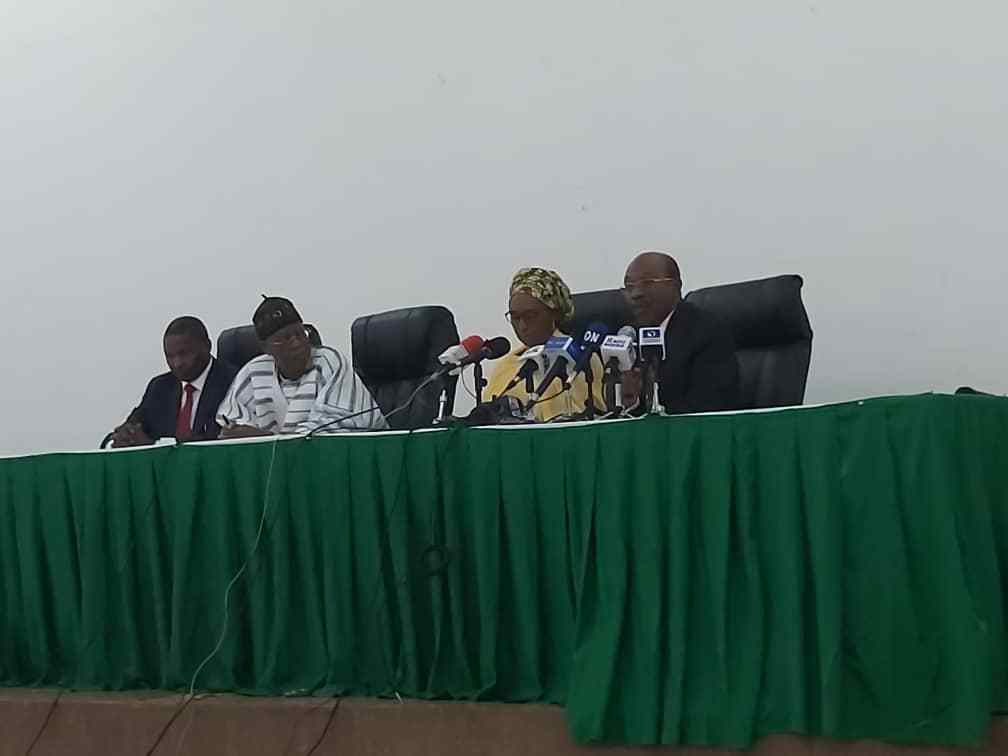
EFCC has gone nuclear to now examine the contract. And the finance minister is informing everyone that it would be “unpleasant for every Nigerian”in a briefing. In short. It was a high level conversation with three ministers – Ministers of Justice, Abubakar Malami; Finance, Mrs Ahmed; and Information and Culture, Lai Mohammed – in attendance.

The recent ruling by a UK court asking Nigeria to pay a hefty N3.2 trillion to a British company, or have its asset seized, will have profund implication for all Nigerians if executed, the finance minister, Zainab Ahmed, said Tuesday.

The government said it was rejecting the $8.9 billion arbitral award because the foundation of the contract, in terms of conception and execution, was flawed.

The case is thus, in brief, from Premium Times.

A fortnight ago, the United Kingdom, Business & Property Courts (the Commercial Court), presided by Justice Butcher granted a British gas firm, Process & Industrial Development Limited (P&ID) request to enforce a March 20, 2013 award by a District Circuit Court in Washington DC against Nigeria.

The company had accused the Nigerian government of breaching a 2010 gas supply contract agreement for the construction of a gas processing plant.

In August 2012, the company said it served notice of arbitration after attempts to settle the matter out of court failed.

Nigeria’s argument now is that the contract is voidable because it was “fundamentally flawed”. And the Central Bank of Nigeria has challenged this foreign to show evidence that it invested $40 million in Nigeria: “If they (P&ID) have proof of their investment, we are calling on them to please come forward and provide us evidence of how they invested $40 million in this country”. Yes, you “invested” $40 million and you went to your country judge to get a judgment of $8.9 billion. Can a judge in Nigeria return fire?

But meanwhile while they sort this mess that began in 2010, your 10 kobo may be needed!

Living Dangerously? “Accommodating” the Student Experience in British Universities

0

What’s this ‘hoopla’ about ‘student experience’ in “British” higher education? How is it defined? How should it be? Whose responsibility is it?

Too many questions, and yet too little answers. Be that as it may, it is the ‘new black’ in marketing terms – a buzz, hype, fad or cliché, take your pick. But that is the problem.

Following an exploration of the experiences of rival European university study destinations such as France, Germany, and even the Netherlands, the student accommodation attribute remains one unresolved question. In this article, I argue that the topic should be of strategic importance in the marketing of study destinations, and especially for international students seeking places in British universities. Yes, this applies to African students choosing British Universities – and yes, the places are currently being filled.

As reported in the UK The Guardian, 6 October 2015, “once students went to university for education, now it’s an experience.”

Considering the current higher education climate, where students’ needs are ever-changing, and universities always playing catch-up with these changing needs, the matter needs to be addressed, and stakeholder groups need to pay some attention. I would share four initial points in this post.

First, for potential (and sometimes even returning/ continuing) students, they may become better informed of the perceived lack of accommodation as an important attribute for their study choice. As Peter Scott, Professor of higher education studies at the Institute of Education, points out in a recent Universities UK report:

“All students are different, and are becoming increasingly more so. The categorisation of students into part-time, full-time, undergraduate and postgraduate – or any mix of these, does highlight the differing needs, perceptions and/ or attitudes of each.”

While the quality of teaching (and learning from their peers) might mean a lot for part-time postgraduates attending classes on wet winter evenings, what matters most for full-time young undergraduates may well be the quality of ‘student life’, in which formal academic work may rank alarmingly low.

Second, many universities pride themselves with top student experience rankings without fully understanding and/ or explaining what the term actually means, and more importantly, from whose perspective?

Universities need to be more proactive in either providing affordable housing for students or partnering with landlords and assisting students with signing contracts for accommodation.

With this in place, students would have one less worry, and productivity/ engagement levels would increase, thus enabling better academic performance, and ultimately preparedness for the real world of work following graduation.

Third, and from a managerial angle, the consumer behaviour literature suggests that one of several ways of compensating for low rankings, may derive from the “importance weights” students assign to these attributes, and how universities capitalise on their relative advantage under these circumstances.

Perhaps universities that have invested in student housing may be better positioned to communicating this more forcefully, if for nothing else, to compensate for their proximity disadvantage – this is especially important for those universities whose student body are predominantly made up of international students – which is all.

Indeed, most student prospectuses, as well as job advertisements, especially on the higher education job platforms such as www.jobs.ac.uk tend to highlight the campus environment (e.g. beautiful setting) before prospective applicants even get on to the main job descriptions, person specifications and course contents (for prospective students). This, in my view, is targeted at international students – as funders of these positions.

Fourth, and from a theoretical perspective, the attribute of housing, as far as the student experience is concerned, leads me to weave in the multiattribute model (Martin Fishbein) as a theoretical backdrop, the study proposes a rather understated element of the total student experience – i.e.  accommodation. This attribute arguably impacts upon a range of stakeholders – notably universities; students; private investors; and even the government. Furthermore, research on university selection shows that what might appeal to:

Part-time postgraduates attending classes on wet winter evenings, would be different from those of full-time young undergraduates, who seek quality of ‘student life’, and for whom formal academic work may rank alarmingly low.

It is imperative for scholars, and especially those involved in education research, therefore, to rethink the need for further exploration of student accommodation as part of the “proximity to home” attribute that has appeared widely in studies spanning decades, as one of the lesser ranked attributes for students’ university choice.

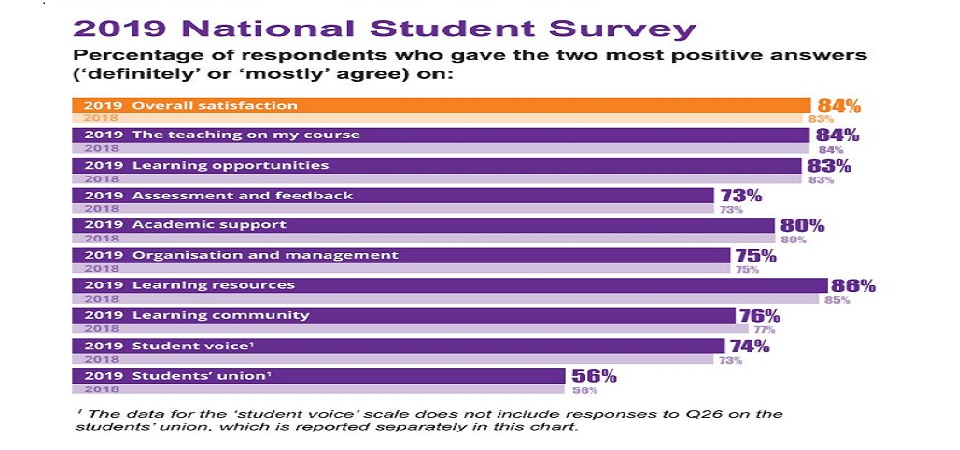
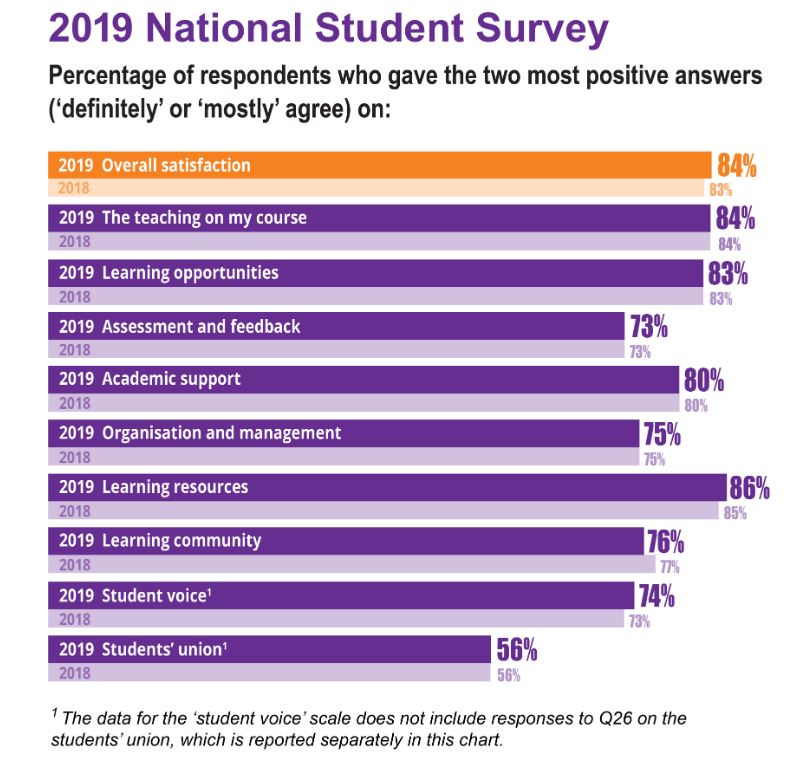
It is a ‘no brainer’ that the availability of on-campus living or recommended student accommodation serves as a counterpoint to the ‘proximity to home’ disadvantage. Needless to add that ‘availability’ and ‘affordability’ of (student) housing might well serve as a compensatory attribute to other lower-ranked attributes such as reputation, learning resources, community etc., as indicated in the questionnaire of the National Student Survey.

Yes, in the next week most British Universities would be welcoming new students – whether home or international – is there any room in the Inn?


Image credit here (clearer version below)
Governor Nyesom Wike Response On Alleged Demolition of Mosque

0

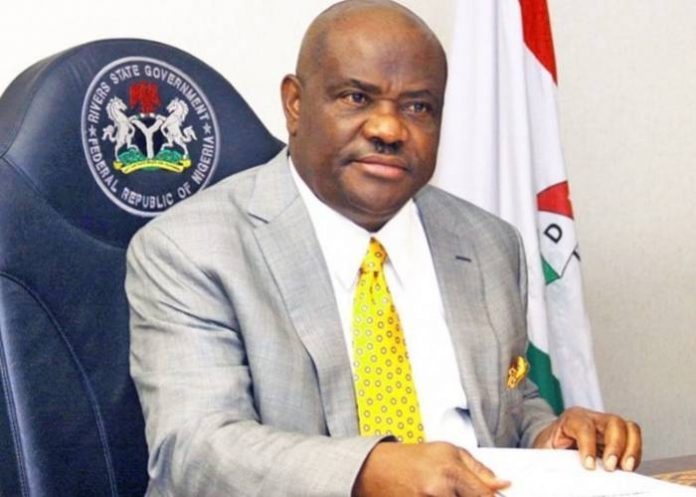
Two days ago, a video surfaced online alleging the demolition of a central mosque in Trans-Amadi, Port Harcourt by the Rivers State Government. With the help of many Nigerian news outlets, it rapidly went viral. Drawing attention and condemnation from many, especially Northerners.

It could be recalled that Governor Nyesom Wike of Rivers State was reported weeks ago, saying that Rivers State is a Christian state. He has also been vocal about his opposition to RUGA, vowing not to give a piece of land for that purpose.

These among other reasons have put him in the anti-north spotlight and escalated the allegation without giving room for his side of the story. However, the Governor issued a statement yesterday, refuting the allegation, saying it is a calculated political smear. 

Here is the full statement:

“I have received calls from several prominent Nigerians on the fake news being circulated online. I have come here with reporters and you can see there was no Mosque here. It is most unfortunate that fickle minded persons will claim that a Mosque was demolished at this place, when no Mosque existed here. The story was concocted by mischief makers to score cheap points. Some persons came here to erect illegal structure. There was no approval from the State Government for any structure to be erected here. The persons who started the foundation had already dragged the State Government to court on the disputed land. The Rivers State Government won the case. What they attempted to do was to start the illegal construction to tie the hands of the State Government. The Muslim Community in Rivers State should show me where a Mosque was demolished in the State. Do not allow yourselves to be used by politicians to peddle false stories against the Rivers State Government. The State Government operates within the rule of law. The State Government will not be distracted by the illegal circulation of fake reports. Several Mosques constructed on the approval of the State Government exist across Port Harcourt and other major towns in Rivers State, without the State Government demolishing them. The Government gave them notice not to do anything on the land. But they went ahead with the illegal foundation and relevant agency stopped them.”

A Twitter user, Chris Okpokiri, corroborated the Rivers State’s statement with his tweet:

“Yes, I stay and do business along Trans-Amadi, the acclaimed location of the Mosque. There has never been a mosque building there, it is just a fenced area where people go to pray. If they say the fence was pushed down that’s different, but saying a mosque was demolished is a lie.”

Nigeria Needs A National Reorientation 

0

Last week I saw a post by Chinedu Junior Ihekwoaba on LinkedIn. In the piece, he talked about the biggest challenge facing Nigeria and concluded it was the youths. While I agree with him that one of the biggest challenges Nigeria faces is her youths. I disagree because I believe there’s a bigger challenge for Nigeria than her youths, a challenge that engulfs all her children, and that’s the orientation/mentality of Nigerians. 

 This was my comment on the post 

You’re right because the youths are part of Nigeria’s problem, but it’s not just the youths it’s the citizens (youth and elders) as a whole. Don’t forget the youths grew up learning from one or two persons around them and from their environment. What did they learn? What did their environment thought them, directly or indirectly?

Even our so called elders ain’t taking the back position. They are at the forefront of sowing discord, disunity, tribal chauvinism, ethnical jingoism and religious intolerance. It is just normal the youths follow their lead. Remember, the Yorubas say – Esin t’osiwaju ni t’eyin wo s’are (literally, the leading horse is what the the followers emulate in running style).

Also, another Yoruba proverb says – Agba kin wa l’oja ki ori omo tuntun wo. Literally, we can’t have an elder in a place and the infant (you can say youth) would misposition his head. In other words, some level of discipline is expected from the young ones who have elders around them.

The question now is, the Nigerian youths are fast becoming a menace to Nigeria, What role are the Nigerian elders playing to correct things?

Therefore, for me, Nigerians, both young and old, are the biggest problem Nigeria faces. Or should I say the destitute mentality and orientation of Nigerians is the biggest problem Nigeria is facing.

Now to my point about our orientation/mentality being our biggest challenge in Nigeria. Two quotes come to mind.

The first is that of Daniel Ally. It goes thus

To change your reality, you must change your mentality.

While the second is an Islamic quote and goes thus – 

There’s a part of the body, if it’s okay the whole body is okay. If it’s sick, the whole body is sick. It’s the mind.

You see we are who we think we are. What builds in our mind becomes our thoughts, our thoughts become our words, our words become our actions, our actions become our habits, and our habits become us – our personality, mentality and being. So if we must do the right thing we must start by doing so in our minds.

The mentality of the average Nigerian sucks and stinks, and that’s why we are where we are – internet fraud and taking undue advantage of people (thinking we’re smart) but to mention a few.  How do we explain some of the happenings that occurred in our political sphere (the 8th Assembly comes to mind)? How do we explain the support some of us gave to a presidential aspirant that happily boasted he’s contesting to enrich his friends with the country’s assets? How do we explain the celebration of people convicted for stealing our wealth upon their return from jail? How do we explain security agents’ connivance with the same criminals? But to mention a few.

Now what must we do moving forward?

The government needs to declare a state of emergency on what has now become a destitute orientation/mentality of her citizens. The National Orientation Agency needs to be revitalized and gets her tooth re-sharpened, and be swung into full action. The draft/template that has been designed to shape our orientation needs to be revisited and perhaps redesigned. If need be volunteers can be recruited to help breathe life once again into the offices of the agency, in all the local government areas in Nigeria.

Also, Nigerians who are fortunate to be blessed with brain and sanity should never shy from educating and enlightening those around them who fall short.

I know the fight to resuscitate Nigeria will be a tough one, but it must be done, and it can be done, because if it is not done we are done. GOD Bless Nigeria.

He Got A Job As Managing Director

2

A letter from one of our Tekedia mini-MBA students:

Dear Tekedia Team,

I received a job offer yesterday. For the final interview which took place last week, I used the One Oasis Strategy and Double Play to develop a business strategy for the company.  This is a new company coming to Lagos. I was interviewed as ED Business Development. But last Thursday, they contacted me if I was open for Managing Director. Yesterday, the offer was for MD.

Tell Prof Ekekwe that reading him has made me a better businessman in theory and practice. […] Let me know next time he will be in Lagos please.

[…]

Read