DD
MM
YYYY

PAGES

DD
MM
YYYY

spot_img

PAGES

Home Blog Page 6742

Social Media – The Perfect Field of Magicians

0

The world has moved from the stone, iron and bronze ages to the jet, digital or modern age. One of the central cores of the present age is the social media. A large number of people will find the link to this article on social media platforms. Social media is robust with real-time attention. Timelines are filled with reaction and raw responses. Opinions are wielded like swords. Political and popular figures are skewered with aplomb.

ICT has turned the world into a global village with the chief tool to achieve this being social media. One can access life transforming messages through social media platforms, distance barriers in relationships have been broken, and with just a click, one can access the current news, and world trend, amidst a few to mention. Everyone has to say a heartfelt thank you to everyone involved in this evolution.

Social media is often referred to as the worst and best thing to have happened to this generation. It is a platform where billions think they are connecting with the world, but are disconnecting with reality and connecting with only illusions.

The allure of social media is the desire to be seen, omnisciently seen, if not always affirmed, at least always put in view of others. It promises to protect us from athazagoraphobia — the fear of being forgotten. So we impulsively connect, from the moment we wake up to the moment we must surrender ourselves to sleep.

It is a panopticon, a type of prison in which you never know who is watching. A panopticon is a type of goal that was proposed by philosopher Jeremy Bentham in which a single guard tower stood in the center of a prison in which guards in the tower can visually see every inmate in their cells causing the inmates to have a feeling of paranoia because they can not tell who is looking. Isn’t social media like this? One can update my status on Facebook and in seconds get notifications of likes and comments.

But not to be deceived that is not the number of people that have viewed the update. With one click, marriages have been shattered and visions destroyed.

The world is full of illusions. Magicians use myriads of things to trick people into believing the unbelievable and capture their attention. Today, a large percentage of people engaging in social media also perform this kind of magic. Life is full of illusions but social media has amplified this. Many put in their profiles who they are not, there are the tools we have to update our status, share pictures and perform magic that can make who we would like to be in the real sense. With everyday, social media is moving us from the real world into the magic world.

It is easy to get the impression that friends are more famous, powerful and knowledge than they really are these days. It is also easy to form the impression of the nice guy or lady than in real life. Everyone of us must be humbled enough to accept we have fallen for this magic before.

With the tools available people look more beautiful or handsome than they’re, locations can be changed, voices can be made more sonorous amidst others. Truly, with social media all that glitters is not gold.

Millions go to the extreme ends with social media today. Why? Because with social media racking up likes, comments, and follows has become a way to measure someone’s worth. A writer starts to measure the worth of his or her article with number of likes gotten.

And with everyday, we disconnect with people near us while fighting to connect with people far from us.

Next time you are posting something – ask the critical question – do I just want a reaction or something else?

The search for perfection embodies our social media and in that hunt we are deviating everyday from who we are to who we wish to be with a less appreciative manner in the society.

In the 1890s, physiologist Ivan Pavlov discovered that when he rang a bell to signal mealtime to dogs, they would begin to salivate whether he brought food or not. Many researches have been done in recent years to confirm his findings. Brain researchers have found that people have more brain activity anticipating a reward than receiving one. With this, whenever the ping of your phone rings it sets off a dopamine loop in your brain. Dopamine isn’t simply a pleasure chemical but a wanting chemical. With this, people send all kinds of pictures and messages hoping for responses.


The Invisible Layer Strategy and Why OPay Is Emerging As Nigeria’s Most Potent Fintech

5

I wrote a few days that OPay, an Africa-focused mobile payments startup founded by Norwegian browser company Opera, was in the phase of customer acquisition through subsidization of transportation services. By making ORide (motorcycle ride hailing) very affordable, Opera would attract massive user base for its paytech unit, OPay. I explained that even though Opera may be losing money in the transportation unit, it has a promise on the payment one under double play strategy. Simply, OPay will make money for the business even though ORide may be loss-making. And profitability is irrelevant, at least in the short-run, because the parent company is known for exiting via IPO (initial public offer) in Europe where user base and growth are the key selling factors.

Extending that, I remind you that in a perfect internet market, marginal cost is zero for online solutions. That means, every internet delivered service should have distribution cost of zero fee if markets were perfect. Of course, markets are not perfect, and that means we have to pay distribution costs for online solutions. Yet, companies like Google and Facebook which can attain marginal cost of zero, offering freemium services, scale massively. Besides the distribution cost, there is also the transaction cost. Marginal cost comprises of transaction cost and distribution cost.

People, marginal cost of zero has come to the paytech sub-sector of Nigeria’s fintech sector. Yes, OPay is running what I call the Invisible Layer Strategy. The Invisible Layer Strategy is a strategy where a company builds a product utilizing critical infrastructure of another competing company, in the same product line, but finds a way to under-cut that company on cost of services to end users. Today, OPay offers zero fee to customers who use it to pay for DStv services in Nigeria. It utilizes and relies on Nigeria’s banking infrastructure. But if the same customers use banks, directly, they would be charged fees, by banks. Largely, OPay has invented an invisible layer which makes it possible to handle those payments at zero cost that even the banks themselves cannot do. It is important to note that OPay is not absorbing any cost to acquire customers; there is no cost whatsoever in the value chain, and that means even in the long-run, it can process payments in Nigeria at absolute zero fee.

Image result for marginal cost is zero tekedia
OPay has eliminated both the transaction and distribution costs pushing the marginal cost to absolute zero

I will not explain what OPay is doing at the technology level [pardon me for that, that is exclusive for our clients and portfolio startups  Update: many have written asking for help. Consider the possibility that OPay has bank accounts in all banks in Nigeria. If a customer ( paying for DStv) pays through it, it will simply receive money from the customer to the specific corresponding bank account it maintains in the customer originating bank. At the same time, it will pay the merchant to the merchant’s bank account using its (OPay) funds in the same bank as the merchant’s. Because wallet-to-wallet transfer in Nigeria does not attract a fee, this two-sided intra-bank transaction (inflow and outflow) does not cost OPay and its customers any transaction fee.OPay, relying on bank APIs, automates this protocol. This is Option 1. There are other options on how to execute this including having a holding quasi-entity.]

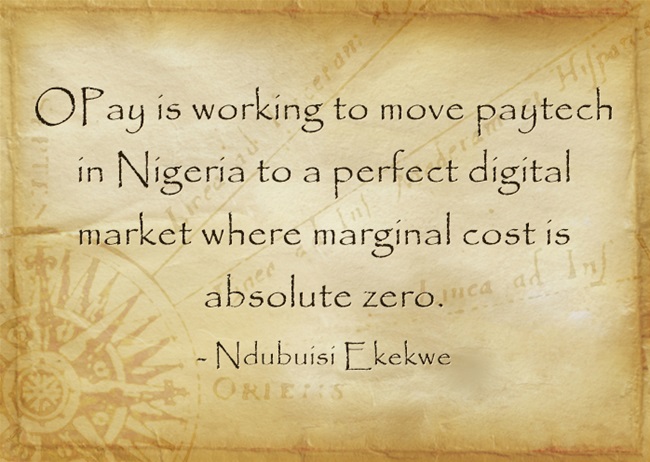
But consider if OPay scales that redesign of zero fee across all payment ecosystems in Nigeria, killing commissions, you will agree that many fintechs in Nigeria built on commissions will go bankrupt. Simply, you cannot compete with free. OPay is working to move paytech in Nigeria to a perfect digital market where marginal cost is absolute zero.

I have a friend who runs a fintech. His wife uses OPay to pay for their DStv services since his own company charges fees and madam cannot ‘waste money”. Scale that experience, you will understand where OPay is going.

I expect massive dislocation in the fintech sector as OPay advances. You cannot compete with zero! As ORide (motorbike aggregator), OBus (bus aggregator), OKash (loan services), OTrike (keke aggregator), OFood (food delivery), and OWealth (investment management) feed into the Opera operating system, Nigeria’s business sector will not be the same. This company is on a mission – the indigenous companies have a huge challenge ahead. I expect OPay to be low-fee, and OKash and OWealth, at maturity, to be components of money makers for Opera.

OPay Raises $50 Million for Digital Finance Business in Nigeria

OBus from Opera’s OPay is expected to be launched in some Nigerian cities next month


NB: This will work well via non-card transactions

How to Market Facilities Management Training in Nigeria

2

From recognition gap to the insufficient skilled facilities managers and other professionals needed for effective solutions delivery, players in the Nigerian Facilities Management industry cannot continue to wait for the formal institutions of learning to produce professionals through undergraduate courses. The industry is thirsting for skilled Facilities Managers. The supply remains low to the demand every year. This has been the main reason for companies in the industry to create FM Training as part of their solutions.

In the last 5 years, Alpha Mead and Max-Migold have been the vanguards for FM training deepening in the country, supplying required skilled practitioners to other companies within and outside the industry. Since June, 2019, the two companies have been engaging the public, especially existing and prospective FM professionals on the need to acquire necessary skills and learn the emerging ones based on the global best practices.

This piece offers insights from the data generated from the companies’ engagement with the prospects between July 1 and August 12, 2019. During this period, 58 posts and 115 reviews from the trainees were analysed. The emerging insights point out appropriate marketing practices considering the prospects’ emotions and cultural norms.  This line of argument was chosen because of the need to properly communicate the benefits of varied FM courses to individual and organisational buyers.

Strategic Intents and Message Construction

Source: Companies’ Websites, Infoprations Analysis, 2019

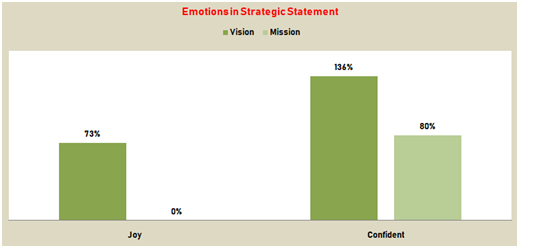
The two companies’ strategic statements indicate that they came into existence because of the need to engage the right people, to apply the right processes and to deliver value to users and other stakeholders in the built environment.  When this was subjected to emotional analysis, the result indicates that the companies are more confident in their vision and mission statements than being happy about their intents. One of the reasons which could be adduced for the low happiness is the expected level of commitment to the clients’ cause and societal growth. This is equally anticipated to reflect in the communication engagement to various stakeholders.

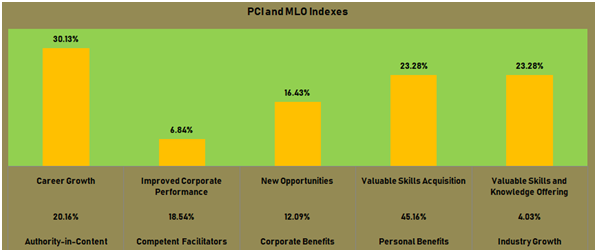
Like other FM solutions, communicating or marketing requires an understanding of the prospects’ respect for authorities, believe in experts, seeing the benefits or values in courses being sold by the companies and the end results of being equipped with the courses for the industry growth. This is captured under the PCI Index. Another index is MLO. With this Index, the companies are expected to develop messages that resonate with the individual and corporate desire to be the best and have reasons to connect with their previous activities along the learning or skill acquisition curve.

Career growth, valuable skills acquisition, and valuable skills and knowledge offering are used mostly within MLO Index, personal benefits, authority-in-content, competent facilitators are better than others within the PCI Index. These insights have many implications for the companies and the industry.

While the prioritisation of career growth, valuable skills acquisition and valuable skills and knowledge offering are good, it is instructive to note that low interest in creating and disseminating contents that establish improved corporate performance and new opportunities for the trainees would facilitate perception of the FM training as insipid for operational efficiency and job opportunities expansion. The low interest in connecting training of the prospects with the industry growth has indicated that overcoming the recognition gap would remain take years to subdue.

Source: Companies’ LinkedIn Pages, Infoprations Analysis, 2019

What Happens When They Cross the Line?

As pointed out earlier, communicating the FM Training and its benefits is best understood within the companies’ strategic statements. Modelling of the statements with the specific consideration of emotional appeals and language tone employed by the marketers shows that the statements reduced the PCI Index by 3.5%. A similar result was obtained for the MLO Index. A 6.8% reduction was found. These indicate that marketers did not develop sufficient messages that resonated with the statements during the period.

Post-Training Behaviour: What is in it? What is at Stake?

Source: Google Business Review, Infoprations Analysis, 2019

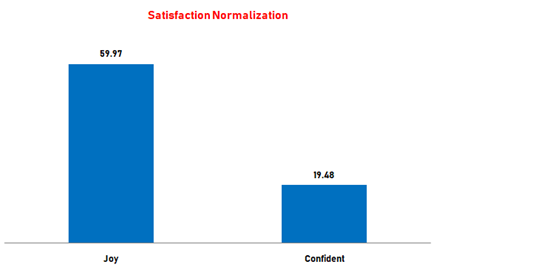
It is a norm that trainees would express their feelings about the course contents, facilitators and learning environment. With this belief, analysis was conducted using reviews collected from the two companies’ Google Business Pages, the results indicate that the level of happiness of the participants connected with content quality and competent facilitators, and confident about their views on the enablement than the good facilities and learning environment, and delivery strategy. Analysis further suggests that the trainees had a different confidence level in satisfaction enablement. In this regard, trainees’ confidence in content quality, competent facilitators, good facilities and learning environment and delivery strategy differed. The highest confidence level was 99%, while 55% was the lowest.

Despite this, analysis reveals that the trainees were not comfortable with their satisfaction within the PCI Index. A 27.2% reduction was found in their evaluation of the indicators within the Index. This is quite different from what was obtained for the MLO Index. The higher they perceived career growth, valuable skills acquisition and offering of the right skills and knowledge as benefits, the more they rated the enablers –content quality, competent facilitators, good facilities and learning environment and delivery strategy. With these insights, the companies need to train the marketers on PCI and MLO Content Generation and Marketing Strategy towards the attainment of their mission through the training solution.


Why Freemium Model Does Not Work in Nigeria

0

I maintain that your chances of hitting gold running a business venture in Nigeria are higher when your products and services are poised as a pain reliever than a multivitamin, and where such pains have become so afflictive the affected persons are already trying to mollify the effects through improvisations and makeshift arrangements, then your “working solution” almost instantly becomes a success.

For clarity sake the freemium model, a portmanteau word coined from “free” and “premium” is a business model where basic services are provided free of charge to the customer while the more advanced features must be paid for. As you can guess, this model is an easy go-to for entrepreneurs because of its inherent tendencies to attract large pool of interests and considerations while serving as a lure for the advanced features – the actual revenue generator. But the real question is: how efficient is this model ultimately in generating revenue for Nigerian businesses?

The Nigerian economy and consequently its business scape is quite an interesting one to observe, duplicitous as her ideals are a thousand miles at variance with her actual reality. Nigeria according to the World Poverty Clock has 91.16 million citizens living below a dollar a day which implies that virtually half of the population lives in extreme poverty, and of the remaining half above the poverty line, a huge number erstwhile regarded as the “middle class” currently suffers purchasing power erosion due to economic policies and government inefficiencies, meaning that having even a “basic offering” is currently a luxury to about 70% of the Nigerian population.

Hinging on the above, offering basic services free of charge in hope to charge premium on the advanced services in Nigeria could therefore be tantamount to frustration and ultimately, death of such business. Not that the freemium model doesn’t work, at least it could help generate tons of leads and traffic to keep you in the high (for those who enjoy the busyness side of things) but the herculean task will be converting the leads (many of which came because of the “free-ness” of the solution than of the actual solution) to purchase the advanced features, a percentage usually few and disappointing in comparison with the leads generated. 

Typically, those who need and can afford the advanced features usually don’t need the bait of the free basic services but will rather seek other validative methods such as testimonials or referrals. On the other hand, those who rush at the free basic services many times are contented as it largely is a luxury for them, the real problem then starts when such business needs to cover the costs for the free basic services offered at the expense of low patronage of the advanced features. 

Of course, the story is not always gloom using a freemium model in Nigeria, data collection from the free basic services could become a huge goldmine in itself. Also the business charging for the advance features could partner with a not-for-profit providing the basic services freely as a way to absolve the former of the costs. Ultimately, having being as a consultant and advisor to many businesses in Nigeria, it is a lot better, safer for a business to offer their paid services and then add the free services later as a strategy to keep its paying customers. I guess we’d call that a “Premifree” business model. 

Africa’s Dramatic Leap into the Future: A Projected Reality

1

Africa is at the cusp of the industrial revolution with the capacity to become the epicentre of a global renaissance.  The emerging disruption requires blue ocean ideas to radicalize new thinking, uphold compelling values, and establish fresh perspectives in order to entrench a fundamental approach to the remaking of Africa as the world’s biggest economic hub. Africa is well known for leapfrogging into the future and this would be no exception on the future of work.

Exponential economic growth, exponential technology and exponential youth population would be the key drivers of its strategic emergence. Africa’s current population is over 1.3 Billion, about 16.64% of the total world population with a median age of 19.4 years well ahead of other continents in terms of youthful energy.  According to the World Economic Forum by 2050, Africa will be home to 1 Billion young people. With growing demand for food globally, Africa seats atop about 60% of the world’s uncultivated arable land according to a Mckinsey report. With an outcry for global food and cravings for organic food production Africa holds the key to saving mankind with its ability to feed the world. 

About 210 tech startups across Africa secured US$ 334.5 Million worth of investment in 2018 alone, the continent is gradually deepening its tech ecosystem to galvanize a continental revolution across all sectors for economic impact. Agritech innovation is also enjoying continental spotlight which will help accelerate the needed Agricultural disruption. Sub-Saharan Africa for instance, currently houses six of the globe’s 10 fastest-growing economies, a pointer to the coming economic shift. 

While it is obvious that with manpower and machine power integration, radical disruption across all industries is inevitable championing a more proactive innovation roadmap is critical for quantum economic growth.  According to Thomas Frey, Google Top rated Futurist speaker, around 2 billion jobs are expected to disappear by 2030 due to automation. African governments must as a matter of priority create enabling environments and corresponding support to credible initiatives centred on upskilling and reskilling the workforce through the development of a digital curricular that will advance the radical shift as new jobs are recreated. 

The continent parades 54 countries, and over 600 institutions of higher learning yet plagued with leadership crisis, infrastructural deficit and brazen corruption – a paradox that continue to haunt its citizenry. The need to transform these centres of learning into tech powerhouses to further empower youths to deliver ingenious inventions for the continent is one critical area that must not be ignored. This disruption is also igniting a new wave of workers: digital nomads, freelancers and remote workforce delivering value across virtual spaces; disrupting, refracting the long standing 9-5 tradition is the model. The gig economy according to the Economist is a $50 Billion dollar a year industry – a highly competitive economy.

Despite challenging experiences the African youths face, many have continued to soldier on as laser-focused change-makers from Basil Okpara, the 9 year old Nigerian that built over 30 mobile games and 20 teenage South Africans who built a plane in an unprecedented manner telling the world what the African youth can achieve with just a little push, a feat they achieved in just ten days. This is some out of many all over Africa championing revolutionary ideas to galvanize change: Kenya, Egypt, Congo, Malawi, South Africa, Cameroon, Ghana, Sierra Leone, Nigeria and the list goes on across the regions of Africa. These youths continue to soar amidst huge infrastructural deficits and poor government support.

As the new machine age takes centre stage and the era of quality and volume explodes, we must be strategically empowered and positioned as an individual, as a community, as a nation, and as a continent, to become heavier on technology.