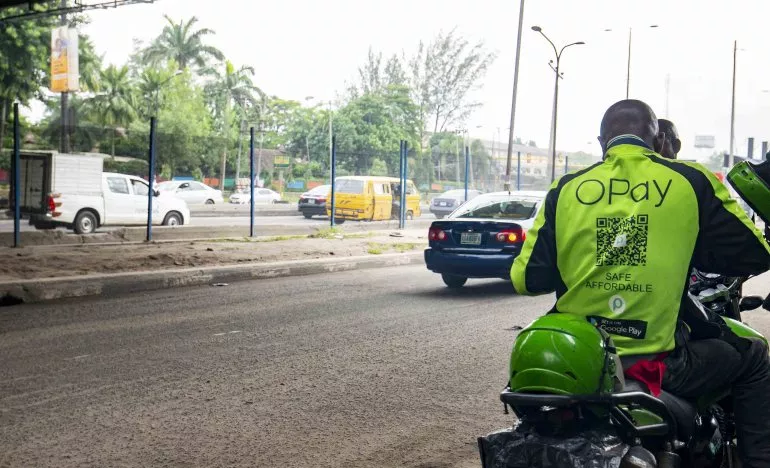
I wrote a few days that OPay, an Africa-focused mobile payments startup founded by Norwegian browser company Opera, was in the phase of customer acquisition through subsidization of transportation services. By making ORide (motorcycle ride hailing) very affordable, Opera would attract massive user base for its paytech unit, OPay. I explained that even though Opera may be losing money in the transportation unit, it has a promise on the payment one under double play strategy. Simply, OPay will make money for the business even though ORide may be loss-making. And profitability is irrelevant, at least in the short-run, because the parent company is known for exiting via IPO (initial public offer) in Europe where user base and growth are the key selling factors.
Extending that, I remind you that in a perfect internet market, marginal cost is zero for online solutions. That means, every internet delivered service should have distribution cost of zero fee if markets were perfect. Of course, markets are not perfect, and that means we have to pay distribution costs for online solutions. Yet, companies like Google and Facebook which can attain marginal cost of zero, offering freemium services, scale massively. Besides the distribution cost, there is also the transaction cost. Marginal cost comprises of transaction cost and distribution cost.
People, marginal cost of zero has come to the paytech sub-sector of Nigeria’s fintech sector. Yes, OPay is running what I call the Invisible Layer Strategy. The Invisible Layer Strategy is a strategy where a company builds a product utilizing critical infrastructure of another competing company, in the same product line, but finds a way to under-cut that company on cost of services to end users. Today, OPay offers zero fee to customers who use it to pay for DStv services in Nigeria. It utilizes and relies on Nigeria’s banking infrastructure. But if the same customers use banks, directly, they would be charged fees, by banks. Largely, OPay has invented an invisible layer which makes it possible to handle those payments at zero cost that even the banks themselves cannot do. It is important to note that OPay is not absorbing any cost to acquire customers; there is no cost whatsoever in the value chain, and that means even in the long-run, it can process payments in Nigeria at absolute zero fee.

I will not explain what OPay is doing at the technology level [pardon me for that, that is exclusive for our clients and portfolio startups Update: many have written asking for help. Consider the possibility that OPay has bank accounts in all banks in Nigeria. If a customer ( paying for DStv) pays through it, it will simply receive money from the customer to the specific corresponding bank account it maintains in the customer originating bank. At the same time, it will pay the merchant to the merchant’s bank account using its (OPay) funds in the same bank as the merchant’s. Because wallet-to-wallet transfer in Nigeria does not attract a fee, this two-sided intra-bank transaction (inflow and outflow) does not cost OPay and its customers any transaction fee.OPay, relying on bank APIs, automates this protocol. This is Option 1. There are other options on how to execute this including having a holding quasi-entity.]
But consider if OPay scales that redesign of zero fee across all payment ecosystems in Nigeria, killing commissions, you will agree that many fintechs in Nigeria built on commissions will go bankrupt. Simply, you cannot compete with free. OPay is working to move paytech in Nigeria to a perfect digital market where marginal cost is absolute zero.
I have a friend who runs a fintech. His wife uses OPay to pay for their DStv services since his own company charges fees and madam cannot ‘waste money”. Scale that experience, you will understand where OPay is going.
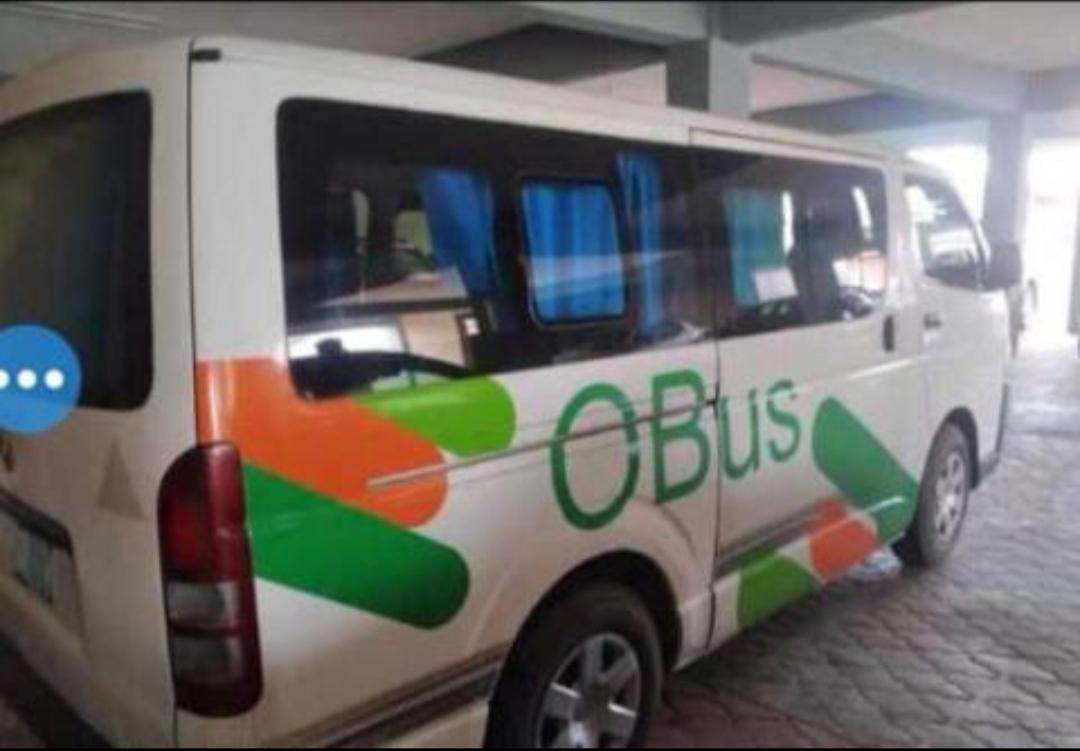
I expect massive dislocation in the fintech sector as OPay advances. You cannot compete with zero! As ORide (motorbike aggregator), OBus (bus aggregator), OKash (loan services), OTrike (keke aggregator), OFood (food delivery), and OWealth (investment management) feed into the Opera operating system, Nigeria’s business sector will not be the same. This company is on a mission – the indigenous companies have a huge challenge ahead. I expect OPay to be low-fee, and OKash and OWealth, at maturity, to be components of money makers for Opera.
OPay Raises $50 Million for Digital Finance Business in Nigeria
NB: This will work well via non-card transactions