DD
MM
YYYY

PAGES

DD
MM
YYYY

spot_img

PAGES

Home Blog Page 6748

Jumia and Konga’s Biggest Challenges

0

My last article tilted – “Jumia and Konga are selling mainly graphics”, got mixed reactions from the audience. Majority of the audience shared in the sentiment while some opposed. Some unsatisfied customers even cited scenarios where they had fallen victims to the graphics displayed on their website. 

According to a customer, R. Oketade, “I am a living witness. I used to believe that any product /gadget you purchase through this platform is nothing but original. Alas! It wasn’t. Your Quality Control needs to buckle up. Though, their return policy is great.” 

Business only thrives when customers trust is earned. But it wasn’t so for John Paul, who seemed to have been burned by the love of graphics on Jumia.

John Paul shared his own side of the story, “Unfortunately, this is the main reason e-commerce has struggled to pick up in Nigeria beside logistics. Trust issues! When you display a diamond and delivers a steel to the customer, you have lost that customer for life.” 

To be responsible, you must be accountable. Nkem accused them of being nonchalant towards the satisfaction of their customers because they are not held accountable. 

“Their Quality control/assurance is zero. That’s why they sell fake products on their sites. There are no standards, which they are supposed to have for each product sold by these companies, but it seems one is holding them accountable not the people, not the government departments.” – Nkem 

As they say complaints don’t solve anything in life but to add more salt to injury. The best is to find the cause of the problem instead of whining about it. 

Something JohnPaul did while pouring out his anger.

“They really need to do more in terms of quantity checks for their vendors and start delisting vendors who don’t meet up with their quality standards. ” – John Paul. 

This problem is not only limited to e-commerce, it is also a big problem with Franchise in the hospitality business. Some of the hotel franchise in Nigeria don’t even meet up with the standards of the brands. When I stay in some of those properties abroad compared to what I see here back home is nothing to write home about.

Jumia and Konga need to step up their games. Jumia especially needs to wake up to the call. It’s no longer a small business as it used to be. It is now a public company that has been listed in the international stock market. The stakes are high. 

Adimuchinobi said, ”While the issue with Jumia is that both the sellers and the customers are losing money. Last month, we incurred a huge loss due to reverse e-commerce. To me, Jumia positioned their brand in a tight corner which is the genesis of this ugly incident.”

The brand is positioned as a place to buy goods at low prices, very cheap, thus forcing or coercing the sellers to sell at a very low price with a very low-profit margin.

Now, here is the thing the cost of processing an order is very high. The cost includes: Packaging cost, logistics, connectivity, Jumia commission, seller shipping contribution and printing.

So for a seller to make a profit, he or she has two options – sell inferior goods or think out of the box. In most cases, the easiest option is to sell inferior goods.

But, the best option, in this case, is to use group buying. I actually discovered that one can source quality products from China at an amazing price through group buying. Using this method helps to increase the chances of making a profit because of the huge discount buyers would benefit from China manufacturers or suppliers. 

Jumia and Konga are doing great but they can do better. 

Note: This article has not been written to downgrade Jumia and Konga. It is neither politically inclined. This article represents the voice of the people who want to see a change in the e-commerce sector.


Kill Your Fear to Unveil Your Potential

0

How to unveil your potential. 

Long time ago, a tourist asked me on how to recognize one’s potential. I simply replied to him, “to every human, there is a measure of potential.”

But many people still fail to realize that everyone has got potential in him. 

What do you understand by the word, ”potential”?

Potential can be defined as a chance or possibility that something will happen or exist in the future. In other words, is a quality that someone has knowingly or unknowingly that can be developed to make it better. Also, it is an inbuilt ability in someone that can be developed to help that person become successful. 

Often times, I asked myself if I have what it takes to be a writer.

Why? Because I’ve never written anything before. 

My friend once advised me to go into writing. I laughed him off. I said it’s not my way. I gave many excuses. But there’s one thing he said that struck a chord in me, ”you don’t know what you can do until you try.” I definitely agreed to that statement. 

I decided to give it a try. I wrote my first article but it was full of blunders. I didn’t bother to post it because of the fear of being mocked. He gave me the push – just do. 

I summoned the courage and published it. But to my surprise, no one cares about the blunder. All that matters was the message. That’s when I realized that what we fear most times doesn’t really exist. 

Imagine what you would have achieved if you had not let fear gripped you? 

Fear is a killer of potential. Fear has buried much destiny. Many youths out there have the potential in them, but the fear of what the public would say have turned their dreams to a mirage. Does it really matter? 

The truth is, you can never overcome what you fear. 

How to unveil your potential. 

  • Face your worst fear: There is a saying that everything you ever wanted is on the other side of fear. I agree. Until you learn how to face your fear, you can never unveil your potential. Action fights fear. By taking small steps, you’re building evidence to show that you are more and can do more than you think.
  • Take a step: They said the journey of a thousand-year starts with a step. Wow…..I love this. Nothing starts until you start. If you pause, things paused. When you start, things start. No destiny achievers remain stagnant, they take a step. I understand that when you start, you might come across many obstacles. Even your parents can tell you it’s impossible. But always bear this in mind that life gives you option, you make a decision. To every great step, there is a great decision.
  • Be determined: Problems are real. Problems come in many ways. Some are minor, while some are big. If you come across any, treat it like it’s your last day on earth. If you want to unveil your potential, you must have a strong determination.
  • Be positive: Our doubts are nothing but useless thoughts created by our mind by its filtering process. The more negative information we subject our mind to, the more our brain will filter our thoughts in conjunction with that information. Lack of confidence comes as a result of habitual negative thoughts. Be positive when taking actions.

Note: Nothing starts until you start. Unveil your potential by doing the needful.

 Credit: Adeleke Lekan


Google vs Trump: A War The US Doesn’t Need

0

Earlier in the year, the US president, Donald Trump rekindled his interest in Google’s activities. Trump has a history of questioning the Silicon Valley giants’ motives and actions, using one alibi or the other. This time it was based on his suspicion that somehow, Google has been helping the Chinese Government to spy on the US and steal intelligence.

It was and allegation that prompted a meeting between Trump and Google’s CEO, Sundar Pichai, at the White House. Where he assured Trump that Google has not been compromised and cannot work for a foreign government against the United States. Trump tweeted after their meeting:

“Sundar Pichai was in the Oval Office working very hard to explain how much he liked me, what a great job the Administration is doing, that Google was not involved with China’s military, that they didn’t help Crooked Hillary over me in 2016 election, and they are not planning to illegally subvert the 2020 election despite all that has been said to the contrary. It sounded all good.”

Trump lost the popular vote by almost 2.9 million, in the 2016 general election and has a claim that it was due to electoral fraud. Now there is a shift in the narrative, with him claiming that he could have lost the popular votes with a little margin or won it after all, if not for the manipulations of Google.

In 2017, the editor in chief of Psychology Today, Robert Epstein, examined how Google might have influenced voters’ decisions in favor of Clinton. He said that the search results may have been manipulated to influence an estimated 2.6 million votes for Hillary Clinton, or even at the maximum of 10.4 million. Trump took it up from there, and his swipe at Google heightened. Although, Epstein explained:

“I’ve never said Google manipulated the 2016 elections.”

It doesn’t matter, Trump has taken his examination as an alibi to aim at Google, and even exaggerated the figures put out by Epstein.

The recent outburst of a disgruntled former employee of Google, Kevin Cernekee, who has been on the news slandering his former company, accusing it of sabotaging Trump’s chances of winning the last election in favor of Hillary Clinton, seems to have revived the grudge. Trump tweeted on Monday:

“Wow, report just out! Google manipulated from 2.6 million to 16 million votes for Hillary Clinton in 2016 election. This was put out by a Clinton supporter, not a Trump supporter. Google should be sued. My victory was even bigger than thought.”

This is one in a series of tweets alleging anti-conservative bias by Google, and a conspiracy to sway votes in the 2020 elections against the right wing. And the recent interviews granted by Cernekee to Fox and Wall Street Journal have upped it. With Trump sharing the video clips and calling them “very illegal.”

With 2020 around the corner, there seem to be unprecedented premonition among conservatives that not only Google, but the social media as whole could be used to subvert the elections. And it is getting paranoid. President Trump has warned that “they are watching Google closely.”

The fear is that the search giants may once again suppress negative news about opponents while presenting searchers with all the negatives about Trump administration. A claim that though it cannot be substantiated, has been held to be true by many, especially supporters of the president.

Google has been in defense of itself, not wanting a loggerhead with the president. But it is becoming inevitable, and in the face of trade war with China, the US government getting into a fight with Google will do more harm than good.

Chapter 1 – Background To The Study

0

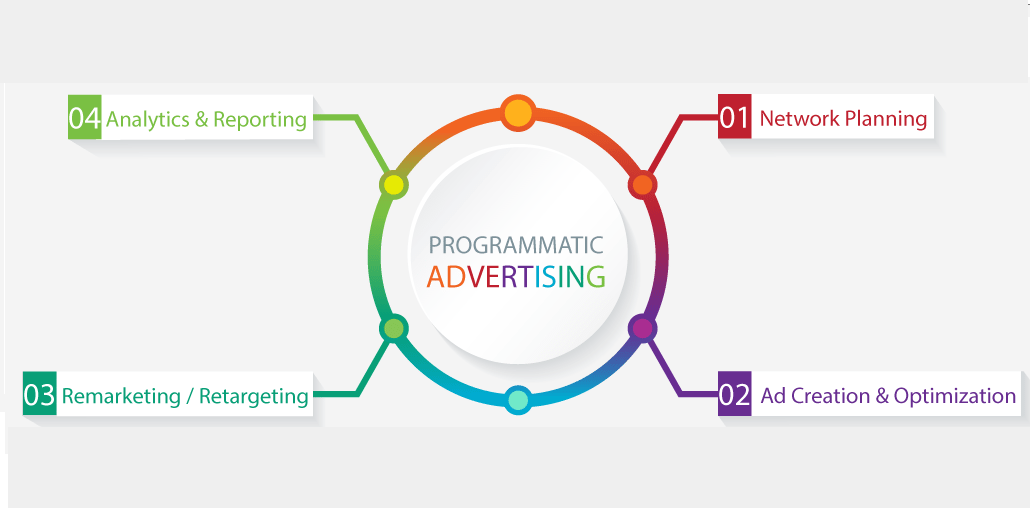
Programmatic advertising, defined generally as “an automated, technology-driven method of buying, selling or fulfilling advertising” (American Association of Advertising Agencies, 2015), is a relatively new instrument within media and advertising in general that has the potential to disrupt the business models of the various actors in the media industry (Busch 2015). Tasks traditionally performed by human actors can be automated using programmatic solutions, and in this sense, programmatic has the characteristics of a production technology that could alter the business models of actors in the industry. In the traditional business model, advertising space is bought and sold by human actors as insertions in a media (magazines, television, and so forth) that will reach and expose a given audience to a general message. With programmatic advertising, each individual in a given audience can be reached, bought, and sold independently and separately from other media users (Kosorin, 2016).

Programmatic Advertising is a novel technique which has been developed in recent years, and uses large amounts of data, or big data. It has stimulated growth and investment in graphic advertising on the Internet (Kireyev, Pauwels, & Gupta, 2016). Programmatic Advertising, when compared to traditional models of buying and selling advertising space on the Internet, has led to models which use the number of user impressions, the cost of banner clicks and creative advertising (Aslam & Karjaluoto, 2017). The technology that drives Programmatic Advertising analyses millions of pieces of real time data, which allow the adverts to accurately reflect the precise interests of a user at the exact moment at which they are most likely to make a purchase or click on an ad (Huang, 2018).

This can be emphasized further that, for these online advertising techniques to work properly, companies need to have at their disposal data about the users browsing their web pages, as well as information about their interests and the types of products they are willing to buy (Hargittai & Marwick, 2017). Companies even customize programmatic advertising depending on the interests and offers suitable for each user (Saura, Reyes-Menendez, & Alvarez-Alonso, 2018). In these cases, users are not aware that their online behaviour patterns, along with millions of pieces of data about their search history and Internet browsing are being analyzed in order to increase programmatic advertising effectiveness (Yang & Nair, 2013).

Programmatic advertising allows the exact audience for each advert to be precisely defined according to their visit history. This type of advertising allows the profiles of the product or service audience to be selected and limited (Klein & Ford, 2003). Information such as age, sex or previous searches for similar products or services, is useful information to help target and personalize the advertisements that are shown to consumers (Bennett, Yábar, & Saura, 2017).

In this way, thanks to the complex management of large amounts of data, the audience can be correctly selected at the time and place when and where they are most likely to be receptive. This is the point at which terms related with this sector such as user privacy and massive data collection are interesting for research into finding out how users feel about these practices (Kannan & Li, 2017). We must take into account that Li and Huang (2016), found that users consider the perceived usefulness of programmatic advertising as positive, as long as it is personally related to them and offers them better savings, products and Internet services. However, the Perceived Usefulness of Programmatic Advertising is negative when the segmentation does not have the above qualities.

In coming chapters, effort will be made to consider the impact of programmatic advertising on products and services using Tecno and Ren Money as case studies.

Research Study – Programmatic Advertising

0

This material is from a research study conducted by Ayomikun Bamgboye and titled Impact of Programmatic Advertising on Products and Services: A Study of Tecno & Renmoney.

Abstract

This study attempted to investigate the impact of programmatic advertising on Products and Services. The study focused on Tecno (as the products) and Renmoney (as the services). Programmatic advertising is increasingly gaining relevance as it assures brands – Top of mind awareness, Engagements and Ultimately Conversions regardless of verticals and platforms/apps. 

The Study demonstrated the impact of programmatic advertising by documenting theories like Uses and Gratification Theory, Perception Theory, Dependency Theory and Conceptual frameworks for better understanding of its relevance. 

Also, to accomplish the objective of this research, some hypotheses were set. And the results obtained from the research were compared with the hypotheses set. Based on the comparison, the result and conclusion were made.

Table of Contents

Chapter 1 – Background of the Study