DD
MM
YYYY

PAGES

DD
MM
YYYY

spot_img

PAGES

Home Blog Page 6750

Online Reputation Management for Professional Services Firms

0

When trying to build an online reputation, Brands usually merely slap together a website, set up social media pages, and publish content. Many do not understand that there are deeper layers to online reputation management than merely just having those pages out there on the Internet. It goes beyond setting up profiles and getting (negative and positive) reviews from clients.

A Scenario

I am a lawyer, though I have a deep interest in marketing and online assets building for professional services firms. And I also do work in that area. Recently, a law firm in Lagos named [REDACTED] hired me to critically assess their online assets. For 2 day, I set down to work, accessing and assessing their online trail; then I noticed something: another “law firm” supposedly based in Benin Republic named [REDACTED] had a website that was a carbon copy of the website of this law firm I was auditing their online portfolio. They copied EVERYTHING in the website, down to the partners and associates working with the firm, merely changing their names and educational qualifications.

I pointed this out to the law firm managing partner, and it turned out that he was not even aware of what was going on. I initially takedown proceedings and got the website taken down.

Analysis

Online reputation management is an issue professional services firms and consultancies should be more deeply invested in. obviously, the law firm was being impersonated and had been for a while before I noticed this anomaly and pointed it out to them. What it also pointed out was the fact that they had neglected their online reputation, such that someone out there took them for easy game and worked to utilize their details, infringe on their intellectual property, and pass off unknown services as theirs.

There is a possibility that this issue would have gone undiscovered for years unless someone had pointed it out. There is also the high possibility that their images were being used to commit fraud, until they were stopped.

Monitoring and Prevention

If you have an online reputation, or your firm has an online reputation, then it is pertinent to actively monitor and prevent intellectual property infringement and defamatory cyber attacks that are aimed at destroying your firm’s reputation. For a firm that cannot employ an in-house team to actively handle their online reputation management, it would be instructive for them to use the services of online marketing experts who in turn will use dedicated deep online search tools to monitor the conversations on the Web about them and discover any infringement of their intellectual property, unfair practises, and defamation of their Brand name.

Damage Recovery

If a Brand’s online reputation is affected negatively whether in the form of the publication of infringing content, defamatory statements made, or real profiles are passed off under fake names and credentials, then identifying, yanking and ultimately halting that unlawful behaviour becomes the paramount consideration for any firm. In some cases—and depending on the wishes of the firm involved—yanking these infringing content and stopping the unlawful behaviour may not be altogether enough. Some wronged firms may want to go a step further by obtaining court judgments and monetary compensation against the persons involved.

If a firm chooses the latter option for its online reputation management, the wide geographical spread of the Internet may make it difficult and time-consuming to obtain the necessary Court relief(s) because of the fact that these crimes may cross more than one jurisdiction when they were originally being executed. This will ultimately make legal action in that circumstance an expensive undertaking.

The Best Class of Experts to use for Online Reputation Management

Online Marketing Experts: You will agree with me that an online marketing professional with experience in Search Monitoring and online portfolio management will make a better online reputation management resource person than a professional without these experiences.

Lawyers: There are thousands of blogs and websites out there, and the number of online defamation and infringement online continues to rise over time. There is a distinct flavour using an actual lawyer who is highly skilled in online brand management and has actual Domain Name expertise will bring. In addition to monitoring, identifying and having solutions for infringements that can (and do) occur to Brands, a lawyer skilled in Digital Domain will also have a battery of advice under his belt pertaining to legal measures that can be taken against infringers.

Conclusion

In today’s world, perception is everything. What you put out there to the world to read and view is what they will view you as and what they will believe you are. Or, what others put out there about you and your Brand is what people will read and then believe. Investing the time and resources to monitoring what is put out there on you and your Brand, or how your Brand is being used, will help you prevent horrible reputation dives that will give your Brand a negative perception. And remember, perception is everything nowadays.

You will hit a deep low if your Brand has a negative perception out there, or there is infringing or defamatory content out there which you don’t know how to handle or take down. Take active charge of your Brand—if you have one. Even if you don’t—which is a Branding decision on its own, albeit a passively negative one—you might want to start Googling. What you find out there in the Deep Web may surprise you.

Reasons Behind Youths Failure

0

Reason Behind Youth Failure.

Failure, as much as it hurts, is an important part of life. In fact, it is often necessary sometimes. There is no one on earth that is bigger than failure. Although no one wants to go through that moment when nothing is working, it is part of life.

Failure is a great teacher.

However, I discovered that most of our youths don’t want to fail in everything they do. A life without failure is life without experience. On the other hand, there are so many reasons behind not meeting a desirable or intended objective but it should not be seen as failure.

“It is impossible to live without failing at something unless you live so cautiously that you might as well not have lived at all, in which case you have failed by default.” — J.K. Rowling

The reasons behind youths failure:

  • Freebies mentality: I know you will be shocked. Yes! Anything free stops you from thinking. Freebies mentality especially free food has turned most of our youths into a lazy horse. And the truth is, anyone that gives you free food stops you from thinking. Most youths don’t want to work but they want things to fall in pleasant places for them. Anyone with such a mentality is a failure already.
  • Friends: I believe that the kind of people you moved with sometimes determines how people see you. I love the saying – show me your friend and I will show you who you are going to. Bad friends contribute immensely to most of the failure of the youths.
  • Background: I do tell people that the kind of parent you have determines how far and fast you go in life. I discovered that many youths failure in life is also due to their family background.          

How to minimize failure:

I know you will be so surprised that I said minimize instead of how to never be a failure.

No one on earth can boldly say he never fails.

Life comprises both good and bad. No success without a failure story behind it. All the most successful people you see out there were once a failure. But this is one main important thing to minimize failure – mindset.

  • You dare what others are scared of facing. Nothing good comes too easy in life. It takes sacrifice that comes from a great mindset.
  • Get angry. Sometimes when you are fed up with your situation and you want to come out of it, get angry with yourself. Tell yourself that, whatever comes your way, I want to be successful.
  • Purposeful living. Having a clearer understanding of who you are, helps you to go further. I want to make an impact in life. I want to be a blessing to my generation.

Note: ”the bus stop is not a full stop. You are not a failure until you permit it.”

Credit: Adeleke Lekan

Understanding Influencer Marketing

1

You may have not paid attention to this so far in your business model or probably in your marketing strategy as a company. I have discovered that a lot of businesses, even big companies do not pay attention to metrics so they spend so much on marketing and get turnouts which if proper metrics are taken, such companies will realize that they ran at a loss. However, since there are no proper metrics taken, such a company automatically assumes that they are making progress so far.

Influencer marketing is one area where this fallacy is common, and I will analyze why it is so and what you can do to get the best result on marketing. Firstly, influencer marketing is simply the use of influencers to help promote your business, product or service. Banks and telecom networks use a lot of artistes to help brand their products and make them visible to the public.

This approach is very good in helping a business idea get publicity. However, I wouldn’t recommend it to every business or company and as a matter of fact, some things should be known before you venture into trying out the influencer marketing approach when setting up your marketing strategy. I’d give an example; I once watched an Instagram celebrity or influencer in Nigeria market a product and I unfollowed him immediately. Prior to this time, I check his Instagram account daily because I do get value from it but this particular product annoys me. So I got offended that he was marketing such product to me.

The first mistakes companies make is that they just hand out their products to any type of influencer not considering the niche such an influencer belongs. For example, an Instagram celebrity or artiste may have been well known for talking about Hip Hop, well known in such a niche. It is just common sense to automatically assume that most of the fans of such influencer will be Hip Hop lovers. You cannot approach such an influencer if you have a product that is for R n B lovers because they will most likely not be followers of such influencer unless you have plans to convert them.

Most times, it’s better to focus your marketing strategy on those who are already almost interested or likely to be interested in your products or services than on people whom it will cost you more stress to convert. This is because it will save you more time, energy and also save more money. The point is that you need to also pay attention to the audience of the influencer you want to use. What does their audience trust them for. Are their audiences all Christians or just Muslims alone. Do they even believe in God’s existence. This is very important! I’m explaining this so you’d get the output you invested your money into.

Another important thing about influencer marketing is to understand the influence such influencer has over their followers. There are three categories of people following any account whatsoever.

  • Followers: an influencer might have 10 million persons following their Instagram account or any social media account. The followers are just people who either intentionally or unintentionally follow such account. They are people who consciously or unconsciously like their post. At this stage, these people are not deeply connected to such influencer. It will be wrong to go for an influencer because of numbers because you have a 50/50 chance of missing it completely. What if all the audiences are not even connected to such account. What if they followed such account because of hype, a bonus offer or some sort. The followers are just followers. They don’t give a good ROI on marketing expenses.
  • Fans: This is the next stage of following. Fans are loyal to the brand, to the influencer. They can also be called advocates. They stay true to the influencer and can defend their image any day and anytime. They regularly visit such page and love to fraternize with the idea of knowing such influencer. They can be a good consideration if your strategy is targeted at bringing awareness to your product or service. Most times, they are not a good metric when talking about conversion except it takes some time.
  • Customers: The customers happen to be a fraction of the whole followers and even a smaller fraction precisely. If you want to get sales, then focusing on customers is the best bet. You look for influencers who have higher control over the decision of their audience whose audiences are also capable of purchasing such product. It is one thing to wish to purchase something, it is another to be capable of purchasing.

I have literally helped you analyzed how best to use influencers and also how you should portray your brand to be customer-focused and not just follower-focused. A brand having much influence over a small niche is better than a brand having very low influence yet no specific niche.

Building Nigeria’s Ant-Hills

3

The ant-hills are not built by the elephants but by the collective efforts of the little ants.

– African proverb

We are the “ants” that will build Nigeria. Tell governments that we do not need anyone to waste our money on CNN, NY Times, and Economist to “rebrand” Nigeria. That has no value. Those are the elephant projects which have never added value.

We need to get back to the ants – and learn. If we “become” like them (ants can teach us many things as I noted in this Harvard Business Review piece – The Leadership Lessons of Ants), out of the global capitals, the world will see a hopeful, prosperous, and honourable nation on the horizon. From that HBR piece, we learn the following:

The ants worked as a team: I will form a team, bringing professionals together.

The ants trusted one another: I must do away with the notion that only by working alone can I ensure quality.

The ants were open: I will share the idea with like-minded people. I later got a Boston area professor to lead the design. When ants discovered food, they informed others, who came along and helped.

The ants were partners and of different sizes: I will bring help and make the task our project, not mine. As much as possible, each team member will get assignment based on his capability.

The ants were diligent and focused: The team must keep working, even slowly. Deadlines will give us focus.

The ants regrouped: I will be open to try new ideas if present ones are not working.

Why Nigerians Leave Nigeria

0

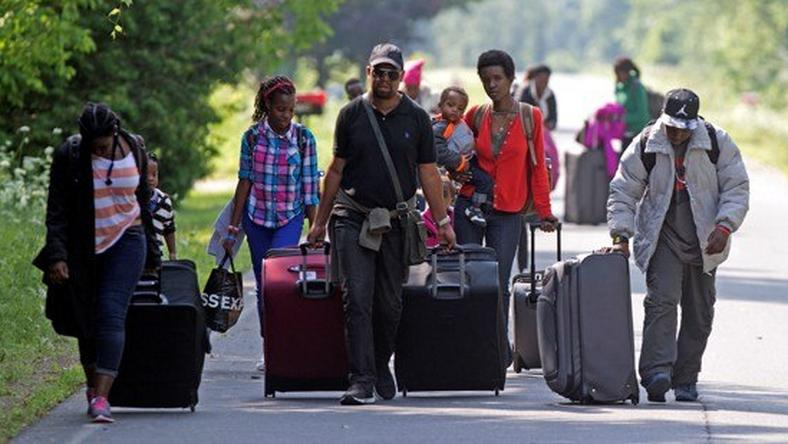
It is a common knowledge that Nigerians are moving out of the country in large numbers. Some leave because they have something good they want to obtain out there while others leave because they are running away from something. News continues to filter in about many who were caught trying to enter another country illegally. We have also seen video clips of some who died in the desert and in the ocean just because they wanted to leave their country. And then there are those that ended up as slaves and involuntary organ donors. There are so many horrible things some people pass through as they struggle to make it out of Nigeria, but it didn’t deter others from desiring to embark on that same journey.

The question a lot of people ask is ‘Why do Nigerians want to leave their country?’

Attempting to answer this question could prove to be an uphill task. Truth is that all these people leaving, attempting to leave, or even desiring to leave the country have their own personal reasons for that. Some people want to leave as a result of their personal experiences, while others do because of the experience of others. Those that leave as a result of the experiences of others (which they heard from media houses, literature or face to face conversations) easily fall prey to human trafficking.

Anyway, to try to find out the major causes of human emigration from Nigeria, we may have to employ the Push-Pull theory. This theory opines that there are certain factors that exist in a migrant’s original home that is pushing him out of it. These factors could be bad weather, unemployment, diseases, wars, natural disasters, political instability and so many others. The pull factors, on the other hand, are those factors that attract him to his desired host community. These could be greater job opportunities, good weather, good infrastructure, good medical facilities, religious freedom and so many others. This is to say that negative experiences push people out while positive ones attract them.

Applying this Push-Pull theory to the Nigerian situation, we can find out that all the push factors are man-made negative experiences that wouldn’t have been there if the systems are working properly. Ok, let me list the push and pull factors to buttress my points.

A. The Push Factors

  1. Poverty: Most of the victims of human trafficking are from impoverished homes. These people were promised better lives in foreign lands and their ‘hunger-stricken’ relatives readily agreed to let them go.
  2. Poor Education System: Most Nigerians do not consider leaving the country for further studies until they become frustrated with the incessant strikes and unnecessary delays in the Nigerian higher institutions. Any Nigerian that spends extra two or three years on master’s degree will want to go for his PhD outside the country.
  3. Unemployment: Of course, when somebody that has no source of income hears that there are so many job opportunities out there, and that they are well-paid jobs, he will start looking for a way out of the country.
  4. Attitude: Truth is, Nigerians have this mindset that anybody that is able to cross the shores of this country is either rich or will be rich (by fire by force). We grew up with this positive attitude towards travelling and living outside the country. As we grow up, this attitude becomes fed and nurtured by the other pushing factors.
  5. Corruption: What I want to say here isn’t what you have in mind. I’m not trying to say that people leave because they are tired of corruption in the country. What I want to state here is that people leave the country because they are corrupt and wouldn’t want to be caught and probed (or witness the anger and harassment of their people). This is one of the reasons our political office holders send their children away immediately they assume offices.
  6. Intimidation/Victimisation: Only a few Nigerians leave because of this. But I have known some people that left because they were being victimised in their places of work. So what these people did was look for better opportunities out there and relocate immediately they get a promising one.
  7. Exclusion: As some of us know, Nigerians are being excluded from so many international benefits and opportunities. One man narrated at a conference I attended about how he wasn’t allowed to spend a night in a hotel in Addis Ababa when their flight made a stopover because he was carrying the Green Passport. Nationals from other countries were allowed out of the airport but he had to spend the night there. We also have some international organisations and companies that exclude Nigeria from partaking in their activities while allowing some other African countries to do so. Situations like this make some Nigerians look for ways to leave the country to make better livings for themselves and their families.

Beside the international organisations, Nigerians have been complaining about tribalism and favouritism that takes place within the country. The ‘Who-You-Know’ syndrome seems to be causing more problems for us. When you know that you can never make it to the top, or even make it into the organisation, because you do not belong to a particular tribe, you will seek for other alternatives. If that alternative means leaving the country, you will take it.

The good thing about Nigeria is that we don’t have natural push factors like bad climate, earthquake, cyclone and other natural disasters (except flood, which is also caused by man). You can notice that all our push factors were caused by Nigerians, directly or indirectly. Until these push factors, and some others unmentioned, are curtailed, Nigerians will continue to look for means out of the country.

Ok, now over to the other side.

B. The Pull Factors

  1. Good Infrastructure: The first thing any Nigerian that goes to the Global North notices is that ‘NEPA doesn’t take light’ (lol). This is so true. A lot of people move because they want to enjoy basic infrastructures that are available over there. Anyway, these people are among those that can afford to move.
  2. Education: As mentioned earlier, the education system in this country is sending away a lot of our young and invigorating minds. Apart from having the basic facilities needed for teaching and learning, the schools in developed countries ensure that academic programmes run in due course. Let’s look at this, you started your PhD here in Nigeria and you have been on it for seven years. Meanwhile someone that travelled out of the country to do his M.Sc. at the same time you started your PhD has obtained both M.Sc. and PhD certificates and has come back to take up a higher position in your office (and you are yet to finish with your PhD o). How will you feel if it were you?
  3. Job Opportunities: I can’t really say much about this because I noticed that unemployment is a global problem. The only thing I know here is that people’s talent are well harnessed in developed countries. But I will like Nigerians to be sure of this job opportunity of a thing before making a decision to move, unless they are moving to Canada that seems to be looking for skilled workers.
  4. Strength of the Currency: This is one mega attraction I know. I always find it funny anytime I see small boys in my village calculating what they will do with money when they land a job in US that pays them $100 a day. They don’t mind the kind of job they will do there so long as there is ‘hard currency’ to come with it. This dream can do a lot of wonders to the souls of those desiring to move. If Naira is strong enough (I don’t want to dream about it being stronger than dollars), most people wouldn’t want to leave, trust me.

There are so many other reasons people move out of Nigeria. But these listed ones are the major ones, which needs to be fixed.

Nobody wakes up and decides to leave his home unless there is something pursuing him or something he is pursuing. People can leave to take up job positions, people can leave to carry out business transactions, and people can leave to unite with their families. But when people start leaving because their homes are not good, then there is a problem.

Nigerians need to heal Nigeria. Nobody else can do it for us. If we don’t act fast, we will wake up one day and realise that everybody has run away.