DD
MM
YYYY

PAGES

DD
MM
YYYY

spot_img

PAGES

Home Blog Page 6759

3 Things to Avoid in Job Interviews

0

When it comes to attending job interviews, looking good is not enough to land you that dream job. Often times, job seekers have blown up their chances of getting a job because of the manner in which they answer interview questions. 

In life, there are things you say that could make or break you. Likewise in job interviews, you could shoot yourself at the leg when answering the interviewer’s questions unaware. With the stiff competition for the vacant role you are applying for, you may not get a second chance. 

A Career Coach, Brad Blanchard; shared 3 things that don’t look good in an interview and how to avoid them. 

  • Avoid saying overly vague answers that don’t answer the question. I know it’s not as easy as it sounds. It could put you in a tight corner by getting caught off guard with things that you can’t or don’t know how to answer. This may make you look like you have no clue of role or question before the interviewer. Instead, take a second to compose your thoughts. While preparing your thoughts, try to come up with something specific and relevant to what the interviewer is asking. Don’t be afraid to ask for clarification. It’s not a crime to ask the interviewer question inasmuch it is in line with what is being asked. An interview session is meant to be interactive. 
  • Don’t play the victim. Don’t complain or act like you have too many troubles in your life. Although it is human to complain about some things, not in an interview session. It is totally unprofessional. The interviewer wants to see a problem solver and not a complainer. Playing a victim might paint you as a negative person.
    They want problem solvers, not problem bringers. When explaining situations, focus on what you did rather than the issues or challenges you face. Don’t complain about your previous employers, the job market, government or anything else, it’s not flattering. You might be sending a message to them. Perhaps, they will see you as someone who will go out and say the same thing about them. Even if you are asked about your relationship with your previous employer, say good things about your previous work and colleagues. Be someone who is going to brighten up the office. 
  • Lack of interest for part of the job. We don’t all like every component of the job, but don’t make it obvious. Every job has its dark side. I read about a Footballer, David Luiz. He said he hates training but he doesn’t have a choice since that’s his chosen profession. Same with Muhammad Ali. Don’t go to interview telling the interviewer you detest a particular aspect of the job. It might be their major challenge or the reason why they are hiring. So telling them you don’t like that part of the job has automatically disqualified you as the right choice for the role. Instead, act like you would be happy to do the work unless you are not interested in the job anymore, then walk away. Hiring managers want to see that you wouldn’t be a runaway hire. 

All of these things will help set you up for success by preventing you from appearing like the wrong choice. 

I wish you success in your job search.

Out-Of-School Children in Northern Nigeria Can be Rescued

2

The out of school children in Nigeria was rated 47% of the global out of school children with more than 10.5 million children. It was also reported that 69% of Nigeria’s out of school children are from the Northern part of the country. Only 45% of girls in the Northern Nigeria attend school.

The Government had so far made some efforts by building Almajiri schools. The intentions  are to provide access and equity to basic education, discourage and gradually eliminate itinerant begging. And also to support the emergence of an enabling environment that could facilitate the effective integration of Islamic discipline into basic educational program.

It became obvious to me during my stay in Kano State in the last six months that the framework had failed to completely achieve its aims. Out-of-school children in Northern Nigeria have the highest numbers. Kano State for instance has about 837,479 out of school children according to statistics in public space.

Most of the Almajiri schools built by the federal government are not functioning as initially planned. One of the major reasons for the unremarkable success as gathered from the information in public space is the absence of definite and sustainable arrangement to fund the going concern of the schools.

Neglect of the welfare of the pupils and their Teachers, situating some of the schools within the premises of existing schools and insufficient transformation aim of the Almajiri system are also part of the reasons for the failures.

The recent government’s effort in this regard is the school feeding project which was partly aimed at luring the out-of-school children to attend schools. Still, it has no remarkable impact on the statistics of out of school children in the country.

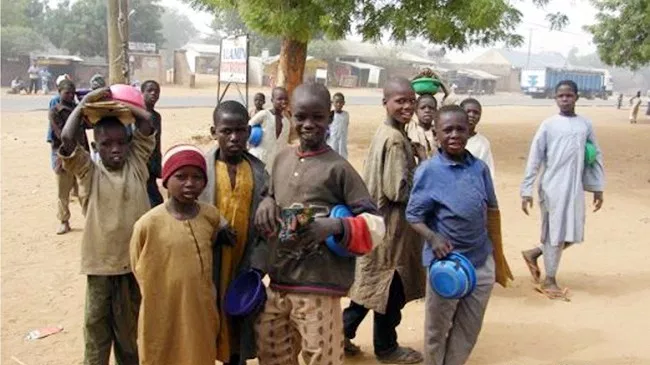
It is very unfortunate that the Almajiri children can now be categorized in different phases. Very few of them have schools and a poor Mallam teaching them only Quran at a particular time daily after which they all move out to beg for alms. They usually returned to the school to sleep at night. Another category are those that does not have any Mallam teaching them Quran. They usually wander around begging for alms and sleep on the street at night. These children are vulnerable and can easily be manipulated to commit crimes against anyone.

Many argued that most of them are not Nigerian. The fact is that they have become our collective responsibilities after allowing them to cross the borders freely.

Proposed Framework

Introduction: It is always important to devote more time to have a detailed knowledge of an issue to be able to proffer lasting solutions to the issues that several attempts to solve had previously failed. I have in the last six months been attentive to understand the livelihood of the Almajiri children in Kano state, Nigeria. Subsequently, a conclusion had been made that there is a need to erase the idea of making the Almajiri schools become the usual 6-3-3-4 schools set up we have in Nigeria.

A new system of education should be adopted as part of our educational system in order to accommodate these children. Any approach to solve these menace without considering the fact that they had been subjected to grow differently will not be productive.

The peculiarities of these kids are:

  • Homelessness
    • Lack of shelter
    • Hunger
    • Lack of parental care
    • Clothing
    • They are very fearful
  • Out of school/vocational skill

They have been exposed to different means of surviving as a human being.

The proposed strategies are categorized in to three stages:

Preliminary Stage: This should begin with a public Television show (preferably Islamic programs) for kids. At this point, the children will willingly gather to watch Television. It is one of the behaviors noticed about the kids. Basic daily needs of these children should be catered for on the street that had long been known as their home. Basic needs such as feeding, clothing and medicals are very paramount at this stage while they gather daily to watch Television.

These kids lack good food and drinking water. Many of them move about with minor wounds on their feet. All of them put on tattered or dirty clothes and many of them walked around barefoot. Hardly would you find any of them with the same pair of slippers. If you do; it will be in a very bad state. Make a drawing of these kids based on these descriptions in your mind even if you have never seen them. It is real!

Several locations across the state should be designated to provide the basic needs for the kids daily. One billionaire can sponsor this conveniently.

Eat, drink, light medical attention and change of clothes/shoes on the street are the first steps. This should be sustained daily until the ‘Mid stage’ is ready.

Out-of-school children in Northern Nigeria most especially, cannot be forcefully chased out of the street. Any attempt to apply force in resolving this issue will chase them to the wrong hands.

The Mid Stage: At this stage, it is required that houses are built to accommodate these kids. The biometric records of these kids are to be taken by those they are already familiar with at the Preliminary stage. They should not be forcefully moved to their new home. Only the kids that are willing should be moved to the new location. These houses should be managed like a boarding school with good facilities. The children should be categorized according to their age range with guardians where necessary while their daily basic needs are also being met accordingly.

The final stage: This stage should be concurrently run with the Mid Stage. The children should be provided with classrooms where they can be taught communication skills, personal hygienic (home training). They should be taught depending on their age range. Some of them are up to about Fifteen years of age. They will need a proper motivation to create a picture of a hopeful life for them. They should all be taught Islamic studies, Arithmetic skills, Financial/business studies and vocational skills. Different types of Sports should also be introduced to them. They should be guided properly to create a professional career growth for them. Only the kids less than Seven years of age may be reshaped after a long while to conform to the usual educational career path.

The implication of the proposed framework on society is enormous and  can be further analysed to get the lists out.

Conclusion: I have planned to begin the implementation of this framework personally in partnership with my Hausa friends in Kano State. Television show and provision of some basic needs for these kids will soon begin. It will become very significant when adopted and implemented on a larger scale.

Four Lessons for today’s Entrepreneurs from Nollywood

0

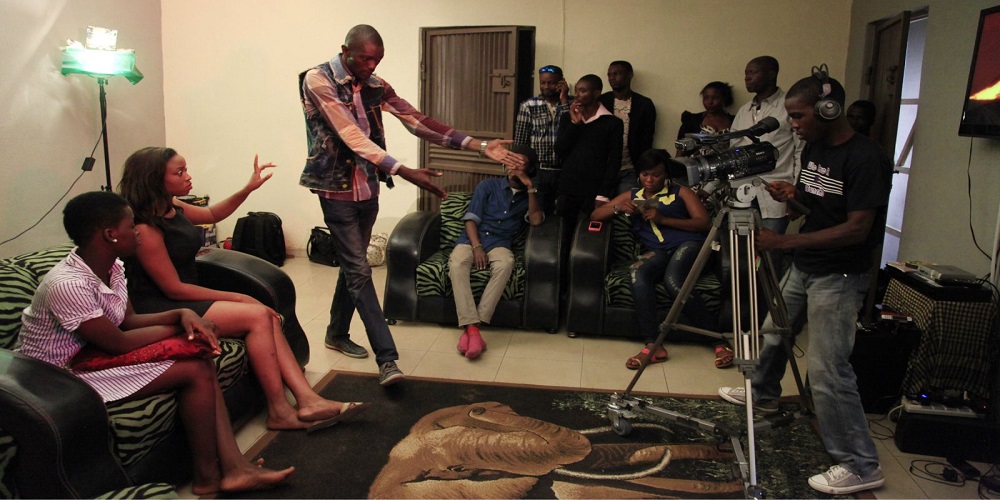
Nigeria, today, is fraught with a myriad of bad press: Boko Haram, sex trafficking, corruption, bad governance, economic decline; and it was offhandedly labelled a ‘shit-hole’ by Donald Trump. But right in the centre of its mess stands Nollywood, the country’s million-dollar film industry, built by dogged entrepreneurs in a world without major cinema chains, world-class film equipments or million dollar funds.

Nollywood’s success proves that with a few right ticked boxes, any entrepreneur, even you, could grow a successful venture from scratch. Below are the four boxes that you, and your business, must tick:

  1. Focus on being remarkable.

In his 1993 Ted Talk, bestselling author and marketer, Seth Godin defines remarkable as, “something worth making a remark about.”

Marketers also have another word for this: a differentiating benefit. And even another: standing out.

Having an appealing benefit that only your brand can offer is the key to entrepreneurial success. This rule works irrespective of the type of startup that you run: Type A startups attempt to tap into a proven, efficient and already existing business model (like a tailoring or a web design startup) while Type B startups are an experiment to find and dominate an untapped but viable business model (like the celebrated tech startup, Amazon).

Being remarkable – possessing a stand out benefit – helps your brand get noticed and easily remembered.

But does this concern Nollywood?

Nollywood were apostles of this theory.

Prior to the industry’s birth, Nigerian filmmakers shot films on celluloid that were exhibited in elitist cinemas. Most of these movies catered to the need of the “few” wealthy in urban cities and only left the poor thirsting for a rare taste of cinematic beauty.

But it was not until international sanctions crippled the Nigerian economy during the early 90s, strangling theatres and forcing filmmakers to seek alternative means of income did they opt to make movies with cheap video equipment, sell them on VCDs and connect with the average Nigerian. Nollywood’s local appeal ensured it spread like wildfire throughout Africa, even without outrageous marketing budgets.

Even Google, You tube, Facebook and Amazon are examples of remarkable businesses. These companies shot right to the top without the need for expensive marketing budgets because people cared enough to talk about them.

  1. Build on your strengths.

When critics realized the kind of local, unsophisticated output that Nollywood was churning out daily, they were scandalized. It was a descent from the promising days of celluloid filmmaking to amateurish productions and they were unpleased. But they were no less scandalized when the same industry scaled heights that no other African film industry had aspired, becoming Africa’s largest and most popular film industry.

Nollywood had built on their strengths, and turned disadvantages to advantages. Without the typically big budgets of Hollywood and Bollywood, they were producing a lot of video films within weeks, paying no attention to preparing proposals to big corporations for film financing.

Fortunately, the market loved their content so much that they mostly overlooked the errors in filming.

Also, since theatrical exhibition was elitist and limited only to urban Africa, Nollywood used video to connect with a waiting audience in both urban and rural settlements. They also benefited from the low access to foreign films in Nigeria at the time for average Nigerians. And solving this problem put Nollywood firmly on the map in Africa.

That’s why the next generation of billionaire entrepreneurs must be ready to turn problems to answers. Your brand’s strength emanates from the weaknesses of your competitors and how well you are able to utilize this for your own good.

  1. Win where it matters the most.

And where does it matter the most? In your customer’s mind.

How your business is perceived among its customers is its true market value. And facts do not always equal perception.

During its early days, video Nollywood’s output was amateurish and of low quality when compared to Hollywood – and to a large extent, it still is. That was the fact and many critics hampered on it. But how many average Nigerians cared about this? Very few. And this was Nollywood’s market, not the audience obsessed with Hollywood. Small wonder then that Nigerian filmmakers kept making their low-budget movies.

Today, Nollywood’s stars are recognized around the world, and even better, new businesses are now springing up in Africa to take leverage of the industry’s runaway success. Jason Njoku’s irokotv, now tagged the Netflix of Africa, is a multi-million dollar example of this.

Building a profitable perception demands that you create something remarkable in a positive way, at least for your target market. If anyone outside your target market does not appreciate the kind of value your brand provides to your market, you should not be bothered in the least. For example, Nigerians living in Britain and South Africa still watch Nollywood movies regularly to relive the Nigerian experience.

  1. You should be profitable.

There’s no need to make something that no one is going to pay for. Most billion-dollar entrepreneurs, while designing their products or services, had a clear idea of how they were going to get paid for their efforts. This may require teaming up with someone who is more business-savvy than you are.

While it is true that most businesses hit rock-bottom in the first few years after inception, you should aspire to make turnovers while you are still small. This will afford you the leverage to attract more investors and build on past successes to greater heights.

In Conclusion.

You must realize that no one can succeed at entrepreneurship without the right mindset. You must be ready to fail, you must love the unpredictability that comes with self-employment and you should build your business with a purpose.

The four factors are essential ingredients that will add value to your business and increase your chances of success. And when you fail, you can always use them as a guide when revisiting your mistakes and hunting for the next business idea.

Spent A Full Day with BeepTool Team

3
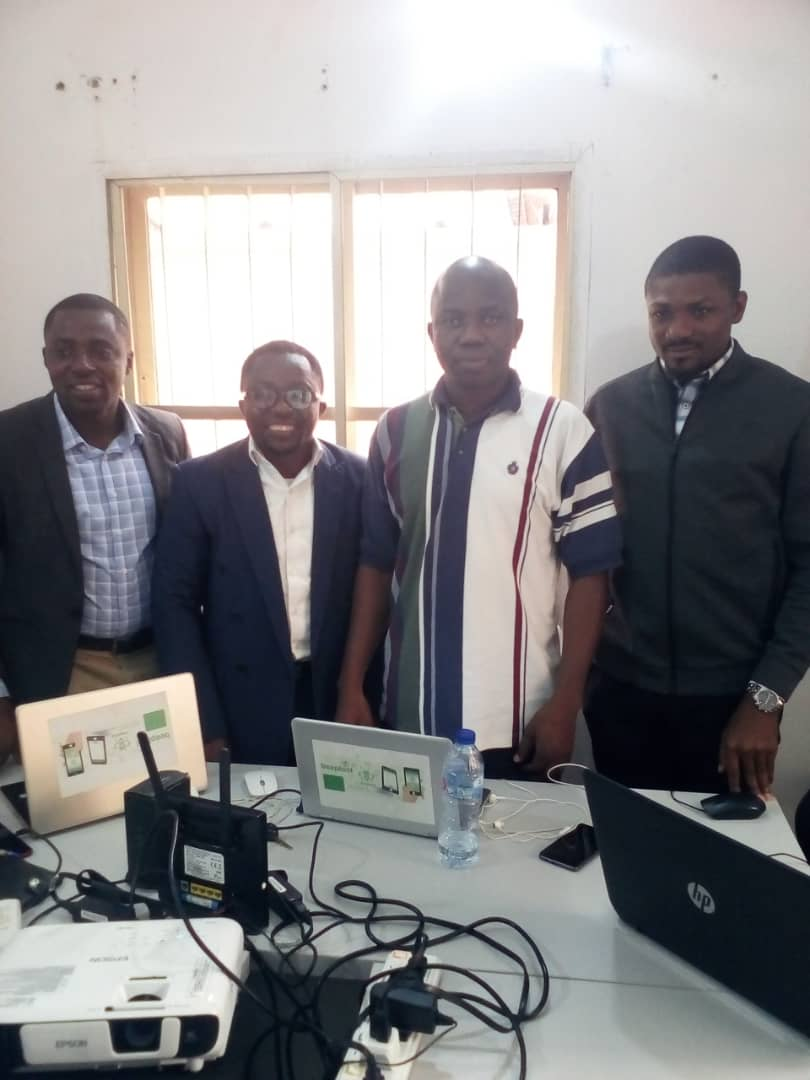
A section of our Lagos team

This is a cross section of the BeepTool team. Our vision is to improve rural communities with the best satellite connectivity and services. I spent a FULL day with our team, explaining the mechanics of markets and frameworks to execute for success.

The Head of the telehealth wrote: “It was the most interesting and inspiring workshop”.  And the agtech leader thundered, “It’s really a wonderful experience. Like just graduated from a business school”.

Yes, they have graduated. Now, execution. Learn more about BeepTool and how we can use satellite connectivity and services to advance the wellbeing of our citizens.

Ndubuisi Ekekwe Takes Equity And Joins BeepTool Board (Photos)

A section of our Lagos team

Ndubuisi Ekekwe Takes Equity And Joins BeepTool Board (Photos)

6
Telehealth system connected via BeepTool

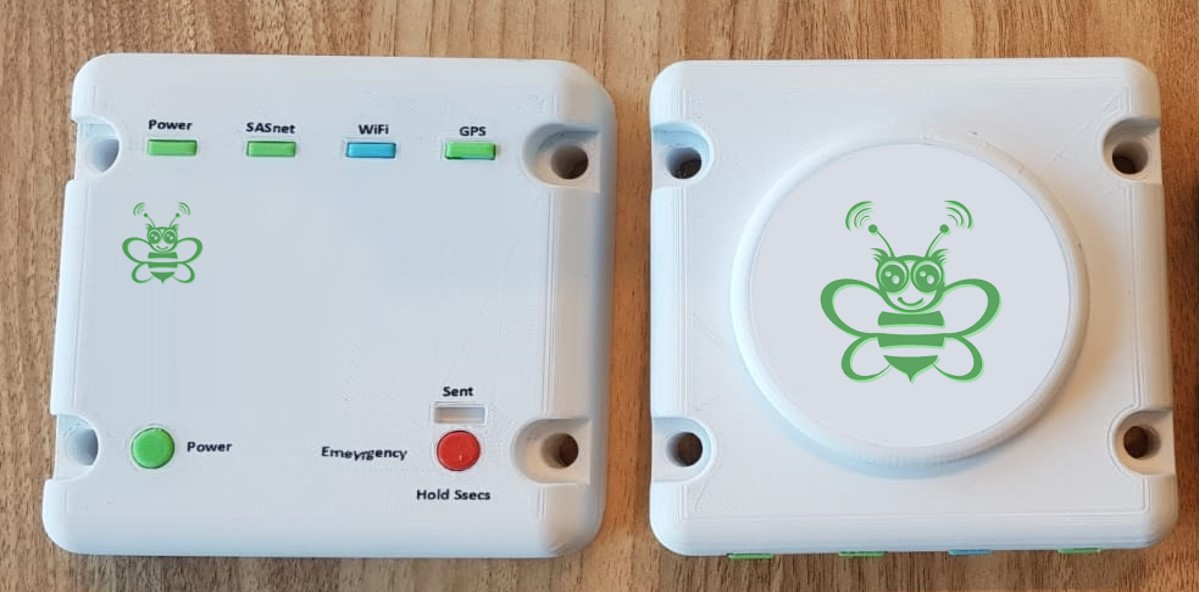
Today, I became a shareholder and Board member of BeepTool. BeepTool makes small satellites with its partners. With its Oyi-I smartphone, you can access the web using a mobile application in areas its satellites cover. The satellites are engineered to serve largely small geographical areas and well optimized. For example, you can have one in your village and if everyone uses Oyi-1 phone with the app, everyone will have Internet connection. You can put one in your oil rig location and everyone will have Internet connection.

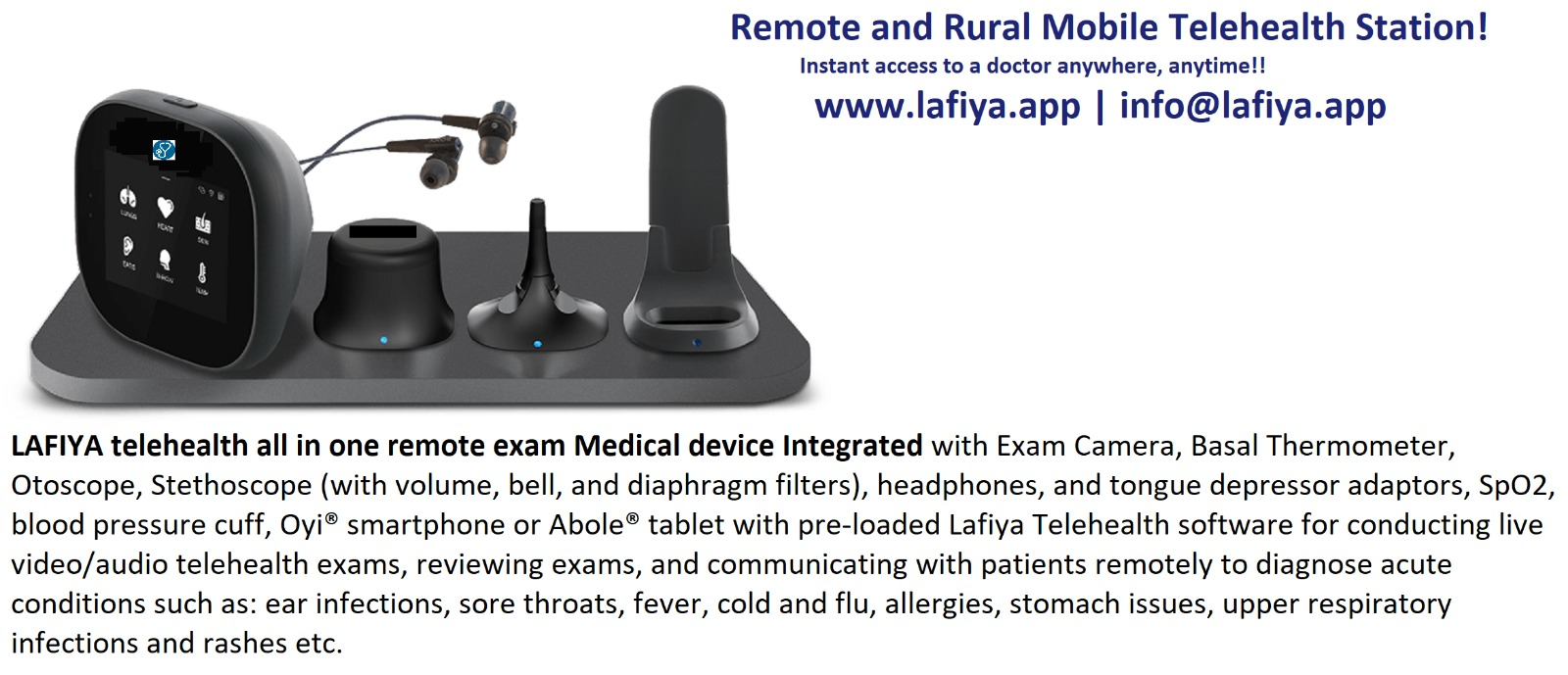
Building on this connectivity are services like Lafiya which is a telehealth solution that practically brings a “clinic” in your office, home, church or more with clusters of health professionals unbounded and unconstrained by geography. Lafiya is powered by solar with nothing to do with national grid. There is also an agro-aggregation business, Ogleji, which supports rural farmers.

In the BeepTool world, there is a fintech – mNaira – which powers the commerce happening in BeepTool ecosystem.  To load credits on BeepTool for subscription of the data, one has to use mNaira. mNaira enables many services designed for locations and areas with non- or poorly existent connectivity. Those services include saving, lending, etc.

Over the last few months, I have been working with BeepTool founder John Enoh, and it is amazing that we are ready for the world. John is based in Texas USA; our local team operates from Lekki. I spent a full day with them today. You will be learning about the different solutions in this amazing African technology company.

Our vision in this company is to take the services which Nigerians in urban areas are enjoying to rural communities. To do that, we have to create a connectivity system supported by services. The Nigerian regulators and Standard Organization of Nigeria (SON) are all licensing or have licensed critical BeepTool technologies. I have been working with this entity for largely a year, and decided now is the time to get full. We also hope you will be interested in our services and quickly connect.

A section of our Lagos team

Contacts

  • Address: 40 Fola Osibo Rd Lekki Phase I, Lagos, Nigeria
  • Tel #: +234-1-453-5771
  • Email: info@beeptool.com
Immersion on the satellite
The satellite
BeepTool terminal
Telehealth with solar support

Telehealth system connected via BeepTool
Oyi 1 smartphone
Oyi 1 smartphone