DD
MM
YYYY

PAGES

DD
MM
YYYY

spot_img

PAGES

Home Blog Page 6766

Plantain Farming Business: The Low Profile Money Maker

3

Agriculture is a money maker. Agriculture is the cultivation of the soil for the growing of crops and the rearing of animals to provide food, wool, and other products. We all are conversant with this definition, but only a few understand the implication of this.

Food is a necessity for man, while we wake up with the troubles of the day, the craving for food cannot be killed. Which better way is there to provide food if not farming?

With more than 60% of Sub- Saharan Africa’s population in small scale Agriculture and only 23% of its GDP coming from the Agricultural sector, this simply shows its not exploited well. Be bold to see that food can be exported to other countries of the world. Anambra State in Nigeria exports Vegetable.

Ethiopia, Nigeria, and Tanzania are countries where we have seen the effects of Government intervention in the Agricultural sector. The coming to power of President M. Buhari of Nigeria, promised increased funding to the Agricultural sector to boost its production and change the Narrative of depending on oil. Whether this has been achieved is a question for another day.

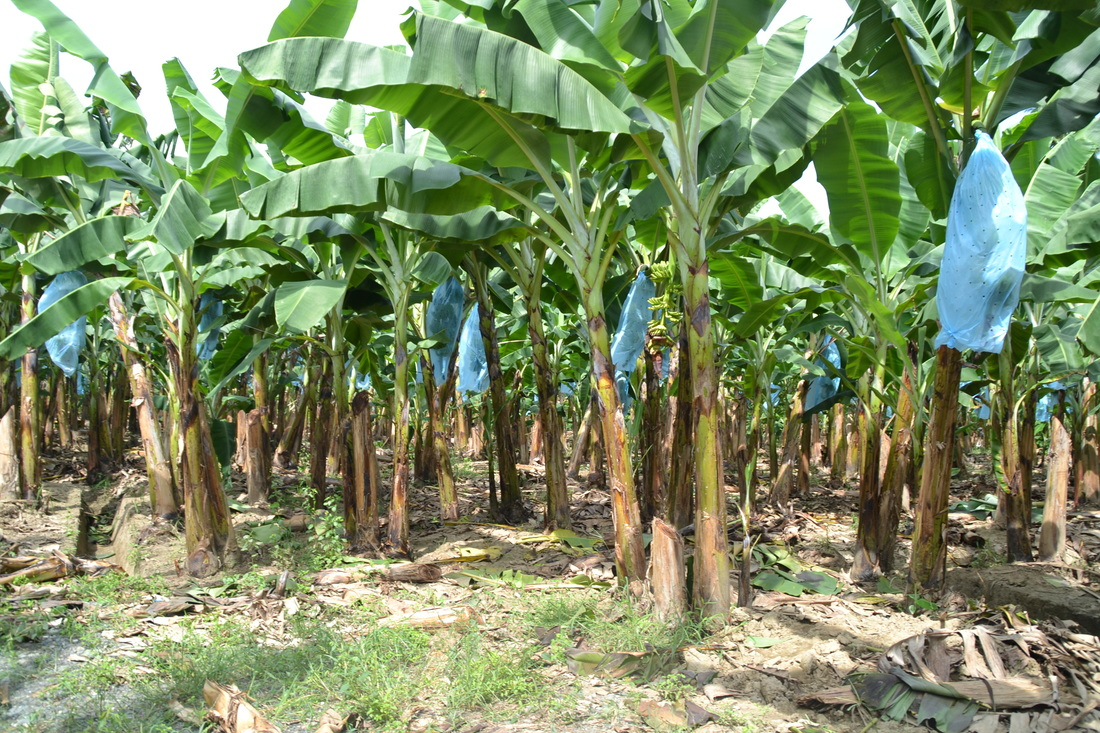
Plantain Farming Business

Plantain, otherwise called “cooking bananas” are starchy fruits with a relatively neutral flavor and has a soft texture when cooked. They produce fruit all year round and this makes them a staple food for most families.

The possibilities of making it big in Plantain Farming are much.

As an entrepreneur, you should see it as the most common crop in the country, this spot is shared with cassava. Plantains develop in clusters, while each mature sucker brings forth another sucker, making for easy propagation.

Plantain Farming Business is that agri-business that anybody can try their hands on and smile home with cash. Plantain starts producing fruits from 7-9 months after planting, so you can be assured that if you do it right, your first yield will be enough to cover initial expenses.

How To Start Plantain Farming Business

  • LAND 

You need a piece of land to plant on. Else, you are from the year 3030 when plants will be grown on thin air (Lol). While selecting land for this crop, do bear this in mind

Plantains love rich loam soil, avoiding steep slopes and places with a bad water drainage system. In all, if the soil is rich in loam content, not marshy but moderate in holding just the right amount of water, that’s the land you need.

While preparing the land, please avoid compaction of earth, employ manual labor as opposed to mechanical work. Do using organic manure is very welcome.

  •  PLANTING RANGE/INTERVALS

According to Alabi Isreal’s Article On Medium,

The recommended spacing is 3 m between the plantain rows and 2 m within the row (in other words. 3 m x 2 m). An alternative is 2.5 m x 2.5 m. If spaced 3 m x 2 m, 1 hectare should contain 1667 plants, but with a spacing of 2.5 m x 2.5 m, it should contain 1600 plants.

This arrangement makes for good spacing, adequate sunlight and air circulation. Also, note that if your land is on a slope, the arrangement should be done in a way that ensures little erosion. This can be done by following the contour lines.

Planting should be done with about “30–60 cm (11.8 in –23.6 in)” deep in the soil.

  • SUCKER SELECTION

A good breed of the plantain fruit will better your chances at making the best of it.  While choosing your suckers, it is advised to choose from vigorous plants, they should have small spear-shaped leaves and are about 4ft high.

  • PLANTING SEASONS AND CONDITIONS

Plantains develop best during the rainy season, although they produce all year round, do not plant towards the end of the rainy season. The best period to plant is the beginning of the rainy season, these periods give it about 4-5 months of constant water while ensuring you reap the fruits in the 7th/8th  month. Extreme weather conditions can damage your crops.

  • FERTILIZING, MULCHING, WEDDING AND PEST CONTROL

Sufficient manure is necessary for proper development. The combined use of Organic and Inorganic manure gives the best result. A month after planting is enough time to add additional nutrients to the plantation.

Mulching should be done around the base of the plant to help the plant conserve nutrients and reduce erosion at the base of the plant.

weeding should be done regularly so that plants don’t compete for nutrients. Schedule for weeding in about 6-8 weeks.

The known pest for Banana and Plantain are bats, monkeys and humans. You should find ways to ensure that plants are adequately protected.

  • HARVESTING 

The moment we all have been waiting for, once you see your fruits, harvesting should come in   3 months. Fruits normally appear within 90 to 120 days after the tree flowers. Upon fruiting, plantains are typically ready for harvest within 6 to 8 months.

Tesla’s Solar Panel Is Failing – And There’s Little Hope

0
Elon Musk, Founder of Tesla

In 2016, when Tesla delved into solar panels, it was in a bid to promote cleaner energy using the best technology. Tesla is well known for its sophisticated and intelligent electric cars until a swipe in “business drive” took effect, so that they started providing companies who needed cheap alternative electricity with solar power batteries. A business aimed at reducing their electricity bills and carbon footprints.

Tesla’s CEO, Elon Musk, had acquired residential solar installer, SolarCity, from his cousin back in 2016, at the cost of $2.6 billion. Offering rentals to cities, companies and individuals who find the innovative idea attractive for economic or environmental reasons.

It was in this faith that companies started subscribing to the rooftop solar innovation, and Walmart was early enough on the list. Walmart has a target to source 35% of its electricity supply from renewable energy by 2020. A push that has inspired 350 on-site solar installations and hope for another 120, next year.

Tesla was responsible for the installation of solar panels on 200 out of 5000 stores own by Walmart, and it was fulfilling their cleaner energy objective until smoke started rising from the roofs. In march 2018, Walmart’s store in Beavercreek, Ohio, gutted fire, and about a month later, two other stores in Maryland and California recorded fire incidents.

The instances were satisfying enough that Walmart didn’t need further incident, they had had enough. So Tesla was ordered to disconnect the Solar panels to prevent regular visits of fire fighters to Walmart stores. In November, another store in Yuba City, California, (although disconnected) joined the blaze record, prompting Walmart to file a suit against Tesla.

According to the complaint, Tesla failed to live up to industrial standards in installing, operating and maintaining its solar systems. And the systemic negligence has resulted in the incessant fires. The complaint also claimed that Tesla has been operating on deficient inspection procedures or had not been inspecting the sites at all.

Walmart’s inspectors saw dangerous connections, including loose and hanging wires at various places. Having other solar panel companies at their service, Walmart seems to know exactly where the problem is coming from. The comaplaint said:

“Many of the problems stemmed from a rushed, negligent approach to the systems’ installation.

To state the obvious, properly designed, installed, inspected and maintained solar systems do not spontaneously combust, and the occurrence of multiple fires involving Tesla’s solar systems is but one unmistakable sign of negligence by Tesla.”

The complaint continues:

“To this day, Tesla has not provided Walmart with the complete set of final ‘root cause’ analyses needed to identify the precise defects in its systems that caused all the fires described above.”

Tesla’s share of the solar market has been in decline since last year, losing its lead in the residential solar market to another company in San Francisco, named Sunrun. Tesla’s revenue also fell by 12 percent, from $784 million in the second quarter of 2018, to $693 million in the same period in 2019.

The recent fallout with Walmart means that Tesla’s future in the solar energy business is uncertain. The biggest challenge so far is their inability to figure out where the fire problem is coming from. However, Tesla has devised some other means of recovery: although its primary target was residential areas, it is now offering services to whoever cares.

The electric car giants are now offering a short term solar panel rentals without contracts, Elon Musk announced. An idea aimed to propel the interest of potential subscribers and lovers of cleaner energy.

However, consumers believe that the deterrent question is: what causes the fire in the solar panels? An answer to this question may cushion the effects of Walmart’s fire incidents, if consumers see it as a problem with a solution. There is also the tendency that Walmart vs Tesla case in New York, may decide the future of Tesla in the solar panel industry.

The Hearts in HR

0

“When HR fails with outdated views, it doesn’t get respect from “jobseekers.” – Anonymous

An overwhelming hiring process can leave a wrong impression on HR and a company’s overall brand. Because HR demands so much from job seekers, and all they are asking for in return is respect. But a wrong impression of HR is formed by jobseekers over three phases during the hiring process: Application, Recruitment, and Interview.

A jobseeker’s first introduction with a company is through a job posting — some with the mile-long job requirements and unrealistic workloads that would require more than one person to do. Job seekers are left shaking their heads in disbelief as the job posting doesn’t describe a “real” person and the underwhelming compensation package it comes with.

In a survey at the Harvard Business Review, jobseekers felt they were unqualified for reasons that had to do more with intimidating job postings taken at face value. The job seeker would instead liken options to “nice to have” rather than having nonessential requirements.   

The application itself can be pretty agnostic to the things that don’t matter but become compulsory before moving on. The other biggest roadblock the jobseeker has to contend with is the hiring company’s Applicant Tracking System (ATS).

An ATS is not a one size fits as they vary among companies; therefore, a jobseeker must try to beat every system. Unfortunately, for a job seeker, these systems are designed to make recruiting more efficient and indispensable for the hiring company. Not necessarily easy for the job seeker. Applying always takes some judgment, and some skills are required. It excludes candidates, who may have mismatched keywords, word tense, among other factors making highly qualified job seekers slipped through the cracks and are not found.

The way forward – it really takes the Heart in the HR to get a good hire from the unrealistic hiring protocol.

If Rejection Happens

It’s tough to be rejected or to get a no response from hiring companies.

HR can be considered as the corporate mouthpiece to job seekers, and both internal and external recruiters are perceived as messengers for HR and their brands. While Recruiters don’t make any hiring decisions, they are expected to enforce those that are built above them.

However, it should not be their mere job to insert keywords into their profiles/resumes and cherry-pick candidates but rather to dig deeper into the pool of candidates. Nothing more, nothing less.

Among the most frequent reasons for the frustration of candidates in the hiring process is the lack of communication. There are a lot of unhappy job seekers who are frustrated from not receiving a response from prospective employers. Sadly, due to a lukewarm hiring environment, job posting still appears without no intentions of hiring or any regard to potential employee/employer relationships.

98% of Fortune 500 companies use ATS while a Kelly OCG survey estimated that 66% of large companies and 35% of small organizations rely on recruitment software.

Hopefully, a job seeker gets past the ATS and starts preparing for an interview. They spent hours pressing clothes to wear, role-playing with themselves about what to say and what not to say. But at the interview, they realize the conversation is centred around the gap in employment and not whether they’re a good fit for the company.

HR forgets that a job seeker has many legitimate reasons why he or she may be unemployed for a period of time, some at no fault of their own or why worked outside their core training.

Then after the interview, there is barely any definitive answer as to “when” there will be a followed-up.

The hiring process can be overwhelming – a frustrating application process, and a complicated interview process with multiple hoops to jump through. All of this frustration builds resentment and a loss of respect for the hiring process.

All Together

Candidates have now begun to exercise control over the recruitment process, one in which recruiters have always had the upper hand in the hiring process. Many recruiters and hiring managers have been ghosting candidates for years, and jobseekers are living out the phrase “what goes around, comes around.” Jobseekers are now ghosting – failing to show up for job interviews or even the first day of employment, and cutting off all communication abruptly.

If HR does not respect that relationship, then the “Human” thing is at least, minimize the frustration. Be it in the formulation of policies and procedures for hiring practices and employee selection to building a culture of getting past the “usual” role of “paper pushing” for legal and compliance reasons.

Overall, job seekers expect a simple and straightforward process — one with an insight into the employee experience and a sense of connection with the overall brand.

Credit: Gaile Sweeney (Resume Writer and LinkedIn Optimization)

African Impact Initiative Canada To Use Medcera On Its Healthcare Projects Across Africa

0

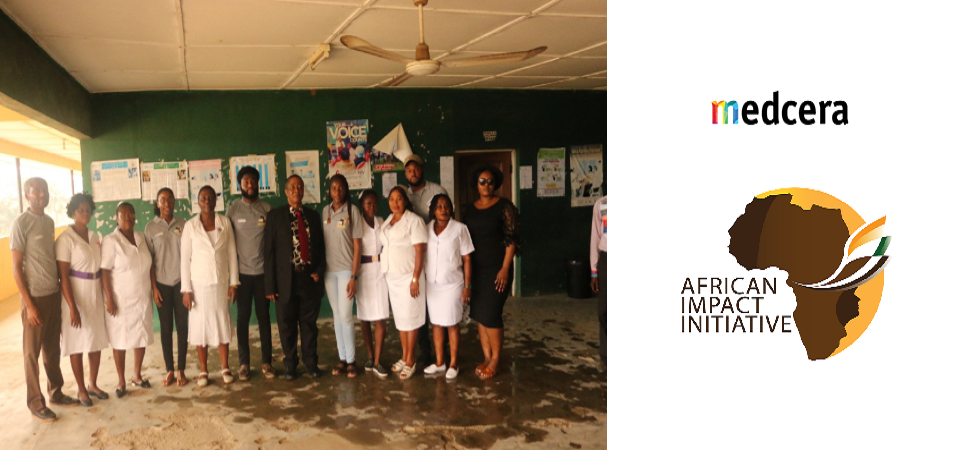
August 22, 2019 (Lagos, Nigeria) – African Impact Initiative ( www.africanimpact.ca), a non-profit organization founded by Africans in Toronto, Canada, has entered into a partnership to use Medcera  (www.medcera.com) to anchor the delivery of healthcare services it offers across Africa.  African Impact Initiative delivers healthcare innovation in rural communities by working with local healthcare professionals to provide basic care to citizens. Their recent project in Akwa Ibom State, Nigeria, focused on improving antenatal care, family planning, hypertension management, stress management, among others.

Medcera is a web-based EHR (electronic health record) system with patient portal that supports clinics, hospitals, pharmacies, health insurers, labs, and imaging centers across Africa. It offers physicians and medical professionals with practice management technology that includes charting, scheduling, e-prescribing, medical billing, and more. With Medcera, a patient manages his or her healthcare records from one single location irrespective of location. The following are core modules in Medcera:

Medcera Fusion: web-based electronic health record (EHR) software for physicians and medical professionals.

Medcera Connect: non-EHR designed for non-physicians structured for labs, imaging centers, pharmacies, dentist practices, etc making it possible for these entities to connect with Medcera Fusion.

Medcera Patient: Personal health record (PHR) system that gives patients access to their prescriptions, diagnoses and test results. Consumers can search physicians by location and specialty, and request an appointment online.

Medcera Insights: An analytic AI tool based on Medcera Fusion dataset. Real-time data provides perspective on clinical trends and helps with population health management and clinical decision support.

African Impact Initiative will use Medcera in its activities across Africa to improve healthcare delivery efficiency, reliability and positive outcome for patients.

The Founder of African Impact Initiative, Efosa KC Obano, said on this partnership, “Our team is very excited about working with Medcera to provide EHR solutions at no cost, to hospitals that can’t afford this normally. We’ll be starting off with the Cottage Community Hospital in the coming weeks. There are so many other hospitals/communities that need this across Africa, and it aligns with our mission of impacting our African community positively.”

Commenting, Medcera General Manager, Timothy Egwemi said, “We are excited on the promise of working with African Impact Initiative. We are a very innovative company with a unique technology. We remain the only EHR in the world that has harmonized patient records without risks to privacy and security. With Medcera, a patient’s health record is delocalized which means irrespective of his or her current location, care will always be delivered by healthcare professionals having access to the current pertinent health data. With AII, we are confident that we will touch more lives as our solution serves doctors, labs, imaging centers, pharmacies and indeed all key players in the healthcare sector”.

About African Impact Initiative

A non-profit organization with the mission of positively impacting the African community, through projects focused on community impact and professional development. For more, click https://www.africanimpact.ca/.

About Medcera

Medcera is a cloud-based EHR with nodes for all critical players in the healthcare sector. For more, click https://www.medcera.com/.

Repatriate – South Africa’s Xenophobic Attacks On Nigerians

0

“Remove your mattress from my space or I ‘ll throw it out!” Fumed Chidi. “If you are the son of your father try it,” retorted Elo. With flared temper, Chidi picked up the mattress, opened the door and flung it. And before he could make his way back into the room, Elo had caught him by the waist, lifted and slammed him on the reading table that immediately collapsed under their weight.

Those were my roommates ten years ago in the university. The hostels were originally built to accommodate two students in a room but during our days, the school authority was allocating bed spaces for eight. When we add squatter students, we get an average of ten per room. There was always strife for the use of facilities in the hostels like bathrooms, pews in the reading rooms, bed spaces, water, etc. This deplorable condition exists because the school was over populated and accommodation in the male hostels was not expanded since 1960 when the school was established.

The reason for this historical narrative is because I have been pensive for two weeks now as a result of the latest xenophobic attack on my compatriot in South Africa, SA. – more on this in concluding paragraphs. As I ruminate on the issue, my dominant thought was not the denial, the injustice, the culprits, the triggers…But how to end the hate on black African immigrants, especially Nigerians by black South Africans.

According to Pastor Fred Odekhian, “No man can touch the means of survival of another man and expect him not to react.” Studies abound to corroborate this quote from Charles Darwin’s ‘Survival of the Fittest’, Abraham Maslow’s ‘Hierarchy of Needs’, and/or Thomas Homer Dixon’s ‘Environmental Scarcity and the Outbreak of Conflict’. In all, the same human behavior is exhibited. And, funny, all living things conform to this reality. 

Maslow’s Theory on Human Motivation states that, “Humans are compelled to fulfil their most basic needs(food, shelter, employment, etc) first in order to pursue intrinsic satisfaction (security, belongingness, esteem, and self actualisation) on a higher level. If these needs are not achieved, it leads to an increase in displeasure within an individual. This explains the mass hysteria in South Africa.

Thomas Homer Dixon identified three basic ways in which environmental (and by extension, economic) scarcity can lead to social conflict. The most appropriate in this discourse is Demand-induced scarcity, which says, “population growth or increase in consumption levels increase the amount of limited resources available to each individual”. According to the United Nations estimates, the number of African immigrants in South Africa is between 1.5 million to 3.5 million out of which Nigerians are believed to represent 27,326. The ANC Government never planned for this magnitude of influx when the economy demanded for skilled immigrants a little over two decades ago. The number also includes refugees and asylum seekers.

In my opinion, hate, regardless of the form it assumes, has the same destructive capacity in any circumstances. Under apartheid, it adorned the toga of grand racism by the minority whites against the majority blacks who were indigenous. In Rwanda, hate manifested in the attire of tribal war leading to the 1994 Genocide. In Central African Republic, hate engulfed people in religious conflict between the Seleka Rebels, and the Anti-Balaka in 2013; and ethno-religious crisis divided the largest country in Africa into Sudan and South Sudan in 2011. Hate is notorious for turning kindreds and friends into foes by distorting emotions, obliterating reason, and drowning memories of kindness.

In modern South Africa, hate has reawakened like the legendary Phoenix in the form of xenophobia. Since 2008, the population of both legal and illegal African Negros is willfully being decimated with the ANC Government looking the other way. Foreign intervention, Nigeria inclusive, was instrumental for liberating black South Africans from their white oppressors, restoring peace in Rwanda, Central African Republic and Sudan. The same foreign intervention is needed to end xenophobia. Injustice is always the root cause of most conflicts.

128 is the number of Nigerians killed by South Africans this year alone, the highest of foreign nationals. I need to be convinced that it is not a consensus. 128 might be statistics to you until the next digit knocks on your door or a neighbor’s door(God forbid); and unfortunately, it knocked on my friends door when on the twenty-second of August two xenophobic bullets were shot at Benjamin Simeon Okoronkow, the immediate elder brother to Emmanuel Okoronkwo.

I paid a condolence visit to Emmanuel in Mowe, Ogun State where he holds up with his elder sister.An excerpt of my visit: “Gani, I am very happy to see you. You cannot imagine the pain I feel. My brother had been the breadwinner for the family and since he left Nigeria, this December would have been the first time we will see him and his family. He paid for my attempts at securing American visas. In the Month of April he asked me to wait until the Month of August to enable him make conclusive arrangement for me to emigrate to Isreal which is safer than South Africa. He was going to arrange for a job, accommodation and the rest so that immediately I get there I will start working. Now that he is gone, how can I take care of his wife and children?” “Since God permitted it, it will turnout for good,” I assured him.

Emmanuel and I have been friends for eleven years now. His late brother sponsored his university education. Seven years after graduation, the government has failed to provide him with a job like millions of others. In a country with unequal access to opportunities, mass exodus of the youth to places of perceived green pasture is the only hope for self preservation. Many youths have lost confidence in the present and future of the country. They take their chances like the four leprous men in 2Kings 7v4, who said, “If we say, ‘We will enter the city, ‘the famine is in the city, and we shall die there. And if we sit here, we will die also. Therefore, come, let us surrender to the army of the Syrians. If they keep us alive, we shall live; and if they kill us, we shall die.” 

Honestly, the end of xenophobia in South Africa is not in sight as long as socioeconomic conditions are worsening in the former apartheid state. Unemployment rate rose from 27.6% in Q1 to 29% in Q2. Another reason is the populist rhetoric from S.A’s political leaders that serves as fuel and match for xenophobia. Let us consider some of these volatile utterances. Thabo Mbeki, 2008: “My people are not diseased by the terrible affliction of xenophobia, what is happening are acts of criminality.” Cyril Ramaphosa: “Everybody just arrives in our township and rural areas and set up businesses without licenses and permits. We are going to bring this to an end.” The Zulu King, Goodwill Zwelithini: “…We can not even recognize which shop is which, there are foreigners everywhere… We ask foreign nationals to pack their bags and go back to their countries.”

The elite in SA are following in the footsteps of the apartheid government in notoriety against a different race. For instance, in 1948, during the national election, the National Party of Daniel F. Malan, argued that whites are being “swamped” and called for a forceful restoration of the old order. Malan dubbed his policy “apartheid”. This was the stroke that consolidated the racist regime for an additional period of 46 years led by the National Party.

The way foreigners are being made scapegoats reminds one of George Orwell’s Animal Farm, where Snowball, a former outstanding hero was made a perpetual enemy and blamed for the failures of the current government of Napoleon. An excerpt: ” Suddenly, early in the spring, an alarming thing was discovered. Snowball was secretly frequenting the farm at night! The animals were so disturbed that they could hardly sleep in their stalls. Every night, it was said, he came creeping in under the cover of darkness and performed all kinds of mischief. He stole the corn, he upset the milk-pails, he broke the eggs, he trampled the seedbeds, he gnawed the bark of the fruit trees. Whenever anything went wrong it became usual to attribute it to Snowball. If a window is broken or a drain was blocked up, someone was certain to say that Snowball had come in the night and done it, and when the key of the store-shed was lost, the whole farm was convinced that Snowball had thrown it down the well. Curiously enough, they went on believing this even after the mislaid key was found under a sack of meal. The cows declared unanimously that Snowball crept into their stalls and milked them in their sleep. The rats which had been troublesome this winter, were also said to be in league with Snowball .”

From the foregoing, we can conclude that the life of every black immigrant in SA is at risk everyday. People ask, ‘Why are only black immigrants the targets of xenophobia and other races are not touched?’ The answer is found in Maslow’s Hierarchy of Needs. At the bottom of the five level hierarchy is domiciled most black SAs and black immigrants. Here population is larger than the available resources to support it and there is much strife. Non black immigrants are high above the reach of the frustrated black SAs comfortably at the level of Esteem and Self-Actualisation. Their inability to reach those responsible for their deprivation, makes them vent their anger on the defenceless aliens. In Nigeria, there are some Chinese, Indians, and Lebanese committing crimes they won’t dare in their countries but we don’t resort to jungle justice, we allow the law to deal with it. 

With much said, I am convinced the only solution to xenophobia is complete repatriation of foreign nationals. This is what sensible countries do instead of resorting to senseless attacks. For instance, in 1969, Ghana forcefully repatriated thousands of Nigerians. Also, in 1983, though not retaliatory, Nigeria expelled over a million Ghanaians from the country in what is known as the ‘Ghana Must Go” revolution. Both repatriations were due to economic burst and the need to prevent xenophobia. Of course, there was global condemnation of these acts, but the truth is, it is better than xenophobia. Despite these, today, Nigeria and Ghana are in healthy bilateral relations. Nigeria sincerely appreciates the activities of the ‘anti-xenophobic’ activists; your voices  and actions premised on Pan-Africanism has immensely minimised the menace of xenophobia.

In sum, and in the words of the late reggae iconoclast, Peter Tosh in his hit song, Mystery Babylon:

                  “Send my sons and daughters back home

                    All them who are call out jah jah name”

I call on Cyril Ramaphosa, the president of SA, and the ANC government to send our sons and daughters back home, all who are called Nigerians! Asthe Holy Book said in Ecclesiastes 9v4, 

                    “But for him who is joined to the living there is hope

                     For a living dog is better than a dead lion.”

This is just saying, a living poor man in Nigeria is better than a dead rich man in SA.

Rest in peace Mr. Benjamin Simeon Okoronkwo.