DD
MM
YYYY

PAGES

DD
MM
YYYY

spot_img

PAGES

Home Blog Page 6766

Because We Focused More on Grades than on Knowledge

2

I was invited to be the MC at a school’s end of year/graduation party. The event was so colourful. The presentations by the students were wonderful. Parents were proud to see their children perform. There were smiles and laughter everywhere. The event was moving so smoothly until we got to the last item on the programme – the prize and award presentation.

Immediately I announced that the next item was prize and award giving, the atmosphere became charged. The first set of people called were the graduating students. Theirs was just presentation of gifts, no award attached to it. After that came the presentation of prizes to those that took the first three positions in each class – you know, the first, second and third positions. Being the MC, I kept observing the faces of the audience. What I saw on the faces of the students and guests was a mixture of emotions. I saw anticipation, fear, hope, anger, disappointment, envy, joy and so many others I can’t place a finger on. My efforts to relax the house didn’t work. I tried to preach about every child being special in his or her own way; it still didn’t get anywhere. Some students were crying, others were laughing. Some parents were smiling while some were scowling. The party that started so well ended with mixed feelings all because of one culprit – the result grades.

Yes, the students’ graded results brought about the charged atmosphere at the party. If this result wasn’t brought in, everyone would have gone home happy. Truth is that awarding positions in classes is beginning to cause a lot of problems for us. I am not against class positions, so to say, but on what type of assessment is it judged? What is that position saying? Is it saying that the child that took the first position is the most intelligent in the class? I think we need to look into this matter because what I saw that day said a lot.

By the way, it looks like we parents send our children to school not to acquire knowledge but to compete academically. This is the only thing that explains why parents collect their children’s results and go straight to check their positions before looking at their class average and performances in different subjects (that is if they bother to look at them). Whether their children could demonstrate what they learnt or not isn’t their problem. All they are interested in is that their end of term results said that they are ‘better’ than some people in their class. This also explains why you hear parents say things like – “My son took first position”, “My daughter can read and she is just in Nursery 2”, “My son had nine A’s in his WAEC” (even those that cheated), “My son scored 400 in JAMB” and so many others. What we need to hear are things like – “My son doesn’t go near electricity because at school they were taught safety at home”, “My daughter learnt how to bake cake from her Food and Nutrition class”, “My son is speaking French fluently because they taught him in school”, “My daughter studied computer engineering and is doing very well now”. Dear parents, we shouldn’t be interested on who our children are better than in the school but on the knowledge they acquired and their ability to apply it. Let’s stop focusing their attentions on competition, it won’t help them in this present day world.

Because our children know that we expect them to top the class, they only study to pass their (or rather, make good grades). These children spend their days and nights studying to score high in their exams and do not bother to really understand what they are studying.

The teachers, because of the pressure from parents and the system, teach students so they will pass their exams and make good grades. This is why teachers spend time repeating and repeating things until the students memorise them, even if they don’t understand what they are. Later, the teacher will copy notes upon notes on the board, which the students will copy, memorise and transfer to their exam answer scripts. Because teachers are sometimes appraised based on the performance of their students, some of them teach only those areas that will feature in exam. Teachers need to teach students to understand and use what they were taught in real life situation. A student that understands will definitely do well in exam. Let the teaching focus less on exam and more on understanding.

When these students move to higher institutions, the story continues. The lecturers that are supposed to teach them to think will leave them to continue their ‘copy and paste’ format of writing exam. By the end of the day, these students will graduate with good grades only to get stuck in the labour market. This is part of why Nigerian education system is seen as substandard: we are only after grades, not knowledge.

I believe our system in the country is encouraging this quest for better grades with less knowledge. Most establishments recruit workers based on their academic performance. If, for example, you found out that you need to make first class to land your dream job, all your attention will be on making up that grade. But if the company’s requires the abilities of job applicants to perform, irrespective of their grades, less attention will be paid to grades and more to knowledge.
What I’m saying here is very simple – let us stop putting much interest on grades and focus more on the changes our children undergo because of the knowledge they acquire. Let these children showcase what they have learnt in real life, not on paper.
The Robots are Coming for Your Job

0

Jobs will get fewer, much fewer than the number of both home bred and imported certificates chasing them. Neither the paper quality, the name of the issuing institution nor the field of study on it will give the bearer an edge in the death race for jobs of the future. As the prospects of getting into the available job opportunities dims, the prospect of remaining relevant and retaining the existing job positions dims too. Thank to the robots.

In one era, such hallowed pieces of paper had so much power. Kings respected them. Whoever had them stood out like a star and had many waiting opportunities in the job market. In fact, the jobs pursued them. Parents sold their prized possessions so that their children could get one. Folks with no benefactors toughed it out through fire to get one. There was always a consolation in one form or the other waiting for a school certificate bearer.

However, that era has passed, and except for a few, no one seemed to notice. Everything else has changed except the quest to get educational certificates and to hunt for jobs. But that is not the problem. The problem is not that the government is incapable of creating these jobs. It is not that the present day graduates are no better than their illiterate counterparts in job creation.  It is that the good old days aren’t coming back. Not even something close to it.

The jobs are not coming back.

Let’s face it. We will always look forward to the next release of the iPhone, and expect the next smartphone from Samsung to do more wonders than its predecessors. If it allows us to surf around the world right in our palms, chat and whine away our time with friends, threat ourselves to some nice musical tunes, and  play some mind blowing games, that’s dope. For the slightly weird ones, if the phone can point at a person and the person reduces to the size of a gnat instantly, that will be more fun, and more exciting. The bigger the wonders the better they are, an ever present companion to humans.

What about the cost?

Who cares? A part of us quietly approves of buying them expensive and wishes the price to be sky high. That way it puts you conspicuously far ahead of your peers in swag and status rating.

Furthermore, hospitals, industries and our homes are not left out. We want everything around us to be mind-blowing and smart. We crave the easy life where we spend little human effort and achieve the most results.  Cost matters very little as long as we receive our heart desires whole right inside our palms. .

But there are heart-rending consequences.

Our thirst for the good and easy life leaves Toyota, Nokia, Apple, Samsung, the tech giants and manufactures of those sleek and shiny smart thingamajigs we crave with a heavy task. They jostle to meet up with our unending yearnings and expectations. Each wants their products to have better features. Each yearns for higher human approval rating. And each of these companies wants to outsmart the others and lead the pack. As much as we don’t care about the prices they do care. They care about the cost of feeding us fat on those gadgets. Their utmost desire is to bring it down as much as possible; the lower the cost, the higher their profit. They are going for cheap labor, and embracing every means that helps them meet this target. They are not looking at the side of the humans any more for this kind of labor.

The droids, the apps, the machines, Artificial intelligence, the burgs, and those fancy shinny ensembles of ambidextrous arms called robots have the answers. Most times they appear like human look alikes. Their presence thrills us and the amount of extra abilities they give to the humans amazes us. We fail to notice how gradually our ability to control slips from our grip. They take the burdens off of our shoulders and leave us with heavier ones in disguise.

They are timely, more accurate, and faster than their human makers; and most importantly they don’t charge wages and salaries.   One robot, humanoid, droid, app, whatever you call it, can displace thousands of humans in one subtle swoop. Technology has become us and we have become technology. The robots make this union more seamless like the Siamese twins. Our soaring thirst for the good life and hunger for those fancy gadgets we carry about fuel their existence.

The bots are taking over.

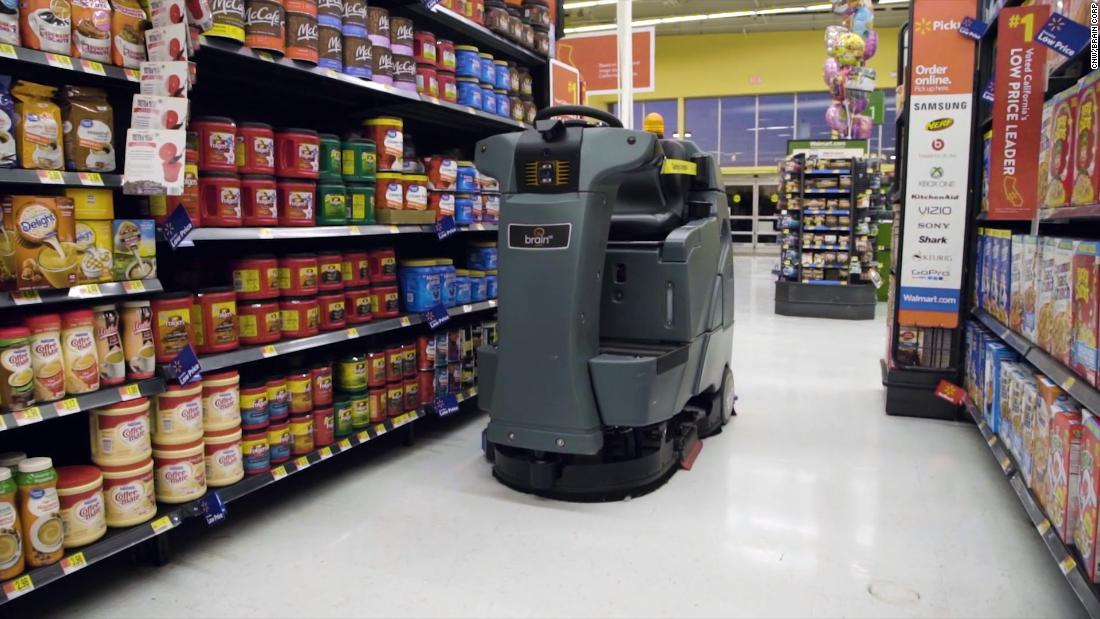
Who will hire a human to do the repetitive and drudge work of sorting and fetching items in a warehouse? Amazon for one won’t.  The robots are in Amazon warehouses fetching items. Alibaba has thousands of them too. In the hospitals they now read MRIs. They walk around in restaurants and recreational facilities in ‘excitement’, warmly saying ‘hi’ and ‘welcome’ to the humans and taking orders and packing luggage. They even shop online, place orders and have their goods delivered. Did I forget to mention that they are doing a computationally intensive research to find a cure for cancer? The examples can go on and on.

One day you will relax to read and enjoy your favorite blog posts on this forum. You will feel the same flare and finesse you have known the author with, and hear a familiar voice speaking to your soul, and making the usual emotional connections you are used to. And in the end you will meet a shocking postscript that reads: ” a robot wrote this article” (Lol).

Edward D.Hess in one of his articles calls it the “Robot tsunami’. In this era the blame for not creating jobs will no longer be on the government. Be ready to blame and say those harsh words to the robots. I hope a line or two in the program controlling them will grant them the uncanny human ability to listen, understand and possibly sympathize.

“The jobs aren’t coming back,” said Steve Jobs. 

The bots, like an army of locusts, devour and ravage every job position they lay their scrawny fingers on. In their wake they leave permanent damage.  Once they have conquered a territory, with their heads high in pride, they definitely move for the next job in their radar. Without control or break, they will match on until all human jobs are ‘terminated’ and a flag is hosted high announcing the era of robots.  That’s is hypothetical thought. They will monitor the traffics, sell food at restaurants, administer justice, teach in classrooms, perform critical surgeries in the hospitals and answer you when you call the customer care line of your service providers. With Artificial intelligence and data mining technologies, their possibilities are limitless.

My greatest fear is that one day they will enter the police and army to check human ‘excesses’ for which they will have no humanity  to tolerate nor the empathy to understand and show mercy. That’s funny and a bit scary. But the reality is very much close to that.

Finally, unemployment in the world and especially third world countries like Nigeria, had sunk so low over the years. It has come to the red alert line. Nigerians seem unaware of this like the rest of the underdeveloped world.

That the bots are coming for the available job positions even makes it worse.

The over 300,000 robots working in Japanese factories are actually doing jobs humans once did.  The world is fast getting automated. Processes are getting done smartly by apps and Artificial intelligence based techniques.

The trend of the events of the future shows that this situation will get worse. In the end those who succeed in creating a job for themselves and others will remain in business.

According to research by Carl Frey and Michael Osborne, 67% of the US workforce is at risk of losing their job forever to robots in a few years from now.  A disease that makes US sneeze will kill Africa in their numbers.

Those jobs with repetitive activities, which do not require the ability to perceive and adapt to subtle changes, or engage on an emotional level with other people are in the robot’s plan for destruction in a few years to come. You find these jobs in manufacturing, packaging, construction, and agriculture.

But jobs in the sciences, engineering, arts, health care, law and business management will be at low risk of takeover by robots. That is if the prediction of Car Frey and his co researcher holds true in the years to come.

So what can you do?

Quit chasing certificate and hoping on the government to create jobs. Develop yourself and get a skill instead. Create a job and own it. Build up your skills and begin to channel them into finding solutions to critical problems of our time well ahead of the robots. In the job adverts of the future, humans may need not to apply. They will need to be retrofitted with some chips and programs to stand a chance of competing in the same job market with a robot.  When you own the job, you have some control over whether the bots will take it or not.

The Game Plan for Waterways Transportation in Lagos

0

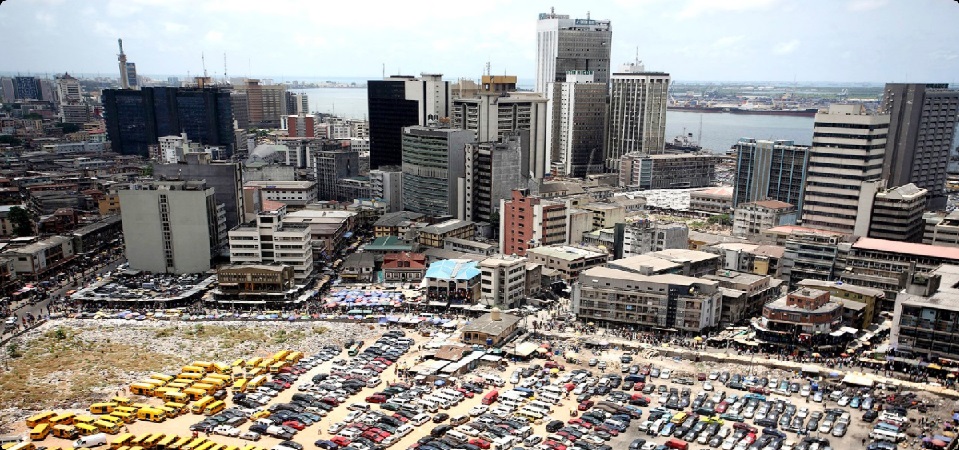
Lagos has over 5 million cars and 200,000 commercial vehicles on the roads. Where the national average is 11 vehicles per kilometer, Lagos daily records an average of 227 vehicles per every kilometer of road being used by its 25 million people residents. About twelve million commute daily, meaning 65% make daily use of road transport making its resources over stressed. 

Game Plan: If Lagos can focus on the remaining 35% utilizing water transportation, setting a standard fee of 200 Naira per trip as the lowest fare to commute between two places via the waterways, and making a profit of 50 Naira on each trip per passenger;  if we put a target of 1 million trips daily for 12 months, it’s simply equates to 50,000,000 Naira daily in revenue multiplied by 365 days which equals to 8.3 billion Naira. Considering staff salary, maintenance and other running cost at 10 billion yearly, we still have a whooping 8.3 billion Naira as profit being generated by fully utilizing the water transportation system. (This does not consider the cost of equipment yet which is treated as fixed cost.)

Type of boats: we could get really good ferries at very good affordable prices that make use of solar energy or we could still incorporate the local wooden boats thereby giving more jobs to the local manufacturers of such wooden boats attached to a speed engine.

Additional Features: Aside from the main feature of transportation via an Uber like application, we would be incorporating the following features:

  1. We put together a well planned logistics menu platform for utilizing the waterways In Lagos where we have an Uber like application for boats where you can book to transport yourself, goods etc from one place to another. 
  2. We get people who have boats for lease to list them on the platform, we would also list our own boats available with their corresponding daily routes and fares for different destinations and services being offered. 
  3. There would also be a tourism menu on the application where they can book a local boat cruise and book international shipping trips, cruise and voyage.
  4. Users can also make use of the application to list their yacht and other luxurious boats for hire by musicians for various purposes like video shoots and picnics.

The game plan above has two components which I think are critical for modern startups: technology and renewable energy usage. Yes, for any startup to succeed in this modern 21st century business ecosystem, I feel two factors must be in play here which are:

  • Technology: Starting up a business without incorporating technology in it is like building a dinosaur business; it’s already extinct. Ease of process, sophistication and ease of access should be the major keys and decider here.
  • Renewable Energy: you must seek to go clean in terms of energy generation as soon as possible, this is to be climate compliant and to reduce recurrent expenditures geared towards maximum capital efficiency. If you don’t incorporate renewable energy in your business, then you are building Rhino Business, it’s soon to go extinct.

A Simple Model of Economic Prosperity for All

1

According to economists, the distribution of wealth in society is determined by the ownership of factors of production namely Land, Labour, Capital and Entrepreneurship. So, people who own one or more of the factors use them as sources of income as they engage in economic activities. You pay me rent for using my land, wages for labour, interest for capital and profit goes to the entrepreneur. 

Based on the above, we can capture all individuals in the society and model a possibility of economic prosperity for all. We will be making some assumptions along the way. 

Before we go further let us agree that all human beings have at least one factor of production, hence, this implies that we all  are capable of earning income upon putting our factor input to a payable service. In this model, only those who fall in the category of children are excluded from factor owners, in that they are not of working age; child labour is illegal. Persons of disabilities to join this category as it is nearly impossible or extremely difficult to have them engage in many forms of economic activity. 

Starting with the most popular factor of production labour, we can agree that all who are not children or disabled have possession of labour to offer services and earn income in the process. We also know that with skilled labour comes higher compensations. So, an individual of working age is free to find a paying employer. There exist some options from menial jobs to skilled jobs. If an individual is lucky enough to have taken advantage of free education offered by the Nigerian government from Primary to Junior Secondary School they will have more options of where to offer their labour no matter how little the compensation. Upon getting employment, the owner of labour can decide to acquire more skills and attract better payments. The individual is now able to fend for himself and others. In the current times, I have met young people who sponsored themselves through higher institutions of learning in Nigeria. We cannot deny that tuition in Nigerian higher institutions are affordable.

As for those fortunate to own lands, they have the choice to engage their land in real estate and receive rent. However, since the majority of the Nigerian population are employed in the agriculture sector and the country has vast arable land, we say the owners of land are the farmers. So, the farmers own one factor land from which rent comes. Also, they produce food for the country which qualifies them as entrepreneurs (those who combine the other factors of production to make a service or product). 

Entrepreneurs as we know them come into the economy to solve difficult problems and earn a profit. We have several of such problems which could mean several opportunities for the entrepreneur. In our model, one opportunity for the entrance of the entrepreneur is the gridlock in the agricultural sector. Low output from the farmers, low pricing of farm produce, lack of access to markets, weather variations among many things leave the farmers perpetually poor. The entrepreneur will prosper in these settings.

Finally, we have capital, which includes machinery fixed or mobile used to produce goods or services. Owners of capital charge interest. These machines are needed in agriculture and other sectors, to boost productivity and increase profits. 

So, if you have at least one of the four factors of production, you should be living above 3 dollars a day. Remember this is a simple model, meant to stimulate development thinking.

Dodoma Wines Tanzania: I heard it from the Grapevine – Missionaries, Grapes and the Wedding at Cana

0

When I first published a paper based on an evaluation of the impact of the country?of?origin effects on the consumption patterns of “made in” Nigeria Guinness as opposed to Guinness “owned by” Ireland in 2011, I had not imagined that the alcoholic beverage market was being disrupted.
 
Since that paper was published, there have been numerous manifestations of the changing landscape of the booze industry. With the rise of craft beers and transformation of Prosecco to Jay Z’s decamping from Crystal to Armand Da Brignac (aka Ace of Spades) coupled with the scramble for Africa orchestrated by big brands such as Heineken.
 

Fastforward to a recent report on Tanzania, which is now Africa’s second-biggest wine producer after South Africa  producing arguably tsome of the best and sweetest wines in Africa. Who would have thought about this only a few years before?

 
According to a recent report by How Africa News entitled “Here are 9 Most Popular Tanzanian Wines that Kenyan President Uhuru Kenyatta Can’t Get Enough Of”:
“Grapeines were first introduced to Tanzania’s central zone in 1938 by missionaries from the Hombolo Catholic Mission, who,  after independence assisted in seting up the first commercial production in Dodoma.”
 
The same article goes on to provide some insight into that place called Dodoma:
 
“Dodoma is Tanzania’s major  grape growing region and the four acre grape farm at Dodoma’s Isanga Prison was the first government institution to invest in wine, in 1969 it built a winery plant and achieved international recognition by becoming Tanzania’s sole  buyer of grapes for wine processing.”
 
The rest as the saying goes, is history!
 
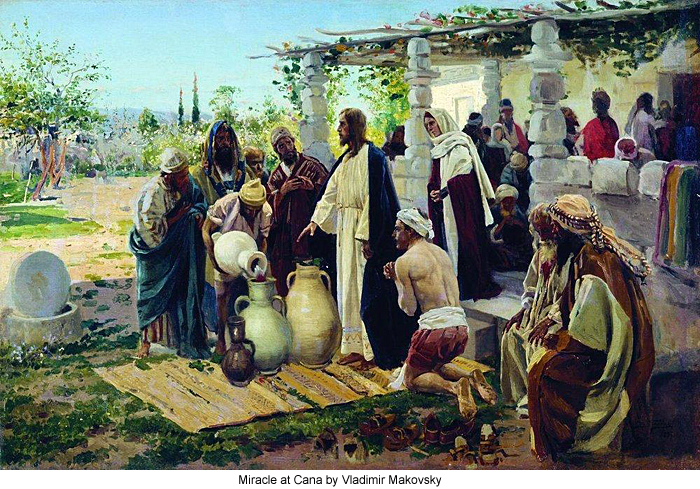
Talking about history the story of religion and booze linked to the origins of Tanzania Wine can be linked to the biblical narratives of the Wedding at Cana where Jesus turned Water into Wine. See John 2:1-12.
 
Likewise, the rise of South Africa in this sector disrupting the old guard such as Bordeaux and California, i staking on a new turn from the East Coast of Africa.
 
Finally, let’s remain mindful of the fact that this is agriculture, and that is a key focus for the development of Africa – Artificial Intelligence, Agri-Tech or whatever other nomenclature exists out there, we need a tangible, critical mass of this nature to secure the future of Africa and its Agricultural sector.
 
Key highlights:
The Grapevine 
Missionaries and Grapes
The Miracle at Cana
The Wine Trail
Craft beer   
Tanzania 
South Africa
Dodoma Wines
Presidential Wines
Nigerian Guinness 


Nnamdi O. Madichie, PhD, is Director of the Centre for Research and Enterprise at the Bloomsbury Institute in London. He is a Fellow of the Chartered Institute of Marketing (FCIM). He has published extensively in the areas of Marketing and Entrepreneurship in Emerging Market contexts. He is author of “Made?in” Nigeria or “owned?by” Ireland? published in Management Decision in 2011
Madichie, N. 2011. “Made?in” Nigeria or “owned?by” Ireland?”, Management Decision, 49(10), pp. 1612-1622. https://doi.org/10.1108/00251741111183780