DD
MM
YYYY

PAGES

DD
MM
YYYY

spot_img

PAGES

Home Blog Page 6777

Stop Limiting the Functions of Your Phone

0

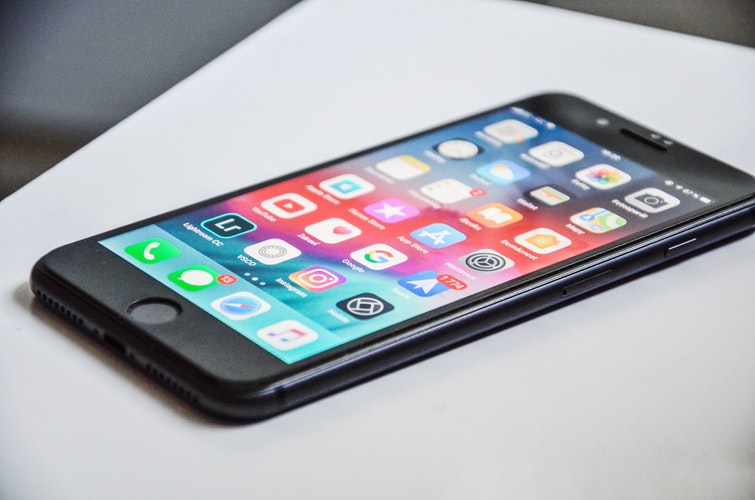
There are many things your mobile phone can do that you are barely aware of. When you have a smartphone in your hand, it is not just a phone in quote, but a technological compilation that can go to any extent you want it as long as you know how to ignite its functions.

It’s amazing that some people will purchase smartphones that worth hundreds of dollars and even thousands of dollars, and they only use them to make and receive calls. That phone is not just for call; if you need a phone designed for calls then you better go get a feature phone..

It’s understandable that most old people, even the educated ones don’t know how to operate a smartphone. I was dazzled when a senior friend, a professor of law, asked me to help him install a WhatsApp and teach him how to use it and other apps on his smartphone. Maybe, there should be an adult education for people on how to make use of everyday technology.  Many adults are technologically illiterate including the educated ones and the elites.

The most functional and popular buttons in a phone are the call dial and receive call buttons especially to the old people. For the young people, the phone is just for calls, take pictures, record videos and chats. Some only care about the clarity of the camera so as to serve their purpose. Some care just about the space capacity of the phone, so it could accommodate all their files.

I am not ignorant of the fact that most people purchase phones for customized purposes and that’s why they insist on the particular feature or specification of the phone; hence use it mostly for that purpose.

Some amateur photographers who can’t afford a digital camera use phones to start up their crafts. Some YouTubers and video makers also insist on the camera quality of a phone before getting, and some digital marketers who use phones as their toll also insist on the camera quality and storage capacity.

The purpose of this article is not to criticize your technological illiteracy but to expose things your smartphone can do that you are not aware of. Other than the basic things individuals use their  smartphones to do, there are other things which are possible. The basic things individuals do with their phones are;

  • ~placing and receiving calls.
  • ~sending and receiving text messages .
  • ~sending and receiving emails .
  • ~reading mails.
  • ~surfing the internet.
  • ~Checking Facebook and other popular social media apps.
  • ~Taking pictures and making videos .
  • ~Checking time with the phone
  • ~Making use if the phone’s calculator

Some other things your smart phones could do for you include;

  • ~Checking the weather: Of course your smartphone could be your weather reporter. Just as you tune in your radio or television set for weather reports, your phone could save you the stress and predict the weather for you on daily bases
  • ~Your phone can be your alarm.
  • ~Your phone can also be your stopwatch.
  • ~You can use your phone as your world clock.There are apps on Google Play store or Apple Store that are world clock apps and they work with your smart phones. So, you can be in Nigeria and know what time is it in China or the United States so you can schedule your international meetings or whatever reasons.
  • ~You can use your phone to hide your location or switch your location to another location for security reasons if you suspect you are been trailed. You can be tracked through phone and you can stop being tracked through your phone by hiding your location or changing your phone location to another location.
  • ~You phone can be your dairy for your daily events and Todo list.
  • ~ You can use your phone to read news and receive latest news updates.
  • ~ You can use your phone for directions through the Google Maps.
  • ~ You can use your phone as your mobile bank. Banks and other financial institutions have apps that work perfectly well with your mobile phone (be it an Android phone or an iPhone) that you can use to transact and save you the stress of going to the banking halls.
  • ~You can use your phone to shop online and what you bought will be delivered at your doorstep without you living the comfort of your home.
  • ~ You can use your phone to type as there are Microsoft Word apps that are suitable with your mobile phone.
  • ~You can use your phone to arrange and prepare for your presentation as there are phone PowerPoint apps.
  • ~ You can use your phone to store and duplicate important files.
  • ~You can use your phone to edit pictures and videos.

There are other things you can use your phone to do especially if it’s a smartphone; the author only highlighted some of them.

Federal University Ndufu-Alike Goes Off-Grid; Nigeria’s National Grid Plan Challenged

2

I have maintained that the biggest challenge with Nigeria’s national grid system is that it is losing its best customers. As banks, oil companies and universities go off-grid, providing electricity through DISCOs (distribution companies) will become harder. Dangote Group uses about 3,000 MW of power but none of those watts have ever been linked to national grid. No matter how you see it, that is lost revenue for DISCOs.

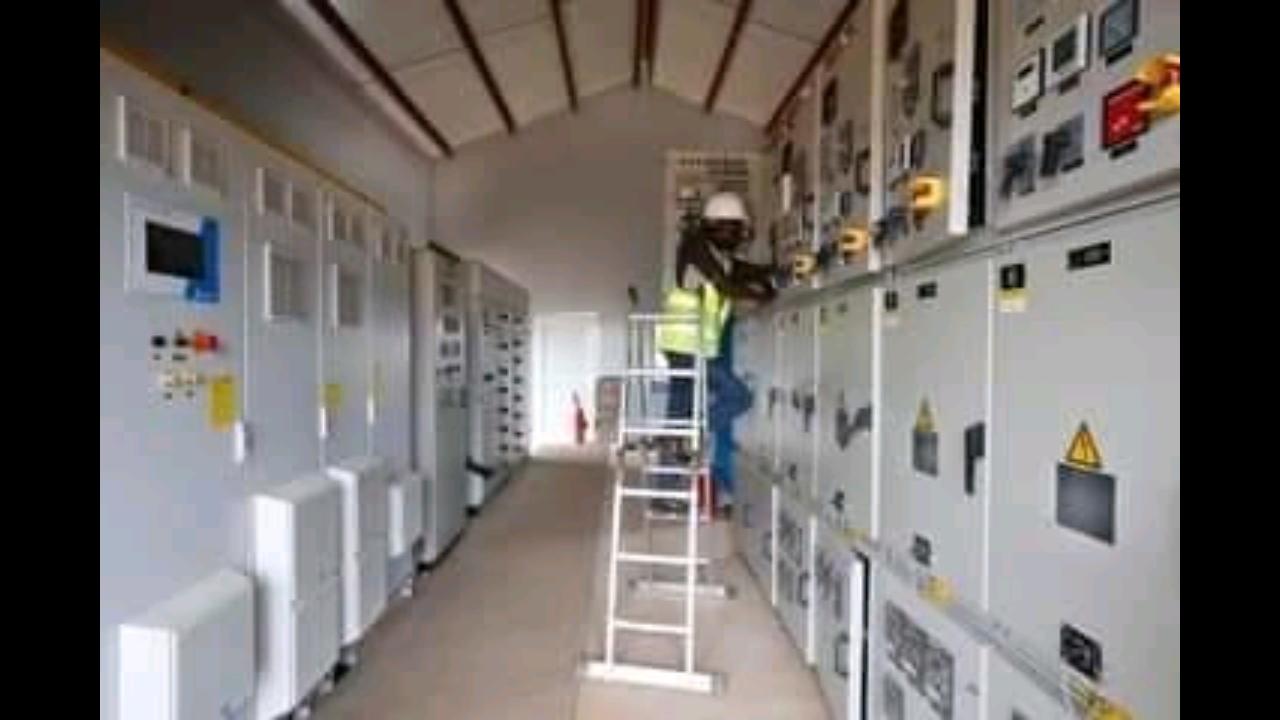
Now universities are joining the game: Federal University Ndufu-Alike, Ikwo in Ebonyi State is now GRID-free. Yes, it is a big deal to be free of national grid in Nigeria. Obafemi Awolowo University plans to do so, and many other universities will follow.

Federal University Ndufu-Alike, Ikwo power project

By the time these schools finish and the premium companies are done, DISCOs will not have good customers to provide services. Who will give them funding under that paralysis? No investor will invest in you only for you to power only those that will require disconnection threats before they pay. Yes, you will be left with below premium customers to serve.

The government must understand that it has only five years before national grid model will collapse at least for commercial purposes. Sure, mid-scale industrial customers will continue to prefer national grid but that cannot be banked upon. Most renewable energy sources (e.g. solar) used in Nigeria today are not optimized for such services. On residential segment, the best customers are going solar weekly and very soon they will replace their generators with solar panels. DISCOs have existential threats in Nigeria under this redesign.

Congratulations to Federal University Ndufu-Alike. You have done well. Now, deepen your program to higher heights; no more power issues.

Ice Cream Sellers Also Have Futures

4

Four days ago, I went to buy fuel for a generator. While returning, I decided to get ice-cream from an ice-cream seller who sold his ice-cream on a bicycle. A young man like myself, I mean will be in the same age range.

I decided to engage him in a discussion. I got suddenly concerned about him. So I asked, “How has the country been so far, and how have you been coping with the hardship in the country?”

He replied by saying, “Well, it’s not quite easy but I have been trying my best and also trusting God”. I decided to push the question further, so I asked, “What’s your plan for success, do you intend to spend the rest of your life riding ice-cream on this bicycle?”

I actually saw the shock on his face because he didn’t see that coming, I mean a random ice-cream patronizer asking such question. Then he opened up, he said, “I’m a secondary school dropout and I have an interest in fashion designing, so I bought a machine and some other things, and I have a little skill in it but because I want to further my skills and learn from a professional, so I decided to start selling ice-cream so as to save up”.

Not a bad idea right, but who saves up from selling ice-cream? I mean the profit is barely enough to feed oneself, pay for shelter, clothes talk less of saving up, except if I’m wrong though. So I decided to ask how long he has been saving up, that means how long has he been selling ice-cream.

His reply was shocking. He told me 2019 will make it his fourth year and I’m not kidding. So for four years he’s been trying to save up just to get professional knowledge or some sort.

Well, I knew I could help him, I had a temporary solution that could help him scale. Matter of fact, I have a solution that would help millions of youths in Nigeria. So I decided to let him on it by asking more questions.

The next question I threw at him was if he had an Android phone and he did. Matter of fact, he said he spends about two thousand five hundred naira to subscribe monthly on his phone to watch sports and live news.

Well, that’s it, you have a solution! You’ve got a phone and access to the internet, that’s it!

I told him that he could learn fashion designing online from different professionals to an extent. He could learn from YouTube. This young folk asked how it was possible to learn his dream skill on YouTube. So, I brought out my phone, went to YouTube, streamed some videos on fashion designing for him to see, and he was shocked and excited.

So I gave a break down, why don’t you spend a thousand naira on monthly subscription, then the remaining one thousand five hundred naira as a budget for night subscription. Since he said he closes from work by 5-6 pm, then sleeps from 8pm till the next day, he could reschedule his resting time so that he could wake up at least 3 hours at night to both download and practice what he learnt seeing his machine is at home.

I had to get his number so as to guide him and mentor him.

We have millions of youths out there who are unemployed and we can push the blame on the government, and all which is fine. However, I have discovered that lack of access to the relevant knowledge that is capable of equipping youths to be relevant in the labour market is the main problem.

The real definition of education is the access to the knowledge that makes one relevant in the society per time and we can see that the school is defaulting in that. But my blame is not on the school, matter of fact, there’s nobody to blame, there’s only action to take and it’s not directed at university students alone, it’s for everyone, any age, any group, any class. My mission is to connect Africans to the right source of knowledge that will equip them either they go to university, they are in the university or are through with university education.

What’s your own role?

Steps To Register A Company With Nigeria’s Corporate Affairs Commission

1

The importance of registration of a business with the government through the Corporate Affairs Commission (CAC) can’t be overemphasized.

Owners of businesses may think that registration of their businesses with the government through CAC is a waste of time or think its another way the government extorts money from businesses. But when you register your business, you are doing yourself a whole lot of good than you are doing the government.

The registration of business is statutory provided for in Part B of the Company and Allied Matters Act (CAMA). Since it is a legal requirement for businesses that operate in Nigeria, it is needed to accord your business a legal status.

So for those interested in doing business in Nigeria, both foreigners and fellow country men and women, here is the process you go through to register your business with the federal government of Nigeria.

Pick A Name

First you need to pick a name and check for availability of proposed company name. Some names are prohibited; reserved to be used by the government. Also,  some names can’t be used because they have been used by another business or they are similar to the name that has already been used by another business.

Pre-Registration Form

The next step is to complete pre-registration form called CAC1. This can be done online by filling the form on the Company Registration Portal (CRP)

Then you pay filing and stamp duty fees; the stamp duty fee which is also referred to as registration fee costs N15,000. This is the only money legally required of you by the government while registering your business.

Upload Documents

You proceed by preparing the signed scan copy of your pre-registration documents for upload as follows:

  • The registration form (Form CAC1.1)
  •  Memorandum of Association and Articles of Association (MEMART)
  •  Recognized form of identification for Director(s)/Subscriber(s) of the company’s shares and Secretary of the company.
  • Evidence of payment to CAC i.e. the receipt of payment of the stamp duty fee or the registration fee.

You will have to upload those scanned documents for processing.

Receive your Certificate of Incorporation

Finally, submit the original copies of the documents uploaded to the Corporate Affairs Commission (CAC) office you had selected. They will be exchanged for your Certificate of Incorporation and the Certified True copies (CTC) of the documents you submitted with the Corporate Affairs Commission.

The Certificate of Incorporation that is issued to you is the evidence that shows that your business has been registered with the Federal Government of Nigeria through the Corporate Affairs Commission and its duly incorporated.

There are numerous benefits your business or corporation enjoys when it’s registered with the government through the Corporate Affairs Commission (CAC) and incorporated. Some of those numerous benefits are;

  • Your business will be incorporated as you will be issued a Certificate of Incorporation by the Federal Government of Nigeria through the Corporate Affairs Commission (CAC).
  • Your business acquires a legal status, can sue and be sued and will be a full fledged legal person.
  • When your company is registered, accessing loans and grants becomes very easier either from the banks or from the government.
  • A registered business has the capacity by the reason of its incorporation to employ full-time employees and staff and pay them salaries and other remunerations.
  • Your business will have the opportunity to seek for intern especially from National Youth Service Commission.

The body or agency established and empowered by the Federal Government of Nigeria to incorporate or register businesses or corporations is the Corporate Affairs Commission (CAC).

The Call for Nigerian Indigenous Vessels: NIMASA Needs to Re-Strategize

0

Regardless of topping the chart on Port State Control inspections carried out in West and Central African Countries, 2018 by Abuja MoU, with a total of 636 inspections as a maritime institution of authority, the Nigerian Maritime Administration and Safety Agency, NIMASA, can only boast of 2 ship flag inspections within the same period as against the total of 350 ship flag inspections amounting to 174% difference carried out by Liberia in the corresponding year.

Apparently, this report portrays NIMASA as an energetic workforce in fight against substandard vessels which operates in the country’s seaport, kudos to this current administration on that aspect. But on the other hand, the report equally reveals the need to facilitate the accessibility of the Capital Vessel Financing Fund, CVFF, in order to encourage the indigenous shipowners come on board.

The CVFF fund is government funding assistance for ship acquisition under the Cabotage Ship Fund established under the Coastal and Inland Shipping (Cabotage Act. 8) in 2017, by the Federal Government of Nigeria through the Nigerian Maritime Administration and Safety Agency, NIMASA, with concluded plans to disburse $100 million Cabotage Vessel Financing Fund, CVFF, to indigenous shipowners at a single digit interest.

However, the deplorable situation has generated worries and hot debates on the gloomy mysteries preventing the disbursement of the fund as well as whether NIMASA fully understand the importance of having indigenous ship owners, which according to maritime experts, is the only way to compete favorably with foreign investors.

The level of worries registered on the faces of potential indigenous investors can be seen through their comments on the need for the acceleration in disbursement of CVFF fund to enhance their participation in the maritime business.

Former Chairman, Indigenous Shipowners Association of Nigeria, ISAN, Chief Isaac Jolapamo, hinted on the need for democratization and localization of the maritime industry which is a panacea to the meted frustration being experienced by intended ship owners who have been striving to invest in the shipping business as he rightly put that some of the prospective ship owners are not where they were supposed to be because they were denied the cargo..


On the issue of discrimination and favoritism against the indigenous ship owners, he also pointed out that foreigners have advantage over Nigerians in their own country which according to him is regretful and discouraging especially when the government officials who indulge in such atrocities are still holding public offices without blemish. He said: “I have an instance of one of us here who was taking out of NNPC system when he was handling a shipment for them for $350,000 but it was handed over to foreigners for $550,000 and the people who are doing this are still making waves, they are getting promoted in the government circle.”

In his paper presentation, tagged “Innovative Concepts and Sustainable Approaches to Effective Ship and Maritime Infrastructure Financing in Nigeria: A Critical Review”, Professor Fabian, a director of Kenner Partners, stated that Nigeria’s maritime industry is still at its infantile stages in terms of funding and must source funds in other ways aside from the federal government.

I quite agree with him because the financial burden of the federal government is becoming unbearable especially on the issue of petroleum subsidy and the need to offset the debts already incurred by the current administration, especially as the debt profile according to Debt Management Office (DMO), has reached N24.4 trillion.

Prof. Ajogwu however, advised NIMASA to be transparent in disbursing the CVFF loan and bring in other innovative ideas to facilitate the local vessel ownership.  

However, from the information gathered, NIMASA said to have remitted US$124 million for the Capital Vessel Financing Fund (CVFF), into the Treasury Single Account (TSA), in the last capital year of 2018, which is in the Central Bank of Nigeria (CBN), but could not be accessed due to some logical reasons as defended by the Director General, NIMASA, Dakuku Peterside.

According to Dakuku, the funds cannot be disbursed as directed by the then Honorable Minister of Transport, Rotimi Amaechi, due to some issues generated in the past concerning similar funds which must be clarified.

He said: “the Honorable Minister of Transport, who has the final authority to approve the disbursement of CVFF, I’ve been engaging with him, his desires will still come to CVFF, he doesn’t want the way of similar funds was disbursed in the past. And so, he has ordered a quick review of the guidelines, as soon as the fund was reviewed with the guidelines, we will commence the process of disbursing the CVFF.

The trudging face of the Ministry of Transport can be clearly seen as the Ministerial appointments are still without portfolios hence the gloomy face of handling the issue if the former Minister is not reinstated. On this premise, however, I must say that there is essentiality for NIMASA to go back to their drawing board and re-strategize.

Therefore, the need to call for foreign investors is now, to enable national individuals who wish to navigate their business acumen towards shipping industry, to be given a level playing ground as leverage, by establishing a relationship between them and other promising private financial institutions duly regulated by the country’s maritime authority.