DD
MM
YYYY

PAGES

DD
MM
YYYY

spot_img

PAGES

Home Blog Page 6793

The Decline of Reasoning and Rise of Sentiments

0

Someone I know was looking for advice on what next to do going forward, as he was at a crossroads considering a career switch, which he wasn’t sure was in his best long-term interest. The advice he received from a trusted motivator was “follow your heart”.

I  have heard this phrase a lot of times, and it seems to be the only available piece of advice for people in desperate times. Contemplating between studying medicine or playing football “follow your heart”, thinking of whether to quit your job or not “follow your heart”, thinking of which business to start “follow your heart”.

As a kid, I loved candies and ice cream. I’m glad I didn’t follow my heart in that. There are so many things we love to do that aren’t actually good for us. What then should we do? The availability of this phrase in visually every facet of life today is a pointer to what is actually going on deep down inside, in this age of information . In other words, sentiments supersede rationality and quotes supersede thoughts . These scenarios play out in two forms:

  1. Sentiments Vs. Rationality
  2. Knowledge Vs. Reasoning

Sentiments Vs. Rationality

Someone once said this to me, “look people will forget what you did for them, but will never forget how you made them feel”. I understand why he said that. I mean who doesn’t want to feel good? But should that be the driving factor behind our evaluation of things and events?

Just imagine for a moment, that you have been stranded on an island for days. After a long wait, a group of nice gentlemen, about five in number, well built and capable of building a boat, came along and said nice words of encouragement and walked away with smiles on their faces, meaning that you have to wait longer before leaving the island.  And then after a long wait, a scruffy looking old man wearing a long face walks by and without even exchanging pleasantries, he began building a boat, and when he was done, he just left you the boat and went his way. What you feel in these two scenarios will depend on which one had a greater impact on you based on your immediate need. Yes, the emphasis should be on need. That which solves a need should have greater value, or do you think otherwise?

Not long ago, a video of a teacher went viral on LinkedIn .The teacher was shown to have very close rapport with the students. She had a unique multiple styled  handshake with which she greeted each one of her students . There was another instance where a teacher was seen teaching trending dance moves to his students. It does make them happy,  doesn’t it? What about a teacher whose students all perform well on the subject he teaches, without making it fun. Who is a better teacher? This is not trying to imply that the first two teachers cannot produce high performing students, but this is directed at asking the question – “what should be the criteria for measuring their contributions”? Results or Feelings?

To answer this question, we need a clear definition of purpose. If I hired a carpenter to fix my roof, what exactly should I use as a criteria to measure his success or failure?  It would be irrational if I judged him by anything other than that for which he was hired, and for which he is paid. If this is true, then it will be consistent if I say that the teacher whose students perform better in his subjects is the better teacher even though this may not fit in into the growing narrative.

I know a man who has been struggling to pass his professional exams; he said he has been made to feel good by many tutors who were more interested in not breaking his ego by not exposing his areas of weakness. But only a tutor who made him not feel so good actually helped him to eventually pass his exams. Ironically many excellent professionals have been left out because they do not possess the flair of sentimentality. 

Knowledge Vs Reasoning

I asked someone a question, and he answered with a quote; I replied by telling him that quotes are not universal truths, that they represent the opinion and state of mind of whoever created  the quote. Yet, he replied with another quote. I am not against quotes as I use them a lot, but we should understand what they really are. People don’t seem to be interested in why things happen, they are only  interested in the end product. Like secondary consumers of the by products of cognitive reasoning, leading to a society massively chasing end products with nobody interested in the process leading to them. We love petrol, but hate to refine crude oil,  we love front end design software, but hate analysis and coding.

So this has led to a system where Hiring Managers are dismissing qualified candidates, because they did not cram and quote the expected stereotypical answers to their questions. A system where the teacher of the year is likely going to be one who makes the students laugh.  A system where a lot of processes are taking place at the expense of reasoning. Next time before you drop that quote, pause for a moment and do a little thinking. Also before you follow your heart, ask yourself this question,”is my feelings more important and representative of what is in my overall best interest”?  If your answer is yes, then you know exactly what to do. 

How To Learn Anything (or at least a lot)

1

If you could learn anything, what would it be? What If I told you that you learn quicker and with less time? Learning and how to learn are big challenges that people face. However, it seems there are oceans of resources not used. If they knew these resources, it would make their lives easier and probably make them more successful. So what are these resources? Are they tools? Are they belief systems? Are they just fads or the flavour of the month? I think they are real and if they are applied properly; they will give people the power and abilities they are searching for.

In education, I found classes very difficult and I thought they had to be proven techniques and techniques to achieve success in a subject. After reading a lot about learning and development, I found out that many things were not just taught and made aware to students. One could ask; why weren’t we told? Benjamin Bloom was a professor and master educator and his thesis was on making sure everyone reached success in academia. But you might say: not everyone would be successful in academics. His theory was that although everyone is different, proper resources and tools could be used by students of every level to become successful. He outlined the taxonomy of learning in which he illustrated the stages of learning and how to achieve mastery within a subject. My experience with reading his books and the works of others have revealed things that people can apply to their search for understanding and mastery that may have eluded them.

In learning, a person might find it very useful to start from the end. What is the final product? What is the expectation of the tutor? This gives a direction and a goal for a person to orientate towards. Clearly defining a problem is a key aspect of problem-solving and learning might be described as a problem. You want to know not just the expectation but the ideology and philosophy of the subject. It may be that you need to memorize or you need to put the knowledge in your own words. If you have firm grasp of the goal, it is much easier to proceed on the road to success.

The key resource is focus. How well can you focus your attention? Can you sit and not have any distraction at all? I mean not even have those random thoughts and concerns that jump into your mind like wild gazelles. Many people have those busy minds. I can get distracted by myself in a room with only a table and chair. But, if you can have focused attention for a considerable amount of the time, it would do wonders for your study and learning. It can get you in the “Flow” state as described by Mihaly Csikszentmihayi. It will take a while but you can build it like a muscle and over time you would be flexing your intellectual prowess like Schwarzenegger. I cannot stress this enough. Focus for a long period of time is the matrix that holds everything together.

Another key resource is environment. This is also includes your social environment. Who are your friends? Who do you spend the most time around? I was surprised when someone (A YouTuber, Tibees) posited that if you are doing badly in a subject, it may mean that you don’t have good friends. If you have friends and they are not putting you through, are they really your friends? Do you want to have friends are not succeeding as well? This may seem selfish and conceited but you have to have a deliberate vision of where you want to be and your friends might be a good indicator of that. In my own experience as an MBA student, when I was struggling, I ultimately had to change my friends. I was circled by people who thought I was okay struggling and that may be just my lot. I realized that and was fortunate enough to pick better friends and things improved.

In learning, there are things that involve doing nothing. They are described as nothing but they actually have a big impact on your performance and your entire lifestyle. They are sleeping and meditation. Most people dismiss sleep. It’s even popular to boast about how little sleep one has. But, this is a grave mistake. Sleep deprivation within a few days can have significant cognitive impacts. Your brain performs poorly, you are more stressed, and this can easily increase mistakes and accidents. It can even damage your health. You need at least 8 hours of sleep a day. This is non-negotiable. But, it will improve your health and prevent things such as high blood pressure, panic attacks, illness, anddivorces.

The other thing is meditating. It is essentially not doing anything. You just focus on your breathe and just observe thoughts as they come to your mind. There are many books on meditation. However, I recommend only “The Mind Illuminated” by Culadasa. If meditation is not your thing, that’s fine. But, don’t say I didn’t tell you.

Friends and people around you also contribute to two important learning techniques: the Feynman Technique and Peer Instruction. The Feynman Technique promoted by genius physicist, Richard Feynman, states that if you want to learn anything well you should be able to teach it to a 5 year old. That means you have to explain as simply as possible without losing the importance and meaning of the topic. This forces you to have to understand and question what you have learnt. Because, how can you really learn something if you can’t explain it simply?  The Peer Instruction was devised by Eric Mazur. Eric Mazur is a fantastic professor who demonstrated that students who just learnt a topic are usually in a better position to teach a classmate who is yet to understand. This is because of what he called “The Curse of Knowledge”. “The Curse of Knowledge” is when someone who understands something finds it difficult to explain it to another because he can’t relate to a point when he was still understanding it. He finds it hard to put himself in the same position. As you can see, this two techniques would be better taught and used between friends or close associates.

Two key techniques you should employ are Active Recall and Spaced Repetition. These have tested and researched and give considerable performance of about 40% with the same amount of time. This means the difference from a D to anA-. Active Recall is trying to apply what you have learned. This may involve doing exercises such as summarizing what you know on your own using a blank sheet of paper, taking practice questions, teaching someone e.tc. Spaced Repetition is giving some intervals between learning and studying. This helps more than just studying continuously. There is software available for SR and some are easily available for free (Anki e.t.c.).

Learning is personal. So, it comes down to you. But who are you? The Oracle of Delphi had a quote: Know Thyself. If you want to learn, you need to know who you are. I think that going for psychographic tests and assessments are good but some are very expensive and some are just not very useful. MBTI seems to be incomplete as it does not consider the aspect of neuroticism and IQ tests are not really a test for intelligence. I think EQ is nonsense but that’s just me. But, my point is that using a personality assessment that uses the Big 5 framework is very useful. I personally think it is the best available and top researchers and employers use it. Even, top election campaigns used it for the 2008, 2012, and 2016 US elections for voter targeting. That shows how effective it is. Penn State has a free assessment tool managed by Dr. John A. Johnson on the school website. Anyone can use it for free. Just make sure you save your results. Asit is not saved on the site and it takes about an hour to complete. Having a good idea of your own personality and behavior would be useful in your learning journey.

Another point is to be weary of bad teachers. This is a very difficult part because you may not be able to assess a bad teacher and focusing on who is a bad teacher is usually not so productive. But if you are taught something and despite your best efforts you don’t understand it, consider the possibility you need to find someone who can teach it to your properly. A good teacher, in which ever form they may appear, would be vital in your learning development and sometimes your happiness. Bad advice are abound and applying things in the wrong way is wasteful and unnecessary. So, you must be aware of the need to search for and identify great teachers.

For research and information on learning, check out authors such as Barbara Oakley,Carol Dweck, Anders Ericsson, Peter Brown et al, Cal Newport, YouTubers: Thomas Frank, Scott Brueckner and Marty Lobdell, and Scott Adams. These are very good people on the scope and understanding of how to learn successfully. Their books are worth their weight in gold.

The last piece of advice is to avoid idiots. They would drag you down and defeat you with experience.

Alibaba Dances the Wave from Flutter – Alibaba’s Alipay and Flutterwave Partner

0

One of Africa’s finest startups, Flutterwave, sent some nice waves to Chinese Alibaba – and both are now dancing. Yes, Flutterwave is partnering with Chinese e-commerce giant Alibaba to offer digital payments, connecting African merchants with Alibaba’s Alipay.  Africa will be payment-connected, and China will be integrated; Flutterwave CEO said it all: “This means that all our merchants can accept or install Alipay as a payment type to accept payments from its billion users. There’s a lot of trade between Africa and China and this integration makes it easier for African merchants to accept Chinese customer payments.” That is unification via payment.

Flutterwave is a Nigerian-founded B2B payments service (primarily) for companies in Africa to pay other companies on the continent and abroad.

Alipay is Alibaba’s digital wallet and payments platform. In 2013, Alipay surpassed PayPal in payments volume and currently claims a global network of more than 1 billion active users, per Alibaba’s latest earnings report.

A large portion of Alipay’s network is in China, which makes the Flutterwave integration significant to capturing payments activity around the estimated $200 billion in China-Africa trade.

I wrote a long piece about the Amazing Flutterwave here.

The Amazing Flutterwave

Can We Have A United States of Africa?

1
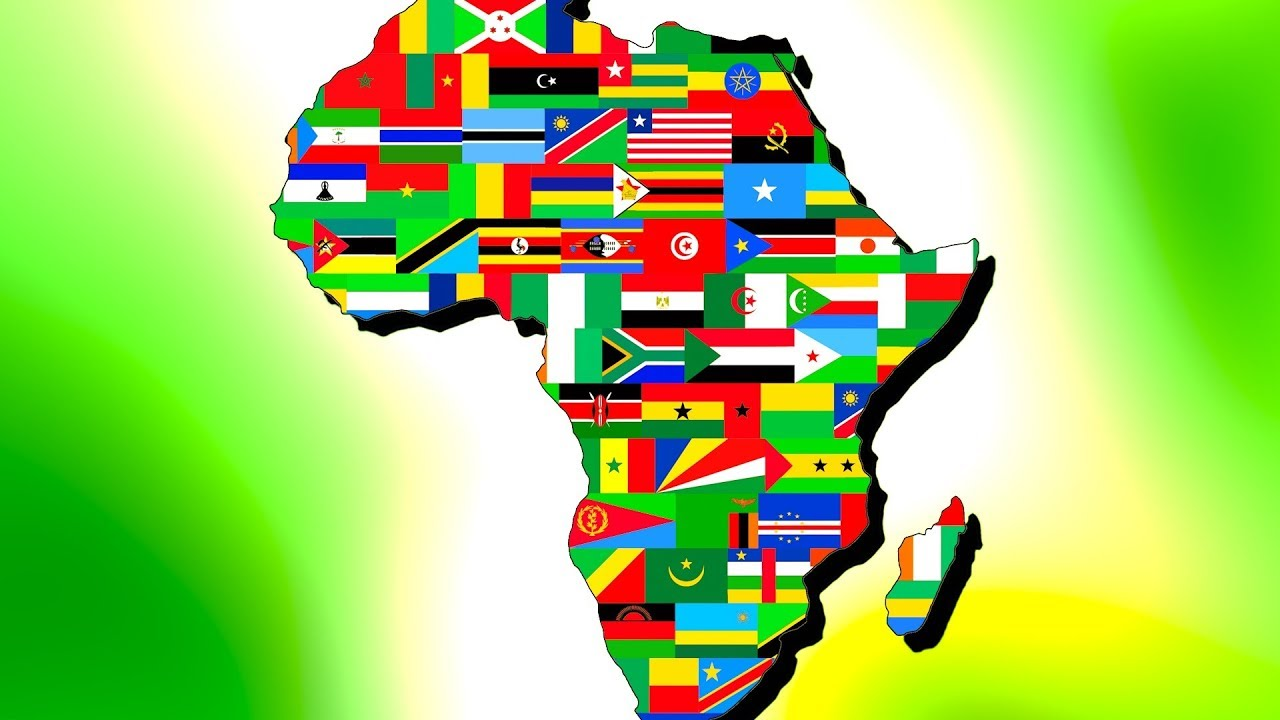
African map

Are you ready for one Africa? Yes, I mean all African countries coming together as one. Perhaps naming all African countries the United States of Africa. But how is that possible to achieve?

Africa is a land full of milk and honey, yet Africans find it difficult to put a crumb of bread on the table. An average African can barely eat three square meals a day.

Oh Africa, when will you ever be great?

A land of great culture and history. A land of blessings. Africa our heritage.

”Can we have the United States of Africa?” – Bruno Kongawoin.

There was a call during the thesis of the Pan African conference agenda of May 1963 in Ethiopia for Africa to unite as one. Meaning they will have a united government,  one leader, spend single currency in the market, and use a single army for defence. Those leaders failed to do so. Perhaps due to corruption, greed or selfish interest.

Colonialism over-fragmented us and the decision to come together was so much affected by over 45 individual country self-interests, including the influence of foreign powers. But we can start with economic integration, maybe the political integration will come automatically.

However, if we must achieve our aim of one Africa, the Pan Africans of today would have to adopt some of the building blocks of the post-colonial African regions (North, West, East, South, Central) to:

  • Progressively come closer economically
  • Remove tariff and non-tariff barriers
  • Allow people to move freely
  • Speak one language

By doing so and with the fullness of time, the economic arrangements will give birth to political African unity. But Africa must be ready to sit and eat at the table of human civilization rather than being the food to be consumed by the developed nations.

As it has been said before, ”safety in numbers” – Our safety as Africans lies in our united sovereignty.

Imagine sovereign Africa (population 1,216,160,000) at the negotiating table with the USA, Europe or China.

What a force it would be to reckon with.

For Africa to be great in terms of growth and development, I would suggest that the first step to achieving this amazing outcome is to work on healing the divisions of tribalism among various African countries. Even in an African country, say Nigeria, tribalism is a major problem. This has hampered our growth as a country. Taking this tribalism across all African countries, it is limiting our general growth. Africans need to unite and see each other as one.

African division gave the colonial masters powers over us and made them the commanding force to create divisions using the classic “divide and conquer” to hold onto power. The colonial masters’ philosophy seems to have been imbibed in us and has been passed from generation to generation.

They say leaders lead by example. Since it is the way our colonial leaders had led us, we seem to be passing it to ourselves and even worse than we were taught. Perhaps our colonial leaders never taught us to love, everything we earned was either by fighting or disagreement.

But if only we can look past those hurts. I mean if those with power and those without power can come together and heal from the harm done to them by the colonial masters, and the harm that they have also participated in, then Africa can be a real force for good in the world.

After all, we are sitting on the land that contains much of the world’s natural resources. It is just a question of whether or not that vast wealth can be fairly distributed?

Dear African leaders, you need to do more. You are an example to us all. If you teach us to lead by looting or crime, the same will continue.

  • Enough of looting our money.
  • Stop killing your citizens to attain power (political violence).
  • Say no to tribalism.

African citizens, you must be ready to come together as one for the future of our unborn generation.

We are one.

Africa for Africa is all we want.

Owning The Hay In Business

0

There’s a secret I want to share. Matter of fact, I am not supposed to share it because it is one of my strong points in winning my competition once I launch my startup. However, I feel it’s not necessary keeping it all to myself. Fine, we have more start-ups in Africa in this age than ever before, and they all seem to be waiting for the glorious day when Africa will be fully matured for their ideas. Personally, I am waiting for the year 2023 because I believe by that time, Africa will be ripe for our ideas.

We have seen other start-ups like Paystack and Flutterwave take the lead founding the companies even when it seems like Africa wasn’t ready for fintech. Now, we are seeing that there is hope. Here’s my point: whatever startup you are building, it will be wrong to be building for the future without carrying your audience along. I believe it’s not yet clear to you and I will simplify it now.

Let’s take a practical example:

I am founding an edutech company and my prediction is that by 2023, Africa will be fully positioned to let my idea scale. It will take an exponential growth because other factors that have been setbacks will be fixed. However, I did something quite interesting. I brought out the blueprint of my business model and looked at how my target audience are expected to behave at that time and compared them with their behavior at this time; there’s a huge difference. It means that something needs to be done between now and 2023 to align them from their present state to the expected state. The product isn’t bad, the roadmap isn’t wrong but the audience is wrong.

Matter of fact, I cannot get an audience for my product by 2023 if I do not create the audience. This is Africa, we will continue to remain the way we are unless we are influenced by an external factor. A practical example is the fact that we have so many edutech start-ups emerging in different parts of Africa, I call it the edutech boom. 

The edutech industry is a huge one that I personally believe will be worth some billions of dollars in the coming times. These edutech start-ups have good business models and roadmaps; they also have online platforms they are building. However, the average African youth prefers to get value for free, so how do you scale with the online platform?

I’m pretty sure a lot do not take this into consideration. By 2023, there should be good internet connection, mobile phones should be accessible, however the target audience will still want free value which means there will be a huge problem for such businesses. This is exactly what I was saying that it will be wrong to build your startup without carrying your audience along.

So what do you do? Is there a way out?

Definitely, there is a way out. I’m pretty sure you never realized this. It doesn’t just apply to edutech, it applies to other fields as well. You as the founder is optimistic that by a particular year, things will normalize. However, have you really looked at the behavioural pattern of your target audience? Will they automatically adjust by such time? I don’t think so.

Here’s what you need to do: You need to create a structure that will direct them from where they are down to where you want them to be. More like you’re building your own audience which is the case. There will be so much competition by such time in the future when Africa becomes ripe. Every startup will be in a rush to convince their target audience that they are the best.

 Wrong business thinking.

This piece is to expose you to the fact that you can own all the audience if you succeed in being in their minds. By that time, you do not need to compete with competitors because you own the hay. Whoever owns the hay owns the horse. While it might be difficult creating a structure to keep your target audience in track from now till where you want them to be, it is the best shot. Behaviours change overtime. What if by 2023, Africans decide that they prefer physical learning to online learning? You’ve built your online platform but by 2021,they had a shift; you lose.

You need to create a roadmap to keep them on track and that’s another huge secret. The aim of this post is to make you aware that you need to begin to get the hay ready now, and not wait till the horses arrive at the manger. But then, they might prefer to eat meat and you lose because your whole structure is built on hay.

You can own the horses, find how to make them keep valuing hay.