DD
MM
YYYY

PAGES

DD
MM
YYYY

spot_img

PAGES

Home Blog Page 6795

How The Crave For Privacy Can Frustrate The Quest For Human Advancement

0

By David Alade

Privacy issue in the past decade has been a very serious one for all technology companies. Facebook, Google, Cambridge Analytical and some other unsung issues, have suffered numerous amount in fine because of privacy suits. Yet, I do not expect this trajectory to reduce in the coming decades, for a simple reason, data is the new oil, and beyond all types of oil (“Brent or Shale”), your data (personal data) is one of the most priced and valuable. Your data has the probability of moving human race forward more than any other data in any ecosystem including, medicine, finance, politics, etc.

This got me puzzling why privacy? Do we really want privacy or our government is just forcing it down our throats? How can we balance our desire for privacy with the need for human advancement in the age of Artificial Intelligence, knowing well that there is no AI without Data including your private data? If data is poised to advance the quest for advancement that human has embarked on from Eden Garden, why restrict access to such data?

As I was contemplating I came across these lines on an article…

Face It?—?You Want To Be Seen
We may fear digital surveillance, but tech platforms count on our desire to be noticed online.

We take pleasure in it when our recommendation system is highly optimized, we enjoy it when our search result is efficient and customized, and we thrive when we get a medical diagnosis that addresses our very issue. The line we fail to constantly add to that is that all these would not have been achieved without data (and some ‘hashed’ private data).

We claim we want privacy but the only reason platforms like Facebook, Twitter, Snapchat, LinkedIn to name a few thrive is because of our unending desire to be seen. We work hard to put contents (our thoughts, pictures, sentiment, struggles and more) on all these platforms, which the platforms have utilized to get the human race to where it is today: modelling behaviour, predicting human action, diagnosing the next outbreak among others.

What then do we mean by privacy? Your name? sensitive medical data? Spending records? Places you visited? Or what? Well, all data can be said to be private if I choose it to be so and GDPR has probably done a great job defining what private data is and how it should be handled. But I opine that if we do not seek earnestly to balance our desire for privacy with our desire to push the human race forward in the era of Artificial Intelligence, we may inherently and inevitably slow down our quest for advancement as a race.

While we should respect every one of our private data, I believe for us to advance as a human race the data we regard to as private is more crucial for the AI ecosystem advancement than we can imagine. Hence, the need for us to quickly find a way around how we can make the data available to AI systems. While for now, the efficient way is through hashing of unique data identifier, we can still up our game for better. Doing this will mean AI systems have more real data to work with and hence more reliability on its findings.

Way forward?

I have been studying the dynamics of Blockchain Technology in the past weeks, and maybe this will be the solution for the current issue that hashing of private data has; scrupulous ones unhashing it. Blockchain is an immutable public ledger, it hides the real face behind the curtain but makes all other records available. For AI systems, these records are all it needs. Imagine we have all medical records powered by blockchain, it means, we can train AI systems on numerous data with unparalleled veracity.

Well, whether blockchain becomes mainstream or not, we need to balance the human quest for privacy and the human quest for advancement in the age of Artificial Intelligence. No AI without data and your data is all we need, but you want it private.
Automated Drainage Management Through AI

2

By Jola-Michael Samson

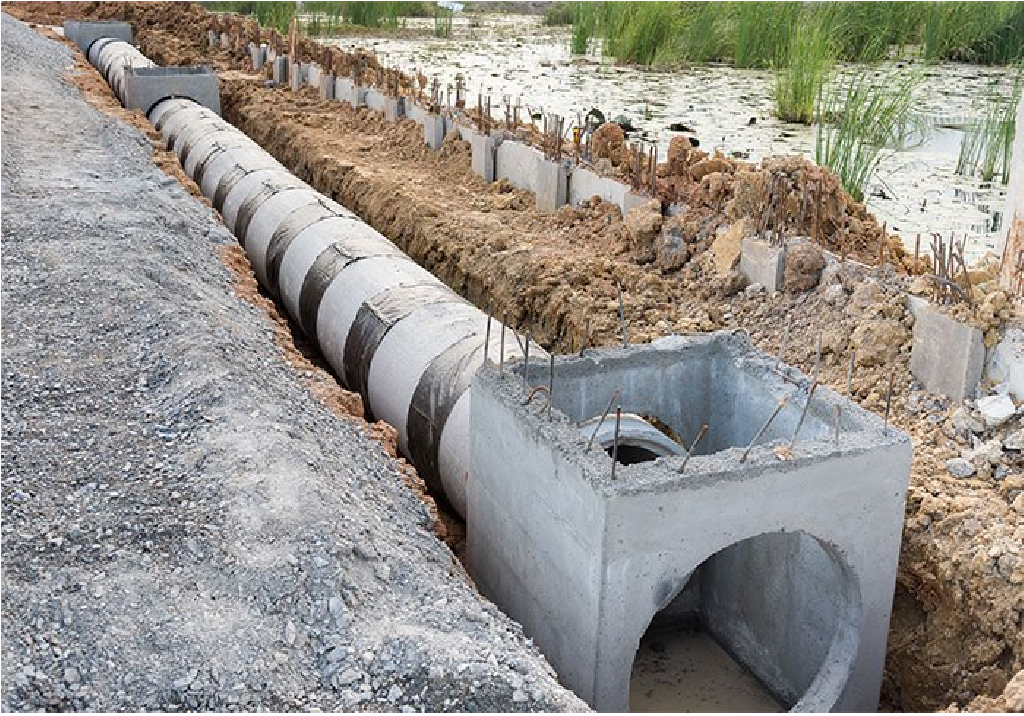
Flooding is a seasonal enemy of the people in both the rural and the urban areas.  It is expected to be controlled by a well-planned drainage network to channel the flow of water to the nearest river or larger drainages.

Most construction engineers have failed to deliver drainages that serve their purposes adequately. Whenever there is heavy rainfall, it is expected that as water flows in to the drainages, it finds the path that was initially planned for it by the construction engineers. But it is obvious that most of our drainages warehouse the water when we do expect that they are pipelines to get the ecosystems dry.

Diverse topography is one of the major drawbacks in the construction of drainages that will effectively serve their purposes.

Rainy season is mostly dreaded by people in the urban space because of flooding which always results in loss of valuable properties and sometimes lives.

We can permanently resolve this seasonal menace through Artificial Intelligence (AI).

This Idea will demand that our drainages are rebuilt in line with the specifications. Although it may be expensive to build but we would not need to build another in same place in the near future.

It can at first be piloted in sophisticated areas in Lagos, Nigeria, where there institutions that can collectively afford the expenses involved without waiting for the government.

The idea involves the following:

  1. Create a central unit for Drainage Management.
  2. Construct padded drainages with laid automated platform triggered by water sensor which will be raised to create slope for water to flow in a set direction at intervals.
  3. Ensure Drainage network that is monitored remotely through installed cameras.
  4. Note the direction to which the water will flow; which must be toward the closest larger drainage or a river.
  5. The in-built platform should also be made in way that it can be controlled remotely from the central unit to focus attention of slope creation to areas with urgent attention, to quickly evacuate water from the area during raining period.
  6. The in-built platform should be created to have solid waste and sand remover components and evacuating them outside the drainage at distance interval repeatedly.

I am not an engineer but I have this picture in my mind, and I believe it is achievable.

Our major problems as human beings, most especially as Nigerians, have remained with us, because we do not nurture our ideas and co-ordinate our innovations adequately.

Nigeria’s Maritime Insecurity: where are the Coast Guards?

2

By Oko Ebuka

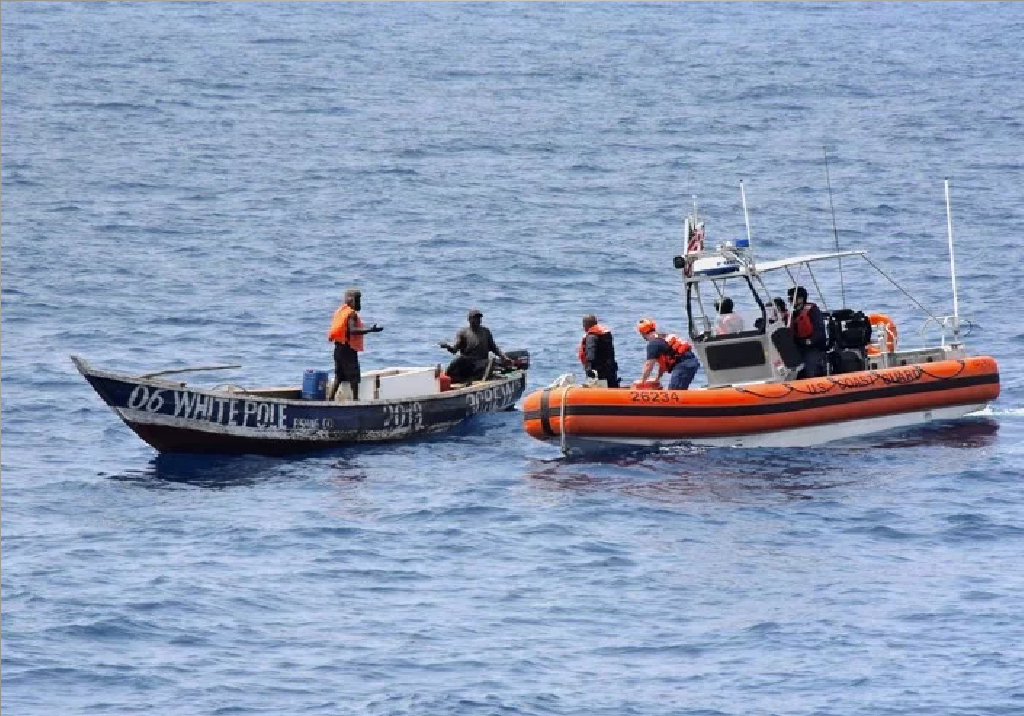
With the trending report released by CNN on the kidnapping of ten Turkish sailors on the early hours of Monday off the coast of Nigeria’s inland waterways, have poised a big rhetorical question concerning the efficacy of the Nigerian Coastal Guards toward achieving a clear coastal terrain and predominantly reduce the criminal activities on-going in the Nigerian waters.

I vividly recall the Facebook post in 2009 on the proposed bill to provide for the establishment of the Nigerian coast guard, which shall be charged with the responsibility among other things to enforce or assist in the enforcement of all applicable federal laws on, under and over the high sea and water subject to the jurisdiction of the federal republic of Nigeria; and shall maintain a state of readiness to function as a specialized service in the navy in time of war; for related purposes. The section 2 (1) (m) of the proposed bill succinctly approved the suppression of destructive and terrorist activities occurring in the maritime zone of the Federal Republic of Nigeria by the authorized coastal guards.

From my own point of view, this bill have a way of reducing the burden practically laid on the Nigerian Navy and equally shift the responsibility paradigm in order to have a definite approach to the issues of maritime security surrounding the entire Gulf of Guinea.

But in my greatest dismay however, the bill “Nigerian Merchant Navy Coast Guard Security and Safety Corps Bill, 2018 (HB.1331)” has just had its first reading in the floor of the Federal House of Representatives, on Wednesday, 21 February, 2018 as presented by Hon. Daniel Reyenieju of the defunct 8th National Assembly. This simply codifies that the prayer won’t be earnestly answered even though the need is highly felt in the survival and sustainability of the blue economy.

Another recent report released this month from the International Maritime Bureau (IMB), a non-profit organization devoted to fighting maritime crime, has called the Gulf of Guinea a “world piracy hotspot,” saying that the “seas around West Africa remain the world’s most dangerous for piracy.” (CNN, 2019)

The statistical report also showed that 73% of all kidnappings happened at sea and 92% of hostage-takings took place in the Gulf of Guinea — off the coasts of Nigeria, Guinea, Togo, Benin and Cameroon — from January to June this year.

The creation of the coastal guards with legal backup will elucidate their roles in safeguarding the territorial waters; improve the dwindling economic activities, open doors for transportation of goods and services through massive job creation both directly and indirectly.

No wonder the words of Captain Alfred Oluwasheyi keep ringing in my head as he hammered on the effectiveness of coastal guards in the reduction of security issues and other maritime misdemeanors which are farfetched if the guards are strategically positioned on the inland water coasts.

On the radar of employment, Captain Alfred boldly said that the establishment of the coast guard alone will create not less than 50,000 jobs without any cost to the government which indirectly, will create another 3 million indirect jobs for the teeming unemployed youths when the water is obviously secured.

Imagine if Nigeria has coast guards that supposed to take care of inland waters because normally the Nigerian navy job is to take care of the territorial waters, it will boom economy, bring back trust of the sailors back to the creek and place Nigerian seas on the map of a secured ocean.

The federal government, especially the existing 9th National Assembly should facilitate the legislative procedures for the establishment of this Act which I strongly believe will see the imprint of the Executive Arm under the auspices of President Muhammadu Buhari, who has shown his steadfastness in improving the Nigerian economic activities as regard to the blue economy especially as he recently assented to the Suppression of Piracy and other Maritime Offences Bill, 2019, as proposed by Nigerian Maritime Administration and Safety Agency, NIMASA.

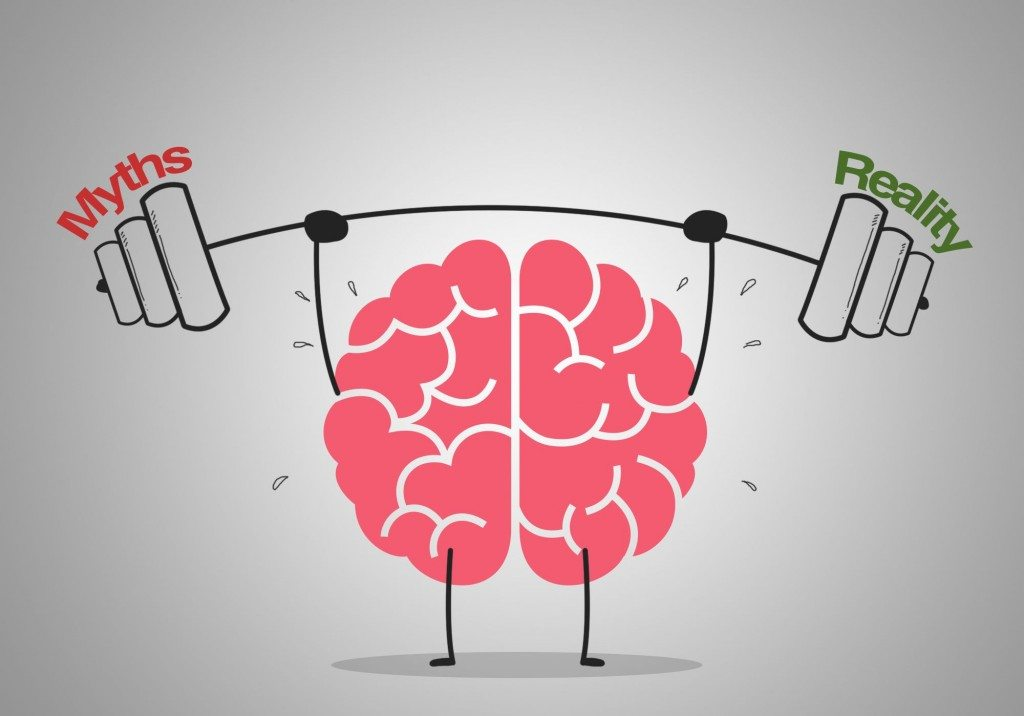
Thrive With Mental Toughness

0

By Dipo Olaitan

In the last few weeks, I had experienced similar challenges but had encountered different results. This has made me to really ask myself a question like, “why different results?” (The latter result was better than the former).

You might say the difference was because I have learnt a lesson from my previous mistakes. That’s true, I won’t dispute that fact. But the difference in result was not really based on a different approach but a different mindset and attitude in facing the problem.

This has made me want to know how I can continue to have this mindset, and attitude in tackling problems. Yes, though I might not be able to determine the absolute outcome of the problem, but I can be able to shape the outcome.

Have you ever experienced an opportunity you and a person had, but that person was able to achieve a better result than you, even under a tougher condition than yours.

During these periods, the person had always shown a positive mental attitude, and it had looked like to you this person has everything working well for him or her, not until they shared their stories, on how they achieved the success. It was then you would realize you had a better advantage than them. This brings us to what we call being “Mentally Tough “.

source: youdost

According to Gucciardi, Gordon & Dimmock,  “To be mentally tough is a collection of values, attitudes, behaviors and emotions that enable you persevere and overcome any obstacle, adversity, or pressure experienced but also to maintain concentration and motivation when things are going well to consistently achieve your goals”.

Being mentally tough also involves the ability to be accountable and responsible in the face of adversity, irrespective of the circumstances.

Life does not give us what we demand or expect; we need the right attitude and mindset to get the best out of life. Being “mentally tough” will help us see the positive things about life, and help us to have the right attitude in the face of adversity.

Why Government Employees Should Be Internal Entrepreneurs

2

By Chinedu J. Ihekwoaba

Do you tremble at the word “Entrepreneurship”?

Yes, I once did. Perhaps the fear of not earning a monthly paycheck is a scary place to be because of the monthly bills.

Entrepreneurship is the only medicine for poverty. No wonder successful people like Bill Gates, Aliko Dangote, Mark Zuckerberg and many more are entrepreneurs. If you care for the unborn generations, start thinking of entrepreneurship.

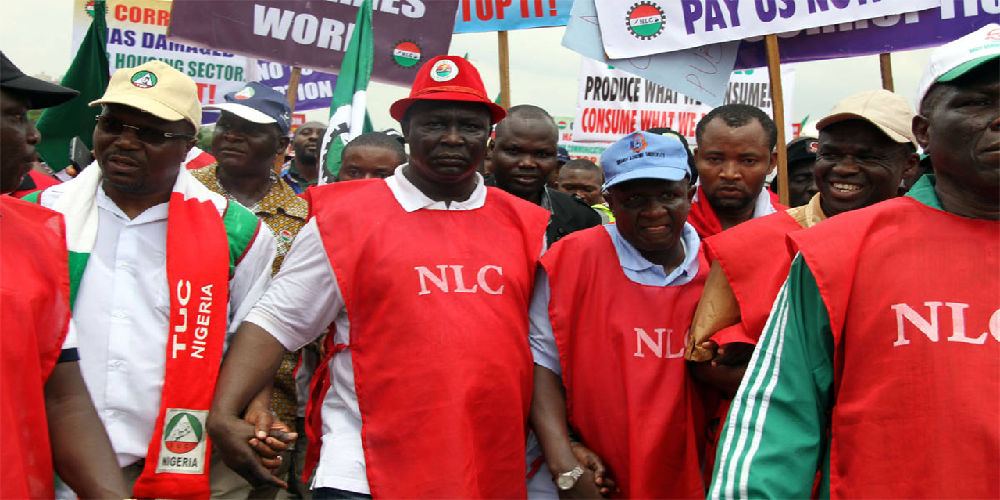
I wrote about the Nigerian minimum wage in one of my articles and I got mixed reactions from the audience. One of the standout reactions from the audience is a masterpiece from a LinkedIn connection, J.O.

J.O. said, “You get paid for the value you bring to the table and not what you want. The result is VALUE. It is not how hard you work but it’s by how much value you bring from the skillset that you have acquired.

That is the reason why it is called MINIMUM WAGE because you bring minimum value due to less skill.”

He further emphasized that, ”A McDonalds  worker works hard but the value he/she brings is little and replaceable compared to the CEO or manager. A load carrier at main market works hard but what is the societal value of his/her contribution?”

This illustration shows why many employees are scared of going into entrepreneurship. Many government employees bring little or nothing to the table when it comes to value.

The government parastatals are one of the places we get minimum satisfaction for our money. Take, for example, the National Electric Power Authority (NEPA), before it was privatized, they gave zero satisfaction to the citizens. NEPA failed in the distribution of power supply to the country. That prompted the government to sell to a private organization.

Think about NITEL, National Population Commission and many other government parastatals. These sets of people running the organizations are employed by the government. No wonder the government finds it difficult to pay above $90/month for the least paid among them. It’s obvious the government cannot see any value they bring.

Most people blame the government for not providing adequate funding but the question is, what have you done with the limited funds given?

The Nigerian education system is still the same way it used to be back in the 1970s. The same sets of people are still in the running, doing the same thing, using the same curriculum.

  • Where is the value?
  • Why do you think you deserve more?

A big question only a few can answer. Those who bring great value had left a long time for greener pastures. Those who brought nothing are still behind agitating for an increase in pay. There is no disrespect to any professional. I am only writing the way I see it.

Entrepreneurship is scary to people who don’t bring value because it takes a lot to convince people to pay for your service. If you think otherwise, answer these questions:

  • Why should I pay for your service?
  • What will I benefit?
  • What is the value or satisfaction?

Remember, not every citizen of Nigerian can actually get an answer from the government parastatals.

If you wonder why people are scared of going into entrepreneurship, it’s simply because they bring little or nothing in value.

Who are scared of entrepreneurship? Many; and I will like to challenge government employees to become INTERNAL entrepreneurs in the government institutions. It is only when they exhibit such capabilities and productivity that government will have money to pay them better. They do not have to resign from their jobs, for the external entrepreneurship of owning companies, but they can innovate and be internal entrepreneurs in any government parastatals they are employed.

An internal entrepreneur is known as an intrapreneur (makes part of intrapreneurship) and is defined as “a person within a large corporation who takes direct responsibility for turning an idea into a profitable finished product through assertive risk-taking and innovation.

If they do just that, government will have resources to pay public workers better.