DD
MM
YYYY

PAGES

DD
MM
YYYY

spot_img

PAGES

Home Blog Page 6802

Era of Traditional Recruitment is Over, Recommendations to Job seekers

9

By Chinedu Junior Ihekwoaba

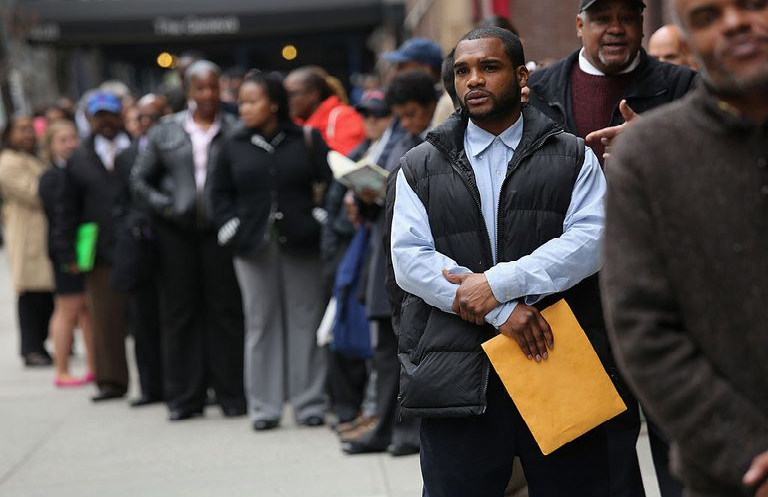
Gone are those days when applicants get jobs by registering through different job portals or submitting numerous application letters. Then, it was an open field for everyone to compete for vacant positions. But today, it doesn’t seem to work anymore.

It reminded me of those days in 2016; I applied for 155 positions through different job portals per week, at an average of 20 applications per day. The success rate was approximately two job invites per month and zeroes feedback after the interview process.

I paused a bit and asked myself some unanswerable questions:

  • Could it be my résumé is not making it  through the system?
  • Didn’t I meet the basic job requirements?
  • Were the companies really hiring?
  • How would my 155 applications not yield a successful result?

I had no clue. Every day, I get spammed by many job-opening emails that say, “we are hiring!”

This made me ask, “who’s sending those emails?”

I spoke with a recruiter I connected with on LinkedIn eight months ago.

She said, “don’t believe some of the job adverts you see on the job portals. Companies post job adverts to fulfill the human labour policy. It’s like a norm. Recruiters actually know who they will hire.”

Her words hurt me.
My interpretation: companies post job adverts to trick governments, perhaps by lying to be contributing to the growth and development of the country through the fake job adverts. But my interpretation was wrong.

Companies are definitely contributing to the growth and development of the country by hiring labour and paying taxes to the government, but the major problem here is that; “Traditional Recruitment is dead.”

Why?

Whenever there’s a job opening, recruiters contact people they know or people their family members and friends refer to them. Hence, the candidates applying for jobs through the link provided on the job portal are wasting their precious time if they don’t fall into those categories.

The whole situation becomes ‘a survival of the fittest’. Meaning a candidate must know someone who knows another person in the organization, or a candidate must have a strong personal relationship with recruiters to be sure of getting a job.

This makes the labour market a tough place for graduates to excel because building a personal relationship takes time.

It’s like falling in love with the opposite gender. You have to take some time to date, and study each other before committing to a relationship.

The main problem in this process is, “how many recruiters do job seekers have to know to get a decent job?”

It defeats the purpose of the hard-earned certificate.

If a qualified person cannot get a job without having to go through office policy, then, it makes no sense applying for job adverts seen online.

What’s the way out?

Every problem must have at least a solution.

Here are a few recommendations I’d give to the job seekers:

  • Build Interpersonal Relationship: Job seekers should spend more time building a personal relationship with humans and spend less time on job portals. With the advent of technology, it has made it easier to connect with amazing people in different fields, from different parts of the world. LinkedIn still remains a great tool for achieving this goal.
  • Attend Networking Events: They should attend more networking events like LinkedIn Local Lagos, LinkedIn Local Abuja and many more networking events. Job seekers should always remember this, people hire people they know and nothing compares to the human touch. Networking events give you the opportunity to meet people, interact with them and keep a fruitful relationship.
  • Work with a Career Coach: Getting a job is a job on its own. Job seekers should work with career coaches who can help them map out a strategy for finding jobs and also, they can help job seekers identify what job aligns with their values and skills. Not every job is good for you. Be intentional about it.
  • Research about the company you’d love to work: This will help you understand what the company’s culture is all about. Get to know a few people who work in the company, ask them what it takes to work there. There are some companies who do not always display their job adverts to the public, they recruit internally. Therefore, knowing someone who works there is a bonus for you during your job search.
  • Get a Referral: These days, recruiters find it easier to hire people through the referral system. Because people find it easier to work with people they know. This is due to the level of trust that exists between them. Don’t just apply for jobs and sit for miracles to happen. Get up and do your homework. Even though you might be qualified on paper, you will still need to work smart.

Although traditional recruitment is dead, but to be candid, most job seekers don’t really know how to position themselves as experts in the labour market. I was once a victim.

A job seeker must learn to position himself as a problem solver and not like someone who needs help. Recruiting has to be a win-win for the parties involved. The first appearance says it all. The easiest way to land jobs these days is to do something that brings you around people.

Do you need help in a job search or improving your sales through social media?

Contact me through my LinkedIn. Good luck in your next career!

LinkedIn Comment on Feed

I respect the writer in his doggedness towards his overcoming of the unemployment challenge in Nigeria, but I disagree with his assertion in the above article.

Traditional recruitment is not dead. People still get jobs via the traditional means.

And it is not becoming less popular, because even other “novel” approaches towards securing employment have been existential even in the days of our fathers. Recruitment based on referrals is not a new recruitment strategy. And at least for multinationals, they still hire a considerable number of persons through the traditional recruitment process because of their international policies on recruitment.

Why getting hired seem rather surreal sometimes is because of the graduate population. For instance, two of my friends made it into the recent AB-INBEV’S Global Graduate Programme for Africa. Only six were hired from Nigeria, from an applicant pool of over 44,000. It was strictly on merit. The other [qualified] candidates were likely to feel like it was all a sham when regret letters popped into their mails, but that’s because the applicant pool makes the demand from employers seem insignificant.

I have more to say, but perhaps I’ll just put it up in an article, too.

Nigerian Customs Service Generates N118m in 14 months

0

By Oko Ebuka

The Comptroller General of Customs, CGC strike force, Zone ‘A’ of Nigerian Customs Service, NCS, has remitted over N118 million to the federation account between May 14, 2018 up till June 30, 2019.

The Zone during this period, made a total of 68 seizures of different kinds of contraband goods with Duty Paid Value, DPV of N118m, this is in tandem with the federal government’s quest to consolidate and create a booming market for the local manufacturers and producers in the country.

The items seized by the zone include; 6,580 50kg bags of rice with DPV of N87.2m, 1,607 cartons of frozen poultry with DPV of N15.4m, 17 bales of second hand clothing with DPV of N1.2m, 2 vehicles with DPV of  N2m and 292, 25 liters kegs of vegetable oil, with DPV of N12.2m.

In a press release statement disclosed by the Co-coordinator, CGC strike force, zone ‘A’, DC Yahaya, U.B, said that the seized items was the intense effort of the custom officers on parole whom were defiant to make sure the smuggling activities are permanently silenced.

According to him, “I commend my highly dedicated officers on field for not being deterred by the various antics and threat from smugglers and economic saboteurs in carrying out their duties to their fatherland.

“For the smugglers, I can only advise them to stay clear off zone ‘A’ and embrace federal government business policy, which they will have us to contend with in failure to do so. We shall continue to engage them in the battle against illicit trade until they turn new leaf.

“I want to use this opportunity to thank our CGC Col Hammed Ali and his management team for their support, as they have continue to give us moral boost as well as working tools which have so far made our job easy.”, he concluded.

In addition to the above mentioned seized items, the unit in confronting the unrepentant smugglers irrespective of their hide out or terrain, the team of eagle-eyed officers led by Chief Superintendent of Customs ( CSC) Esiet while combing the creek along Lagos-Badagry through a reliable information, intercepted and seized five (5) trucks fully loaded with contraband foreign rice (50kg each).

The operation was carried out along Alibaba Street at Iyana-Sash waterside in Agbara-Badagry Axis on June 30, 2019 and the total bags of rice in them after counting is 981, aside 140 that is bad as it drenched.

The registration numbers of the trucks include AGL665XL, AAA534DU, GGE427XU and LXR27XV, while most of the trucks were reconstructed and reinforced to withstand pressure, with the capacity to convey large quantities of smuggled goods and easily access the marshy terrain.

Similarly, the unit made another set of contraband rice seizures involving two (2) mini trucks that conveyed a total of 543 bags of 50kg of the products on the 3rd of July 2019.

However, the total number of seized rice from the seven (7) trucks is 1,524 with N20.1m of Duty Paid Value, DPV.

Would Africa Benefit from Leapfrogging from 3G to 5G Bypassing 4G?

0

By Olayinka Oduwole

I was recently asked the above question by a superior colleague and friend who wanted to know if Africa would benefit from a leapfrog from 3G to 5G. This question was borne out of a previous discussion that had to do with Turkey leapfrogging from 3G to 5G. Simply put, Turkey arrived at the 4G party late and its president, Tayyip Erdogan, was of the stance that Turkey should not waste time deploying 4G technologies to avoid becoming a dumping ground for 4G technologies. The president, however, softened his stance, as 5G regulations and standards were yet to be developed. This led Turkey to instead leapfrog from 3G to 4.5G; 4.5G would then serve as a bridge to accelerating its 5G deployment. So, my friend wanted to know if Africa could replicate such model, knowing that 5G deployments would take longer, as highlighted in GSMA’s report and a previous article.

From my understanding, I think the answer is not in the affirmative. China and the US are some of the leading players within the 5G space. And operators in these countries seem to believe that the commercially viable option is to gradually transit from 4G to 5G. Even as these operators plan to begin rolling out 5G in 2020, they intend to achieve 5G deployment using non stand-alone sites, which involve the use of 5G New Radio (NR) in conjunction with existing 4G core. This is a cheaper and faster route towards the deployment of 5G. This would hopefully give them time to assess the success and failure, and hopefully recoup some investments. By 2023-2025, these operators would then start investing in the development of 5G new core, and then successfully transit to stand alone 5G sites, which requires huge investment.

Generally, in Africa, operators are in the process of transiting from 3G to 4G, and deepening their 4G capabilities within the region. Most 5G use cases (relevant to the continent) can still be operated efficiently using the existing 4G networks. Therefore, I think it makes good business case to invest in 4G networks in Africa, and assess the market readiness before deciding to transit to 5G. Most importantly, roll out of 5G networks can follow the same pattern as observed in other developed markets (China, US, etc.). This would help operators gradually invest, recoup their investments before delving fully into the development of new 5G networks. Furthermore, the demand for 5G use cases would have accelerated and hopefully help justify investment in 5G networks.

In Africa, 5G cannot be a natural progression to 4G, as pointed out in some quarters. Rather, it must be driven by demand, for operators to justify the huge investment in 5G networks. Presently, there is no demand for 5G on the continent, except in South Africa. I am however optimistic that the demand for 5G would gradually increase as the region witnesses an increase in the development of localized smart solutions for the region. Typical 5G use cases that have been pitched over and over again in other regions of the world may not apply here, and where they apply, they may need to be modified and adjusted to meet the region’s’ needs.

On a positive note, even though, Africa may be arriving late to the 5G party, it can benefit a lot by learning from the success stories and failures of those who are currently leading the 5G race.

Comment on Feed

Commenter: Good article Olayinka Oduwole. Yesterday, at GSMA’s M360 Africa in Kigali, GSMA released its Africa 5G report. Let me flag up a few highlights.

1. Africa has a demand problem and not a supply problem. 46% of pop is covered by 4G but only 9% 4G adoption.
2. Hence 5G will also be supply driven, and networks will be built even before users start using it.
3. While 5G is inevitable, it is not imminent. 2025 is a more realistic date for its mass market availability.
4. Globally, 5G rollout is not based on verifiable business case. Rather, it is dependent on market readiness. GSMA looked at 43 indicators of readiness for 160 countries and it is clear that African countries are not ready for 5G in 2019.
5. Leapfrogging is tantalising but unrealistic. Olayinka has flagged the NSA problem. See page 27 of the GSMA report for a full consideration of the technical, commercial and policy reasons why leapfrogging is unlikely https://www.gsmaintelligence.com/research/2019/07/5g-in-sub-saharan-africa-laying-the-foundations/785/

Author Response: Thank you Mr Emeka for sharing the insightful article produced by GSMA. I am not sure I believe 5G will be supply driven in Africa because 5G in Africa will be more focused on enterprise applications, iot, machine Communications etc. rather than the emBB use case. Now, these use cases can still run efficiently using 4G networks and previous generations and I believe when telcos see a huge number in smart devices, enterprises etc. they would be more than willing to invest. Besides, the NSA option also will help them assess the market readiness before leaping further into developing 5G new core. Chinese and US operators think they would need around 220 -250 billions of dollars for investment in 5G networks. That’s a lot of money for African telcos and I do sincerely think demand can be the only driver for such huge investment.

Commenter: Fair points Olayinka Oduwole. But the reality is a lot more nuanced. If it is based on demand, then there is probably no telco anywhere in the world who should be launching 5G today. I understand your concern about cost. But you need to distinguish between recurrent capex and incremental capex. For most operators, recurrent capex is predetermined based on the capex to revenue ratio. Thus, the CTO gets a chunk of money and decides what to spend it on. Today, she spends it on 4G. By 2025, she will spend it on 5G. There is little appetite, from all of our research, of telcos who want to push for incremental capex for 5G. 

The Psychology of Software Development in Synergy with Human Interaction and Use

0

Psychology is the scientific study of the mind and behavior. Psychology is a multifaceted discipline and includes many sub-fields of study such as human development, sports, health, clinical, social behavior and cognitive processes.

Many software developers don’t understand that developing software to interact properly with humans involves a whole lot of critical thinking and unforeseen interactions. Through the process, valuable insights could be deduced, anchoring on the perception of use of the software. By doing this, new improved features are implemented, and in this era, leveraging data Science and artificial intelligence.

Three cases:

1.) Take for example the ride-hailing platform Gokada; to build its software properly, the backend developers have to understand a bit of how the human psychology works and relate it properly to the methods of software development. Take for example, Ifeanyi has been using the Gokada system continuously and constantly for 6 months to pick a ride at 4p.m, as a software developer who understands the concept of the psychology of software development. I would incorporate two features based on data mining and artificial intelligence; one data mining to extract useful insights on continuous usage by each user and derive a pattern based on their time, locations and destinations. Then, I will incorporate algorithm to automatically contact them up and enquire if they would like to have a personal ride assigned to them or have a ride automatically come pick them up.

It could be something like this:  hey it’s 5 minutes past your usual official pick up time and you still haven’t booked a ride yet today, should you send a Location so we could come pick you up, or you satisfy our curiosity and tell us why you haven’t booked a ride today? This not just only indicates that the system is smart, but also indicates deductive futuristic reasoning based on User Generated Content.

2.) We need to leverage on subscription models, and how humans perceive them. I once used an AdWords application and while filling it they offered me a lifetime bidding on keywords for a very reduced price based on subscription model. With these incentives they make more money on the long run because more people are going to subscribe to the lifetime membership platform.

3.) Gestalt perception principles. Perception is the process in which people are aware of objects and events in the external world. Perception occurs in five stages: stimulation, organization, interpretation-evaluation, memory and recall. It plays an important role in user interface related to the psychology of human interaction to software development. Imagine a simple good morning smiley, happy birthday pop-up text or reminders could go a long way in increasing the interaction and usage of a particular app. Take for example myself, due to my business nature, it got to a point where I only logged in to Facebook just to view the “birthday happening today” reminder notification.

Hence it’s imperative we understand and incorporate the concept behind the Psychology of Human Interaction to Software Development.

Season of Letters in Nigeria and the Need for President to Use Nationscope for Solution Delivery

0

By Mutiu Iyanda

In the United States of America, letters have been written by the outgoing Presidents to incoming successors despite political and ideological differences. As a tradition the letters are not made public until a few years after the exit of the former presidents. Whether in the USA or other countries, where former presidents deem it fit to write notes to the new presidents, the contents have always been on national issues and possible challenges for the new presidents throughout their tenure.

One fact that is difficult to disregard is that most ex-presidents cannot resist the urge to stay relevant.  This has been the main reasons for the former presidents to use any avenue to express their feelings about the state of their countries, especially when critical issues are raging and threatening national unity and security. Beyond contributing to the socioeconomic and political discourse, many ex-presidents have devoted their time to charitable works.

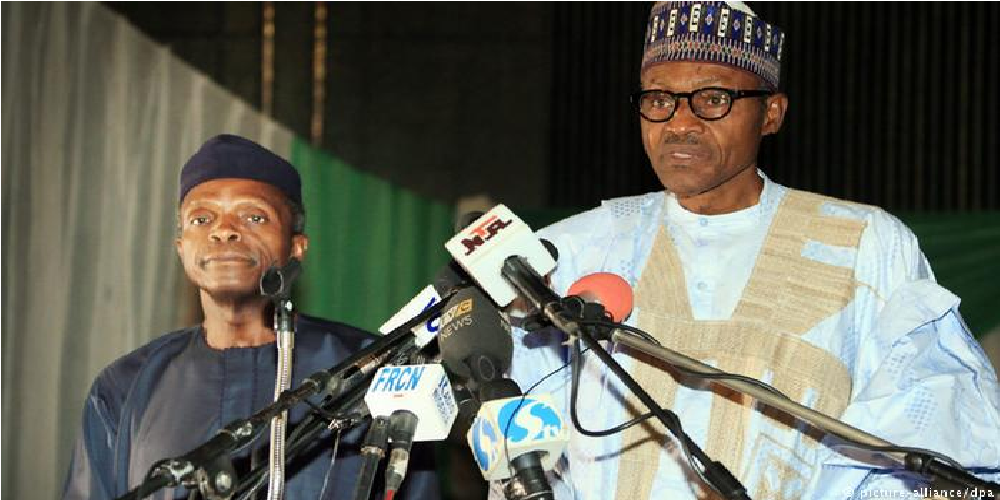
Former President Olusegun Obasanjo is one of such ex-presidents who have used and still employing various means to express his feelings about the present and future conditions in Nigeria. Within a year, Nigerians have had the privilege of reading three open letters from the ex-president to the incumbent President Muhammadu Buhari.

In January, 2018, Nigerians read political and economic uncertainties expressed by the former President. On January 20th, 2019, Nigerians were also flooded with the news of a new letter from Chief Obasanjo, comparing administration of President Muhammadu Buhari with the former military Head of States, General Sani Abacha. On July 15th, 2019, a new letter emerged, calling on President Buhari to speedily address insecurity in the country.

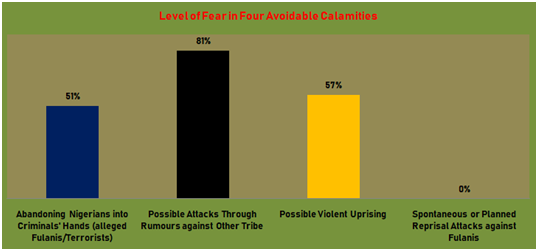
Analysis of the first two letters shows that the level of happiness of Chief Obasanjo reduces by 4%. In 2018, he was contended by 59%. Fifty-five percent was discovered in 2019’s first letter. His unhappiness about the state of the country is largely connected with the 2019 general elections. While happiness and sadness dominated the previous letters, the new letter is full of fear (64%) and more than half of the expected percent of happiness (56%) and sadness (54%). From the beginning to the end of the new letter, analysis reveals that ex-president was analytical in his construction of sentences and paragraphs, establishing his usual ‘constructive criticism’.

Expressing his fear about the state of the country, ex-president notes that “I am very much worried and afraid that we are on the precipice and dangerously reaching a tipping point where it may no longer be possible to hold danger at bay. Without being immodest, as a Nigerian who still bears the scar of the Nigerian civil war on my body and with a son who bears the scar of fighting Boko Haram on his body, you can understand, I hope, why I am so concerned.”

Chief Obasanjo was sad that Boko Haram remains a daily issue of insecurity because of the approach being used by the security forces and the government. “Say what you will, Boko Haram is still a daily issue of insecurity for those who are victimised, killed, maimed, kidnapped, raped, sold into slavery and forced into marriage and for children forcibly recruited into carrying bombs on them to detonate among crowds of people to cause maximum destructions and damage.

The former president believes that the failure of the government to address the herdsmen and farmers crises have snowballed into banditry, kidnapping, armed robbery and killings all over the country. According to him, the indifferent attitude to the public calls regarding the holistic solution will continue to be at the expense of Nigerian unity and possibly its continued existence.

Source: The Punch, Obasanjo’s Letter, Infoprations Analysis, 2019

Public Interest: Fear and Insecurity in 15 States and FCT

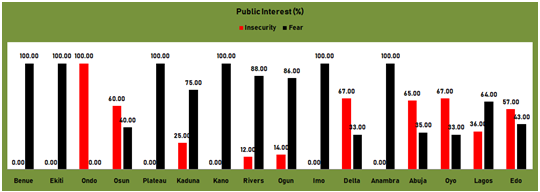
Do the ex-president’s feelings translate into public interest?  Answers to this question were sought using real time data. From 15 to 16, 2019 (till 4pm), people in Benue, Ekiti, Ondo, Osun, Plateau, Kaduna, Kano, Rivers, Ogun, Imo, Delta, Anambra, Oyo, Lagos, Edo and Abuja developed interests in insecurity and fear. Analysis reveals that the interest in fear was higher (75.29 score) than in insecurity (49.56 score) during the period. However, with the consideration of the severity level, interest in insecurity (29.500) was higher than in fear (28.437). This signifies that people were more concerned about insecurity than the fear expressed by the ex-president. This does not mean that people are not aligned with the issues that led to the ex-president’s fear.

For instance, analysis further indicates a 27.5% connection of the level of fear in four avoidable calamities and overall fear in the letter with the public interest in fear in the last 24 hours. This is on the high side for the insecurity. Analysis reveals 32.2% link of the level of fear in four avoidable calamities and overall fear in the letter with the public interest in insecurity during the period.  This also establishes that one percent of ex-president’s fear increases public interest in insecurity by 32.2%.

From the insights, it is obvious that governments and security forces need to address insecurity without fear or favour. It has reached a stage where groups or individuals’ interests must be abandoned for the good of every citizen.

Source: Google Trends, Infoprations Analysis, 2019