DD
MM
YYYY

PAGES

DD
MM
YYYY

spot_img

PAGES

Home Blog Page 6808

Increase in Piracy Attack Triggered by Massive Unemployment in Nigeria – Capt. Alfred

0

By Oko Ebuka

Sequel to the second quarter 2019 report on piracy attack released by International Chamber of Commerce, ICC, International Maritime Bureau, IMB, which placed Nigeria as the headquarter of piracy attack in the world, a specialist in Maritime Security, Captain Alfred Oluwasegun Oniye, affirmed that the report is true as the crime is continuously perpetrated by maritime experts who are unemployed in the maritime industry.

Disclosing this in a chat with Vanguard Maritime Report, Captain Oluwasegun said that the report is authentic because Nigeria is currently leading the Gulf of Guinea in the activities of piracy.

According to him, “Nigerian waters are not secured. And I must tell you, Nigeria is still the headquarters of sea pirate activities in the Gulf of Guinea and why this is increasing is because we have more unemployed seafarers. These boys are back to the creek. They will survive.

“As an Intel Officer, I already have over 50 recorded piracy attacks as a proof of these attacks in our water. If they said the reports are faults, they should give us proof because those who made this report have evidence. The whole world cannot be lying against Nigeria. We sail this water and we know what we are passing through every day”, he said.

On the issue of NIMASA

Captain Oluwasegun also calls for the total overhauling of the Nigerian Maritime Administration and Safety Agency, NIMASA, by appointing marine professionals who know the rudiments of maritime business to enable the country actualize the potentials that are wasting.

“The industry is in serious mess. It needs overhauling. We need the right people. If you want to appoint a NIMASA DG, appoint a master mariner who understands the job perfectly. So when you don’t have the clue of what is going on in the industry, how do you want to manage it? Or you bring a historian to be the NIMASA DG, what does he know about maritime, he can’t feel the seafarer’s pain.

“We need master mariners or marine engineers. We need the professionals and we need the ministry of shipping or ministry of marine. If we can have ministry of aviation, we need ministry of marine if we only want to get it right in the country because the economy of the industry has not being tapped”, he explained.

Establishing Ministry of Shipping

The Captain equally suggested the removal of maritime industry from the auspices of Ministry of Transport to enable the industry properly manage of the blue sea economy.

“I still find it difficult to believe that at this stage we still have marine under Ministry of Transport. I don’t see any reason why this government cannot create a ministry for shipping. If aviation can stand on its own, then marine should stand on its own. We shouldn’t be under ministry of transport because marine is strictly a professional field which takes someone time to understand the depth before it can be managed.

“This industry controls 90 percent of the Nigerian economy, if they shut it down in a day, in the next 20 years Nigeria will not recover from it”, he concluded.


What Goes On Behind Buy/Sell Mandate? A Beginner’s Guide to Stock Investing

0

By David Alade

Investing in the equity market is as seamless as saying buy/sell this for me. The real work lies behind the call to buy/sell. Why did you sell or buy or hold? What were your considerations? Your strategy?

Behind every buy/sell order lies 4 fundamental things. Liquidity consideration, Profitability consideration, Overall Company Financial Health consideration and Capital Gain/Dividend consideration. You really do not want to buy any stock without first considering these four things, but that doesn’t mean these are the only considerations, they are just fundamentals, remember.

Liquidity

For anyone looking into equity investing the first thing you really want to consider is how liquid the stock is? What does it mean for a stock to be liquid – it is simply how easy it is to buy and sell the stock without affecting the asset value? A stock will be regarded as perfectly liquid if you can buy it for N7 and sell immediately for N7. To stress that point, it is the availability of the market for the stock.

As you go into equity investing, your first consideration will be liquidity. Your next question is how to know which stock is liquid? The answer to that is to check the Exchange website for top traded stocks. You may want to do this for like 2 weeks to be able to capture all stocks that are liquid. Create an Excel Sheet to save your findings, equity investing is not a play, Microsoft Excel will come helping a lot.

Do that and you have your liquidity question answered. The next you want to consider is your strategy which will follow below.

Capital Gain and Dividend Consideration

This is really about your strategy, do you care for capital gain or dividend?

Capital gain is the increase in the value of the stock you own. Capital gain would be said to have occurred if a stock you bought for N7 has appreciated to N10. That will be about 48% increase in value.

Dividend is the money companies’ payout to investors that own a share of their stocks. This is typically paid yearly (some bi-annual). If you own 10,000 units of a stock, and the company declared a dividend of N2 per share, you will receive N20, 000 as a dividend.

Now the question is which do you care for? Capital Gain or Dividend?

History has it that young people tend to value capital gain over dividend. That’s because really, it’s about growing your wealth not about having more cash, dividend put cash in your hand, and capital gain increases the value of your investment.

Once you decide on your strategic need; dividend or capital gain or both, your next concern is how do I know stocks that pay a dividend and those that don’t?

To answer this as well, get your Excel Spreadsheet ready you will do a bit of work, remember equity investing is not a play. You have earlier determined which stocks are liquid, those stocks I encourage you to go to their websites and navigate to “Investors Relation” there you will find the company’s financial statements. Download it up-to-the last 5 years (2018, 2017, 2016, 2015 and 2014). 5 years is just good enough, but not less so you can see the historical pattern of dividend payment.

Go to the page where the Income Statement is and below you will find the dividend declared for that year. If nothing, the company probably didn’t pay dividend for that year. Keep your 5-year record to know how much they historically payout in the dividend. Now you should have your questions on dividend answered.

If your focus is capital gain, just on the Exchange’s website (or Bloomberg), find the stock and view it’s 5 years historical trend at least. What is the pattern? Growing? Declining? Static? This should inform whether you should choose the stock.

Company Financial Health

This is a deep and somewhat complicated point. It will take more than an article to scratch its surface. Basically, you want to look at the whole financial statements, Balance Sheet, Income Statement, Cash Flow, Management Composition, and Corporate Governance. You see it’s a lot. So no deep diving on this.

Profitability

To be candid you don’t want to invest in a company that is not making a profit (yet). On a global scale, a lot of technology start-ups have been listing on NYSE with no profit but only Part to Profitability (PtP). But stocks like these takes more effort to understand, in that beyond the surface level analysis, you must understand its operations, and vision and the very PtP. If you don’t understand the business model, be wary of investing in such stock, I recounted my experience making similar mistake here.

But really, you may want to start with companies that are profit-making. And to know them, go on the financial statements you downloaded, and from the Income Statement, you will see their Profit after Tax (PAT). Use that to determine profitability, and going as far back as 5 years is also key.

What goes on behind buy/sell mandate?

The above is just a tip of an iceberg regarding what a typical equity investor will consider before giving a mandate to his/her Stock Broker. Do you still want to go into equity investing?


Disclaimer: this is not investment advice nor is it a call to invest, it’s basically for knowledge sake. Also, opinions are mine and do not represent that of any organization I am affiliated to.

Graduates Should Acquire Digital Skills

4

By Chinedu Junior Ihekwoaba

Job Search has become a hard nut to crack. In fact, looking for a job is like looking for gold in the street.

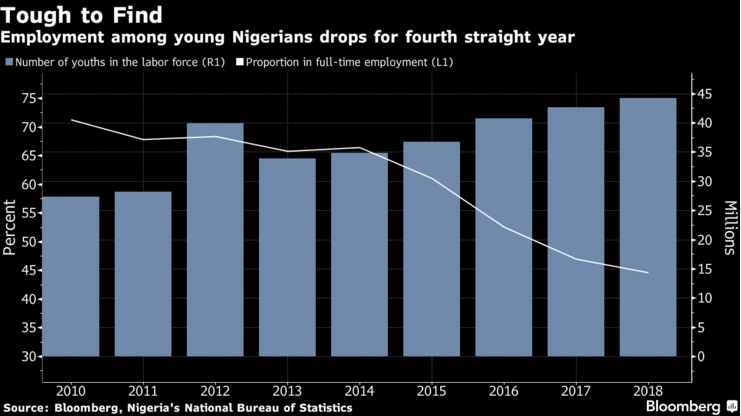
According to CNBC Africa, the unemployment rate in Nigeria rises to 23.10 percent in the third quarter in 2018 from 22.70 percent in the second quarter in 2018. The youth unemployment rate is in excess of 50%.

That’s an alarming figure. It’s frightening. Many qualified graduates have been without a job since they graduated. Those who were fortunate to get employed are working for a meagre salary.

So what’s the way forward in a country like Nigeria that’s still developing: ’Digital skills.’

Digital skills include:

  • Content Marketing
  • Email Marketing
  • Social Engine Marketing
  • Social Selling
  • Analytics
  • Social Media, etc.

Many graduates are without digital skills. It makes them look raw and unready for the labour market.

There are various digital skills that will put you in the right job.

Here’s why graduates should consider having numerous digital skills:

  • It can be a long-term source of income

After my graduation, I have never worked in any organization. Although I did apply for many Jobs, I never got any.

After numerous futile attempts, I embraced a digital skill, ’Content Marketing.’ It’s been a source of income for me since 2017.

  • It can aid job search

Digital skills can bridge the gap between you and your potential employers.

Take, for example, Social Media – there are over one billion people who visit social media daily, i.e. LinkedIn, Twitter, Instagram, Facebook, etc. Building a brand on any of these platforms can be the icing on the cake for you.

I have gotten numerous opportunities through these means. I built a strong brand on LinkedIn, amassing an average of million views monthly with over 35,000 followers.

  • It can lead to self-employment

I know many job seekers who turned entrepreneurs through efficient and effective usage of Digital Skills.

Josh Fechter built his company, Squibbler, through the use of digital skills. I am also a typical example of this testimony.

There are numerous problems you can solve with digital skills. If you can master how to use one of it effectively and efficiently, you are always good to go.

  • It can be a side hustle

In the modern world, it is advisable to have a side hustle. In fact, everyone must have multiple streams of income in order to be secured from unforeseen circumstances.

Digital Skills can be a side hustle and of course, provide multiple streams of income for you. It’s not a crime to work and earn from another source.

That’s the future of work.

  • Lastly, it can provide an avenue to further investments.

There are many ideas that remain ideas because of the lack of funds. Many graduates have the best ideas but can’t be executed.

Money is vital in business. It fosters the growth and development of business by making it possible to transform business ideas into reality.

Here’s where Digital Skills can be the Messiah to achieving your dreams. Money made from selling your digital skills can be used as funds to start your business ideas without having to acquire a loan from the bank.

Any graduate who wants to be relevant after graduation should start thinking of acquiring digital skills.

There are many platforms you can acquire them either for free or at a particular fee. Better still, you can contact me through any of my contacts if you are interested in taking my ”Digital Skills Course”.

Steps for Choosing the Right Analytics Tools

0

By Chibuike Goodnews

The data analytics marketplace can at times look like an obstacle course. Yes, with so many vendors claiming to have the right tool for the right problem — which is nearly every problem — it can get noisy and confusing.

So how can you choose the right option without worrying that you’ve just spent a ton of time and money on a solution that won’t get the job done?

Below are some strategies for when you move to the next phase: exploring options for deploying and supporting a big data analytics solution. These strategies will help determine what you need, how much you need and when you will need it.

1. Research, Research, Research

Vendor evaluation can be both a fun and tedious process. While vendors may “wow” you with their latest and greatest solutions, you still need to do more research.

The research that is less glamorous will be the key to success. That starts with working with key stakeholders inside your organization to understand the needs of your business.

Researching the business sounds a lot easier than you might think. People are happy to share their expertise, what their everyday problems are and what they think you can do for them. As you make your way through the business, remember to take a sampling of stakeholders, including managers, knowledge workers and partners.

2. Identify High and Low Priorities

Moderating a use case assessment or workshop yields amazing results and helps uncover what your business needs. Take the time to sit down with stakeholders and a “neutral” party to brainstorm business needs, assign values to each and then prioritize.

The business use case assessment helps to show what needs are being met, what needs are being missed and the relative importance and value of these needs for each group of stakeholders.

3. Match Solutions with Needs

Once you have business needs and use cases in your pocket, take the time to look at the different use cases that where uncovered and their relative priority. Next, match these use cases to solutions. Criteria for this matching game are unique to each organization, but the process could be outlined as the following:

  • Familiarize yourself with all uncovered use cases
    • Infrastructure Evaluation:
      • What do you have installed today?
      • What can you re-use?
      • What can you use better?
      • What do you need to buy?
    • Which solutions — either built or packaged — meet the needs of the high-priority use cases?
      • Will the solution(s) that you want to purchase meet the needs of the high-priority use cases?
    • Who are the people knowledge/experts in your business that have interest in building new solutions for your business?
      • What can you easily do today?
      • What are these business users’ career aspirations?

Once you’ve performed an analytical inventory of people, products and solutions, you’re ready to articulate a strategy and long-term vision for the big data analytics journey you will be championing in the business.

4. Socialize, Improve and Organize with Your Stakeholders

Socialize your ideas before you get too far down the road. You want feedback up front so you can either handle objections or consider alternative solutions.

Improve your solution with iterative feedback. Constantly reevaluate and ask if you are optimizing and evolving the solution as needed. Remember the data environment is constantly evolving, and so should you and your vision for the big data journey.

Organize the solution, the stakeholders and the solution providers. Transparency will drive agility, rapid implementation and high adoption.

This last step seems superfluous, but with the new world economy driven by rapidly changing data, staying organized and on top of everything guarantees control and greater success.

Finding the Right Big Data Analytics Path

Taking these steps will clarify the right build or buy solution for your business. As you gain a stronger understanding of the maturity of your business’ data evolution and its needs for an analytics solution, the clouds will part, revealing the solution that makes the most sense.

While starting the journey may seeming daunting at first, take these few steps towards understanding and assessing what you may need between building and buying. You will gain confidence that you are on the right big data analytics path.

Who knows where this journey will take you in the end? The fun is in the journey, and the rewards are in the virtuous balance of becoming a much more strategic and data-driven organization.

The New York City’s Blackout

0

There is a new major “historic” day in New York City for many kids. It was the day light went off for five hours. Yes, on Saturday, some American kids experienced the true nature they have been taught in primary and secondary schools: light went off and they saw the wonders of stars. Think about it: “Ken, were you old enough on the day light was off for five hours? I knew where I was with mom and dad. That was surreal”.

Power was restored to the heart of New York City after a major outage Saturday impacted an estimated 72,000 customers, mostly in Manhattan’s midtown and Upper West Side.

Con Edison said it completed power restoration to all customers on the West Side of Manhattan shortly before midnight and the last of six electrical networks was back in service.

A preliminary investigation from Con Edison found that a relay system substation designed to detect electrical faults failed to isolate a faulted 13,000-volt distribution cable at West 64th Street and West End Avenue.

In Nigeria, some were born before Independence Day. Now, New York City kids have a special day to categorize their lives. You only do those things when the events are evidently rare to have meanings. Gov. Andrew Cuomo and Democratic presidential candidate Mayor Bill de Blasio would be expected to make sure that blackout will not repeat in their generation. Yes, someone’s political career is dimmed because the blackout crossed his name in the minds of New Yorkers!

People, watch the Jimmy Fallon’s monologue and the reaction when light returned: up NEPA in New York! But hold, it was just five hours. Now, go and put your fuel as the generator fuel is running low in Nigeria. See the contrast!

New York City leaders


https://www.youtube.com/watch?v=T_jOwdOLOQI