DD
MM
YYYY

PAGES

DD
MM
YYYY

spot_img

PAGES

Home Blog Page 6818

How to Sell Heating Appliances and Forest Mowers in Sahara Desert

0

By Ajayi Joel

It is the purpose of firms – sell things to as many people as possible. Yes, I’m aware that a lot of companies face the challenge of locating customers, getting them to listen, and be converted as paying customers. This process involves three phases within the nexus of inbound marketing strategy. Let us get started; here are the steps to consider:

  1. Attention
  2. Engagement
  3. Conversion

ATTENTION

Now, it may seem complicated but I’ll try to make it simple. Attention – it is actually very easy to get attention. Yes, it is easy to go to the market and sit at the center of the road screaming to get everyone to look at you. Yet, getting attention is hard if we’re talking in the real context of attention when monies have to be exchanged for a product or service, in Nigeria.

Here’s what I mean: ride a Mercedes-Benz G-Wagon to Silicon Valley. Nobody is going to notice you because there’s nothing spectacular about having a G-Wagon in Silicon Valley. It’s not strange. So nobody will notice you, except if it’s on fire though.

So, is getting attention really easy or hard, and why is attention the first part? If you want to talk about attention in its real context, you should be talking about what the attention is for.

Now, let’s go back to the market and meet the man sitting at the center of the road. He has gained attention. Fine, everyone is looking at him. But what was the attention for?

Was it to show people that he has new clothes he’s selling, or that he needs money, or that he’s contesting for his village association treasurer, or just showing that he’s alive? If it’s to show that he’s alive, then he’s stupid. That’s because the news that he’s alive doesn’t change a thing to anybody; doesn’t give anybody any thoughts to hold onto.

It’s more like a mad man in action. Simply, the attention was stupid, and that’s why it’s going to be short-lived. People will forget and overlook within seconds.

Well, he could also use it to show that he’s alive and yet not be stupid! But that’s if he has the intention of returning some other time. More like to get attention for attention sake for the first time with the plans to return, and not be a total stranger to those set of people.

Nevertheless, there’s still a purpose to that than just screaming. So here’s the point: getting customer attention is not easy if you don’t know what it entails. It’s only easy if you don’t have a plan. But if you have a plan, then it becomes difficult.

Now let me simplify it. If there’s a purpose for getting the attention, then you need to begin to consider many other things. The consideration of other things is what makes it hard. It’s no longer about the getting of the attention alone, but what the attention will do. That’s what makes it hard

If I want to sell clothes, and I go to the market to begin to ring bells, what if those passing by are saving to buy chicken for Christmas, or to buy shoes instead or simply government has not paid them for months. Perhaps, I wanted to sell for 1,000 naira but someone was already on ground selling for 200 naira. What if everyone was looking at a politician who is doing rally? Or they are waiting for another politician to share 5,000 naira.

Can you see that it’s becoming difficult because you’re already having a plan for the attention you want to get? In getting attention, you need to have a purpose. The purpose will determine the plan.

Getting attention is easy if you have no plan for the attention. However, if there’s a reason for getting the attention, then there’s a whole lot to worry about, a whole lot to work on and all.

Picking the example above, it gets difficult if you want to go to the market to sit at the center of the road to get attention either because you want them to know that you’re alive and that you’d be returning or because you have a product to sell.

There are so many things to consider: what if there are five other people in the market on the road currently? And what if that same day was a day where the government has promised to arrest people who create scenes in the market? What if there was a fight in the market while you’re ringing your bell?

Remember this analogy applies to anything you want to do. I am just using the man in the market as a case study. If you get the idea well, you can sell home heating appliance in the Sahara and also supply forest mowers to the residents. Now, you are thinking! But it will be hard if only attention is where you stop.

I’m sure you’re quite aware that you cannot throw products at people; you cannot throw ideas at people. You cannot push contents at people if you don’t have their attention. You cannot bid for a project if you don’t have their attention. So, I’d give three different steps in getting attention:

  1. What is your Purpose for Getting the Attention?
  2. Who are the people you want to get their attention?
  3. How do you get their attention?

These three steps are all linked together. However, I’ll begin with the first.

What is your purpose for getting attention?

Before you think of running to the market square or opening that social media account or running to the radio or television station to make the noise, what is your purpose for the attention? People dress nice probably because they want someone else to notice them or because they want to go apply for a job, or they do not want to be mistaken for a pauper or to impress others.

You can choose to get the attention for attention sake. More like for recognition sake. It’s not a bad idea. Some brands do that. They do not have a product yet. However, they sponsor an advert just to create awareness that they are existing or that they are planning something.

It can be to create awareness or sell a product or to disrupt a trend, or go showcase a skill. Whichever one, the main thing to have in mind before you make a move is to note the reason for planning to get attention. Once it’s known then, you can move to the next step.

Who are the people you want to get their attention?

Now, it becomes more difficult and requires more strategy when you get to this point. Why? Your purpose cannot be for the world. Otherwise, you will not scale.

Here’s the point: if you want to get attention just because you want to be recognized so that you will return some other time and not be a stranger, it has to be to a set of people who your purpose is targeted at.

So you must have a set of people you want to get their attention. Is it the doctors or lawyers or aliens or unborn babies? Or you want to get their attention of mutants and the government – whichever one; you need to have it in plan after you have defined your purpose.

Your purpose is what will determine this. Here’s an example: My reason for getting attention is because I want people to know I can write. Definitely, aliens from Mars cannot be the sets of people I plan to reach.

The next step to take after writing down the purpose of your idea is the reason behind why you want to get attention. The fact remains that humans are the ones you want to get their attention and not drumsticks.

So your purpose will definitely be to get the attention of humans either directly or indirectly and the category will definitely differ based on your purpose.

As straightforward as it looks, you shouldn’t make the mistake of going to farmers or going to firefighters to get attention of doctors. That would be lame.

I believe you must have nodded your head with what I just said, the truth remains that people still fall into this mess; this ignorance. You need to know who your purpose for getting attention is directed at.

If it’s sportswear, if you’re writing contents, if you’re an architect, you need to know who exactly your contents are for. You need to make research. What you have in mind might not exactly be what you will discover.  Simple, to get the right attention, you need to know those who you want to catch their attention. Are they a perfect match for your purpose? If there’s no correlation, then you need to keep the searching.

Continue reading here to finish the piece
The Paradigm Shift of Social Media Sites to Social E- Commerce Sites

0

By Iselowo Kolawole Kehinde

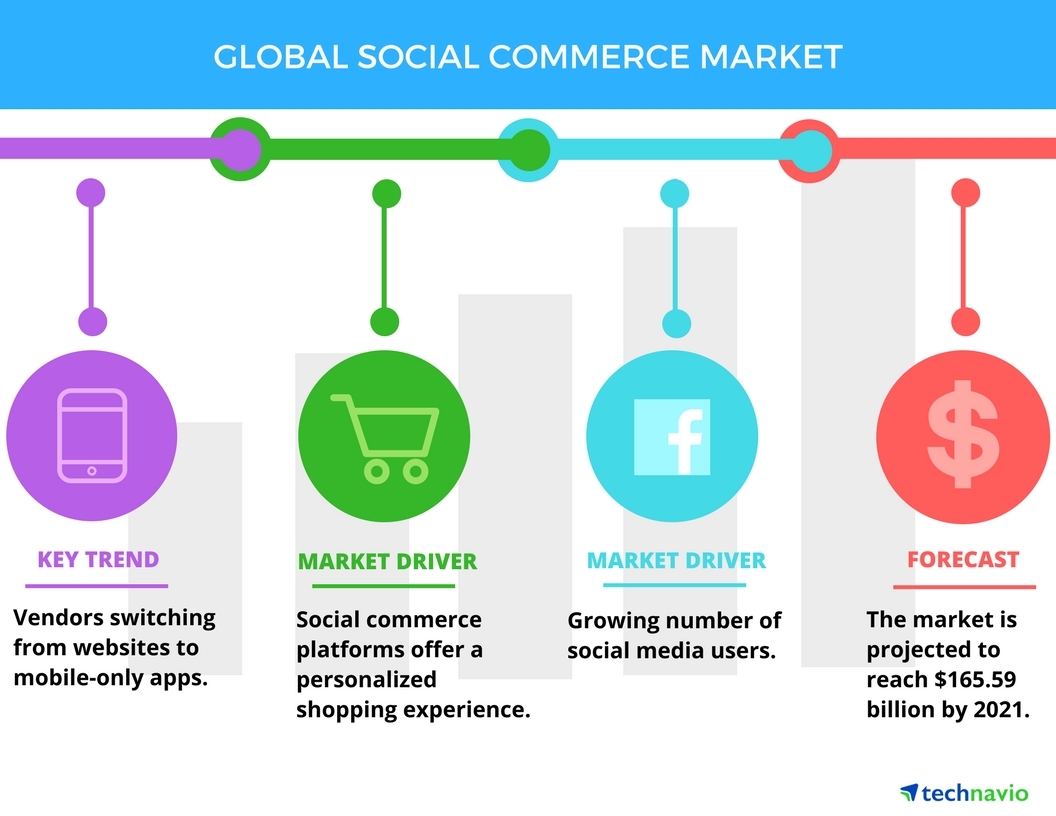
Once had a discussion with a close pal of mine back in 2017 where I made known to him that with the rate at which people now sell on Social Media Platforms, it’s only imperative they had their backend guys optimize their codes to deliver a platform, to help the growing number of users engaging in the activities, of buying and selling online better known as e-commerce, have a more comfortable experience.

He laughed at me that day like he inhaled laughing gas, but I never lost my cool because I knew that he who laughs last, laughs best. Just a while ago, I saw 3 things in the tech news that avouched my initial statements and confidence:

  • WhatsApp introduced WhatsApp for Business not long after I saw another article where they said they had introduced Payment Options, i.e. you can send and receive payments via chats; how incredible is that.
  • Instagram are testing the Instagram E-Commerce feature where they would incorporate full features of E-Commerce sites into Instagram, and you can pay for items directly on your Instagram applications.
  • Facebook introducing Facebook crypto, paving way for the full evolution of a Social E-Commerce site.

Another shockwave that hit me at my epicenter was when I surfed through my Facebook Business Page; I was surprised when I saw create your online shop, whoa! I exclaimed on my bed, Facebook now has a fully integrated e-commerce platform. Yes, you can list all your products with their associated charges and receive payment!

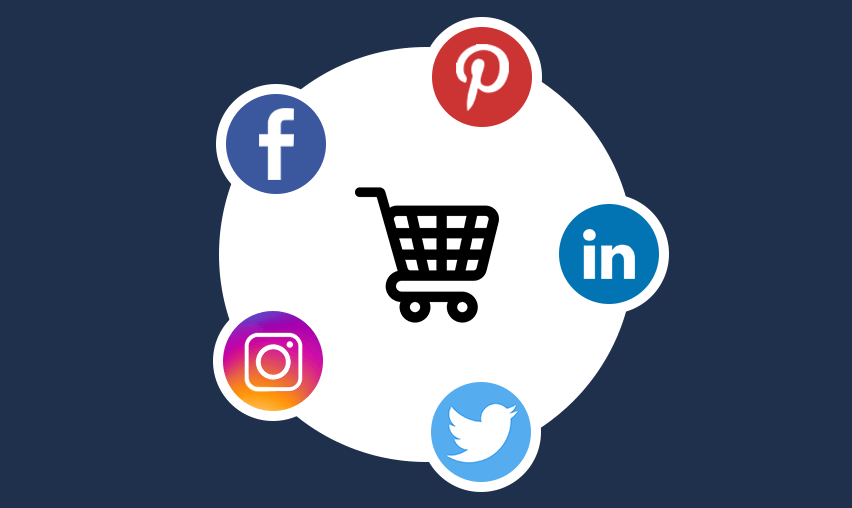
For the social media sites, the Paradigm Shift would truly happen when they finally ramp-up to full e-commerce features and integrate all on their websites. I am talking about features like a well laid out logistics and delivery plan and B2B marketing. Imagine ordering and paying for a product on your favorite Social Networking Sites, and in some few days’ time, you see your package carefully packaged with WhatsApp delivery or Facebook Delivery inscribed on the delivery product package.

It’s really incredible because it affects the everyday man and cuts across all facets of life, because an average Nigerian spends a key part of his time on Social Media Platforms. If this evolution occurs, I guess we would have a swell time playing Alice in Wonderland.

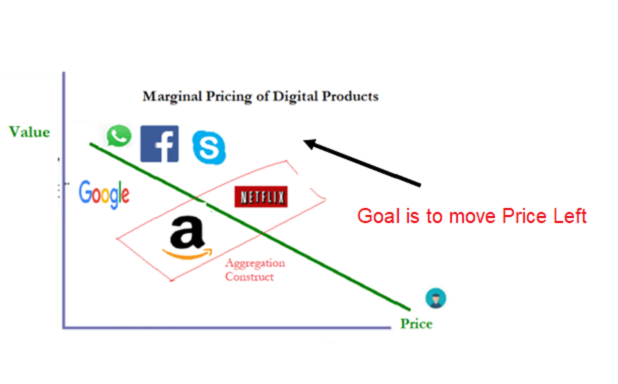
In future, Facebook would incorporate a Netflix kind of streaming subscription based platform where you pay to watch your favorite movies and series on Facebook. No point hammering on this but when it happens just know I was the first to state it here, please reference me back.

Kwik Unveils To Solve Nigeria’s Ecommerce Weakest Link

0

Another intra-city logistics firm, Kwik, enters the fray in Nigeria  as startups work to fix the marginal cost paralysis associated with ecommerce in Nigeria. Jumia and Konga will rejoice but the crises are brooding for DHL, Fedex and local courier firms. Simply, the market is now hotter for courier companies. Of course, everything is still Lagos and other tier-1 cities with most other cities largely neglected. But it will not take long for those to be in play also.

Kwik connects independent delivery partners, either owners and/or drivers of a vehicle, with customers who need reliable, affordable and flexible delivery solutions. The Kwik app comes with an integrated geolocation system and offers an efficient transportation service for small packages (up to 25kg) or documents, following the same model as Go-Jek, Uber or Taxify.

Intellectual Property Right Infringement In Nigeria: How To Stop Online Piracy

0

By Adavize Alao

Copyright infringement which can simply be referred to as piracy is the use of creative works belonging to creatives protected by copyright law without permission for a usage where such permission is required, thereby infringing certain exclusive rights allotted to the Intellectual property (IP) rightsholder, such as the right to reproduce, distribute, display or perform the protected work, or to make derivative works. The Nigerian Copyright Act 2004 makes piracy illegal in Nigeria.

Online piracy in Nigeria has gained momentum with a lot of websites engaging in file sharing for users to download. The Nigerian piracy scene does not frequently feature large file uploads of above 1GB with most users lacking the ability to afford large amounts of data bundles required for large file downloads. The piracy scene features web uploads of files ranging from 2MB – 600 MB. The most commonly pirated files are music files, movies and TV series, with a plethora of websites dedicated to providing two or three of the above-mentioned file services.

According to the Disruptive Creative Economy Meeting (DCEM), digital music consumption in Nigeria overtook physical consumption circa 2013 and market revenues from physical sales, which have been declining steadily year on year, are now dropping to well below $10m. Due to the mass acceptance of social media and its ability to simultaneously reach a broader audience in multiple jurisdictions, it is not uncommon for the sharing of copyrighted content on these internet intermediaries. The ease of acceptance and speed at which social media works have made the sharing of illegitimate copyrighted content swift.

Internet intermediary refers to a company that facilitates the use of the Internet. Such companies include internet service providers (ISPs), search engines and social media platforms.

The Nigerian Copyright Commission has made several attempts at fighting piracy but its efforts are yet to be noticed on the internet space.

A Failure to Stop Online Piracy

The Nigerian copyright space has been left bereft of a watchdog to curtail the activities of online copyright infringers commonly known as pirates. The inaction of several regulatory bodies and private enforcement efforts has also led to the proliferation of copyrighted content. This content is therefore accessed by users who should have paid for these services and product. The effect of the lack of a combative measure to combat piracy as led several persons to believe that all IP content should be free and made available to all Nigerians.

The Nigerian entertainment & media industry according to PWC is currently valued at the sum of 3.7 Billion dollars, while this report focuses on the total value of the industry it does not give a direction on the blockage of these illegal activities.  It is estimated that the Nigerian creative sector loses a large sum of money to pirate groups and the emerging group of online content providers simply referred to as blogs (inclusive of dedicated music blogs and download link sharing websites). ]Nigerians don’t stream they download]

The piracy scene in Nigeria can best be described as an unfettered freeway with little or no rules as a lot of the platform owners do not believe they are breaching the law. They feel it is a privilege to provide Nigerians with premium quality content to gain revenues from ad serving platforms. Such platforms that upload illegal content have, therefore taken advantage of the lack of knowledge on most consumers and the failure of the relevant stakeholders to stop illegal downloads.

A simple search on Google goes on to show that the internet intermediary famed for blocking content use allowed under the fair usage principle has not done much to combat the spread of illegal content over the Nigerian internet space. Web platforms such as netnaija, fztvseries amongst other websites sharing songs and albums belonging to artists continue to operate unhindered. Internet intermediaries such as Google, Bing account for 23% & 21% of visitors to netnaija and fztvseries.

Fair use is an exception to an IP holders exclusive rights. It is an equitable rule of reason, which permits the Court to avoid a rigid application of a holder’s exclusive rights when on occasion, it would undermine the purpose of the Copyright Act.

While Google, Bing and other search engines are not under compulsion to stop access to these platforms, the intermediaries [search engines] may be passively liable under the provisions of Section 14(1)g of the Nigerian Copyright Act 2004 for allowing unrestricted access and acting as a conduit to copyrighted content without taking measures to stop these downloads.

A failure to stop the spread of copyrighted content would continue to lead to the loss of more revenue for IP rights holders and owners. This revenue which ought to be generated to maintain the growing Nigeria entertainment and media industry would, therefore, be lost to persons seeking to profit from adverts/crypto miners which create a lengthy value gap between the service providers and product users. In a time of evolving markets and new businesses. It is essential that the rate of illegal file sharing be reduced as this would improve the protection of IP rights.

A value gap is the mismatch between the value that these intermediaries extract from music, and the value that is returned to rightsholders or in this case pirates

Conclusion

In tackling the scourge of online piracy which is not protective of the rights of IP owners and holders, emphasis should be placed on legal alternatives and educating internet users of the rationale that copyrighted content comes with a price. In policing the internet, the ISPs should not be mandated to become the police of the internet as doing so would be granting the legitimisation of private enforcement. A joint effort between regulatory bodies, copyright holders/owners, right societies, internet intermediaries and telecommunications service providers would be a very effective way of reducing online piracy in Nigeria.

In dealing with persons that seek to gain from IP theft, it is essential for regulatory and rights societies to pursue means of addressing the root causes of IP infringement. The authorities and rights owners may involve the use of the following;

  • End-user blocking and filtering (parental control) with consent, which can be regarded as a very effective mode of dealing with IP infringements.
  • Educate users on legal and illegal alternatives. This is also being propagated by Google in some parts of the world and can be utilised as an alternative to blocking injunctions.

Accordingly, Google in the EU and USA has launched a number of initiatives to present legitimate alternatives to people as part of search results, including providing advertisements on queries for movies and music to link people to legitimate means of purchasing content or finding movie showtimes in local theaters Google Blog – How Google Fights Piracy 2018 Report.

  • Reduce prices or utilise subscription-based services such as Boomplay, IrokoTV for premium content to convert nonpaying customers to regular paying customers.
  • Encourage the use of Freemium services which provide basic content for free and premium content for a price.

A combination of the words “free” and “premium,” freemium is a type of business model that involves offering customers both complementary and extra-cost services.

  • The use of Digital rights management (DRM) technologies have been specifically developed to prevent online IPR infringement. This is the generic term for a set of technologies for the identification and protection of intellectual property in digital form. It should be noted that for every trademark infringement there is a DRM tool addressing the infringement.

The technology enables IPR holders to control access to their protected materials by removing the consumer’s control over their use of the file, and ensuring that only those with valid permission can use it, resulting in IPR holders ensuring that they receive payment for their investment. However, DRM has its limitations. Therefore, IPR holders should be advised to select the most suitable form of DRM for their IPR in order to achieve the protection required without violating valid users’ rights to access the content. Examples include encryption and online monitoring.

  • Voluntary or legal ‘geo-blocking’ e.g. which is the blockading of certain IP Addresses which spread copyrighted content.

What You Need to do to get a Debt Consolidation Loan if you have a Bad Credit History

0

According to Comet, almost 80% of baby boomers, Gen-Xers, and millennials have credit card debts. While you could argue that most of it is mortgage or student loan related, the truth is that the bulk of this bad debt is because of credit card, auto, and medical debts, to the point that the latter is the top cause of bankruptcy filings in the United States. It’s no wonder then, that most Americans have a bad credit history. 

However, you should know that there are options available to address your debt issues, so there’s no need to take any drastic steps. But one should not just jump into a debt relief option and some of the signs before considering such a move include falling behind on your bills, using credit cards to pay your bills (and only the minimum payment at that). One of these debt relief options is a debt consolidation loan. While this may not reduce your overall liability, at the very least it makes managing it easier. The concept is that you borrow enough money to clear your existing debts and just make one monthly payment to the lender providing the debt consolidation loan. 

While it may not be too difficult to get debt consolidation loans with bad credit, you should nonetheless properly research different financing options to choose the loan that gives you the relief you need, at a markup and monthly payment which you’re able to meet. The first step to take before considering a loan is to monitor your credit score regularly and then work towards improving it. Factors which could affect your credit score include making your payments on time and limiting the number of accounts you own. This is important as any lender will look at your credit score first and then determine a “safe” amount to lend you along with the interest rate you’ll have to pay. The better your credit score, the more money lenders will give you a lower interest rate. 

Once you have your credit score sorted (as much as you can), it’s time to research debt consolidation companies. These are ideal for those with “substandard” credit ratings, but more often than not a con artist will be ready to take advantage of your desperation, so beware of scams and fraudulent activity. The best way of doing this is to contact your own bank or credit union first. You should be prepared for being turned away though, as these institutions are already wary of you due to your bad credit history with them. Also, banks and credit unions wouldn’t normally offer debt consolidation loans, and even if they do, because of their risk-based pricing model, you’ll end up paying a lot more in interest and fees. If you think working with a name you already know is worth such a cost, then you have your winner! 

In the event you get turned down because of your credit, your next option would be to research different lenders and debt relief companies. These entities operate differently from banks and credit unions as their main focus is to offer debt relief through debt consolidation loans for those who have a bad credit history. Essentially, your arrangement with such a lender includes the said lender paying off all of your existing debts, leaving you obligated towards the lender alone for the full amount. This results in one monthly payment being made to one single entity, allowing easier management. You should expect the interest rates to be high as is the case with banks and credit unions, considering that these lenders prescribe to a similar risk-based pricing model. 

When discussing your options with the lender, ask as many questions as you can so you have a clear picture of the arrangement. Reputable lenders will offer varies depending on the individual and their credit history. These entities understand that a generalized plan will not work for everyone and will, therefore, offer a few options. Make sure you understand all of them and are aware of the risks involved and the liabilities you take on (in addition to just having to repay the loan). Sometimes there are other fees and liens, such as early repayment fee. This is where you would have to pay an additional (and sometimes significant) amount in the event you’re able to pay off the loan before the contract term is up. It may be tedious, but reading through the contract is always a good idea. 

To summarize the above, the process of getting a debt consolidation loan is the same as it would be with other types of loans. Before you go speak to the lender, make sure you have all your information with you. Make a list of all your debts and creditors and, if possible, have the relevant documentation. This will help you and the lender reach an agreement faster. When you’re filling out the form (more than likely there will be one), provide all the information asked and don’t conceal anything. If they come across the hidden information at a later stage, it’ll just make matters worse. Some companies may put you through a pre-approval stage at this point before signing an actual loan agreement. 

Before signing the agreement, make sure you read all the terms and conditions (remember hidden fees!), and that you understand everything beyond just the repayment schedule and fees. The interest rate isn’t the most important part and you need to look at the overall structure. Once the payment is released, pay off your debts RIGHT AWAY. The longer you keep it, the higher the chances are you’ll end up using it for something else as well. Considering that you now will only have one payment to make, the matter should be a lot easier to manage, allowing you to properly plan your finances. Just be sure not to take on any more debt!