DD
MM
YYYY

PAGES

DD
MM
YYYY

spot_img

PAGES

Home Blog Page 6820

The Jay Jay Okocha’s Interview [Video]

0

This is Jay Jay Okocha on how he dealt with Racism while he was playing in Germany.


Football and Femininity: A Cause Marketing Musing

0

By Kelechi Kalu

It was the final of FIFA WOMEN WORLD CUP 2031 between Nigeria and Comoros and the time was 49 seconds into the 4-minute extra stoppage time. I was playing in the right wings for the Nigerian women team.  The Centre Referee had just awarded us a corner kick at the right. I swung in the cross hoping to reach Asisat Oshoala but the ball was intercepted with a chest-down by our opponent’s Brandy Kamalu.

And Brandy Kamalu picked up the ball from the edge of Comoros penalty area. She ran past a reckless tackle from our own Tele Kommasial; with a drop of the shoulder, the bamboozled Billy Boardu; wiggled to the right past the onrushing Printo Mediah selling her a dummy in the process; I was sprinting back to stop her and ended up colliding with our goal Keeper Esperienshia Maketina while Kamalu coolly slotted into an empty net. We were doomed!

At that instant, the global spectatorship and Social Media erupted in a thunderous applause for such a beautifully and skillfully executed piece of individual goal. Even we, Kamalu’s victim, stood back to witness the emergence of a brand that just catapulted herself into global consciousness forever.

I woke up abruptly with beads of perspiration on my forehead. The bedspread wet. It was indeed a dream. If it were not, how could my fully-bearded and mustached self be found playing for the Nigeria women football team in 2031? How?

Ahhaaa!!

The Fifa Women World cup has come and gone but the tournament left two strong tastes on my tongue.

This year’s 2019 quadrennial football event held in France and won by USA (I wrote this after the Semi-Finals though I am rooting for the Holland) turned out to generate unprecedented followership and social media engagement than any such women event ever. It used to be that the worlds rarely pay attention when a female football tournament is ongoing. This was an exception!

According to available data, over 764m persons watched at the least a minute of the 2015 version with about 10% increase projected before this 2019 tournament kick-off. Seeing the massive head-turn in the first 3 weeks, FIFA moved to projections to over 1 billion viewership across all platforms.

Fox Sports, BBC sports and Globo TV have all reported massive increase in viewership to the extent that Fox TV 30-second commercial slot that sold below $30,000 in 2015 went for about $140,000. The BBC Sports said its total viewership for the 2019 tournament had already surpassed 22.2 million, well in excess of the 12.4 million record set in 2015 during the Women’s World Cup in Canada. Across different major actor countries, sponsorships are skyrocketing from corporate partners.

https://youtu.be/0XzeUJIJ7Pc

What are the implications of all these for brands?

Social Changes or conflicts are corporate brand communication’s village gong.

This is a call to be watchful of an evolving market-and-non-market place, to act fast on new partnership opportunities or sudden social needs.  It’s essential to pay attention to current events with regards to where your brand can fit in. This, for me, is a case of creating and leveraging a social shared value but in this case, the female athletes started it.

The second and perhaps the most intriguing outfall of the just concluded competition is the uproar generated by some of the tournament’s gladiators who sought to use the occasion to remind the world that ‘you can be all too feminine and play football still.’ Prior to now, the image of a professional female footballer has being that of ‘a boy’ in the body of some girl. Did I say girl?

Consequently, female footballers almost always appeared and behaved as boys. Even if they do not, in reality, that was how the world perceived them.

To add fuel to the fire, their dressing and mannerism perpetuated this to the point that parents are terrified at the thought of their girl-child taking to playing football so they don’t end up losing their feminine features.

Tacking this head-on, players such as Nigeria’s Francesca Ordega, Netherland’s Van de Sanden and Brazilian Marta among others decided to take their lady-thing to the field of play.

From Ordega’s braided colourful hairstyle and facial make-up to Van de Sanden’s hair art and eye-brow-and-lashes and even to Marta’s lips painting. The girls wanted it all on display: colourful hairs, muscles and make-up, atletism and femininity, mascara, eyeliners, and spot concealers.

What followed was consternation.

Every on-the-field regular mistake or loss was blamed on their focus on look.

The more the male-dominated football-enthusiasts cried and threw tantrum, the more these girl gladiators strived to display and defend their femininity at the Gladiatorium.

And this time, their voices drowned the criticism of their adversaries. They proved they’ve got balls under their legs!

Their voice echoed loud and clear – football can be lady-like; football can wear make-up; football can braid fanciful hairstyle; and football can even dare to catwalk. Football absolutely takes nothing away from girls!

They can be all they want to be – classy, graceful, elegant, gorgeous, delicate and if need be, sexy  –  and still play football.

Here then lies the crux of my muse  —  if the girls want their balls with ear-rings, eyelashes, make-ups, braids and all – for goodness sake give it to them.

As a brand communication person, I am sniffing at a mammoth brand entrenching opportunity there. I am imagining that a smart brand can align itself beside this gender and sexuality expression cause to create a massively global communication campaign that drives home this single point – that football is a lady too!

Nudity is not a lady, football is; masculinity is not a lady, football is; ruggedness is not a lady, football is. A girl is not a sex object; she is a beautiful and skillful football artist. Asia, Africa, South America and the world at large need to have this awakening to give reasons to more girls on why they should take up this beautiful game of soccer as a career alternative to aspire to. There is no better time to start this than now.

Francesca Ordega echoed same when she said she wore make-up and braided her to send a message to girls back home that football can perfectly blend with femininity.

Van de Sanden vowed never to play any game without her lipstick. According to her it enhances her performance by upping her confidence.

South Korea’s Cho So-hyun added that she wants to show her beauty to everyone and remind them that she is a woman.

Are corporate organizations listening? Are Cosmetics firms, the not-for-profits, fashion trail blazers, make-up and other non-female related brands paying attentions? They definitely should, I think.

There’s no such thing as luck in marketing — only opportunities spotted and acted upon. To pay attention to the world around you and the experience of users or customers is life in marketing.

If you notice a trends, gaps, and opportunities or even conflict then it is time to get strategic in aligning your brand with a good social cause. Of course, there is also the role of timing but the preparation for a campaign that could culminate in the next FIFA world Cup in 2023 starts with other major female sports events in between.

How about if this specific hunch of mine does not fly with you but your interest has been piqued towards using social cause marketing campaign as platform to launching your brand to global or national consciousness? That is what this piece is about.

Should that be the case with you, don’t you worry! I got you covered with the following suggestions.

  1. Seek out a Relevant Cause(s) to Support, especially one with a lots of social or personal passion behind it
  2. Create a Simple but Memorable Campaign Message with Hashtag.
  3. Give More Than Just Money, Create and Champion a Strong Advertising Campaign.
  4. Use more of Social Media and less Traditional Media but definitely both.
  5. Seek out and partner with a relevant not-for-profit organization, if needful…

Still wondering if this cause marketing thing worth the noise?

Consider the experience of Lush Cosmetics, a UK-based business selling soap, shampoo, and other fragrance products. Lush went for a more risky cause.

The brand had been supporting animal rights causes for years but decided to take it up a notch. The brand started a campaign with store window displays in support of the SpyCops campaign, which wanted to raise awareness around undercover police officers and their actions under their assumed identities.

A risky move for any business, it was seen as an attack on the police by some, with a call for a boycott going out on social media. It didn’t look good until it was revealed the company saw a 14% increase in sales year-on-year for the period of the campaign. Not what people expected.

How did this happen? It came down to who called for the boycott and who Lush’s customers are (unsurprisingly they’re not the same people). Risk can be taken in your cause marketing if you really understand your customer.

Not convinced yet? Consider also that a global study found 91% of consumers said they were likely to switch to a brand that supports a good cause, given similar price and quality. Hmmm!

Furthermore, 92% said they would buy a product with a social or environmental benefit given the opportunity, and 67% said they had done so in the past year.

Ring bell?

Well, that’s something to ponder on!

Eliminating Blame Game in Nigeria’s Power Sector Using Supply and Demand Side Models

3

By Mutiu Iyanda

Is the privatisation the way to ensure sustainable power supply to households and businesses in Nigeria? It is obvious that this question was asked before Nigerian government considered privatisation of its national power agency in 2013, while private investors responded in affirmative, highlighting increased efficiency in electricity generation, transmission and distribution as a key benefit of the government’s action.

After the privatisation, expectation among the consumers is that increased efficiency will lead to stable electricity supply within a short period, but the narrative has been changed as the key actors in the power value chain continue trading blames over the corporate structure, government’s regulatory framework and capital impact on value delivery. There are no doubt people and businesses’ hope of throwing away their generating set has been dashed.  Power supply remains the main constraint of over 75% businesses operating in Nigeria. Despite the privatisation, experts and public analysts have not heaved a sigh of relief on the possible solutions to various problems in the sector.

The position of experts remains that Nigeria needs about $20 billion to revamp the power sector. To the civil society organisations, capital is not the problem of the sector, but the corruption which has been the main reason for having Nigerians and businesses in darkness while paying for the price. Is privatisation not supposed to reduce the corruption if total elimination is not possible? Like other private businesses, companies in the sector are expected to deploy their processes for sustainable value delivery and competitive differentiation, while assets and competencies should be used as drivers of profitability.

Actors and the Game

Instead of using processes and competencies for value delivery, analysis has established that players in the power sector engaged in a strategic blame game between January and June, 2019. From the Power Generating Companies to the Public Analysts, resource issues and value creation blame shots were traded during the period. Within the resource issues, generation, transmission and distribution infrastructure were bought and sold by the actors. Government interference, consumers’ debts, distribution and logistics problems were equally traded. As the actors engaged in the game, attack the accuser, denial, scapegoat, excuse, justification, apology and Victimage were employed as response strategies.

When an actor used attack the accuser, it actually attacked the actor(s) that accused it of wrongdoing towards generation, transmission or distribution instead of addressing the main issue preventing Nigerians and businesses from enjoying stable electricity. Denial, excuse and scapegoat response strategies were the centerpiece of reactions when an actor exonerated itself from the problem identified by another actor. As an alternative to clemency, analysis shows that an actor justified the issue raised by another actor leveraging internal and external information. Apology was used when actors discovered that they were actually wronged for not being proactive about the issues raised, while Victimage was adopted when it was obvious to the actors that wrongdoing that led to the issues did not emanate from them.

Source: Newspapers’ Reports, Infoprations Analysis, 2019

From the mined and analysed stories, infrastructure, distribution, capital and logistics blames were traded mostly during the period. Justification, excuse, scapegoat and Victimage were the dominant response strategies employed by the actors.  Out of 156 blame shots identified in the data, actors such as the Nigerian Society of Engineers, journalists, public analysts, consumers and other professionals traded over 39% of the blame shots. The Power Generating Companies (GENCOs) followed closely with 23.71% of the shots, while the Electricity Distribution Companies (14.74%) and Transmission Company of Nigeria (8.33%) occupied third and fourth positions respectively. In terms of response strategy, GENCOs overtook other actors (Nigerian Society of Engineers, journalists, public analysts, consumers and other professionals=23.66%) with 34.35% of the 131 response strategy actions found. DISCOs and the Federal Government followed by 12.97% and 9.16% of the response strategy actions respectively. While GENCOs preferred justification, excuse and scapegoat strategies, other actors (Nigerian Society of Engineers, journalists, public analysts, consumers and other professionals) prioritised justification and excuse.

Source: Newspapers’ Reports, Infoprations Analysis, 2019

Making Sense of Resources Issues

Consumers and the key actors need to make more sense of the insights generated from the issues that led to the blame game during the period. This is better understood within the Global Competitiveness Index. Since delivering and capturing value in the sector requires inputs from the supply-side and demand-side, strength of investor protection, intensity of local competition, government efficiency, the burden of government regulation, quality of overall infrastructure, quality of electricity and venture capital availability were chosen from the 2018 Index for supply-side. The demand-side had buyer sophistication, quality of demand conditions and degree of customer orientation.

Looking at these indicators, this piece hypothesized a significant variation in supply-side competitiveness indicators as a determinant of the blame shots. From the model, analysis reveals that SSC explained 94.80%, 70.80% and 55% variation in distribution, capital and infrastructure blame shots. The key lesson from the models is that the actors need to address the blame shots with the specific consideration of the indicators within the SSC. Holistic solutions to the blame shots depend on the proper diagnosis of the issues contributing to the country’s poor rankings within the indicators. Failure to address the issues would enhance the issues towards the continuous blame game in the sector in the next four months, analysis suggests.

Source: World Economic Forum, 2018; Newspapers’ Reports, Infoprations Analysis, 2019

Like the blame shots, issues in the supply-side competitiveness need to be resolved before ending excuse, scapegoat, justification and Victimage response strategies being used by the actors. Players need to break defensive attitude and behaviours. Instead, efforts should be on how to solve issues in the sector using collective approach. Government and regulators should have the courage to enforce the enabling laws and rules for the sector.

Source: Newspapers’ Reports, Infoprations Analysis, 2019


Source: World Economic Forum, 2018; Newspapers’ Reports, Infoprations Analysis, 2019

The Nigeria’s Central Bank 100 Million BVNs Target

2

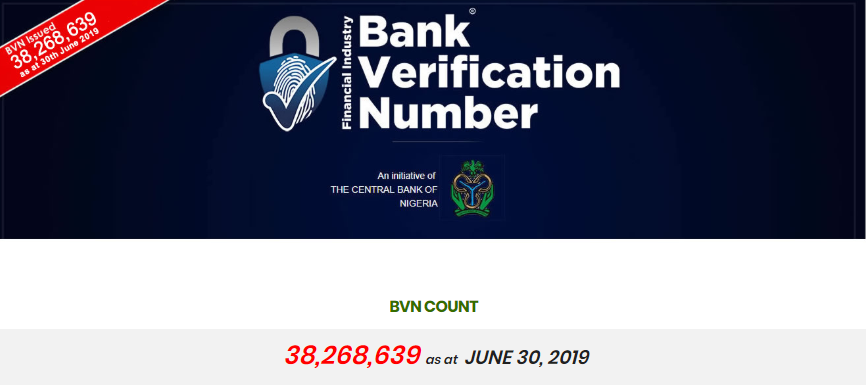
The Central Bank of Nigeria plans to hit 100 million registrations by 2024 for total Bank Verification Number (BVN) in the nation. The CBN governor, Godwin Emefiele , made that announcement. Today, we have 38 million issued BVNs.

This is even as the apex bank revealed that it has successfully linked 38 million accounts with the Bank Verification Numbers. CBN noted that it foresees the increase largely to its partnership with the National Identity Management Commission will also enable integration between the two databases.

“We have set a target of 100 million registrations in five years. What this means is that, we will support an aggressive enrollment of prospective banking customers in the informal sector onto the BVN system,” said Godwin Emefiele as quoted by a national Newspaper.

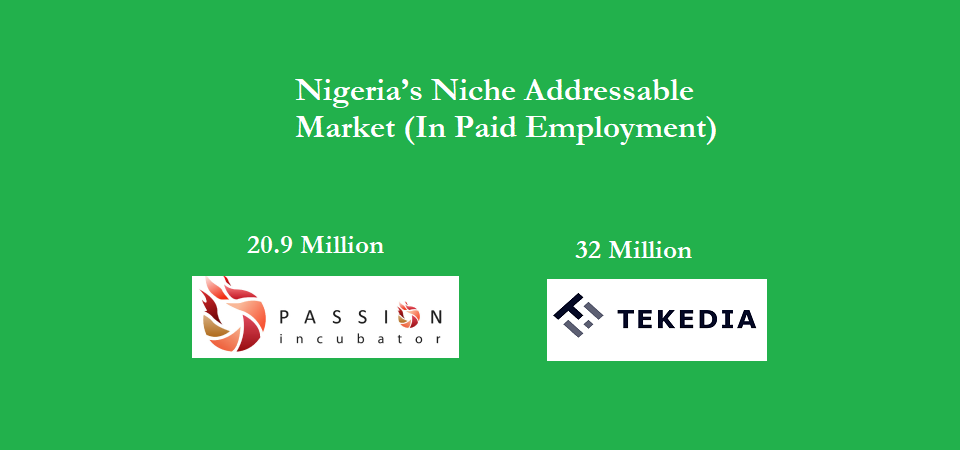
For CBN to move from 38 million to 100 million, it will need to add 62 million people within five years into the formal banking sector. I have already noted that Nigeria has about 32 million people that earn decent income both from the private and public sectors. They are largely the people that truly care to have bank accounts. When you add students and those without jobs but need bank accounts to receive supports from friends and families, you get the extra 6 million that make up the 38 million BVNs.

So for CBN to hit 100 million BVNs, it will have to rapidly scale this economy to bring more into the fold to even need BVNs in their lives or it will make it a requirement to collect social benefits which means most adults will get one. It will be a huge achievement in Nigeria if we get closer to 70 million BVNs by 2025!

Why? Having a bank account is not really the big deal for many. With limited credit facilities in the nation, I am not sure anyone earning less than N30,000 will miss a bank account in Nigeria. Using one is simply funding bank fees.

Passion Incubatorâ??s 20.9 million and Tekediaâ??s 32 million Niche Addressable Market in Nigeria

SolarGaps Makes Smart Blinds for Clean Energy Generation

1

By Nnamdi Odumody

SolarGaps is the world’s first smart solar blinds. It allows most households and commercial buildings to utilize their window areas for green energy generation, and reduces electricity bill and C02 emissions. As a smart product, SolarGaps blinds automatically adjust the angle for the most effective solar power generation and better shading performance. The blinds maintain the desired room temperature, control light, adjust to customer daily habits and changing weather conditions even as they integrate with various smart home and commercial building management systems.

The blind allows the utilization of windows for effective green energy generation thereby allowing users save up to 70 percent in electricity bills, decreasing average household yearly C02 emission by up to 10,000kg.

It allows any household or business to easily generate Solar PV electricity for further storage or sale up to 135w per m2 during sunny hours while the average household consumption during this period is 300W. Only 2.2 m2 of windows equipped with Solar Gaps will generate enough energy to cover energy demand. Solar Gaps tracks the sun using Maximum Power Point Tracking (MPPT) which allows it to adjust its angle to the sun autonomously by calculating the maximum efficiency levels being produced.

https://www.kickstarter.com/projects/1170840477/solargaps-smart-solar-blinds

SolarGaps blinds have plug and play design  and are easy to install and operate, offering a storm mode protecting the window from poor weather conditions and are built to suit all climatic conditions operating in the wide range of temperatures between -40 and +80 degrees Celsius. They automatically close when occupants leave the building for higher savings and energy generation and provide more shade when the room reaches the desired temperature, preventing up to 90 percent of the sun’s heat from entering the building.

We engineered SolarGaps with features designed for renters, homeowners and small businesses to affordably reduce energy usage, create renewable energy and transition to energy independence:

  • DIY PLUG & PLAY – With apartment renters in mind, the interior wall brackets are designed as a non-permanent, plug & play solution with additional installation options for homeowners to maximize energy production.

  • ENERGY GENERATING – Built-in solar panels can generate up to 100W-150W of renewable energy per 10 sq. ft. (? 1 m2) of a window, enough to power 30 LED light bulbs or three MacBooks.

  • ENERGY REDUCING – In addition to generating solar energy, the window blinds also save energy by shading your home interior and reducing air condition cost by up to 80%.

  • AFFORDABLE – Energy surplus can either be stored in the battery or can easily be sold to your electricity company as green energy through a two-way meter they provide.

  • SMART FEATURES – Easily integrate with smart devices like Google Home, Echo, Nest Thermostat and more to control by voice, temperature and/or smartphone app

SolarGaps has the latest advanced smart shading features inbuilt and can easily be integrated directly with the most popular smart home systems like Amazon’s Alexa, etc.