DD
MM
YYYY

PAGES

DD
MM
YYYY

spot_img

PAGES

Home Blog Page 6860

Smart Cities: The Cities of the Future Are Coming

2

By Sani Nahuche

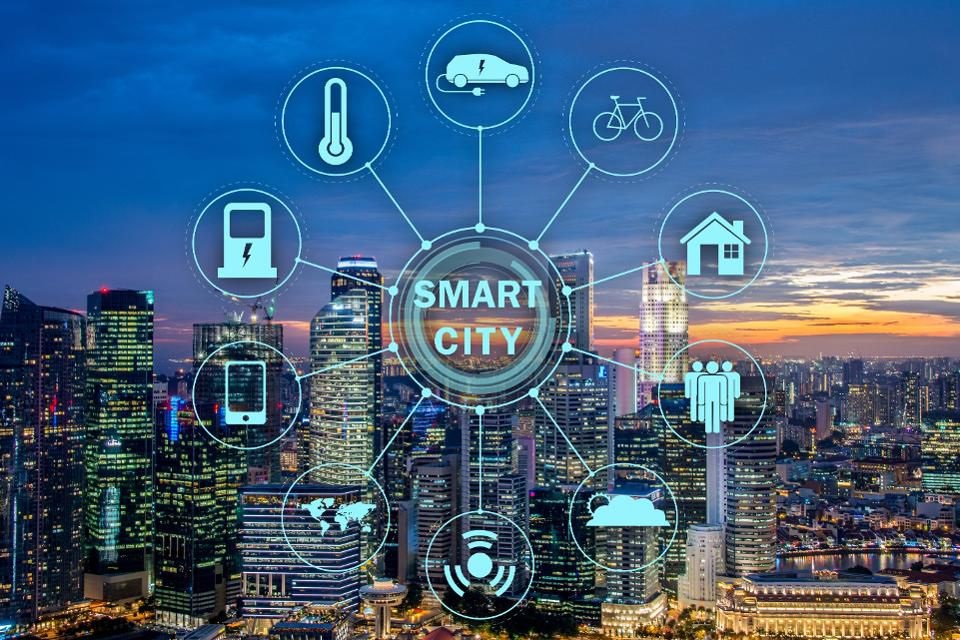
There are a number of urban areas across the globe that make use of many different types of electronic data collection. An area uses this information to efficiently and dynamically manage its assets and resources. These urban areas are smart cities and you will be hearing a lot more about them in the future.

The idea behind the smart city is the integration of communication technology and information. Then, throw into the mix the millions of physical devices that are all connected into this network and you have the Internet of Things (IOT).

The entire network is optimised to make services run with greater efficiency. Data is collected from citizens and devices living and working within the city. The data is collected, collated and analysed to improve many aspects that run the smart city.

It is used to manage traffic and transport systems, energy plants, and water supplies, managing waste and even keeping the peace. It helps run schools, libraries, hospitals, community centres and helps with crowd control.

A smart city saves money, improves quality and makes the general infrastructure more easily manageable. A modern city can evolve over the space of a few minutes – smart technology allows us to react to these sudden changes and improve on them.

Smart Home, Smart City

The future home is the Smart Home, the future city is the Smart City and HCI (Human Computer Interaction) will play a great role in this. Smart homes are intelligent enough to control themselves and the Smart City of the future will inevitably control its own destiny. However, HCI and that human touch will always play a key factor in how information is collected.

The way devices work is becoming incredibly more sensitive. We talk to our Google Assistant, Bixby or Alexa and it responds accordingly. It seems like only months ago we were typing every instruction in through our keyboards.

Devices are becoming smaller, cheaper and the advancing technology is making them more accurate. There is a huge amount of reliability in these devices – but HCI is still required and we are not at that stage where M2M (Machine to Machine) can run it all by itself.

Perhaps, almost certainly M2M will reduce the need for HCI but a smart city will operate and function perfectly well for the time being as everything becomes wireless. M2M will begin a revolutionary move in the cities of the near future when driverless vehicles begin transporting private and public passengers from one end of the city to the other.

The Use of Sensors

Sensors will play a huge role in the cities of the future. They monitor traffic flow, crowds, transport, and driverless vehicles and are intrinsically linked to the IOT (Internet of Things). As its usage increases and more and more are required, the demand will rise.

As demand rises, the cost of production will come down. Devices will become cheaper and consume more of our daily lives.

Smart On Crime in the City

Incredibly, smart technology has been used in one American digital city to combat crime. Boston has developed a system called Shot Spotter that detects the acoustic bang of someone letting off a firearm.

The sensors used are strategically placed in many areas of the city and will hear and subsequently pinpoint the location of where a firearm was heard. The same Massachusetts city also has more than 200 sensors specifically to detect biological warfare chemicals.

Boston is the ultimate smart city where it also gets tough when supporting the environment. Sensors located on many buildings can detect when greenhouse gas emissions are too high and software located in its vast sewer system help with maintenance in the tunnel areas of this vast network.

In Dublin, Ireland, the city is already commissioned by computer firm giant IBM to work with the local council to collate and collect information on traffic data. It can analyse traffic data in order to ease congestion.

Journey information is updated every minute so residents can plan to fastest route to their destination without hitting congested roads. Dublin traffic speeds are among the fastest in any western European capital.

It suggests the city will be quick and ready to jump on board with the smart driving technology that will soon grace all the world’s big cities. In London too, the transport system is the envy of much of the world. This city has introduced a congestion charge to vehicles entering certain central zones during busy periods.

The Oyster card is a smart way of getting about London via the public transport system. It is a credit card-sized pass to get you on the London Underground (the Tube), Rail links, Docklands Light Railway and its hundreds of buses.

The Power of Analytics and Business Intelligence

Analytics and business intelligence can create such an efficient and well managed city that some of these hubs will eventually become more powerful than nation states. Officials in Barcelona have created dynamic bus routes, trash collection with sensors, street lights that are super smart and payment on public transport is achieved by contactless cards.

Analytics and business intelligence is working dynamically in the African city of Johannesburg. It is the envy of all the African big cities with its broadband project and fibre optic wireless system that churns out data speeds of 1.2 Tb (terabytes). That would be impressive in any of the world’s biggest smart cities.

But Johannesburg has no plans to stop there. Smart meters that monitor all residents’ use of water and electricity are being rolled out to every household and to combat the city’s high crime rate, it plans on building an intelligence centre to monitor criminal activity at every level.

Masdar is a city that few will have heard of. It sits deep within the desert of Abu Dhabi in the UAE (United Arab Emirates). It is a thoroughly modern city with a claim to fame of being the world’s most sustainable place on earth.

There is a massive solar power station in its centre and plenty of wind farms to keep the entire city energised and environmentally friendly.

Driverless technology is king here. A series of pod cars take commuters around the city and there are no signs of any gas-powered vehicles in sight. They are not permitted in the city at all. Pedestrians walk the streets in total freedom and impunity.

The advanced technologies that run this city are so vast that the entire area was built on a raised platform. This allows technological and digital plumbing and repair to take place more efficiently and with greater accessibility. Smart driving is the only driving you can undertake in Masdar.

Singapore has always been a modern city that looks like something you might find on a distant planet. Its futuristic look and the innovative apps are keeping its citizens one step ahead of the rest.

Apps in Singapore are used to direct taxi drivers to areas where there might be rain in the next 10 minutes. It can highlight to the business and analytical community that using public transport is extremely busy at certain periods of the day. All of these apps are feeding information to commuters in real time so there will never be a time when one might say, “I hope the platform will not be too busy when I arrive at the train station”. Singaporeans will know in advance.

There are several concepts that make up a Smart city and all rely heavily on the use of modern and advancing technology. The arrival of 5G will undoubtedly propel the power of the Smart city in the realms never seen before.

Digital cities are ones which rely on a connected community that uses high-speed broadband to keep its industry standards at optimum levels. It is designed to meet the needs of its citizens, workers, employees and community members. It also helps businesses run with greater efficiency within the environment that surrounds them.

Information cities are ones that collect information and then deliver that data through a series of public portals. Many employees who work within information cities can access their entire working day from any space where there is a suitable Wi-Fi connection. In Smart cities this can be just about everywhere.

Smart cities can be predominantly Intelligent Cities. Technological innovations – like the ones we see in Abu Dhabi and Barcelona – set these places apart from the rest. It uses HCI, social media information, knowledge, experience and a learning process to collate data and turn our lives into a more efficient and productive state.

Digital Cities Springing Up All Over the World

You would not have to look very far to witness the magical aspect of digital cities. In Toronto there has been a part of the city that has been built up from the internet. The Eastern Water Front is used mainly as a pleasurable strolling district and a lunch spot for the thousands of Toronto’s high flying workforce.

It is a project owned by Google (or at least the parent company Alphabet). The once disused waterfront area is being built into a small metropolis. Although this city section of the future is still under construction, it promises to be a healthier and safer environment for all to live within.

There are going to be more sensors collecting data than you might imagine. Everything from traffic levels, air quality and waste collection services will be monitored by smart technologies. This could be a blueprint for how every city in the future will look. Urban life in the late 21st century will not look as it does now.

Another Proposal To Acquire Tekedia

0

Do we sell Tekedia? They have been proposing really good numbers which can help anyone interested in a chieftaincy title to take one. I have no interest in selling my blog to any investor. But I want to challenge all the young people here: everything in this world is money, if you do it well.

For a blog, you just need to have a process, to respect the readers by showing consistency. Do not be lazy where you post today and then next week you lazily post again. While LinkedIn and Medium are great, the fact is this: you cannot turn them into assets that people can buy into and invest. Branding is strategic and critical.

I started writing about 24 months ago at scale, and over that time, have enabled a decent community that I could exit comfortably. But selling is not an option as they would probably not allow me to write again!

As usual, we have told them “No Interested”. But you may write to say “I am interested to sell”. Pursue anything you do with energy and commitment, and see how all connects into your mission. Do not come here wasting time; make it a useful moment.

We cannot sell Tekedia because it is our oasis in the One Oasis Strategy.


African Diasporas Starting Businesses at Home, Connect for Support

0

If you are an African Diaspora living or working anywhere on earth, and planning to start a business or even invest at home, and somehow not sure how to begin, we will like to help. My colleague, Mr. Gbenga Bamiji, FCA, a Director in our business, will be happy to speak with you.

Mr. Bamiji is a Fellow of Chartered Accountants of Nigeria and leads our Diasporas Kickstart unit which helps us work with diasporas to establish ventures at home. We begin that process from a phone call, through a roadmap, to product launch. Where a technology needs to be built, our engineers will build the portals, releasing the IPs to you, and making sure you get started. More so, we provide supports on those early contacts. You will get access to a team member that will guide you, on hiring, etc.

As we do that, we stay invisible to help you take your moments.

Diasporas Kickstart does not raise fund for people; we focus on diasporas with some money looking for opportunities back home. Most times, you already have ideas; our job is to make those happen. If interested, Mr. Bamiji will like to speak with you. Of course, I am here and will be happy to understand the friction you want to address in the beautiful continent. We understand this continent at deeper level, and will be your partner, if you choose to work with us. Our capabilities cut across many domains. We are Africa-enabled.

Contact our team if interested. At Fasmicro Group, we are ethically built and your proprietary data are safe with us.

Economics of Sesame Seed Farming

0

By Sani Nahuche

Before venturing into Sesame seed farming especially as an economic activity, it is necessary to understand the value and statistics of this agricultural activity. The sesame seeds are mostly produced primary as a source of cooking oil. Sesame seeds are also roasted and taken solely, or mixed with groundnuts as a snack. The young leaves of sesame may be eaten in stews and its dried stem used as an ingredient in soap making.

Commercial, Sesame is used in a number of forms. It can be directly processing it into oil; used in pastes, meals, confectionery and bakery products; used as a good source of protein for animal feeds; its press is used for food  enrichment  of  infant  weaning; it  is  also  used  for medicinal purposes such as treatment of ulcers and burns.

Sesame is ranked second in terms of economic value in Nigeria with Cocoa being first. There are major companies that buy the harvested sesame seeds and export them. However, even with this being the case, the market is still predominantly traded by middlemen who tour the rural areas buying from the farmers. Sesame is then transported from the rural areas to towns; bulked up in stores and sold to agents of the major exporters.

Profitability is the end goal for any farmer looking at sesame farming as an economic activity. As a farmer, you have to ensure that you farm efficiently covering all direct and indirect costs and leaving a significant margin for profit. Entering the sesame farming is good enough but successfully remaining in the industry for long is even better.

Even with the demand of sesame increasing each year, farmers are still not fully reaping the benefits of their farming. Intermediaries eat a big chunk of the profit that is meant to be going to the farmers. To counter this, most countries are forming organizations and cooperatives to protect the interest of the farmers by helping them maximize profit and minimize costs.

Like any business, it is therefore crucial for you who is looking to join the farming industry for the long run, it is important to take account of all the fixed and variable costs that you will incur. This will help you determine the best prices for your produce that will meet your cost and leave a profit margin.

Nigeria Needs National Prevention Strategy on Suicides

0

By Mutiu Iyanda

Death is inevitable, but it is always disheartening when a person killed himself or another person. Suicide occurs every day throughout the world, affecting the rich and the poor. From developed to developing countries, suicide rates are incredibly diverse with many reasons adduced for it. Six months to the end of this year, available statistics have shown that Lithuania, Russia, Guyana and South Korea have recorded significant numbers of suicide cases. In the Eastern Europe, Belarus, Suriname and Kazakhstan are leading the race. While the narrative on suicide rages on in those countries and others, suicide has been reported to be almost unheard of in Bahamas, Jamaica, Grenada, Barbados, Antigua and Barbuda.

In Africa, the story is not quite different as countries on the continent have their share of the global percent of suicide rates. Though, getting data on cases such as suicide incidents are difficult, the recent reports have further emphasised that suicide is real. For 2019, Nigeria is expected to have 9.5 of its 100,000 people committing suicide, while it would 11.6 in South Africa. Existing data also indicate that Ghana, Egypt and Kenya will have 5.4, 4 and 3.2 of 100,000 people committing suicide respectively.

Like other continents, suicide is considered a masculine behaviour, affecting mainly young males in recent years. For this year, 9.9 of the 100,000 expected to commit the offence are projected to be males, while females would be 9.2. In South Africa, it is 18.7 of the males and 4.7 for the females. When suicide cases occurred, hanging, poisoning, diving into rivers and the use of firearm have been recorded as preferred methods. However, the recent incidents where Sniper and Hypo were used have added a new narrative to the methods being used. The narrative has been both counter-narrative and alternative narrative. Some Nigerians believe that banning the two brands would reduce the rate of suicide in the country. To the public analysts and social workers, banning the brands is not the right solution to the problem.

Nigeria bans Sniper

Beyond the materials being used to commit the offence, governments, concerned stakeholders and individuals need to collaborate on developing workable plans towards addressing various socioeconomic challenges in the country. This articles leverage soft and hard data to understand specific trends shaping the suicide rates in Nigeria.

In Search of Happiness, Life Expectancy, Information about Suicide

Being happy and live long are the two things everyone wants. When the first one becomes elusive, depression begins, which has been discovered to be one of the factors contributing to suicide incidents. Having the second depends on the number of years God has recorded for individuals to spend on earth. Apart from this, the presence of the right facilities, especially medical ones, could increase people’s livability.

From 2015 to 2019 Nigeria’s average life expectancy has been 53.9 years, while global happiness ranking is 90.4. The lowest life expectancy and high score on the happiness ranking are pointers that Nigerians will not hesitate to seek for information on how to better their life. While doing this, attention could be shifted significantly to understanding happiness and life expectancy in the country in relation with other countries.

As the media continue reporting suicide cases across the country, from January to June, 2019, analysis indicates that people in Taraba, Akwa Ibom, Borno, Katsina and Plateau have sought knowledge about happiness than any other state in the country, using the Internet. Osun, Enugu, Oyo, Edo and Lagos states, including Abuja are the places where people have searched about life expectancy, with a view of knowing the reasons behind the country’s status in the world and how governments could address the socioeconomic problems contributing to the decline life expectancy rate (in age). Data indicate that people in Bayelsa state only interested in understanding suicide. This could be linked to the high suicide cases reported in the south region of the country recently.

The search interests provide new data for understanding the suicide rates in the country. Leveraging this, analysis indicates that people’s interest about happiness from January to June, 2019 connects with the country’s 4 years and less than 5 months happiness ranking by 52.5%. The result is alarming, when the trending life expectancy was analysed along with the life expectancy. The trends and the real life expectancy in terms of age resonate by 68.7%. These insights have shown that people will continue to understand and seek for knowledge on the two issues based on the earlier information had through global and national reports.

Analysis further shows that a one percent increase in the people’s interest about suicide decreases interest about happiness by 0.8%. This is quite different for the life expectancy. Analysis reveals that one percent interest in understanding suicide increases interest about life expectancy by 1.7%. These results have established that when people do not possess what they want in life, suicide could be seen as an alternative. On the other hand, understanding the consequences of committing suicide and seeing governments’ efforts towards better living conditions could prevent people from committing suicide.

Key Forces Shaping the Trends

The key tool to achieving happiness and live long (as God wishes) is for people to meet and solve common needs and problems during specific periods. This cannot be attained absolutely without recourse to the right value system. To achieve the desired results, each one must be ready to participate actively and generously. Nigeria is a country with a lot of challenges that need collective solution mechanisms. However, the relationship between governments and citizens seem complex. Among the people, fostering strong relationships could be difficult when socioeconomic status becomes a key factor in initiating and building the relationships. In these situations, addressing social and economic problems leading to suicide would be difficult.

Using Nigeria’s national value scores, analysis reveals that people’s interest in knowing suicide links with the scores by 58%, while the interest about life expectancy connects with the scores by 28%. Over 33% of the interest about suicide was as a result of the scores, while 7.8% was recorded for the interest about life expectancy. Considering the interest about the life expectancy and the yearly status, analysis establishes that the scores facilitated the interest by 31.3%, while the yearly status connects with the scores by 56%.

What is at Stake?

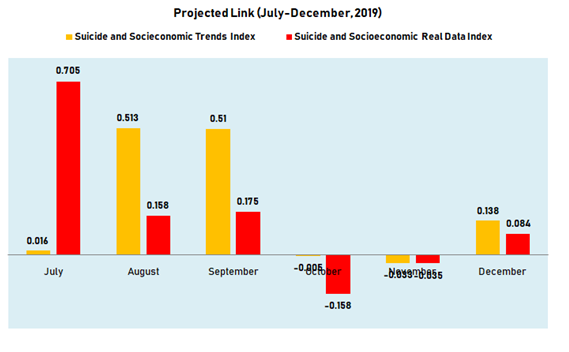
From the data and further analysis, it is clear that both the trends and real data need to be used by the governments and other stakeholders to tame the suicide rates in the country. The linkage between the interest in understanding happiness and life expectancy with interest about suicide will continue in the next three months. It will dip in October and November and expect to increase in December, 2019. There is no doubt, suicide is not seen by governments as a public health problem which needs a national prevention strategy. Nigeria needs the strategy. The strategy must holistically address issues associated with older age, not married, low occupational group, depression, anxiety, somatic symptoms and disability.


Source: Multiple Sources, Infoprations Analysis, 2019