DD
MM
YYYY

PAGES

DD
MM
YYYY

spot_img

PAGES

Home Blog Page 6884

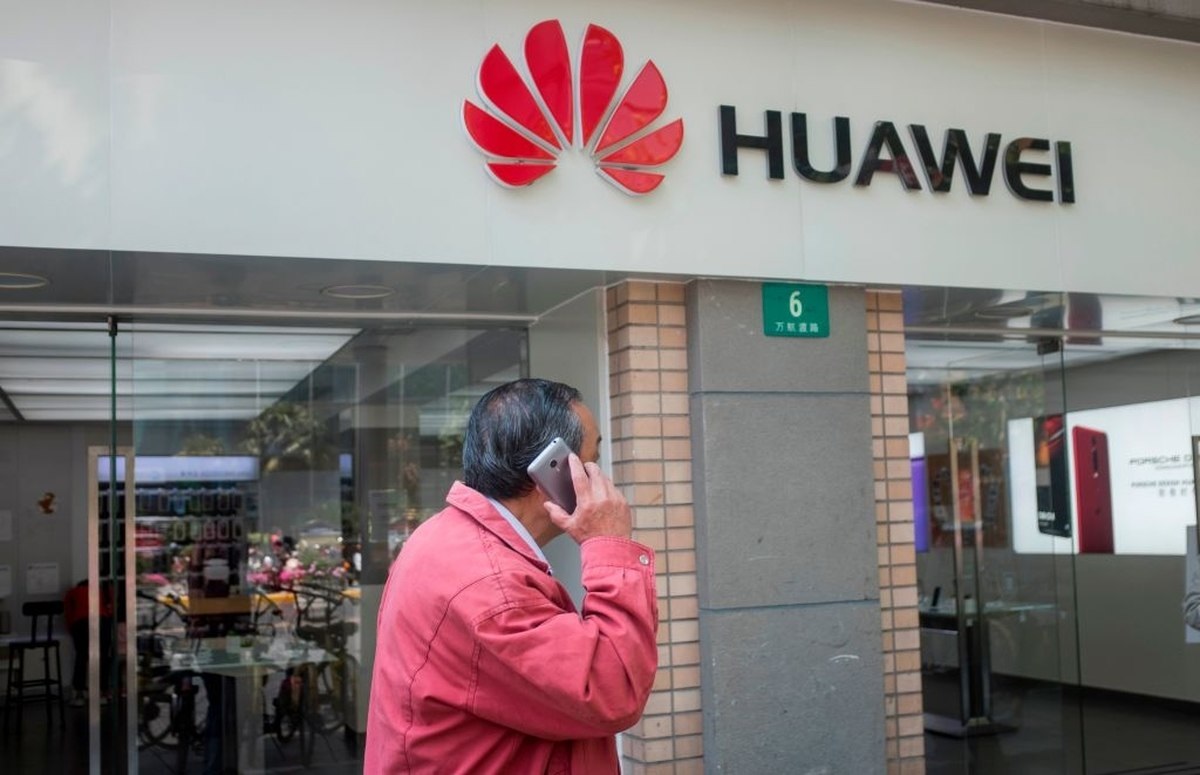
Huawei’s United States Ban Will Redesign Global Hardware Supply Chain

0

By Nnamdi Odumody

Chinese telecommunication equipment giant Huawei Technologies was recently banned from operating in the United States by President Donald Trump-led Government on allegations that its products was being used to spy on the United States by the Chinese Government. Largely, this suspicion had emanated owing to the ties Huawei founder, Ren Zhengfei, a former Red Army (Military) personnel, may have in his country.

This ban resulted to technology giants like Google, Qualcomm, Intel and ARM suspending partnerships with Huawei. Huawei relies on Google’s Android Operating systems for its smartphones, and on Qualcomm, Intel, Broadcom, Infineon and ARM for its semiconductors. It depends on Microsoft’s Windows Operating System for its tablets and notebooks. Google’s Android will continue to run on Huawei’s existing devices but the presidential ban means upgrades to Android’s latest versions and Huawei’s subsequent products will be affected.

Huawei seems not to be bothered about this latest development as it has been working on an Operating System which will power it’s devices according to Richard Yu, Chief Executive of its consumer division.

Huawei has been at the centre of the ongoing US-China trade war which has seen it surpassed an American consumer electronics champion (Apple) to become the world’s second biggest smartphone seller, behind Samsung. It’s Chief Financial Officer Meng Wanzhou was arrested last year on charges of financial crimes considering the fact that Iran, an enemy of the US which was hit by economic sanctions was a key market in its global sales.

According to IDC, Huawei recorded an upward sales trajectory from 39.3 million smartphones shipped in the first quarter of 2018 to 59.1 million units in the first quarter of 2019 while Apple’s iPhone shipments shrunk from 52.2 million in the same quarter last year to between 36 and 43 million in first quarter 2019.

In technological patents, according to the World Intellectual Property Organization, Huawei’s filing of 5405 patents in 2018 put it in first position, and taking the lead in the development of cutting edge technologies like Artificial Intelligence and 5G, ahead of its U.S rivals, must have made the Department of State to cut them down to size.

The casualties of this ban will be the 197 Fortune 500 companies including U.S companies which rely on their equipment. Other members of the Five Eye Intelligence Network: Canada, U.K, Australia and New Zealand are expected to follow Washington DC in preventing the Chinese ICT giant from conducting business operations in their territories.

In the long run, the Chinese might prove winners of this battle. Speed, precision and scale is why China controls the global hardware supply chain with Qualcomm and Apple heavily reliant in the Shenzhen hardware ecosystem and a retaliatory move by President Xi Jinping banning Apple, Qualcomm and other U.S, British and Canadian Technology Companies from having their products contract manufactured in China will force them to shift their production home where labour costs are expensive, affecting their competitiveness and reducing their global market share.

The Chinese consumer market is the most sympathetic to any domestic brand, no matter the advantages the foreign rivals possess. Xiaomi, Lenovo, Oppo, One Plus and Transsion Holdings which along with Huawei are the top Chinese consumer electronic brands globally might gradually migrate from the Android Operating System to a Chinese made O.S and domestic semiconductor manufacturers. The effect of this will be too difficult for Google, Microsoft, Apple, Qualcomm and other Western brands which rely on Chinese production to be competitive in their industries to bear.

The U.S China trade war is the new Cold War. It is a battle over the New Arms Race i.e. ’’Leadership in Exponential Technologies’’. Only time will tell who will emerge victorious.

UK Prime Minister Theresa May Resigns as Illusion of “The Rise of Me Only” Ravages

1
LEON NEAL

UK Prime Minister Theresa May resigns. I do not know why it took so long. The fact is this: the world that United Kingdom wants will not happen in the very near future. So, they better be changing leaders because no one can take them to their designed equilibrium point. In the past, it used to be The Rise of Me Only; today, it is now The Rise of All.

That means – if you expect the world as it was 100 years ago, you are living in an illusion. UK benefited from the world, ravaging empires from Asia to Africa; now, it wants to sleep under its pillows happily, out of the world. That will not happen. Gone David Cameron, gone Theresa May, bring the next person. It will not change UK until it realizes that the new world is The Rise of All and citizens must make adjustments for that reality.

UK Prime Minister Theresa May announced her resignation in an emotional speech on Friday, finally bowing to intense political pressure over the failure to deliver her signature policy — Britain’s withdrawal from the European Union.

Standing at a lectern outside Downing Street on Friday morning, May said she would quit as leader of the Conservative Party on June 7, but would stay on as Prime Minister until a successor is chosen.

May said she had done everything she could to convince Members of Parliament (MPs) to back her thrice-rejected Brexit deal, but acknowledged that she had failed.

Next please…Boris Johnson, possibly. He will experience the same thing: sobering resignation. By the time markets begin to work on Brexit, UK will understand the world has changed. When they had the opportunities, they took over the world. Today, UK wants to hide, from the world it helped to confuse. It will take more time to have new babies that can deliver those new promises in UK.

Like I always say: if parents answered all our requests, we would be in trouble! UK has Brexit (supporting UK leaving the EU block) but UK will lose a “great British success story” as Dyson moves its headquarters from London to Singapore. Sure, the man who owns 100% of Dyson noted that it was not about Brexit but “future-proofing” the business.

Gokada Raises $5.3 Million, Jobberman Co-Founder Deji Adewumni Becomes Co-CEO and Director Rise Capital

1

Gokada continues its trajectory to fix the transportation friction in Nigeria, rising on its vision that the “future is green”. That “future is green” is Gokada as what the firm plans to do is largely unbounded in the transportation domain of Nigeria.  Today, the company announces that it has raised $5.3 million Series A, and Jobberman co-Founder (Deji Adewumni) has joined as Co-CEO. It is evident this money will take Gokada to more cities in Nigeria and beyond.

Yes, the modern okada company is now bigger than most insurance companies in Nigeria, and on the way to glory. Big problems provide huge moments for those that dare: our transportation paralysis in major cities in Nigeria will create $millionaires.

…the press release with some additions

Gokada, the Lagos-based on-demand motorcycle taxi app, has secured a Series A fundraise of $5.3 million. Led by Rise Capital with participation from Adventure Capital, First MidWest Group, IC Global Partners and several local investors, Gokada will deploy its investment to expand its driver fleet, increase daily rides by 10 fold  and acquire local tech talent. In addition, the company will explore new verticals for business growth.

Gokada is an on-demand transportation company headquartered in Lagos, Nigeria. Customers can order a motorbike ride through the company’s website, or by using the company’s geo-location -based smartphone Gokada mobile app.

Based in Lagos, Gokada provides quick, safe and reliable transport, in the form of okadas (commercial motorcycles) – a functional form of transport which has become part of the fabric of everyday life in the heavily-congested city. To date, regular okadas have been deemed as largely unreliable and unregulated. With Gokada, riders can hail drivers via its mobile app which is available on Android and iOS. Since launching in 2018,  Gokada has already acquired approximately 1,000 motorcycles that are manned by trained, insured and verified drivers, kitted out with helmets which are DOT (US Department of Transportation) approved and certified. The company has completed nearly one million rides since inception, getting riders to their destination 50% quicker than travel by car. With combined app downloads of close to 200,000, Gokada currently ranks as the most popular motorcycle-hailing app in Nigeria and a top 100 app overall.

Gokada is committed to driver empowerment; ensuring drivers benefit from health insurance, access to loans as well as the opportunity to own their motorcycles after a year of employment. With this fundraise, the company will be able to provide more value added benefits to its driver fleet.

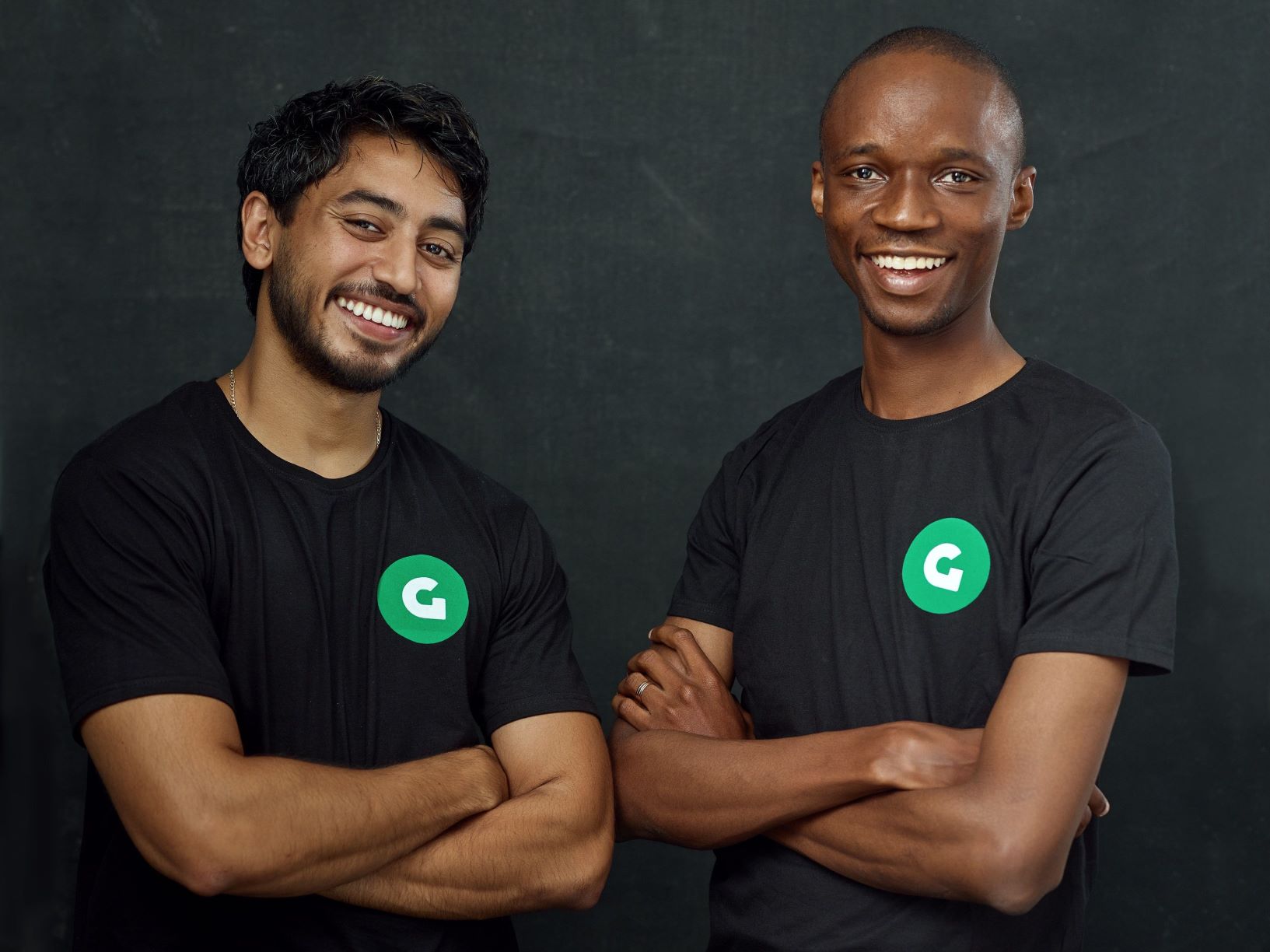
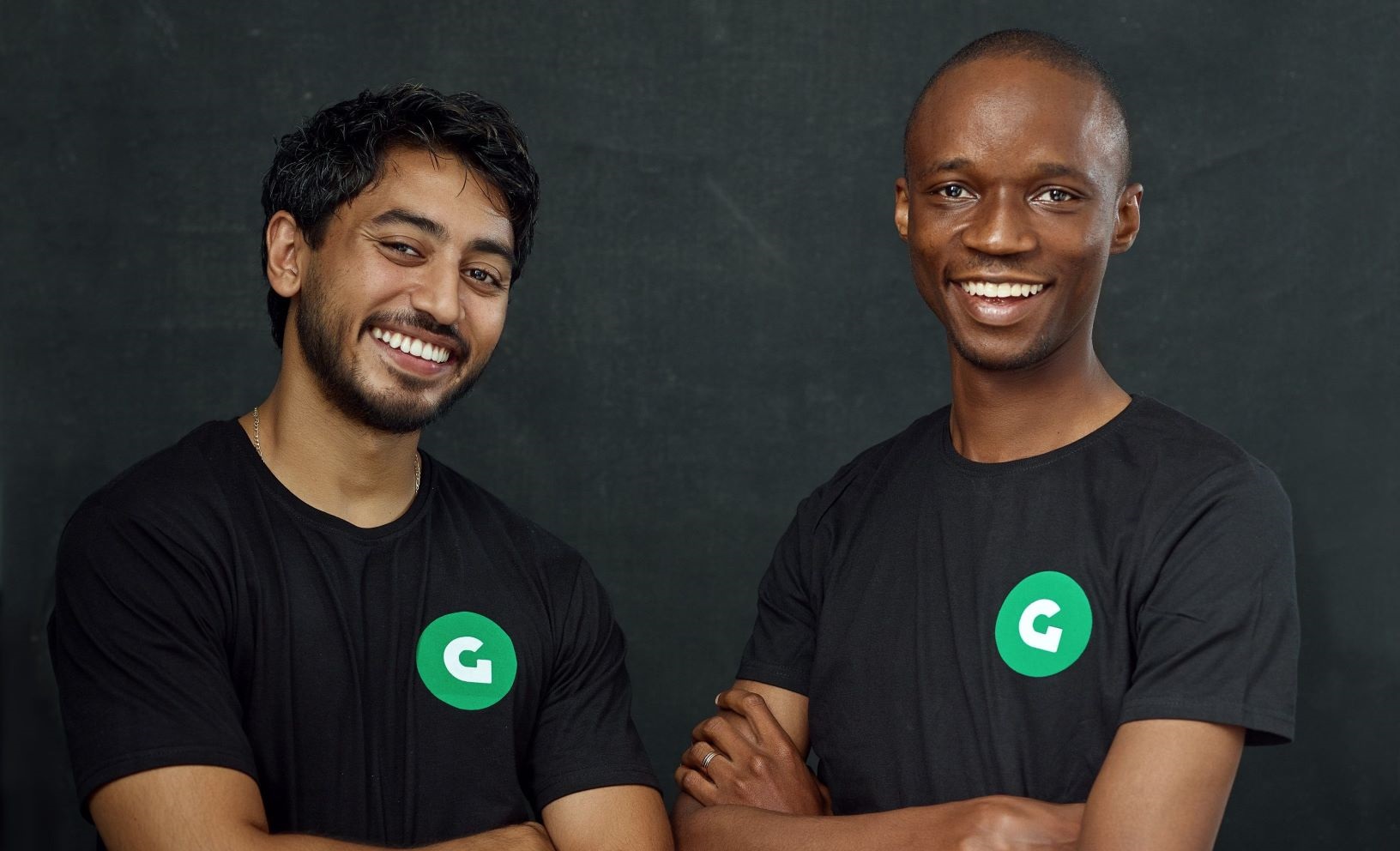
Fahim Saleh, Co-Founder and Co-CEO of Gokada says, “Our green Gokada motorcycles have become a regular feature of Lagos’ roads in the 14 months since our official launch. Gokada was built with the intention of becoming the future of two-wheel transport in West Africa, and we are fast becoming the go-to platform to hail a motorcycle ride in Lagos. Today’s announcement allows us to accelerate our growth projections significantly, as we continue to grow our market share and look to introduce more product features and services”.

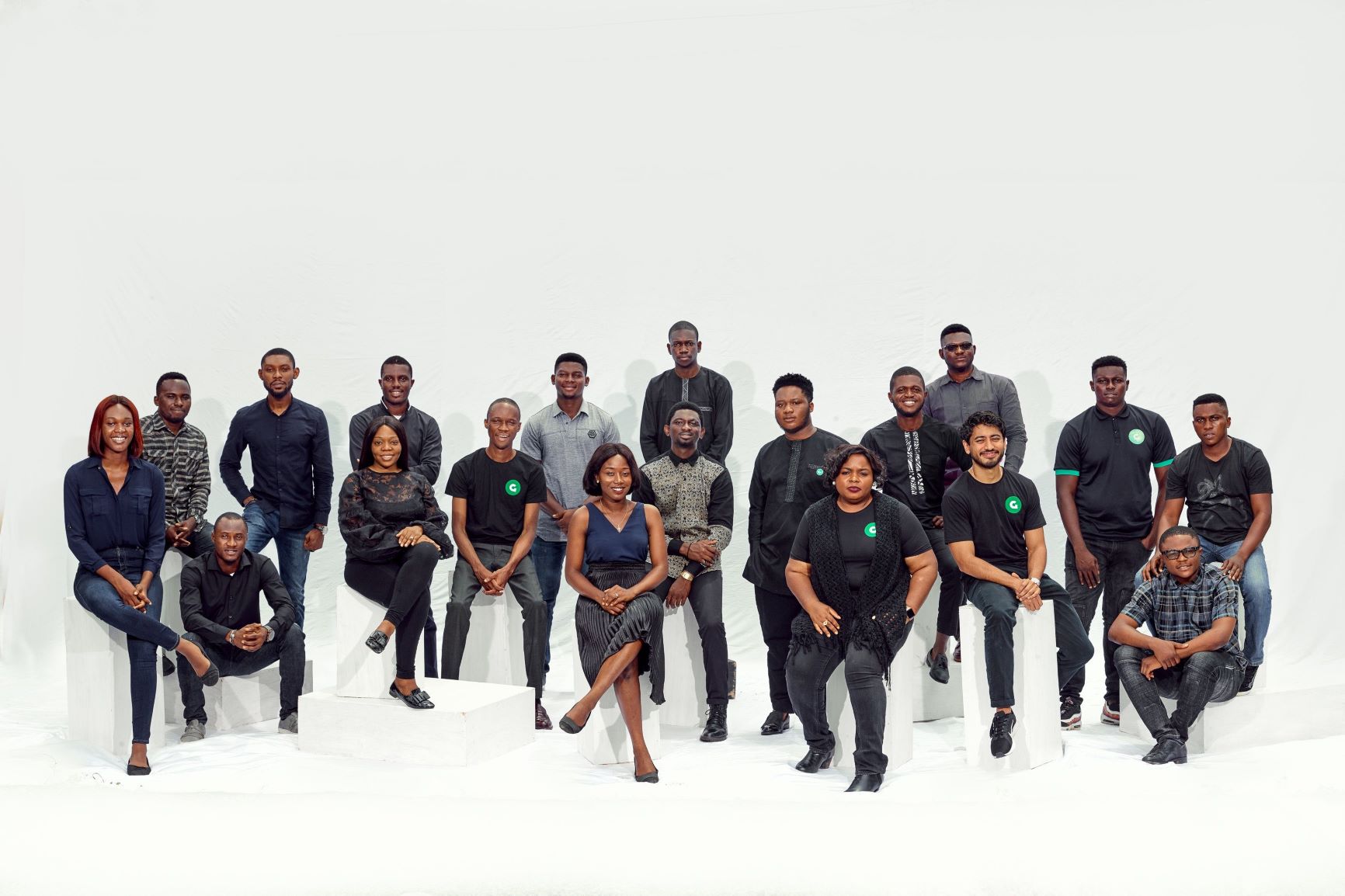
Saleh is joined by Nigerian tech stalwart Ayodeji Adewunmi, Director at Rise Capital and the Co-founder and former CEO of Jobberman, who is joining Gokada as Co-CEO. Former CEO Deji Oduntan will be stepping down from his role at the company as part of the funding round.

Ayodeji Adewumni adds, “It is an incredible time to be joining Gokada on this journey to transform transportation in Nigeria and the rest of Africa. I am truly excited about the promise of Gokada becoming the operating system of how cities function optimally and efficiently across Africa. There is no doubt in my mind that this will become one of the most important companies in Africa.”  

Nazar Yasin, Founder and Managing Partner at Rise Capital says “Gokada’s rapid entry into Lagos’ transport market has been transformative. We have noticed that some markets like Nigeria and Indonesia, which both have large populations and inadequate road infrastructure, are more likely to be dominated by motorcycle-hailing companies rather than traditional car-hailing players, and Gokada’s relentless focus on product, customer service, and safety has enabled them to take advantage of this dynamic and produce some truly impressive growth metrics. They are reshaping the tech-enabled transport market in Lagos, and we are excited to be partnering with them as they scale”.  

Rise Capital is a global investment firm that focuses on investing in technology companies in Emerging Markets. Headquartered in San Francisco and with offices around the world including in Lagos Nigeria, Rise Capital’s partners have an extensive history of backing some of Africa’s most iconic companies, including Iroko, Jobberman (acquired), and Cheki (acquired).

Gokada recently celebrated its first year in business with the launch of its brand new office in Ilupeju, Lagos set to house a state-of-the-art Driver Training School to train and verify up to 500 drivers at a time.

Gokada Business Model

MTN Nigeria Responds On Listing – Becomes a Farmer, Selling Farm Produce and Explains All

0
A brand with unique identity

On a very fascinating thread, MTN explains what we have been saying: I can go to a market (Nigerian Stock Exchange) and display my farm produce (MTN Shares) for all to see but without any obligation to sell to any new person. But if some people that had bought the produce while I was on the road to the market decide to re-sell their portions, they are free to do. I have done nothing wrong in the community because people know where these resellers are: ”According to Nairametrics, just yesterday, MTN Nigeria Plc was the most actively traded stock, with 93.7 million shares valued at N13.5 billion exchanged in 464 deals.” This is the source of the episode. [MTN linked to it via the ad below, so I give it to it].

There has been confusion in some quarters since MTN announced a week ago, that it was listing its shares on the Nigerian Stock Exchange (NSE) by way of introduction. Nigeria info in a podcast and CNBC in a report have both tried to break this down but this thread by Neusroom will help put things in clearer perspective. The issue primarily borders on the perceived scarcity of the company’s stock but the numbers indicate a different story. According to Nairametrics, just yesterday, MTN Nigeria Plc was the most actively traded stock, with 93.7 million shares valued at N13.5 billion exchanged in 464 deals. (TC Daily)

During Digital Transformation of Consumer Business, Understanding “Marginal Cost” is Important

0

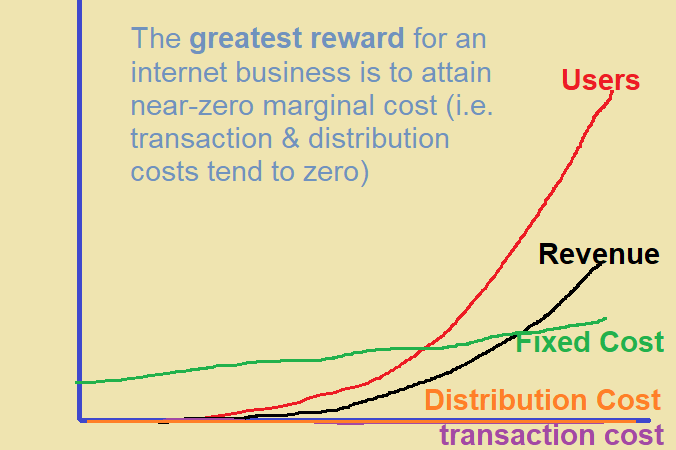
If you are doing digital transformation designed to drive consumer digital product sales on the web, one cost element you must watch carefully is marginal cost. Simply, marginal cost is the cost of serving an additional user in your ecosystem; understanding that cost is extremely important to architect a scalable business. You can also read this my Harvard Business Review piece.

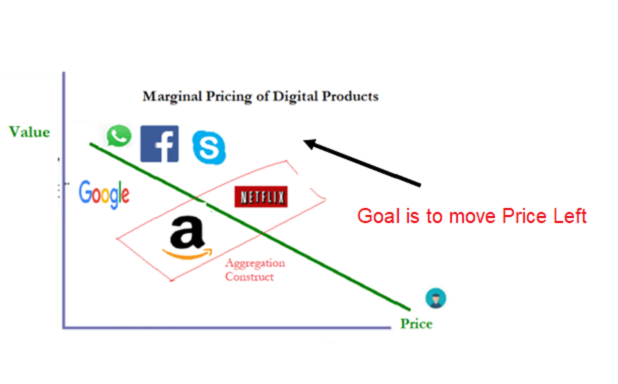
In a perfect internet market, the marginal cost of a digital product is zero. The implication is that only companies with natural equilibrium tending to near-zero marginal cost for consumer markets tend to experience huge growths. Google and Facebook are largely offering products at close to zero marginal costs. For accomplishing that, they make the products free, triggering huge scalability.

And of course, the scalable advantage is possible since the companies are also delivering huge value even as marginal cost is going low. Your goal is to move your product towards the LEFT of the plot where value is high even as marginal cost is lower.

Marginal Cost And How To Price Digital Products
Understand that when marginal cost goes low and value increases, you have disruptive impact in the market.


The freemium is possible because under that near-perfect market system, the marginal cost of producing a digital product becomes zero [Facebook cost is negligible when a new user registers on Facebook]. And if that zero production cost is attained, selling cost can be set at zero, marginally. By doing that, scale comes, and network effects set in – yes, more users will bring more users in a positive continuum that create virtuoso circle.

I give lectures on marginal cost as part of our workshops. I do spend two hours explaining to digital technology companies why they must understand marginal cost to build scalable strategies. Marginal cost is broadly broken into Transaction Cost and Distribution Cost. If your distribution does not go lower as you grow, your unit economics will struggle online.

Image result for transaction, distribution cost tekedia

That is why ecommerce does not scale in Africa as the distribution cost does not marginally reduce as scale happens. Why that does not happen is because logistics is a physical component of the distribution cost, not a digital element, and cannot be reduced via codes online. In other words, ecommerce is nothing “electronic” when it comes to Africa; it remains an offline business because the marginal cost is dominated by offline logistics as we have no efficient postal system which startups can leverage for growth.

Watch the video below for more.

LinkedIn Comment on Feed

It is the same marginal cost paralysis that hinders banking services from reaching every corner of Nigeria, at scale. Because in some cases, you are likely to encounter scenarios where cost of providing the services outweighs the revenue accrued there; making it obviously an unsustainable practice.

So most times, when you question why companies aren’t in a rush to set up businesses in certain locations, the supposed goldmines; bear in mind that business activities don’t always equate profitable returns, and without thinking things through, you are likely to fizzle out after starting on a high.

What happens in digital businesses also takes place offline, that is why you do not go about opening up branches just to count the number of outlets; if you open without analysing the cost implications, economics will help close them after a while.

In other words, if the marginal cost is not moving towards zero, then you are better off saying goodbye to massive scaling.