DD
MM
YYYY

PAGES

DD
MM
YYYY

spot_img

PAGES

Home Blog Page 6887

[Apply] Kobo360 Is Hiring in Ivory Coast (Côte D’ivoire)

0

Africa’s leading digital logistics pioneer, Kobo360, has job openings in Ivory Coast (Côte D’ivoire). We are looking for Logistics & Supply, Business Development, Accounting, and Operating professional with experiences in FMCGs, industrials, agro and agro-allied, etc with focus on logistics and supply chain. We need people who besides French can speak and write on basic English. Understanding the logistics geography of Ivory Coast is critical.

We are looking for brilliant people to join the KoboSquad as the mission of fixing logistics fiction in Africa expands. The call is simple: build and operate a Global Logistics Operating System (G-LOS). Kobo360, starting from Nigeria, has expanded into many markets in Africa. Backed by some of the most prestigious investors in the world including World Bank IFC, Kobo360 clients include Dangote Group, Olam, Flour Mill, Unilever, etc. We will be happy to have you in this business.

Kobo360 is a tech-enabled digital logistics platform that aggregates end-to-end haulage operations to help cargo owners, truck owners and drivers, and cargo recipients to achieve an efficient supply chain framework. Through an all-in-one robust logistics ecosystem, Kobo uses big data and technology to reduce logistics frictions, empowering rural farmers to earn more by reducing farm wastages and helping manufacturers of all sizes to find new markets. Kobo enables unprecedented efficiency and cost reduction in the supply chain, providing 360-visibility while delivering products of all sizes safely, on time and in full. The Kobo mission is to build the Global Logistics Operating System that will power trade and commerce across Africa and Emerging Markets.

Applications / submissions can be sent to careers@kobo360.com.
BE FREE – Ordinary People Have Changed Empires

0

As at 1937, exercising was seen as voodoo science on improving human health. When people reported to some doctors that they felt better after exercising, most doctors discounted the impacts. Also, just about 15 years ago, some people that ate exclusively organic food (no chemicals used in growing the food), in America, were seen as weird people. Today, those elements are now the mainstream: exercising is saving lives and eating organic is a pursuit for many as it is now a luxury. Never be afraid to push for change. Since Ancient Egypt, ordinary people have changed empires.

There is a growing body of evidence that shows some potential health benefits of organic foods when compared with conventionally grown foods. While these studies have shown differences in the food, there is limited information to draw conclusions about how these differences translate into overall health benefits. Potential benefits include the following:

  • Nutrients. Studies have shown small to moderate increases in some nutrients in organic produce. The best evidence of a significant increase is in certain types of flavonoids, which have antioxidant properties.

  • Omega-3 fatty acids. The feeding requirements for organic livestock farming, such as the primary use of grass and alfalfa for cattle, result in generally higher levels of omega-3 fatty acids, a kind of fat that is more heart healthy than other fats. These higher omega-3 fatty acids are found in organic meats, dairy and eggs.

Comment on LinkedIn Feed

COMMENT: That’s not true. Standing armies have had physical fitness regimes for centuries.

MY RESPONSE: Armies had fitness to fight, not necessarily to live well. The correlation of exercise to wellbeing while not new science was NOT universally accepted until about 80 years ago. The fact remains that exercise was not prescribed en mass until recently to manage diseases like diabetes, etc. “However, exercise was not prescribed for the noncureable form of diabetes known as mahu-meha (12).

As noted above, Susruta was of the opinion that participation in excessive exercise, interpreted to mean strenuous or heavy physical activity, would cause multiple diseases and potentially lead to death (46). Consequently, he discouraged patients from active participation” https://www.ncbi.nlm.nih.gov/pmc/articles/PMC4056176/

Unlike now where it is universally accepted, exercise was not the norm until recently. Some used it but many did not. Doctors here with knowledge of medical history on exercise can add

Proposing Reform is Not an Attack – We Can Debate Breaking into Audit and Non-Audit Firms

2

There is no need of privately writing me about my point on breaking accounting firms into audit and non-audit businesses to boost independence and audit quality.  If you think anytime someone writes to improve something, that person is attacking the people, stop reading me. Some have used the word ‘defame’, ‘malign’, etc. I understand – but it changes nothing.

My recommendation remains: no company can be an advisory firm and also an auditing firm. Advisory and Auditing businesses should be independent companies, not just divisions or units within one company – either you do advisory or you do auditing.  That way we can reduce conflicts

I am not an accountant and please bear with me for my perspective on this. But I have seen things that make me sad. In Nigeria, we need to ensure that any company offering Auditing services cannot sell Advisory services besides audit!  Simply, all auditing firms must do only one thing – auditing.

I am an academic – we live to freely share ideas, objectively, without any fear. I am not a contractor, so I am not afraid of not being awarded a contract. Be guided if you want to imitate me! Unless you are worried that breaking the firms will reduce their revenues, there is nothing you can say I have said maliciously.

But I can assure you that I have respect for these big firms; my two sisters are accountants. Yet, that does not mean I cannot make recommendations to make auditing better in Nigeria. If moving the audit unit makes them better, they win, and Nigeria also wins.

May we live in an era in Nigeria where men and women can make recommendations without fear of their stomachs! People seem extremely fearful not to offend, making herding easier with no injection of new ideas. Any contrary insights are seen as rebellion. I did not want you to lose your job – I was simply hoping Nigeria works better to protect and expand that job. Country First!

I would have expected someone asking how to execute the breakup without loss of jobs and chaos in our economy. You can make points why it may not be optimal. But framing that I was attacking these firms is unfortunate. Please wear bigger pants – we are all adults!

But read this: by 2025, my point will happen in UK.

The report seeks to keep up reform momentum after past attempts to end the so-called Big Four’s dominance of book-keeping made little headway.

EY, KPMG, Deloitte and PwC have sought to head off being split up by voluntarily agreeing not to offer consultancy services to audit clients.

The cross-party report said that if the CMA opts for only operational separation, it should be reviewed after three years to see if it ends cross-subsidies and improved audit quality.

“If not, we recommend that the CMA then move to implement a full structural break-up of the Big Four into audit and non-audit businesses in the UK,” the report said.

Deloitte said a structural split would harm audit quality, and could materially damage Britain’s competitive position as a leading capital market. The “Big Four” are global but the reforms could only apply in Britain.

UBER Left Wall Street with $120 Billion; in Main Street, it has $64 Billion Left

0

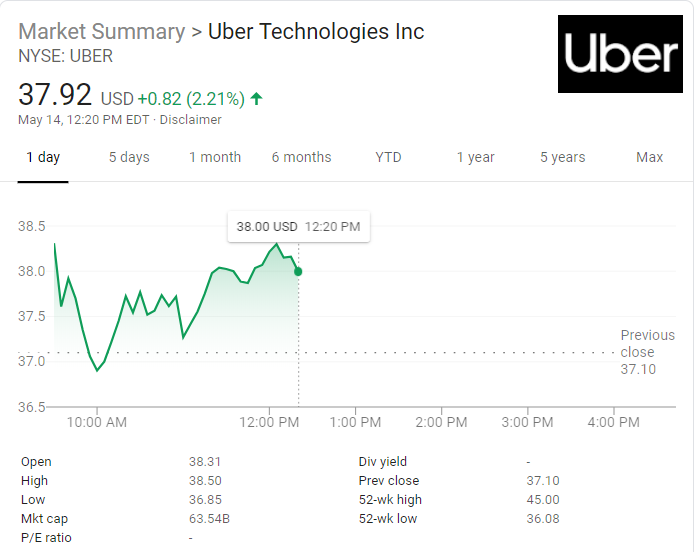
Uber was $120 billion with the exclusive Wall Streeters. Today, as it trades in public market, it is less than $64 billion. Uber – welcome to the Main Street. You will be fine, but you need to understand how to manage with cola and not just champagne. All those $120 billion virtual wealth have come home for reality checks!

Morgan Stanley nabbed the biggest U.S. initial public offering of the past five years. Now it gets to field the second-guessing after Uber Technologies Inc.tumbled 18% in its first two days of trading.

Across Wall Street, questions are flying: Why did bankers including Morgan Stanley’s suggest a $120 billion valuation last year that Uber couldn’t deliver? Did the syndicate led by the firm set the IPO’s price too aggressively? And did they steer too much stock to big investors who made hollow pledges to hold it long term?

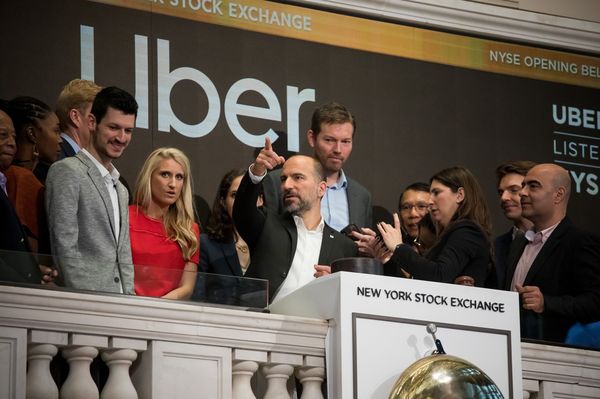
Dara Khosrowshahi rings the opening bell during the Uber’s IPO on the floor of the NYSE in New York on May 10. Photographer: Michael Nagle/Bloomberg

Apple Response

Today’s decision means plaintiffs can proceed with their case in District court. We’re confident we will prevail when the facts are presented and that the App Store is not a monopoly by any metric.

We’re proud to have created the safest, most secure and trusted platform for customers and a great business opportunity for all developers around the world. Developers set the price they want to charge for their app and Apple has no role in that. The vast majority of apps on the App Store are free and Apple gets nothing from them. The only instance where Apple shares in revenue is if the developer chooses to sell digital services through the App Store.

Developers have a number of platforms to choose from to deliver their software — from other apps stores, to Smart TVs to gaming consoles — and we work hard every day to make our store the best, safest and most competitive in the world.

Platforms Are Digital Monopolies, Apple App Store is Modern Day Standard Oil – U.S. Supreme Court

0

Apple lost big yesterday – nothing to do with America-China trade war. The problem: the App Store is a modern day monopoly, says the United States Supreme Court.

A group of iPhone owners who accuse Apple of violating US antitrust rules can sue the company, the Supreme Court ruled Monday. They claim Apple’s App Store is a monopoly.

Justice Brett Kavanaugh, in the majority opinion, said that when “retailers engage in unlawful anticompetitive conduct that harms consumers,” people buying those companies’ products have the right to hold the businesses to account.
“That is why we have antitrust law,” Kavanaugh wrote. The court’s four liberal justices joined Kavanaugh in the 5-4 decision.
The Supreme Court opinion notably does not accuse Apple of violating antitrust law: It holds that consumers have the right to sue the company for monopolistic behavior, because they purchase apps directly from Apple.

Yes, consumers can sue Apple for antitrust violations because the App Store constitutes a monopoly. The claim by Apple that it was just an intermediary was thrown out.

People, this ruling doesn’t just affect only Apple. Everything we know of Facebook, Amazon, Google Play Store and the whole nexus of platforms with the positive continuum of network effect will change. Simply, you cannot attain pure competitive advantage in markets only on the power of platforms. Yes, if you build one, you must make it wholly fair for other players to use same to serve market frictions. The era of walled-off virtual technology storefronts is largely over. I can see the trial lawyers sharpening their spears and swords with the ruling.

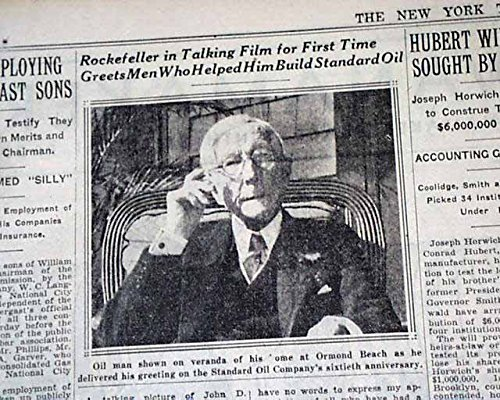
When you think of Apple App Store, you can refer to Standard Oil and how U.S. broke the empires of Rockefeller. I can tell you that the tech world has changed.

By 1880, Standard Oil owned or controlled 90 percent of the U.S. oil refining business, making it the first great industrial monopoly in the world. … Rockefeller and his associates decided to move Standard Oil from Cleveland to New York City and to form a new type of business organization called a “trust.”

Yet, the ruling is very narrow: this was a lawsuit from consumers to a company and not a company against a company. The way the justices looked at the issue may be different if a company had sued Apple. Of the three nexus in technology – making current use cases far improved, inventing new use cases, and pioneering new business models – platforms powers the last nexus, anchoring it on the unbounded distribution of the Internet, and in the process creating disruption through new basis of competition. Nothing has changed except that consumer rights are more enhanced now.