Master your time – and you will make progress. Avoid unproductive endeavors like two computer programmers arguing over typewriters.



Master your time – and you will make progress. Avoid unproductive endeavors like two computer programmers arguing over typewriters.
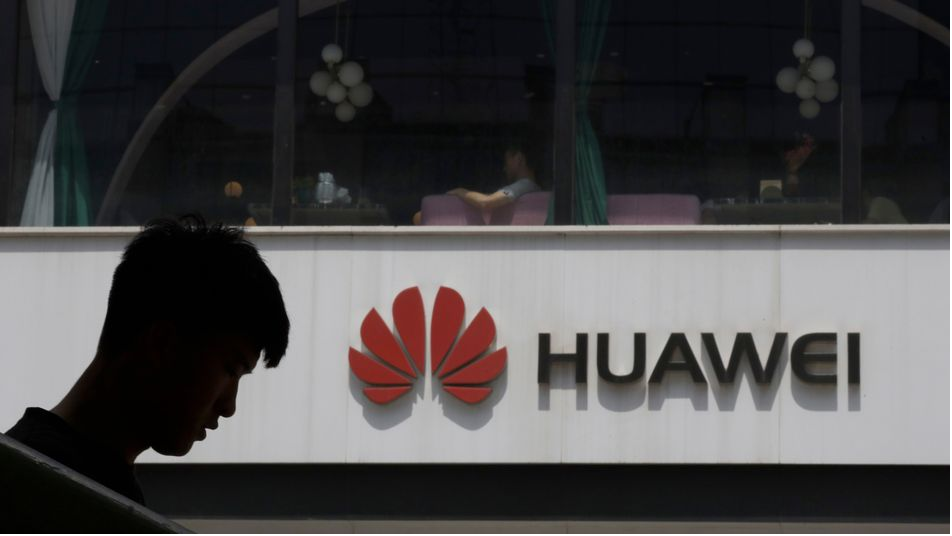
From Fortune Newsletter: Google is worried that Huawei will eat its cake and still have it: “Google wants to be exempted from the Trump administration’s ban on exports to Huawei, and it’s using national security interests (one of the justifications for the ban itself) as the basis for its argument. The logic goes thusly: stop Huawei being able to use Google’s version of Android, and Huawei will end up developing its own version of Android, which will be more easily hackable by the Chinese government among others.”
That makes sense: Android belongs to the open source software category and can be modified. After all, Google has been making the same case, after it allegedly violated Java APIs’ copyright in developing Android. Simply, Huawei will use Google’s argument against Oracle – the owner of Java – against it.
“We are disappointed that the Federal Circuit overturned the jury finding that Java is open and free for everyone. We will appeal to the Supreme Court to defend this principle against companies like Oracle, whose restrictive practices threaten to stifle the work of new generations of tech developers,” Google said in a statement sent to Android Police.
Winning the case is mostly important for Google from a precedent-setting standpoint, but losing would also carry a hefty charge; in the last trial Oracle claimed damages of almost $9 billion. Of course, considering Google’s revenues last quarter were just over $32 billion, the company’s certainly good for it — but losing several billion dollars is never ideal.
I have a name suggestion for Huawei version clone of Android: Trumpy (yes,”trumpy” so that it can be trademarkable).
If U.S. pushes Huawei and by extension the broad Chinese phone makers out of Android, I predict that within 6 years, the operating system of choice in Android will be the flavour the Chinese device markets converge on. If they decide to use Trumpy operating system, as I proposed, Africa, Latin America and most parts of Asia will flip. Why? Affordability.
No one in Africa will buy the expensive Google Pixel or other phones from U.S. makers or European makers. The most affordable devices remain in the hands of Chinese brands like Oppo, Tecno and Huawei. So, if you push them to use another OS, Google’s Android will lose market share over time even in places the Huawei ban does not cover.
When it comes to emerging markets, cost matters. So far, Chinese phone makers dominate therein. That they use your software and pay the necessary fees should not be taken for granted. If Trump puts heat and they create an alternative one, by ripping Android apart, future phones in Africa will not be powered by Android. Sure, Samsung will continue to have offices in Africa but it has lost market share because of price. Simply, Samsung will not save Android.
I hope President Trump understands the risk ahead – Android can become simply an American and European product, losing relevance in emerging markets, for Trumpy operating system.
By Nnamdi Odumody
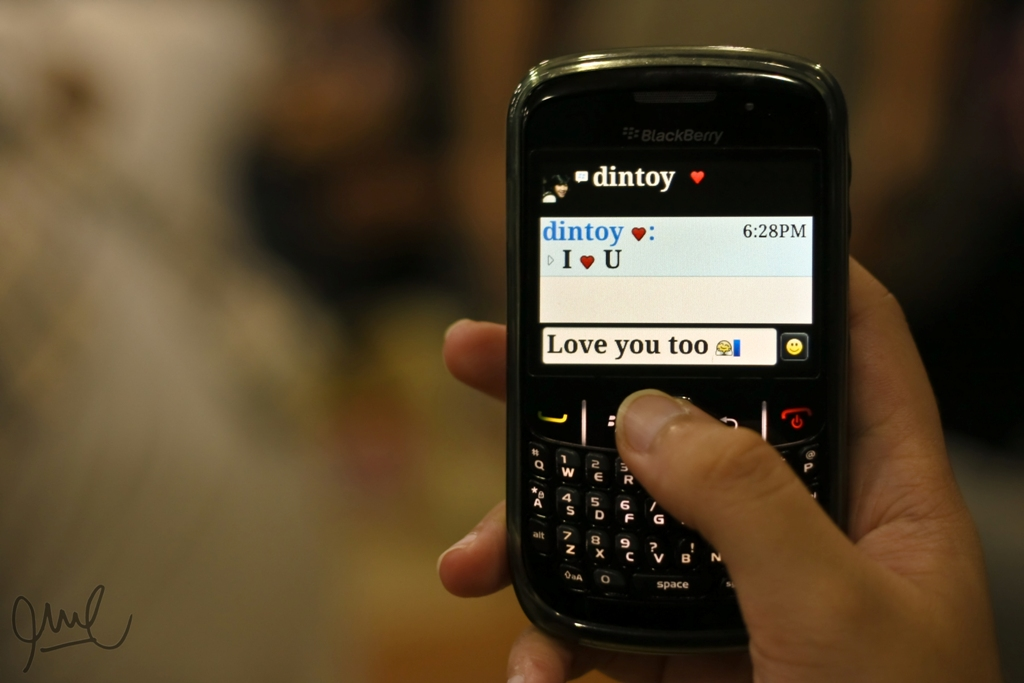
On Friday, May 31 2019, Blackberry Messenger (BBM), the chat messaging solution from Blackberry (formerly Research In Motion), was shut down, after 13 years of operation. BBM was a category-king in the chat messaging solution after disrupting Yahoo Messenger as customers focus shifted from the web internet to mobile. Its rival in mobile chat messaging was the Nokia Instant Messenger which ran on the defunct Symbian Operating System.
The decline of the Blackberry started two years ago after the release of the Blackberry Storm which is supposed to be Blackberry multimedia phone. Just two years ago, Blackberry and iPhone were the players seen to be fighting for number one, not android and iPhone. In late 2008, RIM released the Blackberry Storm (without wifi). It was this device that was supposed to be the iPhone killer. An Engadget review of the Storm notes that Verizon, Storm’s partner, was Apple’s first choice for the then soon-to-launch iPhone, “Verizon refused and Apple took its multi-billion dollar ball to AT&T. But software glitches and lackluster reviews like that from Engadget killed the Storm, people simple didn’t like the product, and a high return rate likely worried Verizon.
Owning a Blackberry mobile device which was a symbol of prestige in its era of dominance came with a customized PIN for access to communication. With unique features as BBM stickers which set the foundation for emojis on all social media chat platforms, Blackberry failed to pay attention to the ecosystem Apple and Google were creating, by making their mobile operating systems iOS and Android open to developers around the world to build applications.
As iOS and Android grew, other ecosystem evolved. WhatsApp was devastating to Blackberry, and that was compounded by the ban on BBM by governments in Asia and the Middle East due to the inability to access citizens’ data in the platform.
Blackberry would later adopt the Android operating system for its mobile devices and put its BBM as an application on the popular platforms but by then it was too late. The world will remember BBM as a case study of creative destruction at scale.
According to Schumpeter, the “gale of creative destruction” describes the “process of industrial mutation that incessantly revolutionizes the economic structure from within, incessantly destroying the old one, incessantly creating a new one”. In Marxian economic theory the concept refers more broadly to the linked processes of the accumulation and annihilation of wealth under capitalism.
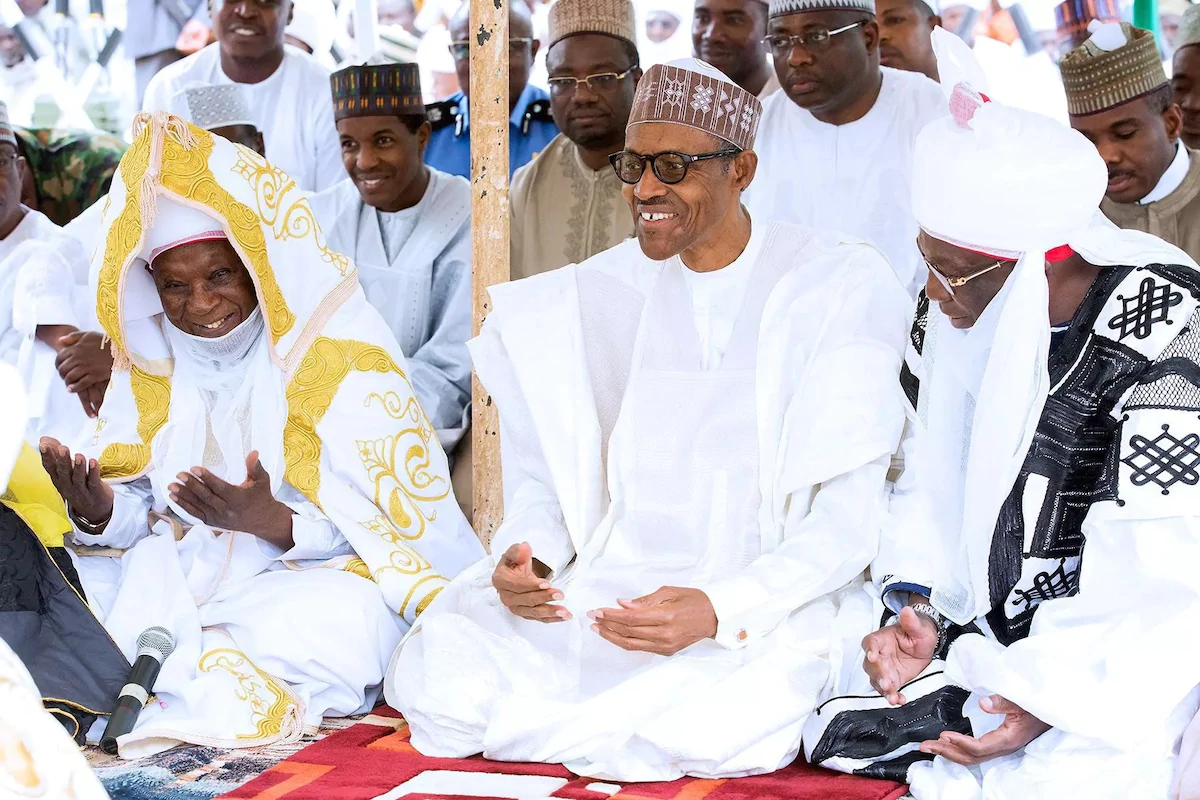
One simple prayer today in churches and I hope people did same on Friday in mosques:
“Father, touch the heart of President Buhari to move faster and prioritize the formation of a new government. As Nigerians, we do sincerely believe that political appointees working on unofficial capacities after the expirations of their terms on May 29 will not serve us well.
Touch him to move faster to avoid a repeat of 2015 where severe 6-month senior leadership vacuums took Nigeria into recession. Open his heart to see that 11 days are more than enough to make at least one appointment. As you used India’s Modi who was ready in 24 hours with a new cabinet, use your son Buhari.
Open his mind to appreciate the urgency of this moment. Teach him, your son, to understand that without Strategic Leadership, tactical and operational leaderships go on stasis. Bless him to appreciate that without these leaders, especially many that do not even require Senate confirmations and untenured, Nigeria’s critical productivity systems will stall.
I pray for him and do seek favor that you will bless his heart to understand that the destinies of millions of people depend on how he acts. With 55% youth unemployment and security paralyses, forming a team requires the fierce urgency of now. Bless him to lead – and move faster on forming a new government, with the right people, that will take Nigeria to the mountaintop.
Amen”.
*Nothing political here or intended. Just pray he does same – fast.
By Nnamdi Odumody
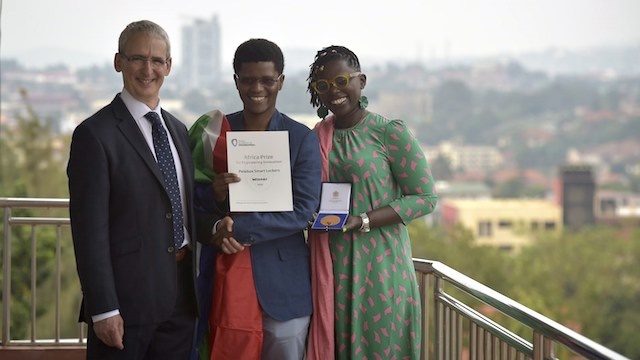
A 31 year old South African electrical engineer, Neo Hutiri, is the winner of the Royal Academy of Engineering’s 2019 Africa Prize For Engineering Innovation first prize of 25,000 pounds for his solution Pelebox, a smart locker system for dispensing drugs to patients suffering from chronic health conditions. Pelebox is used at public healthcare facilities in South Africa and has helped in reducing the number of patients on long queues thereby easing pressure on the healthcare system.
Pelebox is a simple wall of lockers controlled by a digital system. Healthcare workers stock the lockers with prescription refills, log the medicines on the system, and secure each locker. It then sends patients a PIN which is used to open their locker to access medication. Patients access their medicine within 36 seconds which is quicker in contrast to the average 3.5 hours it takes in other healthcare facilities. This is significant considering the fact that South Africa has the world’s biggest antiretroviral therapy programme with more than 4.7 million patients receiving monthly treatment from public healthcare facilities.
As a result of mentoring received from the Africa Prize For Engineering Innovation, Hutiri and his team made a redesign from product development to manufacturing. Also, they have obtained a trademark for Pelebox.
Three runners up received 10,000 pounds each, and they include:
Kaoshi by Chukwunonso Arinze and Princess Oti from Nigeria. They have a peer to peer currency exchange designed for African banks to enable their customers send money out of Africa in a cheap and convenient way.
Smart Havens Africa by Anne Rweyora from Uganda which builds sustainable smart homes from affordable and appropriate technologies designed to make home ownership more accessible to African women.
Sign-IO by Roy Allela from Kenya. The solution is a mobile app with smart gloves that tracks and translates sign language movements into speech and text in real time.
Pelebox is an innovation which will go a long way in fixing a friction associated with the African public healthcare system.