Join me with many eminent thought-leaders on the Platform on May 1, starting at 9am. Endeavor to tune in or attend the event LIVE at The Covenant Place, Iganmu, Lagos. The Platform, on a national TV, reaches excess of 35 million people. My talk will focus on the mechanics of economic growth, innovation and piloting a future of abundance in Nigeria. I have titled it “The Growth of Nations”.
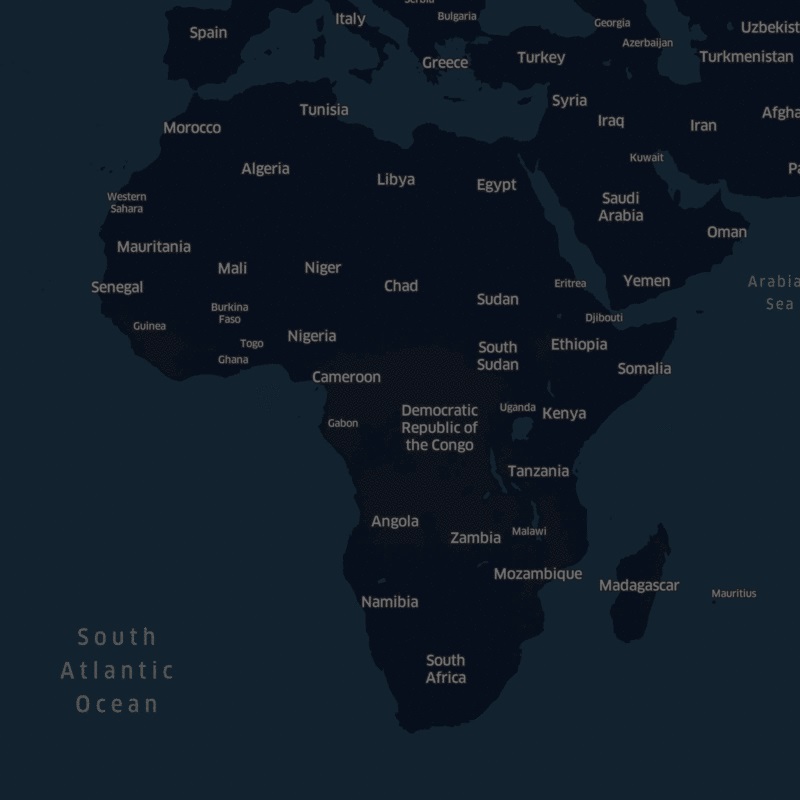
Facebook is bringing new technologies into the African space through new AI-powered, high-res maps to help humanitarian aid and relief agencies better assist people in need. The social media giant is working closely with key non-profit and research partners to use artificial intelligence (AI) and big data to address large-scale social, health and infrastructure challenges in sub Saharan Africa. These efforts range from rural electrification in Tanzania to vaccinating people in remote corners of Malawi.
Facebook is applying the processing muscle of its compute power, its extensive data science skills and its expertise in AI and machine learning to create the world’s most detailed and accurate maps of local populations. Facebook also partners with Columbia University’s Center for International Earth Science Information Network (CIESIN) to ensure that this effort leverages the best available administrative data for all countries involved.
The Boston-based Facebook team uses advanced computer vision and machine learning to combine satellite imagery from Digital Globe with public census data and other sources to create detailed population density maps of Africa. Using Facebook’s machine learning capabilities, Facebook started developing population density maps to provide better tools to support connectivity efforts around the world. No Facebook data has been or will be used in the project and the census and satellite data used contain no personally identifiable information.
High-resolution satellite imagery already exists for much of the world. However, prior to Facebook’s mapping project, it would have required countless hours for volunteers to comb through millions of square miles of pictures to identify which contained a tiny town or remote village.
The Facebook team used AI to solve that problem, efficiently crunching through data at a petabyte scale. For Africa alone, for example, the computer vision system examined 11.5 billion individual images to determine whether they contained a building. The team found approximately 110 million buildings in just a few days.
The Facebook population density maps project now aims to keep adding new continents and countries.
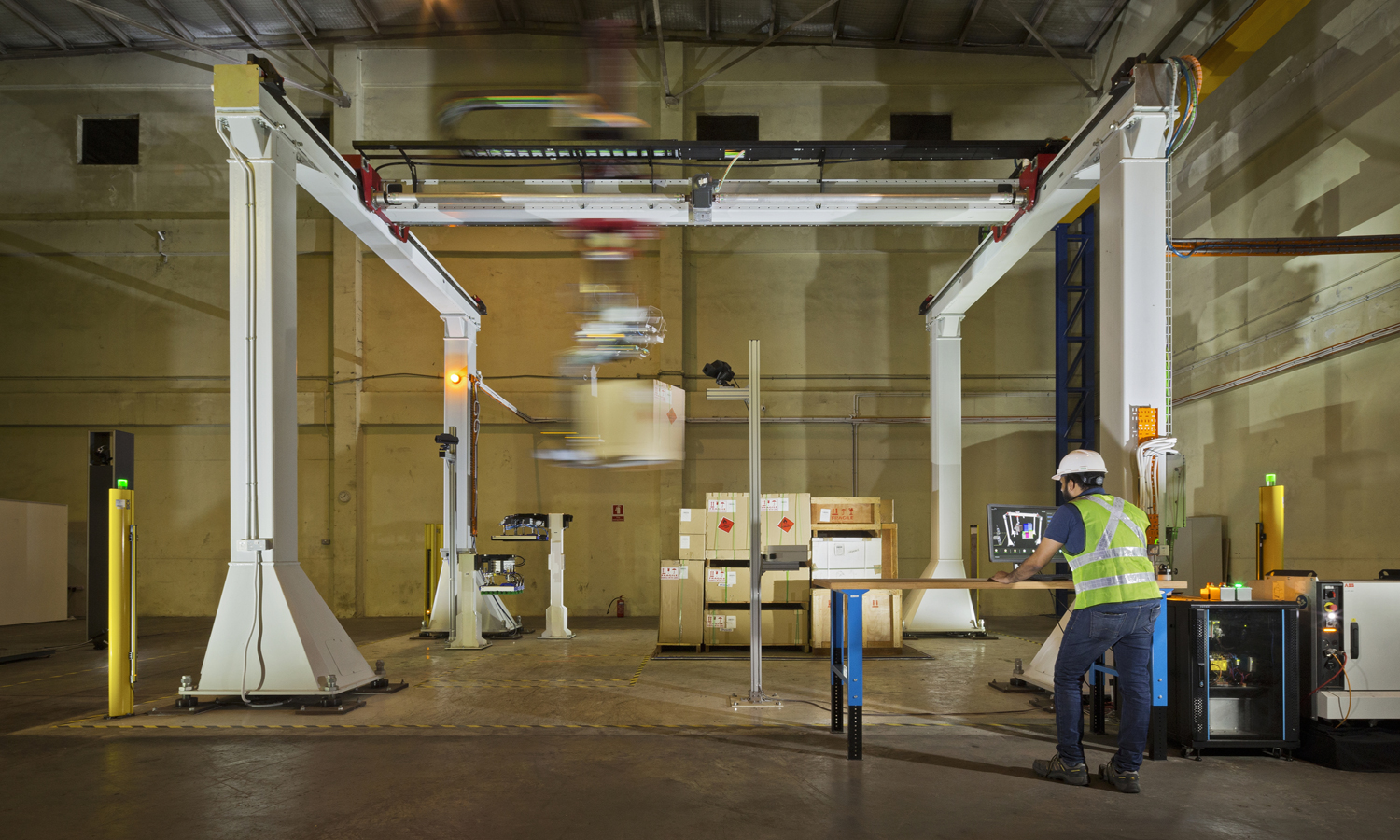
SpeedCargo, the world’s first AI-powered robotic solution for automatic build up and breakdown of aviation cargo pallets, is a product of research collaboration between Technical University of Munich’s CREATE and the National Research Foundation of Singapore.
It addresses the non-standardized cargo shipment category which has high variation in cargo shapes, dimensions, materials and weight. Palletization of such cargo is a labour intensive process and is performed manually worldwide. Deployment of SpeedCargo optimizes yield, enables a seamless flow of data, increases productivity and upgrades job profiles needed within the aviation cargo industry.
It is a turnkey solution using the vital ingredients which define intelligent systems; perception, cognition and action.
Technology
CargoEye: It produces a detailed and accurate digital fingerprint of incoming cargo in real time using the most advanced 3D camera system for acquisition of geometry and image. It goes beyond state of art by capturing non-standardized labels and material information of the cargo in addition to its dimensions, weight and center of mass of a box.
The user interface can be handled by a worker after only single day of training. Cargo Eye can be connected to any database or inventory management system for persistently storing the captured information to be used for planning and handling.
CargoMind: It is an artificial intelligence-based software solution that guarantees optimal packing results at any given time. It ensures that all aviation safety regulations for pallet packing are met while providing the operator a flexible planning tool to maximize profit. In addition, the system is able to re-plan a pallet at any given time within the process to accommodate any last minute modifications; for example a new cargo shipment needs to be accommodated on an existing pallet that has been partially built. CargoMind also enables the structural buildup of the pallet by planning collision-free motion trajectories for the robot.
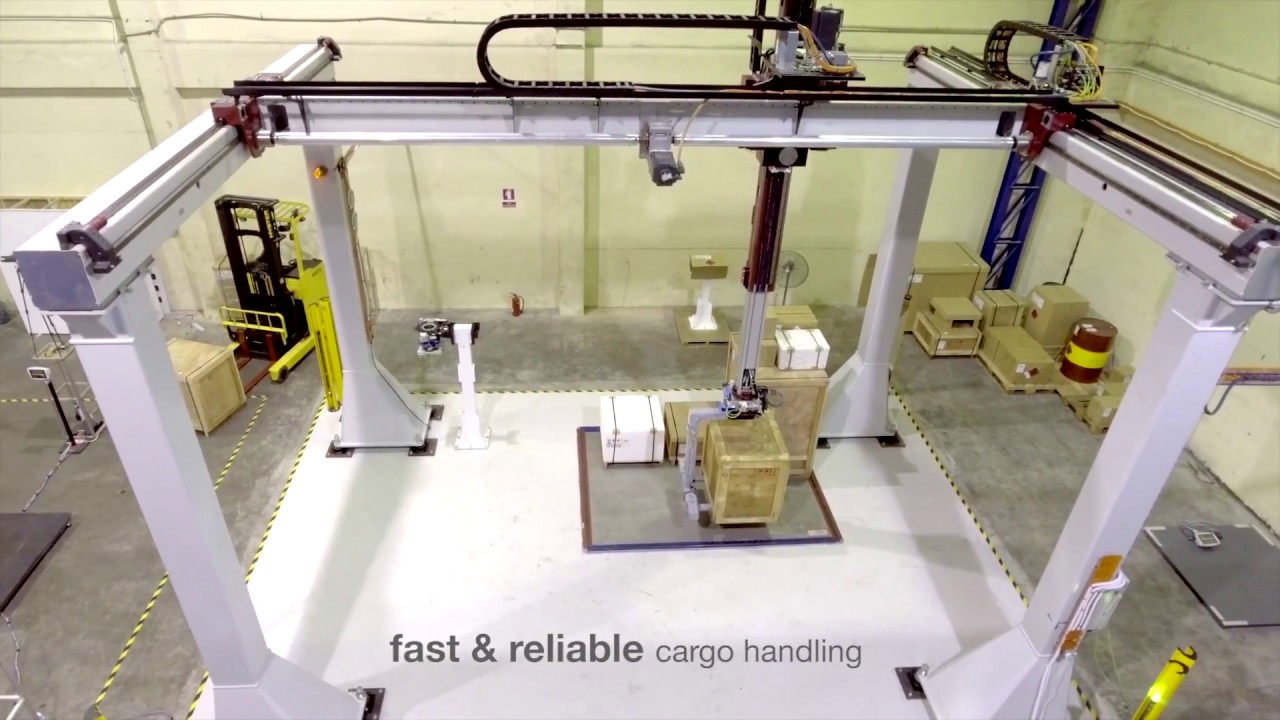
CargoArm: It is the actuating system for physical and reliable handling of high-mix and high-volume cargo shipments. It is equipped with a gantry robot with a suite of advanced grippers to safely grasp and manipulate different types of shipments (ranging in dimensions, material and weight)
Although the gantry is a huge and heavy machine, it has extremely high precision (0.1mm). Equipped with a plethora of sensors, it can measure and record all important parameters that are of relevance while it is in motion.
The Nigerian Aviation Handling Company (NAHCO) should study advances in technology like SpeedCargo and deploy it in all the cargo sections of the nation’s airports to increase efficiency in their operations, eliminate waste and maximize shareholder value.
The world’s richest man, Amazon’s Jeff Bezos, in his letter to Amazon shareholders, dropped a great line: “As a company grows, everything needs to scale, including the size of your failed experiments”. Yes, the Fire smartphone failed but Echo/Alexa, started about the same time as Fire, found glory. Largely, “If the size of your failures isn’t growing, you’re not going to be inventing at a size that can actually move the needle.” The summary is this: Echo/Alexa has made up for the losses Amazon incurred on Fire. To discover that Echo/Alexa, Amazon went on a mission; along the line, it took a journey via two paths, one clear path in one but getting lost in another, and over time recovered and focused on the right path.
As a company grows, everything needs to scale, including the size of your failed experiments. If the size of your failures isn’t growing, you’re not going to be inventing at a size that can actually move the needle. Amazon will be experimenting at the right scale for a company of our size if we occasionally have multibillion-dollar failures. Of course, we won’t undertake such experiments cavalierly. We will work hard to make them good bets, but not all good bets will ultimately pay out. This kind of large-scale risk taking is part of the service we as a large company can provide to our customers and to society. The good news for shareowners is that a single big winning bet can more than cover the cost of many losers.
Development of the Fire phone and Echo was started around the same time. While the Fire phone was a failure, we were able to take our learnings (as well as the developers) and accelerate our efforts building Echo and Alexa. The vision for Echo and Alexa was inspired by the Star Trek computer. The idea also had origins in two other arenas where we’d been building and wandering for years: machine learning and the cloud. From Amazon’s early days, machine learning was an essential part of our product recommendations, and AWS gave us a front row seat to the capabilities of the cloud. After many years of development, Echo debuted in 2014, powered by Alexa, who lives in the AWS cloud.
Perception Demand in Amazon
Reading the letter to shareholders, one can see some elements of perception demand where Amazon went beyond the needs and expectations of customers to the perception of customers, creating products no one originally asked for, but when customers finally saw them in the market, embraced and bought them.
The Perception Demand Construct is a construct where you work on things which are not really evident to be in demand. Yet you go ahead to create that product. The demand may not be existing but you are confident you can stimulate it. Yes, you do believe that your product can elicit demand and grow the sector when launched. This is different from existing demand which could be met via starting a web hosting company or selling light bulbs where you know people actually need those services.
The following are instances from Jeff Bezos’ letter on perception demand:
Amazon Web Services (AWS): “The biggest needle movers will be things that customers don’t know to ask for. We must invent on their behalf. We have to tap into our own inner imagination about what’s possible. AWS itself – as a whole – is an example. No one asked for AWS. No one. Turns out the world was in fact ready and hungry for an offering like AWS but didn’t know it. We had a hunch, followed our curiosity, took the necessary financial risks, and began building – reworking, experimenting, and iterating countless times as we proceeded…AWS is now a $30 billion annual run rate business and growing fast.”
Echo: ‘No customer was asking for Echo. This was definitely us wandering. Market research doesn’t help. If you had gone to a customer in 2013 and said “Would you like a black, always-on cylinder in your kitchen about the size of a Pringles can that you can talk to and ask questions, that also turns on your lights and plays music?” I guarantee you they’d have looked at you strangely and said “No, thank you.” Since that first-generation Echo, customers have purchased more than 100 million Alexa-enabled devices.’
Those with big ideas and large hearts are likely to succeed in places where ordinary folks do not dare to venture. So when we question why 1% of world’s population control so much wealth than the rest of us, we also need to argue about the size of risks each of us has taken; they all add up in one way or another.
Again, when you are out bring about extraordinary thing to the society, opinion poll or customer survey becomes meaningless, because the potential users are yet to think or imagine at that level; so you are the one to experiment, take all the risks, and bring out something the world suddenly realises it needs; it’s for the super few to deliver such to the rest of humanity.
And when it comes to scaling failures, obviously it’s stacked against smaller companies, because you may not have an infinite source of capital to keep failing, meaning that you have to be more nimble and probably laser-focused when making your bets. Where knowledge and capabilities cannot take you, let your imagination bring you within a touching distance, then learn more and finally drop the ball!
Coinbase will issue a debit card which is tied to cryptocurrencies like Bitcoin. So, instead of your bank account, Visa will connect to your Coinbase Bitcoin or other cryptocurrency account. In this one feature, Coinbase has solved two key challenges in the crypto community: made cryptos like Bitcoin easily divisible and usable on the streets for things like coffee and bus ticket, and cushion a future for Visa that even if the crypto era arrive, Visa will be protected from disruption. Simply, it has inserted itself into the future of whatever comes in any potential cryptocurrency era. This is a huge moment in the evolution of cryptos.
The bitcoin price, which leaped higher last week to trade around $5,000 per bitcoin, has been called too unstable and volatile to be used as a means of payment, resulting in bitcoin and other cryptocurrencies being used more of a store of value, like gold, than traditional means-of-exchange currency.
Now, major bitcoin and cryptocurrency exchange Coinbase has teamed up with global payments processor Visa to try to change that, launching the Coinbase Card which allows users to “spend crypto as effortlessly as the money in their bank.”
The Visa debit card, which has a £4.95 ($6.50) card issuance fee, can be used to spend Coinbase bitcoin, ethereum, Ripple’s XRP, and litecoin balances “in millions of locations around the world,” by converting the cryptocurrency to fiat when the card is used—the merchant or store gets paid in traditional fiat currency.
Coinbase users can choose which cryptocurrency is used on the card through a new app which supports all crypto assets available to buy and sell on the Coinbase platform. The app also offers instant receipts, transaction summaries, and spending categories, to help people keep track of their spending.
This amazing product from Coinbase fixes what I have called Bitcoin defect. And it will surely help the coin-believers congregate at deeper levels across the world.
Bitcoin has value. Gold, US Dollars, Nigeria Naira, LinkedIn account, smartphones, etc all have values. But having value is not enough to be a functioning currency: you must also be an effective means of payment. …Simply, owners of Bitcoin are holding it or hoarding it instead of using it as a means of payment. That is the reason why the price has become a domino. When the primary motivation on a currency is to “hold” instead of a means of payment, the equilibrium-value point shifts. Over time, the value becomes speculative. Why? There is scarcity, not out of demand velocity, but exogenous interests.