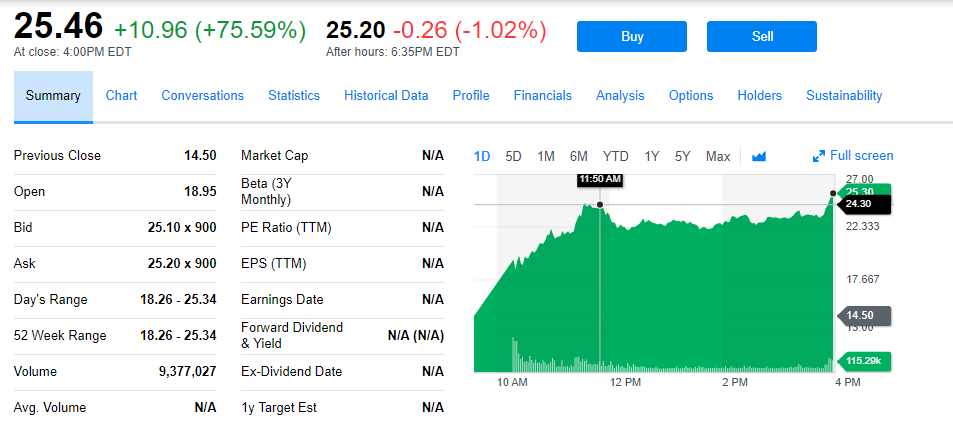
Jumia had a great day on the New York Stock Exchange on Friday. The ecommerce company surged more than 75% on its first day as a public company. People, Jumia at market cap of $3.9 billion, is now worth more than GTBank, Nigeria’s largest bank by market cap. The stock opened at $14.50 per share and ended at $25.46.
Jumia has done it: it has filed paperwork at the NYSE to go public. Last week, I wrote that its IPO was “imminent” after it hired an NBA superstar: “It is very evident that Jumia will like to list in U.S. as early as possible. How? It has brought Andre Iguodala into its Board. Andre plays for Golden State Warriors, an NBA team. I do think with Andre, Jumia will lift its brand in U.S. as it pushes for the journey to IPO, possibly in U.S.”
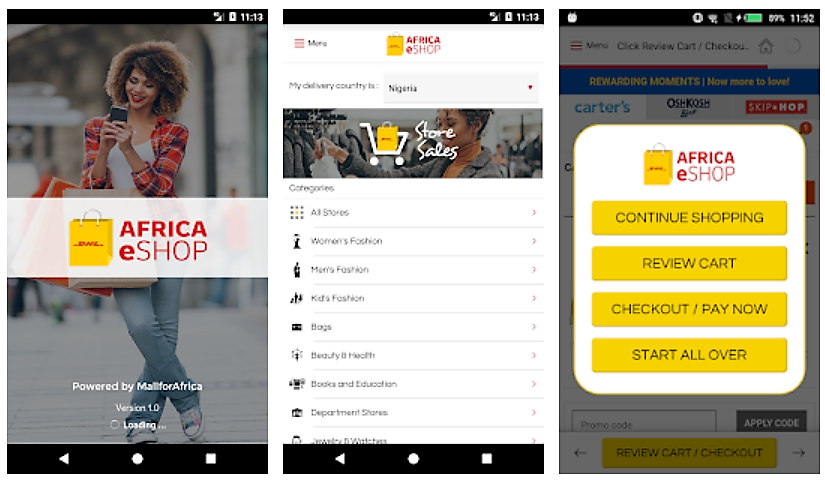
DHL continues the mission of integrated logistics, finding ways for Africans to buy things from major Western retailers. It just launched DHL Africa eShop to make it easier for African dwellers, in eleven countries, to buy items from Macy’s, Carters, Neiman Marcus and other brands. It is partnering with MallforAfrica to execute this – MallforAfrica’s Link Commerce service will anchor the local payments, procurement and delivery.
DHL Express has announced the launch of its new mobile and desktop app aimed at improving the online shopping experience for Africa-based consumers. The exciting new platform, DHL Africa eShop, enables customers to shop directly from more than 200 US- and UK-based online retailers, with all shipments delivered by DHL Express, to the shopper’s door. DHL Africa eShop will be available in 11 African markets to start – South Africa, Nigeria, Kenya, Mauritius, Ghana, Senegal, Rwanda, Malawi, Botswana, Sierra Leone and Uganda.This solution was developed in partnership with Link Commerce – a division of Mall for Africa.
[…]
Despite the growing demand, many US and UK-based retailers do not offer shipping to African countries, owing to the perceived logistical challenges involved such as high last-mile delivery costs and fraud concerns. However, DHL Express was the first express operator to set up in Africa over 40 years ago, so we are well positioned to offer innovative and reliable solutions for on the continent.” (Press release)
If you have not noticed, DHL has just launched an ecommerce operation in Africa. Yes, Jumia and Konga have another competitor. If you have a very efficient way to buy things from American retailers, directly, buying foreign products on local ecommerce portals will cease to be the only option in the digital space.
Join me with many eminent thought-leaders on the Platform on May 1, starting at 9am. Endeavor to tune in or attend the event LIVE at The Covenant Place, Iganmu, Lagos. The Platform, on a national TV, reaches excess of 35 million people. My talk will focus on the mechanics of economic growth, innovation and piloting a future of abundance in Nigeria. I have titled it “The Growth of Nations”.
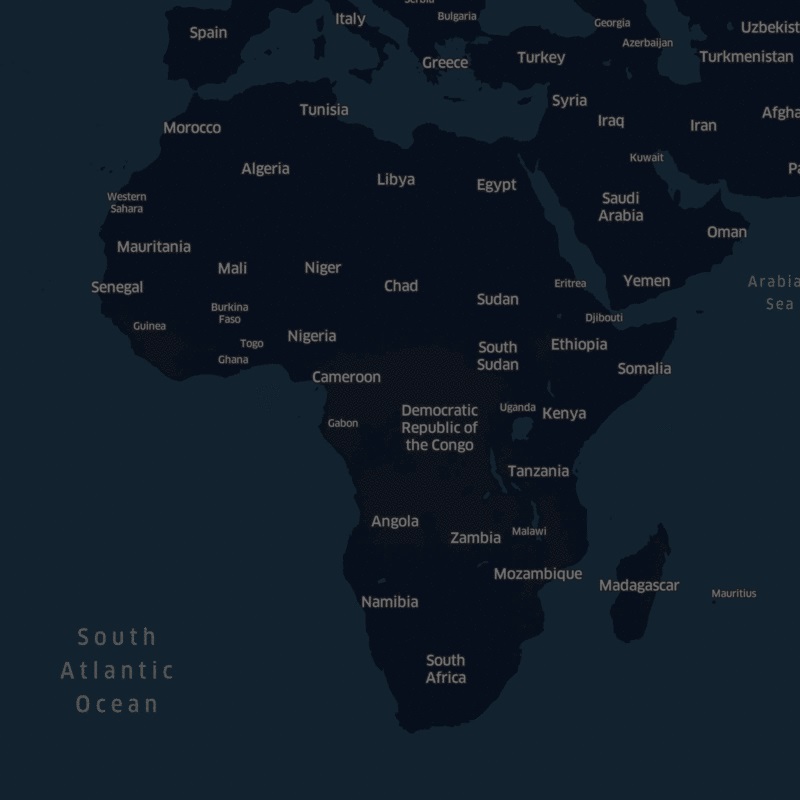
Facebook is bringing new technologies into the African space through new AI-powered, high-res maps to help humanitarian aid and relief agencies better assist people in need. The social media giant is working closely with key non-profit and research partners to use artificial intelligence (AI) and big data to address large-scale social, health and infrastructure challenges in sub Saharan Africa. These efforts range from rural electrification in Tanzania to vaccinating people in remote corners of Malawi.
Facebook is applying the processing muscle of its compute power, its extensive data science skills and its expertise in AI and machine learning to create the world’s most detailed and accurate maps of local populations. Facebook also partners with Columbia University’s Center for International Earth Science Information Network (CIESIN) to ensure that this effort leverages the best available administrative data for all countries involved.
The Boston-based Facebook team uses advanced computer vision and machine learning to combine satellite imagery from Digital Globe with public census data and other sources to create detailed population density maps of Africa. Using Facebook’s machine learning capabilities, Facebook started developing population density maps to provide better tools to support connectivity efforts around the world. No Facebook data has been or will be used in the project and the census and satellite data used contain no personally identifiable information.
High-resolution satellite imagery already exists for much of the world. However, prior to Facebook’s mapping project, it would have required countless hours for volunteers to comb through millions of square miles of pictures to identify which contained a tiny town or remote village.
The Facebook team used AI to solve that problem, efficiently crunching through data at a petabyte scale. For Africa alone, for example, the computer vision system examined 11.5 billion individual images to determine whether they contained a building. The team found approximately 110 million buildings in just a few days.
The Facebook population density maps project now aims to keep adding new continents and countries.
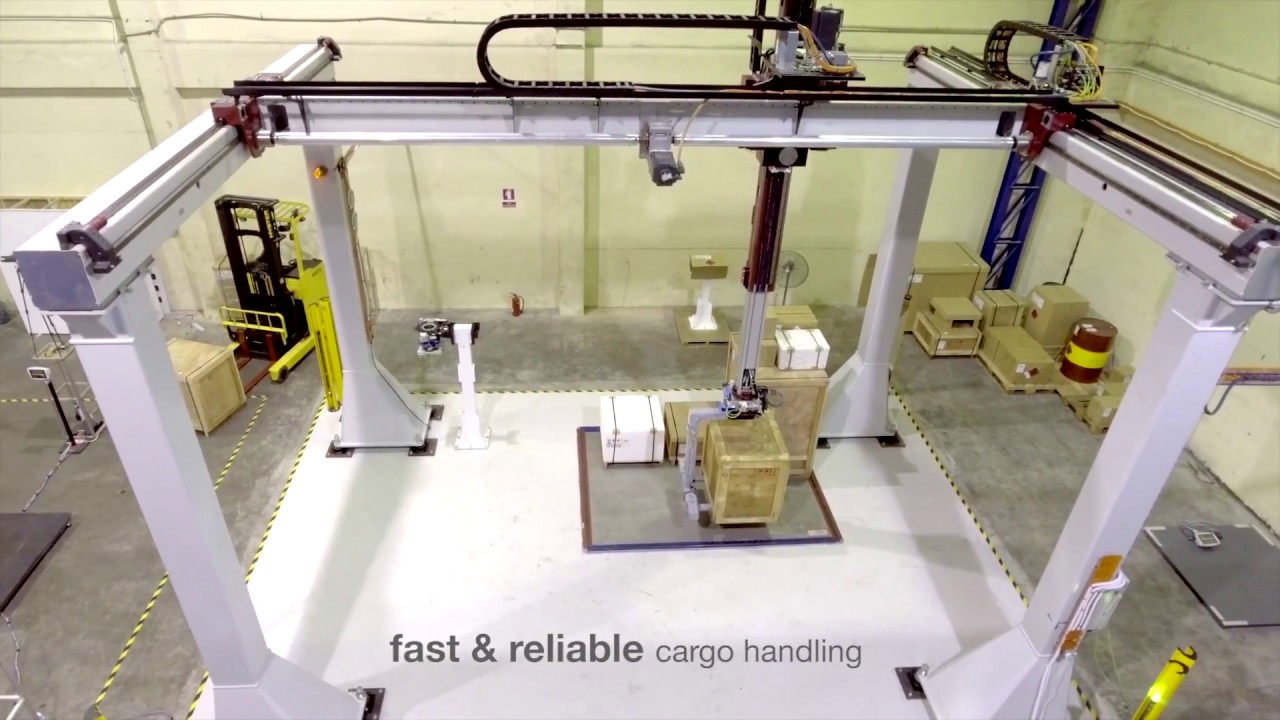
SpeedCargo, the world’s first AI-powered robotic solution for automatic build up and breakdown of aviation cargo pallets, is a product of research collaboration between Technical University of Munich’s CREATE and the National Research Foundation of Singapore.
It addresses the non-standardized cargo shipment category which has high variation in cargo shapes, dimensions, materials and weight. Palletization of such cargo is a labour intensive process and is performed manually worldwide. Deployment of SpeedCargo optimizes yield, enables a seamless flow of data, increases productivity and upgrades job profiles needed within the aviation cargo industry.
It is a turnkey solution using the vital ingredients which define intelligent systems; perception, cognition and action.
Technology
CargoEye: It produces a detailed and accurate digital fingerprint of incoming cargo in real time using the most advanced 3D camera system for acquisition of geometry and image. It goes beyond state of art by capturing non-standardized labels and material information of the cargo in addition to its dimensions, weight and center of mass of a box.
The user interface can be handled by a worker after only single day of training. Cargo Eye can be connected to any database or inventory management system for persistently storing the captured information to be used for planning and handling.
CargoMind: It is an artificial intelligence-based software solution that guarantees optimal packing results at any given time. It ensures that all aviation safety regulations for pallet packing are met while providing the operator a flexible planning tool to maximize profit. In addition, the system is able to re-plan a pallet at any given time within the process to accommodate any last minute modifications; for example a new cargo shipment needs to be accommodated on an existing pallet that has been partially built. CargoMind also enables the structural buildup of the pallet by planning collision-free motion trajectories for the robot.
CargoArm: It is the actuating system for physical and reliable handling of high-mix and high-volume cargo shipments. It is equipped with a gantry robot with a suite of advanced grippers to safely grasp and manipulate different types of shipments (ranging in dimensions, material and weight)
Although the gantry is a huge and heavy machine, it has extremely high precision (0.1mm). Equipped with a plethora of sensors, it can measure and record all important parameters that are of relevance while it is in motion.
The Nigerian Aviation Handling Company (NAHCO) should study advances in technology like SpeedCargo and deploy it in all the cargo sections of the nation’s airports to increase efficiency in their operations, eliminate waste and maximize shareholder value.