DD
MM
YYYY

PAGES

DD
MM
YYYY

spot_img

PAGES

Home Blog Page 6923

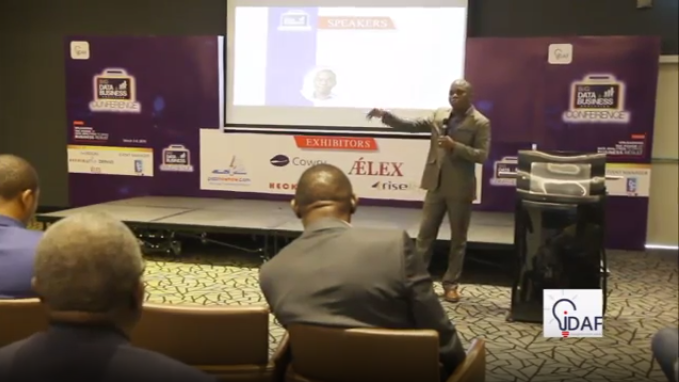
Prof. Ndubuisi Ekekwe Keynote in Big Data & Business Analytics Conference, Lagos, March 2019 [Video]

0

This is Prof. Ndubuisi Ekekwe’s Keynote during the 2019 Big Data & Business Analytics Conference, Lagos, 5-7 March 2019. He spoke on the topic – “Abundance in the Data of Nations”.

At about 6.32 minute frame, the video man lost a small segment. It is not noticeable though. He said he was swapping SD cards in the system.

THEME:     Big Data, Analytics and African Development
VENUE:    Ikeja-Lagos, Nigeria
DATE:       March 5th – 7th, 2019

As demand for digital transformation grows, data and analytics have new visibility and value in the enterprise — the source of unprecedented opportunity for development in Africa, business decision, innovation and growth.  The use of Big Data & Analytics have received significant attention in recent years.

The Sub-Saharan Africa Big Data, Analytics and Africa Development Conference 2019 aims to provide a platform for governments, enterprises, researchers and practitioners to exchange innovative ideas, latest research results, and practice experiences and lessons learned. Its major objectives include big-data applications in various domains such as healthcare, business and financing, education and learning, social networks and media, urban and environment, sensors and Internet of things as well as technology aspects of big data computing and services such as data mining and analytics.

The Conference will be hosting the 1st edition of the Sub-Saharan Africa Big Data and Business Analytics Conference 2019 in Ikeja, Lagos in Nigeria and is therefore calling for papers from both academia and industry experts on various sub themes.

The South Africa’s Presidential Commission on 4th Industrial Revolution

0

By Nnamdi Odumody

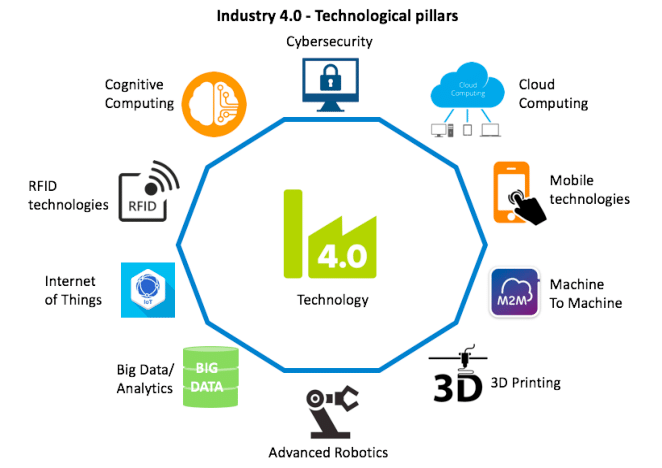
The past industrial revolutions liberated humans from animal power, made mass production possible, and accelerated human welfare across markets and territories. According to Prof Klaus Schwab, Founder and Executive Chairman of The Word Economic Forum, the Fourth Industrial Revolution (4IR) is “characterized by a range of new technologies that are fusing the physical, digital and biological worlds, impacting all disciplines, economies and industries and even challenging ideas about what it means to be human”.

The resulting shifts and disruptions mean that we live in a time of great promise and great peril. The world has the potential to connect billions more people to digital networks, dramatically improve the efficiency of organizations and even manage assets in ways that can help regenerate the natural environment, potentially undoing the damage of previous industrial revolutions.

The Fourth Industrial Revolution is marked by emerging technology breakthroughs in different field which include

  • Robotics
  • Artificial Intelligence
  • Blockchain
  • Quantum Computing
  • Nanotechnology
  • Additive Manufacturing
  • Internet Of Things
  • Electric and Autonomous Vehicles
  • 5G Wireless Technologies
  • Biotechnology

President Cyril Ramaphosa of South Africa, knowing the immense benefits which the Fourth Industrial Revolution will play in accelerating growth and development of his nation, recently launched a 30-man Presidential Commission on the Fourth Industrial Revolution which will identify relevant policies, strategies and action plans that will position South Africa as a globally competitive economy in the 4IR.

South African President Cyril Ramaphosa on Tuesday appointed 30 members of the Presidential Commission on the Fourth Industrial Revolution (4IR), the Presidency has said in a statement.

“The commission will assist government in taking advantage of the opportunities presented by the digital industrial revolution,” the Presidency said in a statement on Tuesday.

On Thursday April 11th 2019, Communications Minister of Republic Of South Africa will unveil the 4th Industrial Revolution in South Africa, in partnership with Telkom, a leading telecom solutions provider in the country, Universities of Witwatersrand and Fort Hare, and the City Of Johannesburg. This partnership which will help to create a national dialogue is aimed at creating a framework for maximizing the potentials of the 4IR. Besides, it will also complement and support national activities relating to the Fourth Industrial Revolution.

More so, the South African Parliament recently held an exhibition in partnership with the Department of Science and Technology tagged ‘’4th Industrial Revolution: Demonstrating South Africa’s Readiness’’ to deepen its understanding on this technological trajectory that will redesign economies, industries and markets,

Nigeria should learn from South Africa and change the composition of its Presidential Council on Research and Innovation and saturate it with skilled innovators and technocrats instead of politicians. By doing this, the experts will have the opportunities to fashion out an implementable roadmap  for the Fourth Industrial Revolution to the benefits of all Nigerian citizens.

Yes, Nigeria must develop capabilities in this revolution to have any chance of competing in Africa. South Africa has a clear vision; Nigeria must elevate its game as it relates with technologies of the future. If you check very well, the ANC flag has the wheel of industry: now, they want to move it really fast to drive their economy. That is amazing thing to do now that everything is about technology.

What is your company’s Double Play Strategy?

0

Samsung’s first-quarter profit dropped by 60% as the smartphone business cools. But Samsung will be fine – it has a solid strategy it has been executing for decades: Double Play Strategy.

For Samsung, provided Apple and others continue to place orders for chips, it would be fine irrespective of what happens in its mobile phone business.. But having the Galaxy series ensures that Samsung does not have to secure external orders before innovating in the chip business which remains hugely profitable.

Yes, provided the chip business has an internal customer (the mobile device unit, the oasis in my strategy), Samsung will continue to commit resources as the oasis has removed most of the risks in investing billions of dollars to build new factories in the chip business. Yes, the mobile device unit (the oasis) makes the chip business better by being a “reliable customer”, irrespective of whatever happens externally. That is the heart of the one oasis and the center of Double Play Strategy in business.

For Amazon’s ecommerce, there is the AWS, for Alibaba Group’s group ecommerce marketplace, there is Alipay. You may think they are making losses in specific sectors when in reality the losses help to win market shares which enable huge profits in other sectors.

What is your double play strategy?

LinkedIn Comment on Feed

Comment 1: 

This could mean that samsungs double play strategy, is gradually loosing its foothold by being dependent on Apples progress. Apple has realised its hardware is not as desirable and has to pivot to more services to balance its profit margins, case of the Apple card.

Samsung has not made its mobile section any better, prices of its phones looking more like mysteries rather than bids to win more customers. This year is make or break for the Apple hardware (iphone), if its a foldable phone (knife to a throat) at what price?

Todays smartphone hardware are being won by lowrange and midrange categories. Samsung can target these manufacturers and be chip suppliers for more of them,to close profit gaps.

For Samsungs sake,Apple should not suddenly wake up and say they are ditching samsung chips to improve profit

My Response: Samsung does not depend only on Apple though. It sells to other firms. Notice that Apple’s future cannot be decoupled from iPhone since most of the services still need exclusive Apple hardware to work. So, more Apple hardware remains a critical strategy for Apple future

Comment #2:

The double play strategy encourages risk taking, which in turn fosters innovation. When you realise that whatever you are bringing forth has a ‘testing ground’ for it, you are freed from major uncertainties that usually discourage experimentation.


TeamApt with CBN Switching License Goes Into Interswitch Territory in Nigeria

0

TeamApt, a Lagos-based fintech startup, which just raised $5.5 million, has been awarded a switching license by the Central Bank of Nigeria. The license powers AptPay, one of TeamApt’s products, to lead a financial revolution as it provides solutions for different customer segments in the Nigerian society. TeamApt Limited has a customer base of 26 banks across Africa, including Zenith, ALAT by Wema, UBA, First Bank, GTBank and Access Bank.

Another bucket of money arrives in the fintech space in Lagos. TeamApt, a payment startup supplying solutions to some leading Nigerian banks like Zenith, UBA and ALAT, has raised $5.5 million from Quantum Capital Partners, an investment firm founded by Zenith Bank’s Jim Ovia. The investor wrote the whole cheque.  According to the company, founded in 2015, it serves 26 African bank clients and processes $160 million in monthly transactions, growing revenue at 4,500 percent over a three year period. With this money, the company wants to expand into Canada and Europe.  And TeamApt plans another destination: NASDAQ.

TeamApt CEO, Tosin Eniolorunda, describing the impact of the license says “It is the highest license awarded to any fintech by the CBN because the license allows you to put all the banks together and be able to debit their banking position with the central bank. What this translates to is that with AptPay, TeamApt can actually move money across the banks without putting our money down. This license puts TeamApt on the same level as other Tier-1 financial technology companies.”

I must say that TeamApt has moved to the upstream in the payment system domain while operating at the edges of the switching curves. And will create more value than most typical fintech startups in Nigeria today.

Largely, as explained by the startup CEO, “If through a payment gateway, a buyer pays a merchant for a product and the payment gateway provider needs to pay the merchant instantly, without the license, the provider will have to pay with its own money. But with the license, the provider is merely moving the bank funds around without tying down its money”. Yes, it does not have to tie its money because it is operating at the edges where the best values reside. AptPay has the ‘last piece to the matrix’ in the payment solution space in Nigeria.

Simply, Interswitch has a real competitor now. With the switching license TeamApt has, it can process transactions between service providers and customers directly. That used to be the only exclusive domain of Interswitch. Possibly, this competition will improve services and reduce some notable paralyses in the nation’s financial services like the persistent failures in the PoS terminals.

Innovation in Healthcare Critical for Nigeria’s Productivity

0

By Nnamdi Odumody

In September 2015, the United Nations General Assembly agreed on the 2030 agenda for sustainable development with a new generation of 17 Sustainable Development Goals, and 169 targets, to succeed the Millennium Development Goals, and guide global development over the next 15 years to 2030.

Low Income countries will need an additional $671 billion until 2030 to attain the health related SDG’s. Seventy nine percent of these costs are required to strengthen the healthcare system.

The Ebola Virus Disease which ravaged Liberia, Sierra Leone and Guinea caused a GDP loss in 2015 of $240 million for Liberia, $535million for Guinea and $1.4billion for Sierra Leone which means that the West African sub-region suffered economic losses of almost $4 billion due to this scourge.

Approximately 47 percent of the total productivity cost of illness could be avoided in 2030 if the SDG targets related to those health conditions are fully achieved.

In 2014, a WHO report on healthcare delivery, which surveyed 200 countries placed Nigeria at 197th position ahead of Democratic Republic of Congo, Central African Republic and Myanmar. Nigeria currently loses 400 billion naira annually to Medical Tourism.

The Universal Health Coverage compliance ranked Nigeria recently in 187th out of 191 countries. Budgetary allocation to the healthcare sector in 2018 was 340.45 billion naira (less than $1billion) representing only 3.9 percent of the budget which is 1,800 naira ($5) per capita for each of the 190 million citizens. Maternal mortality rate in Nigeria is 814 per 100,000 live births and for every 1000 births in Nigeria, 108 infants and children die before the age of five.

Over 72 million Nigerians according to WHO 2017 statistics are at risk of malaria, with 380.8 at risk out of every 1000 citizens, and the cancer death ratio is 4 to 5, which is one of the worst in the world. According to WHO, over 100,000 people are diagnosed with cancer annually in Nigeria, and about 80,000 die from the disease which amounts to 240 citizens daily. Cervical cancer which is 100 percent preventable kills one Nigerian woman every hour while breast cancer kills 40 Nigerian women daily.

The African Business Coalition For Health which comprises of some of the continent’s most successful corporate titans who are passionate about fixing some of the frictions in healthcare services delivery on the continent is taking note. Entities like Global Business Coalition For Health, Aliko Dangote Foundation, and Private Sector Health Alliance of Nigeria have initiatives with the private sector to tackle deficits in healthcare.

Nigeria needs to spend $1billion annually on Research and Development to create Innovative Solutions to some of the common healthcare challenges which alongside the rest of Africa are faced with, by establishing six Centres of Medical Excellence for Cancer, Hepatitis, Diabetes, Malaria, Lassa Fever and Tuberculosis across the geopolitical zones which will make it Africa’s destination for medical tourism. To execute this mission, the nation has to increase the budgetary allocation to healthcare in line with WHO minimum requirements of at least 17 percent to enhance the productivity and wellbeing of the citizens.

They have always said this: health is wealth. Nigeria must live that through policy and priorities.