DD
MM
YYYY

PAGES

DD
MM
YYYY

spot_img

PAGES

Home Blog Page 6923

Uganda’s Xente Shows Why Nigeria is Africa’s United States For Entrepreneurs

0

This is a very fascinating vision – a company that makes it possible for Nigerian customers to buy goods from Ugandan merchants and pay over time. The firm, Xente, explores Nigeria, out of its Ugandan root, just as Nigerian startups like to link into United States and United Kingdom.

Largely, if Nigeria gets itself ready, it can become the American to many Africa-nations entrepreneurs and startups. They see the big market and they are ready to roll in Nigeria. It is simply fascinating that someone will structure a deal to make it easier for Nigerians to buy from Ugandan businesspeople; give credits to these young entrepreneurs!

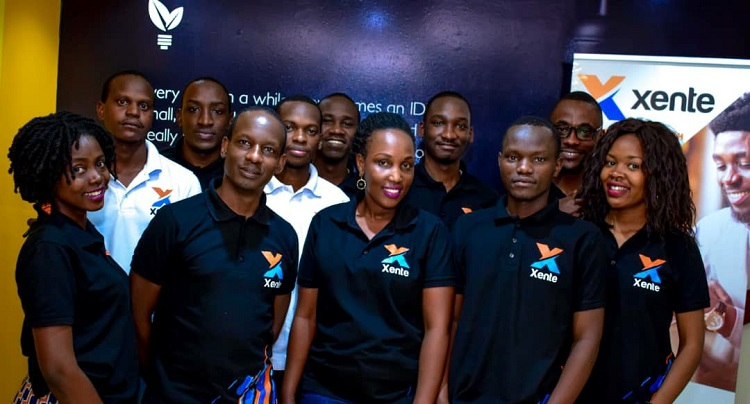
Ugandan startup Xente, which allows customers from all over the world to buy products from Ugandan merchants and pay in instalments with cards or mobile money, has expanded to Nigeria.

Mobile payments and shopping app Xente enables consumers and African businesses to transact efficiently and safely on any mobile channel without the need to use cash.

The startup has now made Nigeria its first market outside of Uganda, allowing users there to, among other things, purchase airtime from all major networks, pay for utilities such as electricity, water and pay-TV services, and pay for physical products at partner stores using their Xente wallet.

“We are proud to have a second home, nothing makes us more happy than to sit in Africa’s fastest growing economy. We are more than happy to provide every Nigerian citizen with a secure, convenient and stress-free online buying experience,” said Xente chief executive officer (CEO) Allan Rwakatungu.

Xente is Africa’s Alipay. Using Xente, customers in Uganda and, Nigeria can make payments in country and cross border for 100 + use cases using mobile money, bank cards, as well as on credit.

Grow With Kobo360 and Zenvus – #Kobo360Startups; Receive Growth Capital

0

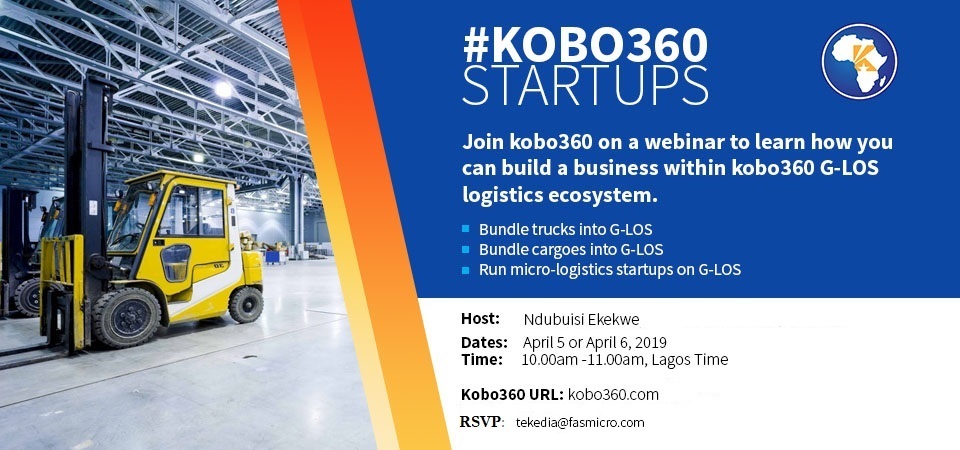
We have a very amazing opportunity which I am inviting the community. Simply, we are looking for partners that can bundle cargoes, trucks and run micro-logistics business on top of Kobo ecosystems. Partnering with Kobo provides a path for injection of capital into your micro-logistics business besides other benefits.

Through #Kurfman (Kobo Urban Rural Feeders Micro-Aggregation Network), we guarantee farming communities zero post-harvest waste if they integrate into the Kobo ecosystem. And through the same #Kurfman, we expand market opportunities for manufacturers of all sizes.

In Zenvus, we have realized that besides producing more in farms, you need ways to send produce to the cities or processing plants. #Kurfman, relying on Kobo G-LOS (global logistics operating system), fixes post-harvest waste in African farming communities.

On this Friday and Saturday, I will hold a webinar to explain the opportunities//benefits. You know someone who owns trucks, we want the trucks on Kobo G-LOS. You know investors [people with money] – we ask them to buy trucks and drop into Kobo G-LOS. And in your local community, you can run a startup, aggregating cargoes and farm produce, and put into Kobo G-LOS.

RSVP with my team – they will share the free webinar link.

Kobo360 is a tech-enabled digital logistics platform that aggregates end-to-end haulage operations to help cargo owners, truck owners and drivers, and cargo recipients to achieve an efficient supply chain framework. Through an all-in-one robust logistics ecosystem, Kobo uses big data and technology to reduce logistics frictions, empowering rural farmers to earn more by reducing farm wastages and helping manufacturers of all sizes to find new markets. Kobo enables unprecedented efficiency and cost reduction in the supply chain, providing 360-visibility while delivering products of all sizes safely, on time and in full. The Kobo mission is to build the Global Logistics Operating System that will power trade and commerce across Africa and Emerging Markets.

How Solomon King Benge is Preparing the Next Generation of Ugandans

0

By Nnamdi Odumody

Science education in many African and developing countries relies more on the theoretical aspect of imparting knowledge, aimed at cramming, rather than the practical one which builds problem solving, and critical thinking skills. This results to poor overall classroom performance, poor skills development, low job and career prospects, and weak economic development.

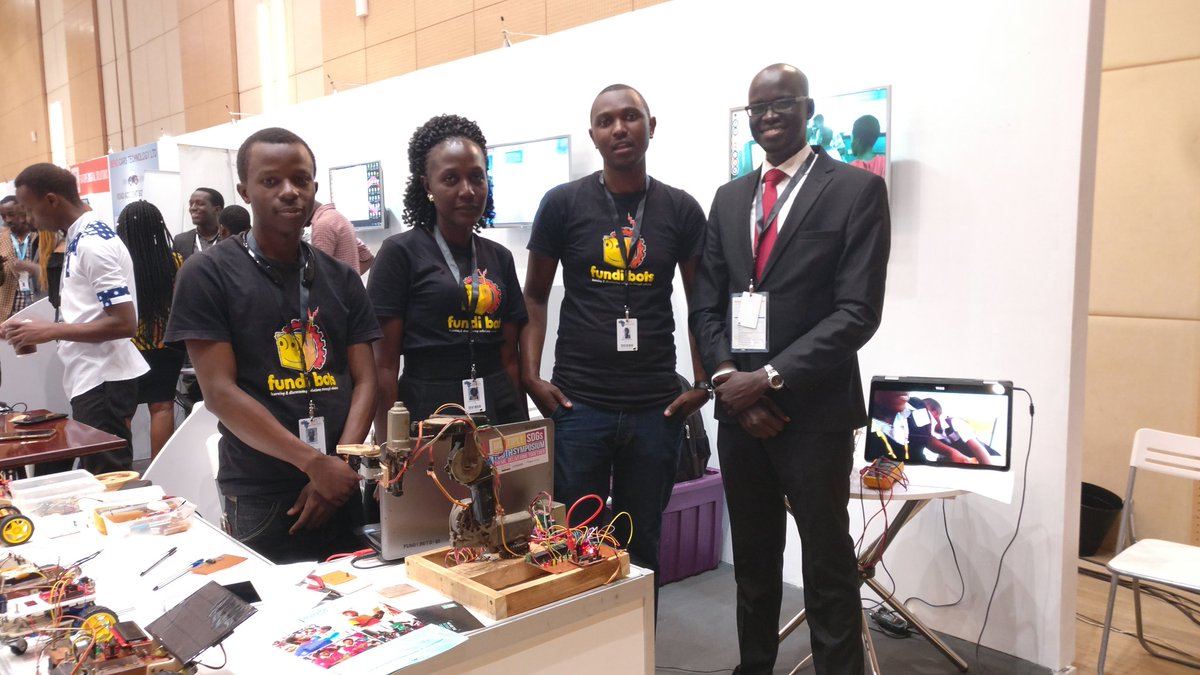
Fundi Bots, founded by a young Ugandan, Solomon King Benge, is on a mission to use robotics training in schools to create and inspire a new generation of problem solvers, innovators and change makers. Its hands on approach bridges the technology divide, between the classroom and the real world, providing training that is in line with recent developments, across the globe, to students, inside and outside formal academic institutions.

We provide hands-on, practical Science, Technology, Engineering and Maths (STEM)) education to children and youth in classrooms, communities and universities.

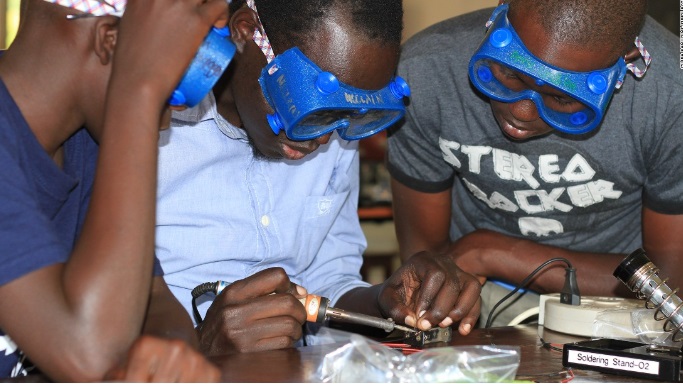
Our students learn how to build robots, which radically improves school curriculum knowledge, classroom performance, provides hands-on vocational skills and career development and empowers students to be forces of change in their communities.

The Fundi Bots learning model is practical, fun, engaging and puts students in a collaborative and exploratory learning environment that inspires them to think beyond simply passing classroom examinations.

Fundi Bots wants students and non-enrolled youths to learn practical skills and resources from day one and pass through an education, and career path, that teaches them to be excellent students in the classroom, innovative problem solvers in the real world, experienced and knowledgeable employees and exceptional technology entrepreneurs.

Fundi Bots session

Its school outreach focuses on providing awareness, knowledge and access to training and resources at the school level, and includes hands on robotics training workshops, speaker presentation, science project assistance and guidance, career and skills development, and mentorship.

Fundi Bots Integrated is a version of its enriched science curriculum that’s deeply integrated within the official government or school curriculum. It addresses the same topics and subjects that the school is following, but adds more layers of practical lessons, projects and deeper immersion within the sciences. The Fundibots After School Program is a special science club for students who want to go the extra mile in learning science beyond their classrooms and for parents who want their children to explore practical science education, beyond the standard curriculum.

Fundi Bots programmes have impacted 4,500 students across 75 schools, and it has 2 regional centers in Uganda.

Kudos to Solomon King Benge and his team for preparing the young ones with STEM skills which will help transform their nation in the Fourth Industrial Revolution.

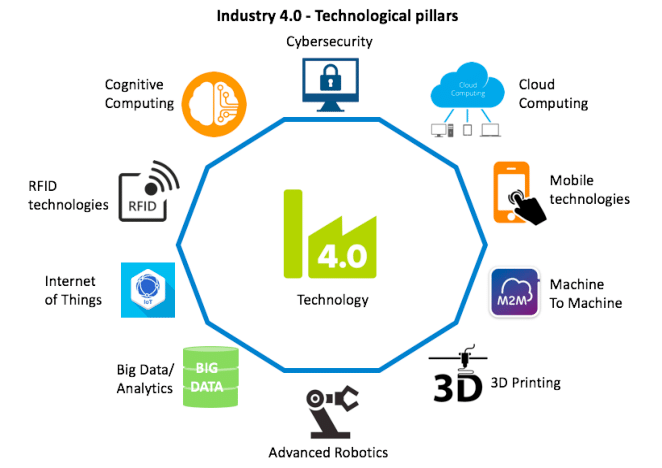
Technologies for industry 4.0 (source: researchgate)

Creating Jobs for Nigerian Youth in the Fourth Industrial Revolution

Why Entrepreneurs Shouldn’t Be Afraid Of Planning For Retirement

0

One recent study from 2017 revealed that 34 percent of entrepreneurs have no retirement savings at all. While the reasons for this varied among participants, one thing was made clear: a large number of entrepreneurs are not taking the idea of saving for later in life seriously. Even though some self-employed individuals plan to one day retire, many CEOs and entrepreneurs are hard working, driven individuals who do not have a concrete plan to stop working. No matter whether you fall into the former or the latter group, it is crucial for all entrepreneurs to have some kind of savings for later in life.

Retirement does not mean the end of working

Merriam-Webster defines retirement as the “withdrawal from one’s position or occupation or from active working life.” Although many who are traditionally employed look forward to this period in life, and plan for it vigorously, entrepreneurs usually have a different opinion of retirement. In addition to the financial risk involved in giving up one’s business, many individuals who have built a brand or company from scratch do not want to give up their involvement with it. However, even though the goal of most retirement funds is to help individuals to withdrawal from their work, it is important to know that this is not a requirement. Instead of selling or giving up control of your organization, your goal can simply be to scale back the number of hours worked.

Creating a retirement savings allows for added leisure

If you know that you won’t be able to stop working for your own individual reasons, a retirement fund can still serve an exciting purpose. Investing in a retirement fund can help you achieve more than simply working less. If you’ve had dreams of traveling or taking more leisure time in your schedule, saving up money in an IRA account or a solo 401K plan can make those goals a reality. Even if you end up saving much less than what is currently recommended for people who plan to fully retire (about 80 percent of your income yearly), you will have plenty of funds to take extended periods of time away from your work.

A retirement account can help you prepare for emergency expenses

As of last year (2018), experts reported that approximately 55 million Americans had no emergency savings. From home repairs, to unexpected business expenses, to sudden health challenges, emergency expenses can pop up anywhere at anytime. Even if you have a healthy savings account, it never hurts to have extra cash. This is especially true as one ages, when health expenses can add up quickly.

No matter whether you plan to fully retire or work for as long as possible, all entrepreneurs should have a retirement savings. As you age and your plans evolve, having extra funds for whatever life brings is one of the most financially savvy moves you can make.

When Facebook Asks for Internet Regulation

0

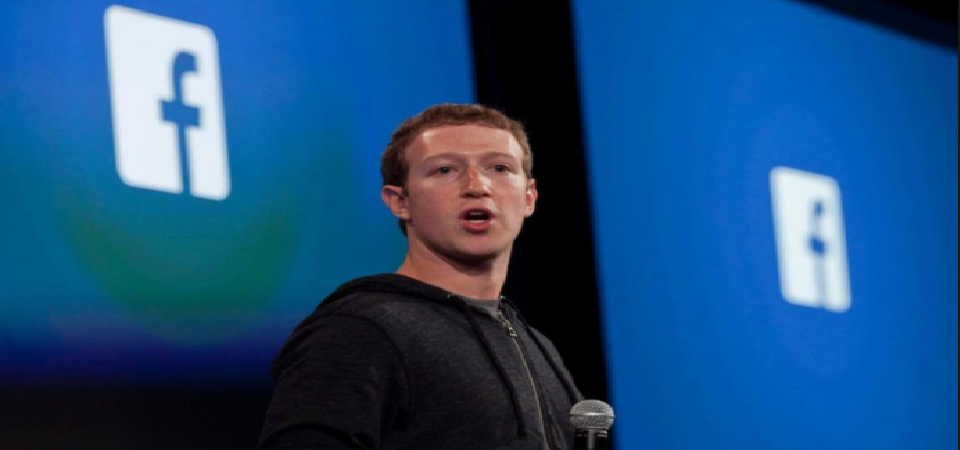
Mark Zuckerberg, Facebook founder, is calling the world to regulate social media and broad internet. He is a brilliant man because regulating the web practically means Facebook dominance is assured in the social media space. This is the deal: if you have a privacy-focused law that says that Facebook cannot share data with another company, you have simply given it a passport to stand unopposed, legally. Yes, everyone will then have to fold inside Facebook since it will not share. If you make a law that platforms will be responsible for what their users post, on their ecosystems, only cash-rich companies like Facebook can live; startups cannot even try to build platforms anymore.

Mark Zuckerberg called for internet regulation. In an op-ed, the Facebook founder and CEO made the case (paywall) for new government rules around harmful content, election integrity, privacy, and data portability. It’s a sign that Facebook acknowledges such regulation is now inevitable and wants to shape it (paywall). (Fortune newsletter)

So, when you read these ICT utilities asking for regulations, do not be fooled: if you indeed regulate them as the politicians’ desire, you will take down all potential competitors for a long time. Of course, any regulation will only affect the American part of the Internet since China has its own part. Possibly, depending on how you do the regulation, the Chinese can, over time, expand into the American part. Not many American leaders will smile over that.

So, if U.S. breaks Facebook, one of those pieces can emerge to fill that void. Or another product from say China or India can emerge and become the world’s leader. It is a web business running on the aggregation construct. They are not structured to have 20 banks in Lagos. You expect to have one popular social media in Lagos for a specific sector. That one leader is what matters. If you break, the one that is best will grow (and win) because network effect will make it easier to attract users to it.

This is my take: U.S. will not regulate Facebook or its web companies at the level many are expecting [I expect nothing to change except cosmetics reporting of violations] because it knows that Chinese competitors which are also well-funded will go after Facebook users across the globe. And even if U.S. regulates Facebook by breaking it, the best surviving part will grow to dominate over time because of network effect where the best gets better and bigger. We just have to agree that Facebook is an ICT utilitiesand I was very happy when my editors in Harvard allowed me to use that against the company. You negotiate with your utilities [ electricity, water] because you have no alternatives. That is where we are with Facebook.

All Together

This is the deal: While it makes sense to regulate Google and Facebook and toughen privacy, we would make it legally possible for these entities to NOT share. And if they do not have to share, they have built a competitive moat which no one can overcome. Facebook’s suppliers are its users. It has been doing the external planet a favor by sharing their data. Now, it can keep ALL under the law, claiming privacy protection.

We would have the best user privacy but we would kill competition. Yes, Google and Facebook would continue to mine and collect all the data they want. The world of web belongs to Google robots. It has access to it. But now what it gets, it can easily keep inside.  The implication is that everyone would have to converge in their worlds. Why? They have the best data and the network effects work in their favor.

The old web has been bidirectional system where Google and Facebook collect data and then share with others in their ecosystems.

We need to be careful what we ask for as we march on this web regulation thing.

No Person or Government Can Effectively Regulate Facebook

LinkedIn Comment on Feed

Comment #1

1. Data monopoly – Facebook will effectively have hoards of data which only it can exploit. Others will starve and sell their firms for less cents per the Dollar. Facebook continues to optimise its offerings and platforms.

2. Platform efficacy – Facebook’s platform is already primed to meet such regulations. Others are.focused on features and light years away from meeting serious regulations reform standards – they shut down or sell off or go for scarce funds to scale to a regulatory compliant platform. Competition wise, Facebook dominates the landscape.

3. Processes & People – as an add on to no.2, unlike smaller firms, Facebook definitely has these 2Ps ready & good to go.

Comment #2

Mark simply wants to rope the politicians in, so that they can have first-hand knowledge on what it’s like to regulate the web. How many governments can deploy enough resources to police what people share on the web, without practically shutting down the web, in an effort to filter what qualifies as decent speech? Not an easy thing to do, because opinions vary; so Facebook wants the politicians to have a taste of it… The other day, one of the presidential hopefuls said she would ‘break’ the tech giants, if got elected. It simply showed her lack of understanding of how these digital natives operate.

In platform world, there is nothing like “fair competition”, not at all; you only have category-kings for each domain, because most users simply congregate on the ‘best’, with those lower on the ladder feeding on crumbs. The best they can do is change of name, in the name of ‘breakup’, because the next best one will still become a behemoth within a short time.