DD
MM
YYYY

PAGES

DD
MM
YYYY

spot_img

PAGES

Home Blog Page 6933

NNPC Needs Restructuring To Become Profitable Like Peers

0

By Nnamdi Odumody

With international benchmark of Brent Crude averaging $71.19 per barrel in 2018, 31.5 percent gain from 2017 when it averaged $54.15 per barrel, the state-owned Nigerian National Petroleum Corporation (NNPC) performed poorly when compared with its global peers.

According to its full year report for 2018, between January and December 2018 it spent 730.9 billion naira on under-recovery (subsidy) while 140.6 billion naira was spent on pipeline repairs and management cost. Its operations and financial report for 2018 showed gains of 393.5 billion naira from its upstream and gas processing subsidiaries: Nigerian Petroleum Development Company, Integrated Data Service, National Engineering and Technical Company, Nigerian Gas Company Limited and Nigerian Gas Marketing Company were wiped off largely by its downstream subsidiary operations which recorded losses of about 351 billion naira.

In 2018, NNPC recorded 24.9 billion naira on product losses while cash call payment for the development of oil and gas assets consumed Federal Government’s revenue as 1.829 trillion naira was paid to oil companies from revenue of 3.11 trillion naira, generated from sale of crude oil and gas in 2018. The combined value output by the nation’s three refineries at Warri, Port Harcourt and Kaduna at import parity price for the month of December 2018 was 10.86 billion naira while the associated crude plus freight costs and operational expenses were 8.89 billion naira and 19.29 billion naira resulting in an operating deficit of 17.32 billion naira by the refineries. The Group Operating Revenue for December 2018 was 731.88 billion naira while expenditure surged by 429.52 billion naira from the previous month.

Brazil’s state owned Petroleo De Brasiliero (Petrobras) had a net income of $6.84 billion, EBITDA(Earnings Before Taxes Depreciation and Amortization) of $30.44 billion, and for the fourth straight year a positive cash flow of $14.17 billion in 2018, generating $40.14 billion in municipal, state and federal taxes plus government take.

Sinopec (China’s state owned oil company) registered a 22 percent year over year growth to achieve $426 billion as operating revenue in 2018 with its downstream business accounting for about 60 percent of its revenue which increased by 2.31 percent to 244 million tonnes while total domestic sales volume of refined products increased by 1.4 percent to 180.24 metric tonnes.

Rosneft of Russia boosted revenue by 31.4 percent to $133.7 billion in 2018. It’s oil and liquids production increased by 2.1 percent to 4.7 million bpd while gas production averaged 1.12mboed per day.

Equinor of Norway earned $7.5 billion as profit – a 64 percent increase from its previous operating year result of $4.6 billion while total oil production hit 2,170mboe per day as at the last quarter of 2018.

Saudi Arabia’s Saudi Aramco earned the biggest profit of all the oil companies. Its net income was $111billion and it generated $224 billion as EBITDA. Currently it wants to raise funds from the global capital markets by offering a percentage of its shares which will value it as the world’s first trillion dollar oil corporation.

The failure of the President who is also Nigeria’s Minister Of Petroleum Resources to sign into law The Petroleum Industry Governance Bill aimed at making Nigeria’s oil and gas industry globally competitive like that of other oil producing countries, and reforming NNPC to operate as a successful business entity, is making the Nigerian state-owned corporation underperform below its potentials.


Five Business Models for African Telcos to Thrive

0

Telcos have constantly complained of dwindling resources from their connectivity offerings as well as fierce competitions from other players within the technology space. Besides, mobile voice calls are declining in some parts of the world, and consumers are generally unwilling to pay more for data services.

Even though 5G presents new business opportunities through verticals like the automotive industry, health care, and agriculture, telcos are generally unclear on the right business models to develop to reap the full benefits of these new opportunities. Besides, telcos also worry about the huge investments needed to migrate their networks from 4G to 5G.

The virtualization and softwarisation of 5G networks would no doubt trigger the development of new business models which were otherwise impossible with previous generations. In view of the future trend, I hereby highlight some business models that may present opportunities to telcos looking to diversify their offerings.

24/7 Connectivity

Here, besides the traditional provision of connectivity services, telcos can guarantee clients a 24/7 connectivity service through an automatic diversion onto their mobile data services during outages.

Connectivity + Data Storage + Analytics

Besides, connectivity, telcos could offer data storage services as well as data analytics applications to interested clients. Recently, some telcos (e.g. MTN) have begun acquiring data centres, as such telcos could easily diversify into this area of opportunity.

5G in automotive

Connectivity + Security

Here, telcos can offer clients the opportunity to secure their infrastructures as part of their offerings. This would perhaps require telcos to employ a dedicated team of cyber security professionals who would help deliver this new offering.

Connectivity + Cloud

For small companies and enterprises, telcos could provide them with cloud storage services as part of the connectivity offerings. This may require telcos to partner with cloud storage companies to offer this service.

Connectivity + Business Services

Telcos could also combine connectivity services with business services like business advice from seasoned consultants, facilitating meetings with leading industry experts, and professional service providers that may help organisations meet and fulfil their commercial obligations.

All Together

These business models can be implemented in both older and newer networks (2G, 3G, 4G). However, 5G will lead to a flurry of business opportunities which would prove beneficial to telcos looking to diversify their offerings.


Thank you #Peru

0

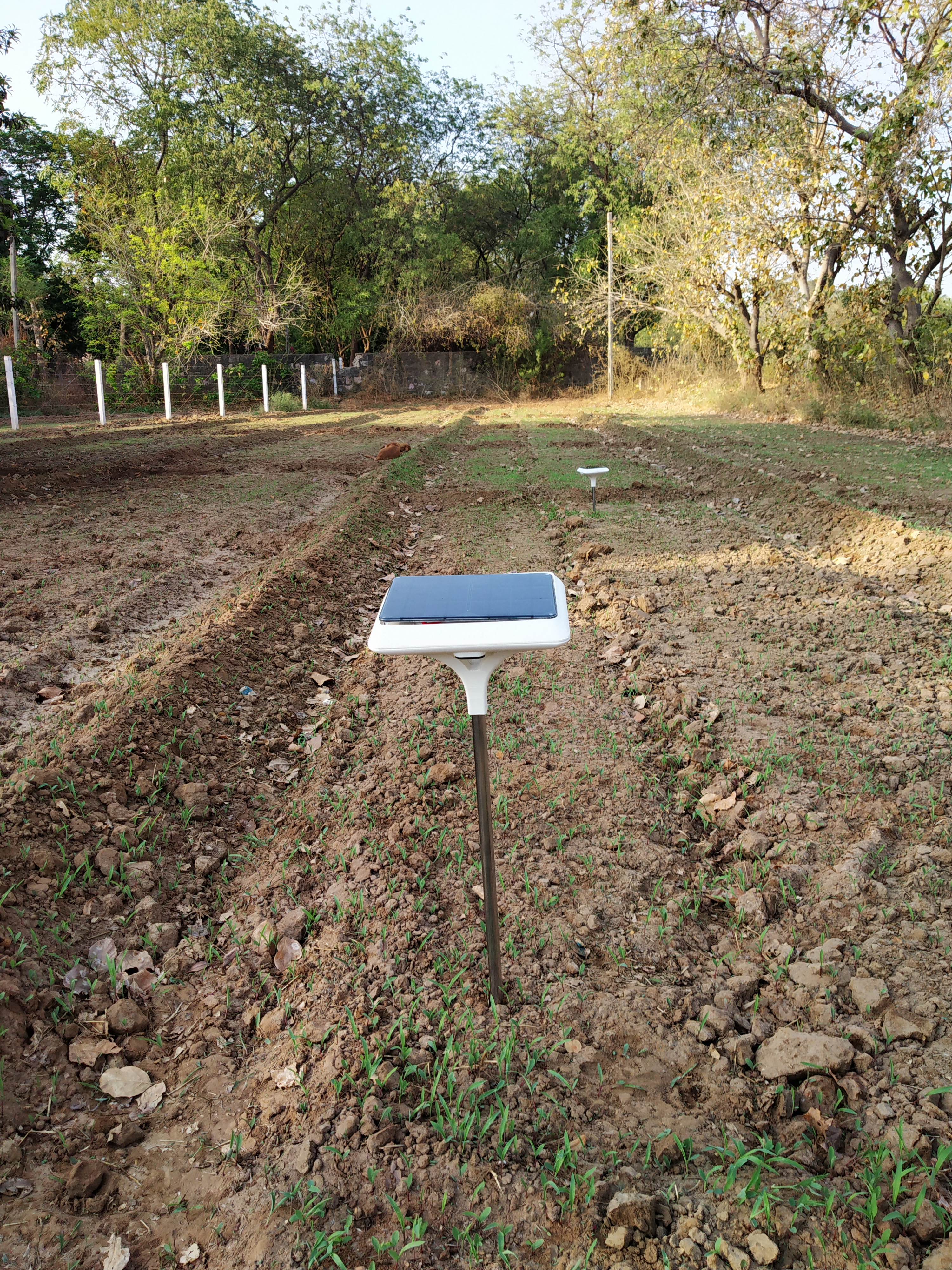
Thank you #Peru. My promise is at least 2x improvement on farm yields by concurrent reduction in input and maximization of output. Zenvus – the intelligent operating system for modern farming. #MadeInNigeria.

What Is Zenvus?


Join #Kobo360Startups [Video]

0

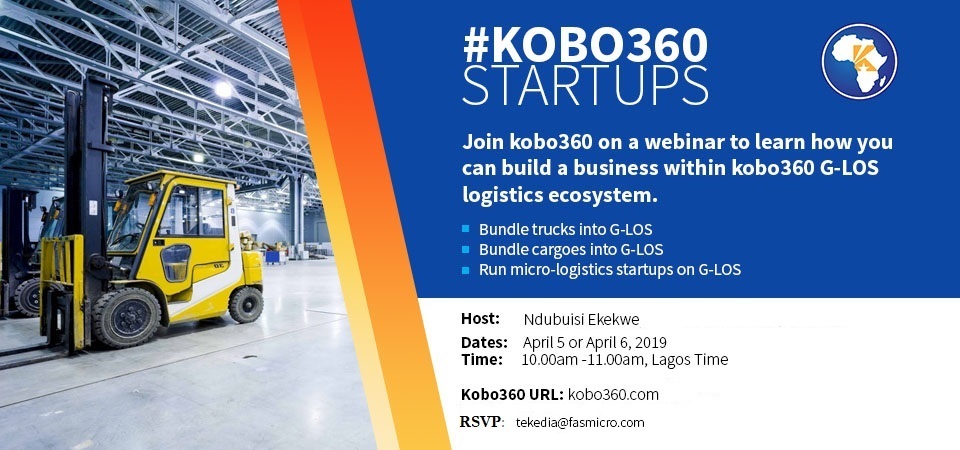
This is the live recorded message. A presentation document (PDF) is available for download here for those that do not want to watch video.

Please send questions to tekedia@fasmicro.com


About Kobo360

Kobo360 is a tech-enabled digital logistics platform that aggregates end-to-end haulage operations to help cargo owners, truck owners and drivers, and cargo recipients to achieve an efficient supply chain framework. Through an all-in-one robust logistics ecosystem, Kobo uses big data and technology to reduce logistics frictions, empowering rural farmers to earn more by reducing farm wastages and helping manufacturers of all sizes to find new markets. Kobo enables unprecedented efficiency and cost reduction in the supply chain, providing 360-visibility while delivering products of all sizes safely, on time and in full. The Kobo mission is to build the Global Logistics Operating System that will power trade and commerce across Africa and Emerging Markets.

As Expected, Nigerian Court Nullifies Sale of 9Mobile (nee Etisalat NG)

1

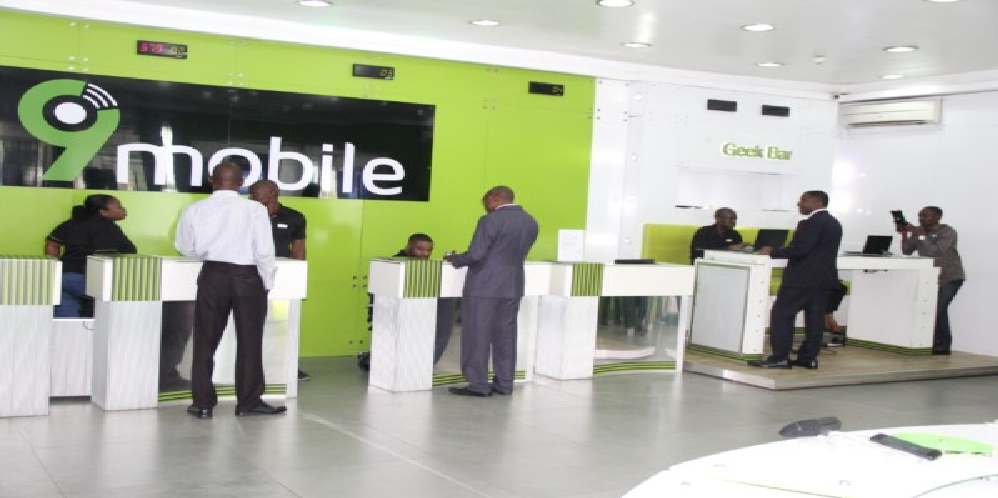
A Federal court in Nigeria has nullified the “sale” of 9Mobile (nee Etisalat Nigeria). Nothing unusual here as I never really believed that 9Mobile was sold when litigants were running over one another with court-bullets as injunctions. That someone saw those injunctions, and yet released money, was a sign of total misunderstanding of the highly active court system in Nigeria. There is fraternity in the legal system in Nigeria: judges respect prior injunctions fanatically. That is why some governors are still being tried for cases that started in 2007, and at the current pace, the cases will finish when paper filing will be illegal in Nigeria!

The Federal High Court in Abuja has, in an April 1, 2019 ruling, set aside the sale of a major telecommunication firm, Etisalat International Nigeria Limited, now 9Mobile, to Teleology Nigeria Limited.

An enrolled order made by Justice Binta Nyako was sighted on Thursday.

The judge held that the steps taken in relation to the exchange of ownership of the company were in violation of subsisting court orders that parties to the pending suit should maintain status quo.

The court had by the orders restrained parties to the suit, involving investors and other shareholders in the company, from destroying the “res,” the subject matter in dispute in the suit.

I had asked if they indeed sold 9Mobile?

No nation has any competitive #4 mobile carrier: two strong leading operators are typical. But in some cases, you can have a forceful #3. But anything beyond #3 is forgettable. Nigeria will not change that until we have billionaires who can buy English ball clubs just to tell their friends: “My boys will play tomorrow, come over to my booth”.

Yes, Teleology Holdings which received approval to take over the operations of 9mobile as the preferred bidder has pulled out of the deal.  The Founder of Teleology Holdings Limited, Mr. Adrian Wood, the pioneer CEO of MTN Nigeria, released a statement, noting: “We now must stand down from further work on the 9mobile project.

My prediction remains that Glo will pick 9Mobile directly or indirectly. Indirectly means someone buys it and uploads into Glo.

UPDATE – 9Mobile has responded

From Premium Times.

The court’s ruling implies that actions concerning the company, including the processes taken by the National Communications Commission to resolve the dispute by selling over the company; are null and of no effect, since parties had been ordered to maintain status-quo from April 25, 2018.

In a reaction, however, the management of EMTS on Thursday denied the nullification by the FHC.

According to the company; the court only decided on the issue of locus standi. The statement was signed by the company’s legal adviser, Ore Orilade.

EMTS however noted that it would appeal the ruling.

“The Management of Emerging Markets Telecommunication Services Ltd. (trading as 9mobile) is aware of the news publication being circulated on online news platforms that the Federal High Court sitting in Abuja has nullified the sale of EMTS to Teleology Nigeria Limited. EMTS hereby states that these news reports are incorrect, misleading, mischievous and a total falsehood.

“The Federal High Court, Abuja did not nullify the sale of EMTS; the court on 1st April 2019 made an order for parties to maintain status quo as at April 25, 2018. As at the said date, EMTS (9mobile) was not a party to the suit before the court. The action before Justice Binta Nyako of the Federal High Court is not about the sale of EMTS (9mobile) but rather, the transfer of the license even without locus standi.

“EMTS (9mobile) has however appealed the order and also sought an injunction pending appeal at the Court of Appeal,” the statement said