DD
MM
YYYY

PAGES

DD
MM
YYYY

spot_img

PAGES

Home Blog Page 6944

GTBank Responds to Innoson Motors’ “take over” Claim

1

Nigeria’s GTBank has responded to Innoson Motors’ claim that it had been mandated by the court to “take over” the bank. Of course, that is alternative fact news. Yet, in the GTBank’s response, the bank dropped a troubling hint: “It is important to state that the Judgment allegedly in issue is in respect of Garnishee Proceedings against the account of the Nigerian Customs Service Board domiciled with the Bank and not against the Bank as an entity.” This particular case is simply unfortunate. What a pity but lawyers smile for  the continuous good alerts!

But in its response, Erhi Obebeduo, company secretary of the bank, said the bank would resist any attempt to execute any such “illegal or fraudulent execution”.

“The attention of Guaranty Trust Bank Plc (“the Bank”} has been drawn to statements circulating in the news and social media in respect of purported enforcement of a Judgment of the Federal High Court, Ibadan, Oyo State at one of its branches in Anambra State,” the bank said.

“The Bank as a law-abiding corporate citizen is taking all necessary legal steps to address this situation and ensure that no illegal or fraudulent execution is carried out.

“It is important to state that the Judgment allegedly in issue is in respect of Garnishee Proceedings against the account of the Nigerian Customs Service Board domiciled with the Bank and not against the Bank as an entity.”

Comments on LinkedIn Feed

#1. Ok, so, here is how it works. Mr. I (Innoson) sues Mr. C (Customs). Nothing to do with GTB. But Mr. C keeps its funds with GTB, like most people. Mr. I obtained judgment against Mr. C and seeks to enforce that judgment through Garnishee Proceedings (a mode of enforcing judgment) seeking to attach the funds with GTB that belongs to Mr. C.

Mr. I serves GTB with Garnishee Order Nisi to show cause why Mr. C’s funds with it shouldn’t be attached to satisfy the judgment debt. This isn’t any of GTB’s business. All it has to do is file Affidavit Showing Cause attaching Mr. C bank statement. The court then issues Garnishee Order Absolute and the judgment sum is paid to Mr. I.

Now, here’s the problem. GTB becomes a meddlesome interloper busy body and seeks to defend its customer Mr. C perhaps by not disclosing all the funds and now buys trouble for itself.

If Mr. I is able to show that Mr. C has funds with GTB and its refused to pay it, then the court will make consequential orders/judgment against GTB such as that it’s not solvent to pay judgment debt in its custody.

Banks have dabbled into Garnishee Proceedings that was not their business and have had their fingers burnt. Now no one is worrying about Mr. C the judgment debtor

  • My response: You sabi the case – I have looked at this and can conclude one thing: GTBank really hated Innoson to have taken over the defense of Nigerian Customs.  NCS is government and how a private bank (not govt owned) found it useful to pay lawyers to defend govt is something only LBS case study will explain.

#2. Innoson has no business with custom,as long as the garnishee order has been given by a competent court of jurisdiction,INNOSON has the powers to halt all banking transactions of GTB until that amount is paid,contrary he might decide to allow his money run on the 22? of 8.8billion,or have it converted to shares.the fact is that he dictates the pace! The hope of a common man,THE JUDICIARY

#3: GT bank wrote off Chief Innocent Chukwuma as “illiterate Igbo trader”, “illiterate Nnewi trader” with no liver or time for court cases.

It is the same reason police men prefer to be posted to Anambra State – especially the Onitsha-Nnewi axis, where they believe the traders don’t like going to police station or court. They would prefer to “settle” the police and go their way. But the same police men don’t like to be posted to Imo (especially the Owerri-Mbaise axis) or Enugu city where civil servants and lecturers have the patience to pursue cases and make life miserable for police people with court cases and petitions.

But Innoson surprised GTBank with his patience and doggedness.

This case the company just won against GTBank is just one of the two cases at the Supreme Court. This one is the case about its goods the Nigerian Customs seized and auctioned to politicians in 2004 (when Obasanjo was president.) The Court asked Nigerian Customs to pay Innoson but GTBank jumped into the case and appealed.

The second case is that of GTBank making clandestine deductions from Innoson amounting to about N600 million – ie secretly stealing from Innoson like most banks do to their unwary customers. Innoson asked GTBank to pay back at the 22 percent interest rate it was charging Innoson for the loan it lent it, but GTBank said that the best it would do was to pay back at 7 percent interest rate. It wanted to pay Innoson at the ridiculous rate it pays its depositors. So Innoson went to court. The High Court and Appeal Court ruled in its favour but GTBank went to the Supreme Court. It even got the EFCC to harass Chief Chukwuma and intimidate him to make him succumb, accusing the man and his company of sundry issues.

Innoson is awaiting the judgement of the Supreme Court on that case. In 2014 the amount GTBank would pay Innoson for the fraudulent deductions stood at 5.9 billion naira. In 2018, it stood at 14 billion. It continues to rise everyday.

In all this, Chief Chukwuma refused to be intimidated or discouraged. The upper hand he has is that the appeal court had ordered GTBank to pay him at an interest rate of 22 percent. So with the passing of each day, the amount GTBank will pay increases.

Caveat: This particular issue between GTBank and Innoson has little or nothing to do with ethnicity. It is a case of big corporations vs soft target. Big corporations always believe they have the financial muscle and connections to intimidate and wear out the soft target, even when it is clear to them that they are wrong.

Kobo360 Startups

0

Ndubuisi Ekekwe left Kobo board in mid 2019.

This is the live recorded message. A presentation document (PDF) is available for download here for those that do not want to watch video.

Please send questions to tekedia@fasmicro.com

https://www.youtube.com/watch?v=EGVyQsfRGe4

About Kobo360

Kobo360 is a tech-enabled digital logistics platform that aggregates end-to-end haulage operations to help cargo owners, truck owners and drivers, and cargo recipients to achieve an efficient supply chain framework. Through an all-in-one robust logistics ecosystem, Kobo uses big data and technology to reduce logistics frictions, empowering rural farmers to earn more by reducing farm wastages and helping manufacturers of all sizes to find new markets. Kobo enables unprecedented efficiency and cost reduction in the supply chain, providing 360-visibility while delivering products of all sizes safely, on time and in full. The Kobo mission is to build the Global Logistics Operating System that will power trade and commerce across Africa and Emerging Markets.

Kobo360 Unveils Global Logistics App

0

Ndubuisi Ekekwe had since resigned from Kobo360 board.

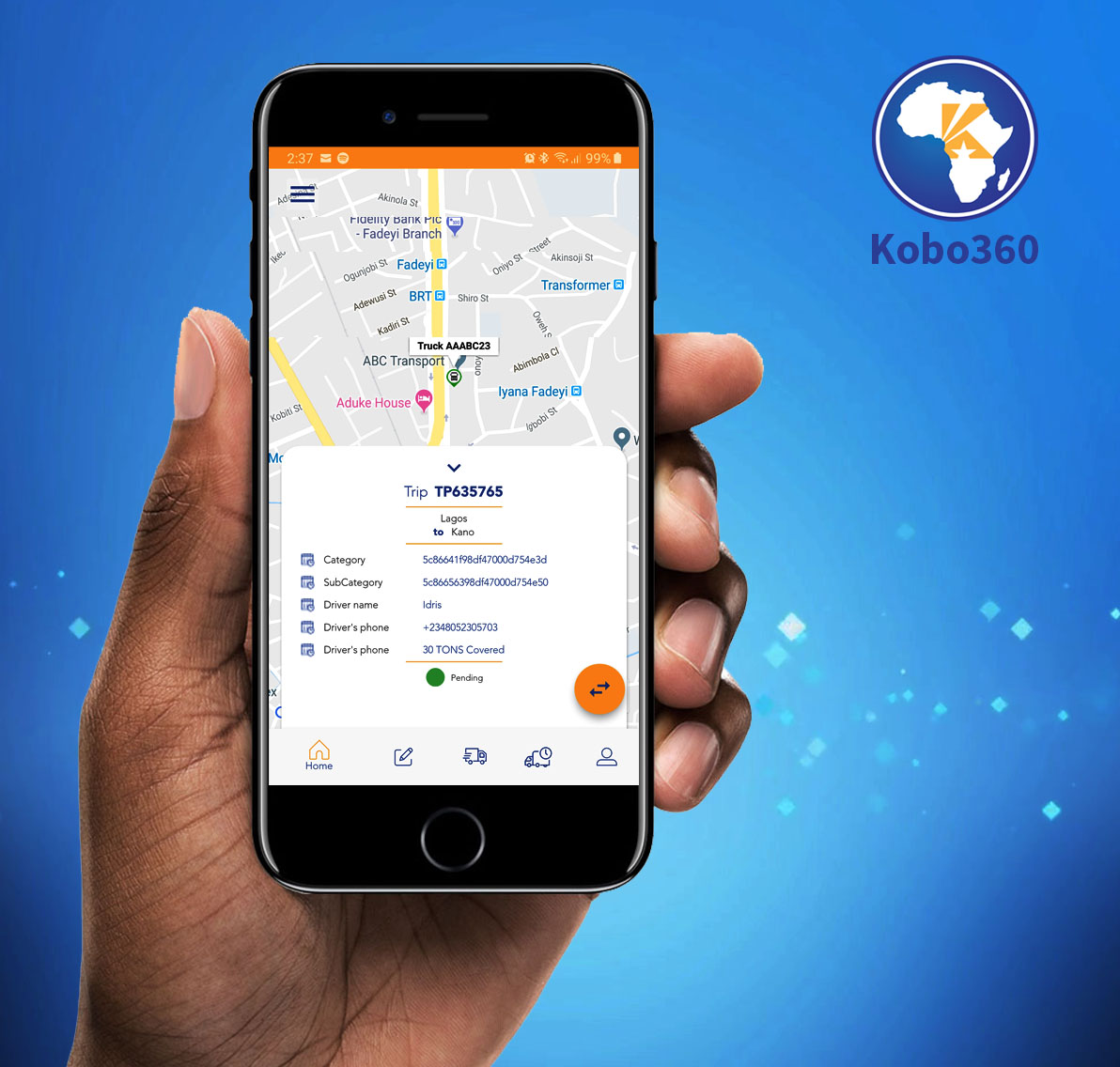
Kobo360, the African technology logistics platform, has launched a new app built to boost speed and efficiency in the transportation market. Developed to ensure transparency is at the core of the platform, with a suite of unique product features, the app has been in beta for three months, seeing over 1,800 downloads with over 10,000 drivers expected to migrate over to the new platform in the coming weeks.

Focused on simplifying processes between truck drivers, cargo owners and recipients, as well as bringing enhanced transparency to the bidding and procurement of trips, the app was unveiled at Kobo360’s launch event in Lagos and attended by key stakeholders and tech influencers in the Nigerian tech scene.

The Kobo app, an intelligent logistics application is available on Android for both drivers and customers, and includes the following innovative features;

First-of-its-kind bidding tools for drivers and customers to assess the price of a trip before selection – a unique product feature not found on any other transportation app in the world, not even Uber!
Digitised way bills with automated invoices after completed trips.

  • Real-time visibility on cargo and trucks as well as enhanced reporting and analytics.

  • A customised dashboard and multi-language functions to facilitate intra-African trade.

Kobo360 CEO Obi Ozor says: “The Kobo App has been built to make the business of doing business, easier, faster, more efficient for our customers. We partner with trusted shippers and carriers to handle their most important and immediate FTL freight needs and this app will wrap the entire process in secure, innovative and world-class technology this is not found anywhere else in the world.”

Tosin Adesipe Kobo360 Head of Tech adds: “Business on the continent is powered by mobile – especially logistics, where the cargo is literally on the move; our clients and drivers are too. We have spent months building and refining the Kobo App with the specific needs of our customers and drivers central to our design process. Our job is to ensure that they are able to execute their business requirements quickly, securely and on-budget. This new app, and the product features that we have developed, are the very best piece of apparatus to enable them to move cargo around the continent”.

The launch of the app is the latest in a line of recent successes for the company. Kobo360 were recently named “Disrupter of the Year” at the Africa CEO Forum awards, and have expanded into  Togo, Ghana and Kenya. To date, Kobo360 has moved over 260m KG of goods, serviced over 1,339 businesses and has aggregated a fleet of over 10,000.

The new app can be downloaded from the Google Play store.

Nigeria’s Mr. Biggs and Sweet Sensation Should Leverage AI to Offer Personalized Services

0

By  Nnamdi Odumody

Franchise quick service restaurant giant McDonald’s is acquiring AI-powered personalization platform, Dynamic Yield, for over $300million. Dynamic Yield will still operate as an independent entity, but its technology will be deployed in McDonald’s locations across the United States of America.

McDonald’s announced that it’s acquiring artificial intelligence- (AI) powered personalization platform Dynamic Yield for over $300 million, sources told Wired.

Dynamic Yield will continue to operate as its own company, but its technology is expected to be brought to 1,000 McDonald’s locations in the next three months, and all 14,000 US stores as well as its international restaurants over time, giving McDonald’s more ability to adapt and personalize its customer experience.

With this acquisition McDonald’s will be flexible on its menu presentation to drive sales and improve its customer experience by leveraging Dynamic Yield’s technology and data. McDonald’s will be able to utilize the customer data better, offering personalized services to the customers. The restaurants could eventually recognize license plates and consider purchase histories for a more personalized experience.

source: Businessinsider

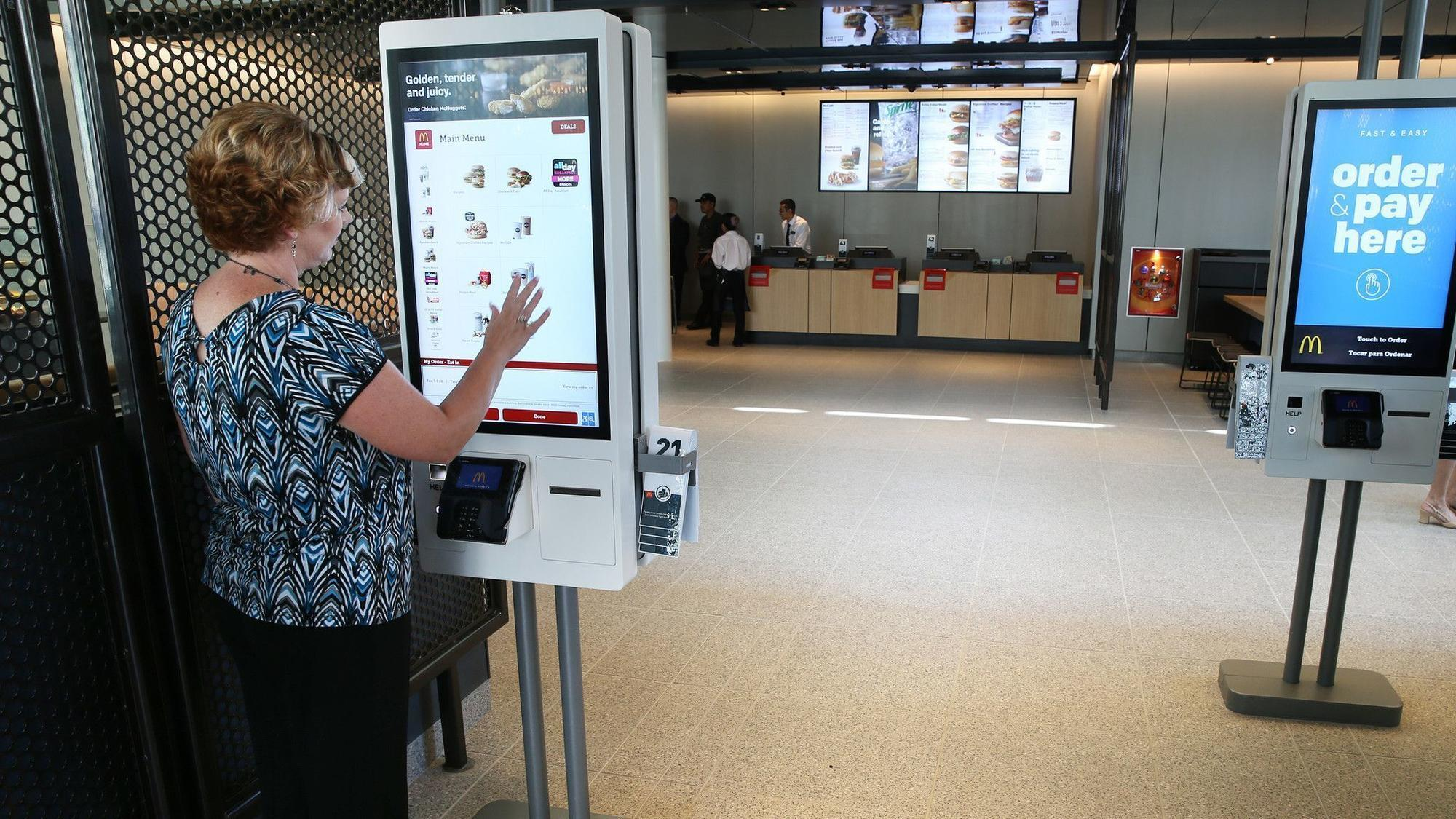
These insights will be deployed through the restaurant’s drive-thru menus and self-service kiosks. The digital interfaces will now change their product offerings, and how they present them will be based on data-driven insights. In a pilot test in Miami, the insights include making recommendations for products customers might want to add to their orders, while also displaying the popular items at a location.

A dynamic menu will also help McDonald’s optimize its operations. In the event that a drive-thru is moving slowly, the menu can highlight simple items to help get it’s processes back on track, and it can promote complex and expensive products when the drive thru is running smoothly.

Tastee Fried Chicken, Mr. Biggs and Sweet Sensation which are the leading quick service restaurants, in Nigeria, should leverage artificial intelligence to improve their customer experiences. Adopting AI can help them offer personalized meals to diabetics, vegetarians, and other customers who are abstaining from consumption of high calorie diets. By using data, which they might have collected from customers, they can optimally serve these customers and improve their businesses.

How Data is Enabling Personalization for Immersive Customer Experience

POS Failure Rate in Nigeria Increasing

0

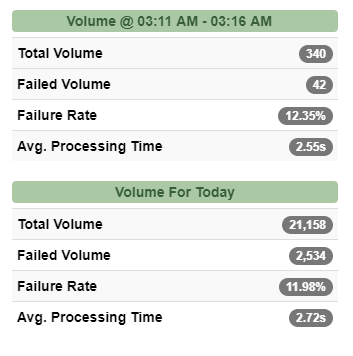
The POS (Point of Sale) failure rate in Nigeria remains high – double digit – and averaging 15% per day. We have also seen 25% failure rate during peak periods. The NIBSS POS Live data show a big concern: failure rate is still rising despite the promises. I do believe that most debit card users try to pay for things from unfunded accounts, returning failed transactions. Yet, the infrastructure challenges remain and could be contributing to the increasing failure rate. If merchants believe the thing is not working, they will just toss the terminals for cash – a big something to worry about. The regulators and NIBSS must get to work to fix this increasing failure rate.

Meanwhile, checks by our correspondent showed that PoS transactions recorded a high failure rate of 29.23 per cent as of 2.59pm on Monday, in which about 157,034 transactions have been declined.

Transactions on PoS terminals in the country have consistently recorded high failure rate above 15 per cent in the past one month.

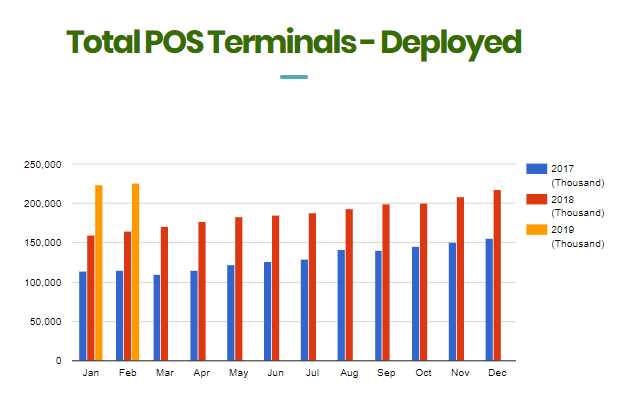
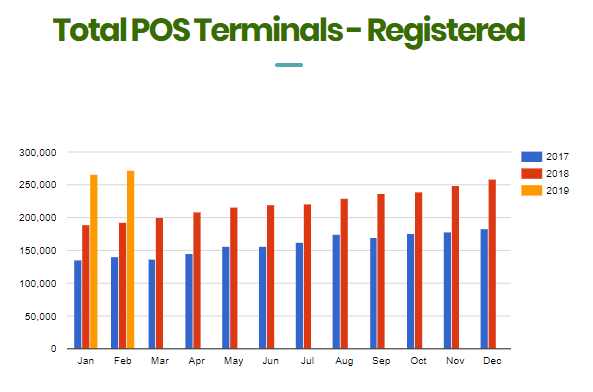
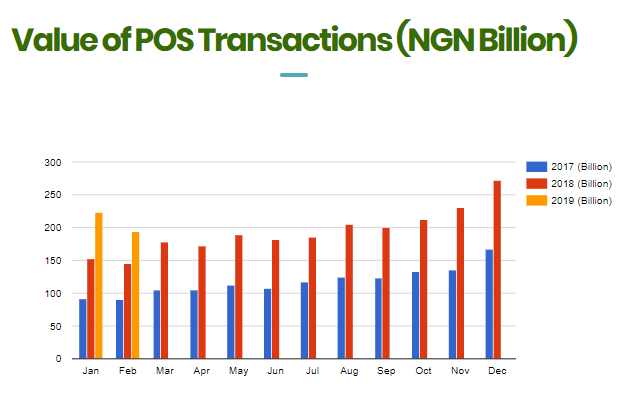
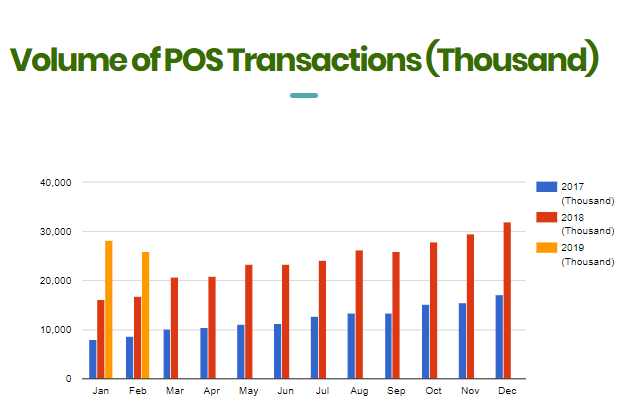
Meanwhile, POS is doing great on volume of transactions and total amount transacted.

Nigeria Needs Fingerprint-Based Debit Cards with Contactless POS Terminals

Linkedin Comment on Feed

“I do believe that most debit card users try to pay for things from unfunded accounts, returning failed transactions.” Is it that people just slot in the card and then close their eyes, hoping for miracle, even when they don’t have money in the account? This should be minimal among the issues. The POS technology has refused to be efficient here, just like many things else; whenever Nigeria gets involved, the level drops. Even websites from big organisations here still struggle with handling decent amount of traffic. We just need to have another good alternative technology to POS here, it’s obvious that the system is overwhelmed. QR code technology could provide an efficient and better alternative.