DD
MM
YYYY

PAGES

DD
MM
YYYY

spot_img

PAGES

Home Blog Page 6947

5G Technology Enables World’s First Remote Brain Surgery

0

By Nnamdi Odumody

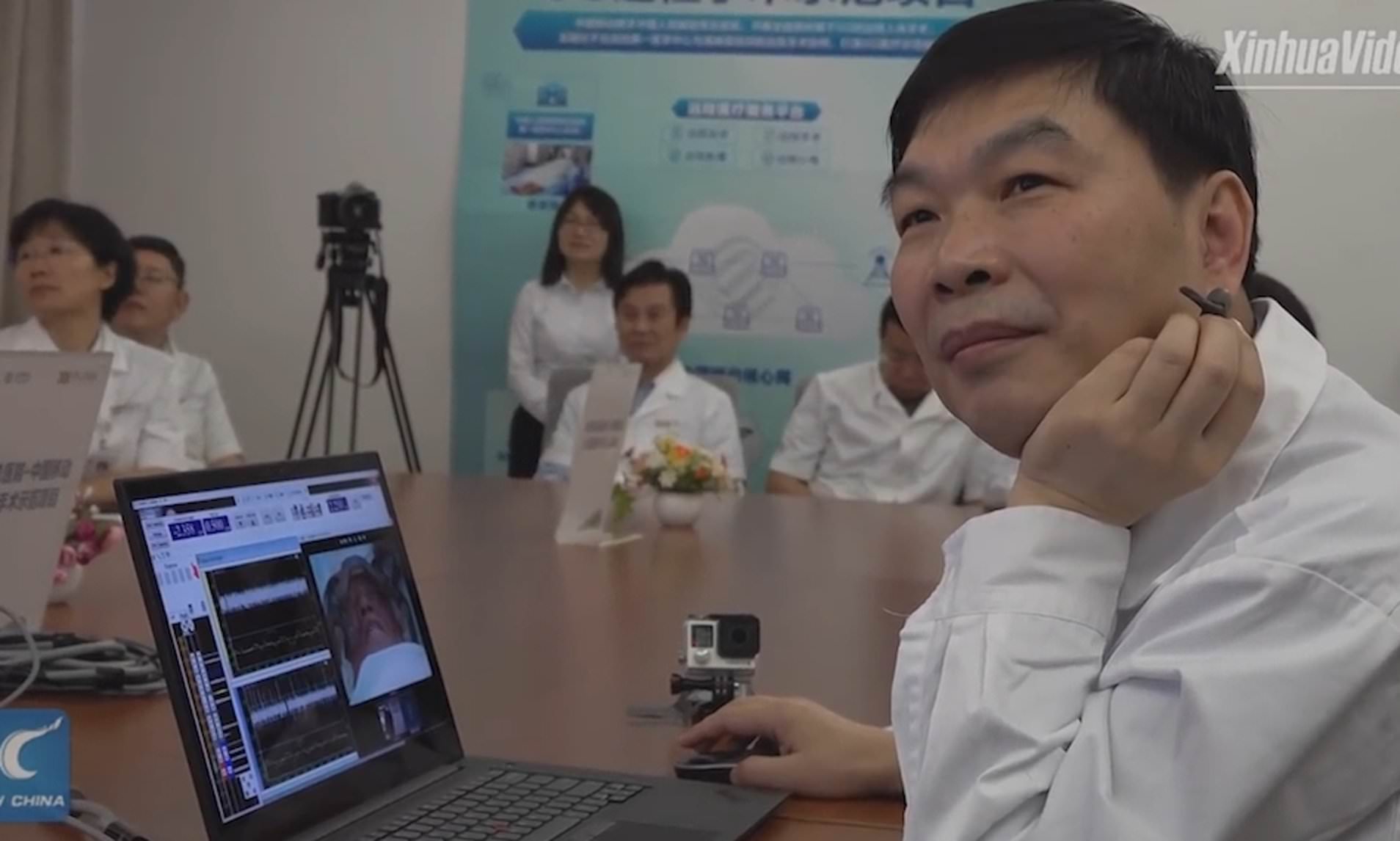
Dr Ling Zhipei, a surgeon at the People’s Liberation Army General Hospital, has performed the world’s first ever brain surgery over a 5G mobile network. Using surgical robots, he put a deep brain stimulation implant, a medical device, into a patient with Parkinson’s disease while he was at Sanya, on the island of Hainan, while his patient was in Beijing more than 1,800 miles (3,000km) away.

A Chinese surgeon has performed the world’s first remote brain surgery using 5G technology, with the patient 3,000km away from the operating doctor.
Dr. Ling Zhipei remotely implanted a neurostimulator into his patient’s brain on Saturday, Chinese state-run media reports. The surgeon manipulated the instruments in the Beijing-based PLAGH hospital from a clinic subsidiary on the southern Hainan island, located 3,000km away. The surgery is said to have lasted three hours and ended successfully. The patient, suffering from Parkinson’s disease, is said to be feeling well after the pioneering operation.
The doctor used a computer connected to the next-generation 5G network developed by Chinese tech giant Huawei. The new device enabled a near real-time connection, according to Dr. Ling. “You barely feel that the patient is 3,000 kilometers away,” he said.

According to him, the technology will make it easier for medics to operate on people who live in more remote areas and can’t travel. The operation was performed using surgical robots controlled by Dr Ling who connected to them through a 5G mobile network while he was working in Hainan. The procedure lasted for about three hours, and the patient was fine after the operation.

Deep Brain Stimulation (DBS) helps to control problems associated with movement, and is the main type of surgery used to treat Parkinson’s disease. It involves implanting very fine wires with electrodes at their tips into the brain. These are connected to extensions under the skin behind the ear and down the neck which then connect to a pulse generator. When the device is turned on, electrodes deliver high frequency stimulation to the targeted area which changes signals in the brain that causes Parkinson’s.

Dr Ling said that the 5G network has solved problems like video lag and remote control delay experienced under the 4G network ensuring a nearly real time operation.

The operation was performed with the help of China Mobile network and Huawei’s 5G technology. Also recently a liver surgery was recently carried out over 5G.

5G is enabling intelligent capabilities of the future of work, and healthcare is not left out.
What is 5G? All You Need To Know

Tekedia Webinar – I will be on Air at 2pm Lagos Time Today, Again

0

Good people, I will be on air at 2pm Lagos time today. After the Tekedia business webinar Q/A session yesterday, we have more questions for the Saturday session. So, I will be live at 2pm to provide insights and guidance on same. Login with your credentials on the link team had provided.

Dates: Friday March 22 2019 (repeat, Saturday March 23, 2019)
Venue: Online.
Webinar Theme: Winning in Nigeria (and Africa)
Register: There are two ways to register (you need to pay to value my time); please email tekedia@fasmicro.com after payment to set up your account.
  • Use Paypal and pay $15 here

  • Pay into any of the Nigerian bank accounts (N5,000) listed here.

Meanwhile, the recorded sessions for the five sessions covering Mission, Operating Frameworks/Models, Investment Options, Starting & Taking Action, and The Opportunities in Africa remain. As you go through them and you have questions, comment on the Comment section or email my team.

The recorded Q/A session of yesterday has deep insights also. Everything is recorded to simplify the stress of bandwidth and time availability – just use the same link to access all. Watch them.

See you on air at 2pm.

Entrepreneurial Governance as a Panacea to Sustainability of Nigerian States

0
The coat of arm of Nigeria

By Nnamdi Odumody

The Senate of the Federal Republic of Nigeria recently approved the sum of 30,000 naira as the national minimum wage. Over the past few months the Federal Government, States and the Organized Labour representatives have been involved in discussions with the Senate making a case of impossibility of meeting up with the sum. Considering rising inflation in Nigeria, the sum of N30,000 is nowhere near sustaining an average working citizen for a month. The Nigerian Labour Congress said that the Federal Government and States spend huge running costs which if slashed will make it possible for them to pay the demanded wages.

Nigeria runs a dependency system where all the 36 states and Federal Capital Territory, despite the numerous natural resources available in them, depend on monthly allocations from crude oil earnings. The federal government takes a large percentage while states take the rest.

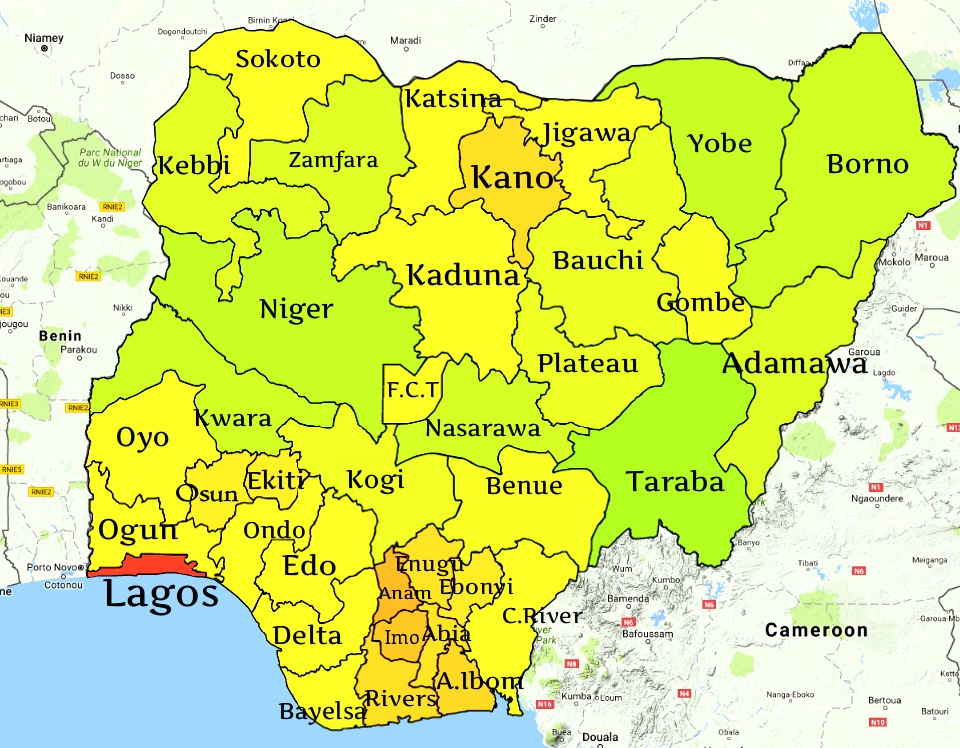
Abia State estimated Gross State Product was 838.89 billion naira or 0.74 percent of Nigeria’s GDP in 2017. Its agricultural output was 45.59 billion naira (0.19 percent of the country), crude oil output was 117 billion naira. Its Non Oil Industrial Output was 63.1 billion naira contributing 0.4 percent of the country’s non oil industry while its Manufacturing output was 43 billion naira.

Considering the fact that Abia State is home to Aba which is famed for being home to leather and garment manufacturers and other industries, due to absence of enabling infrastructure by previous and the current administrations, its potential and capacity hasn’t translated to prosperity for state government in terms of revenue generation.

Despite its abundant hydrocarbon deposits, there is no petroleum refinery, gas processing industry or petrochemical plant which will have aided its industrialization drive. Its Internally Generated Revenue was 18 billion naira- a paltry sum. Recurrent expenditure, at 31.1 billion naira, was more than capital expenditure, an enabler of unlocking its productivity, which stands at 16.9 billion naira. This made it impossible for the state to pay salaries, and was bailed out by the Paris Club package which the Federal Government gave states across the federation.

Nasarawa State had an estimated Gross State Product of 1.2 trillion naira. Its agricultural output was 962.8 billion naira in 2017, and earned 4.4 billion naira as Internally Generated Revenue. Considering the rich deposits of solid minerals in commercial quantity around the state, the state could have increased her earning capability if it had marketed the assets well. She too was a recipient of fund bailout by the FG to pay salaries of her workers.

States in Nigeria

Kano State, the Commercial and Industrial Hub of Northern Nigeria, had an estimated Gross State Product in 2017 of 4.26 trillion naira. Considering its rich human and natural resources, strategic location, it should do better in Internal Revenue Generation than it did with 22.2 billion naira generated. Her recurrent expenditure was 157 billion naira while Capital Expenditure was 9.8 billion naira an amount too low to make impact on her 13.4 million people.

Nigerian State Governors should adopt an entrepreneurial approach to governance by unlocking the potentials which abound in their states to create competitive economies which will grow the GDP of the Nigerian economy.

Pursue a first major win with vigor

0

Victory makes relations, enabling more victories: pursue a first major win with vigor. It could be a talk, an article, an exam, a trade, or whatever you find yourself doing. There is always a First for all legends who have built or transformed empires.


Digital Technologies for African Agriculture

0

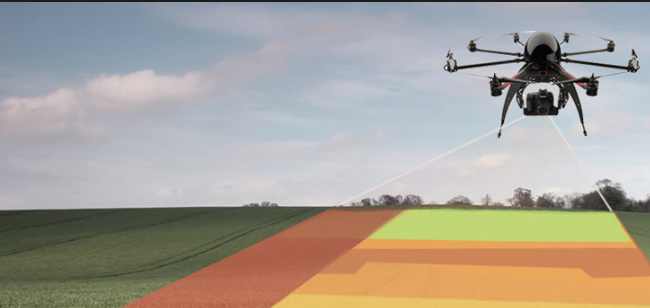
Digital technologies are tackling Africa’s food challenges including low farm productivity, high transaction costs, limited use of modern inputs, minimal levels of commercialization, climate change, and rural-urban migration. While digital tools have already proven to be effective elsewhere in the world, agricultural technology pioneers in Sub-Saharan Africa face roadblocks to scaling up, as the majority of the continent’s farmland is managed by smallholder farmers.

This is particularly evident in Nigeria where agriculture is the backbone of the economy, while its practice has remained unchanged over millennia. Digital agricultural technologies present an opportunity to leapfrog traditional technologies and redefine how food is produced, processed and marketed, disrupting the status quo across the Nigerian agricultural value chain.

A nation where more than 60% of the working population works in agriculture, and yet still farming mass poverty, in the communities of farmers, certainly needs a redesign. Nigeria must adopt emerging digital technologies to feed its growing population.

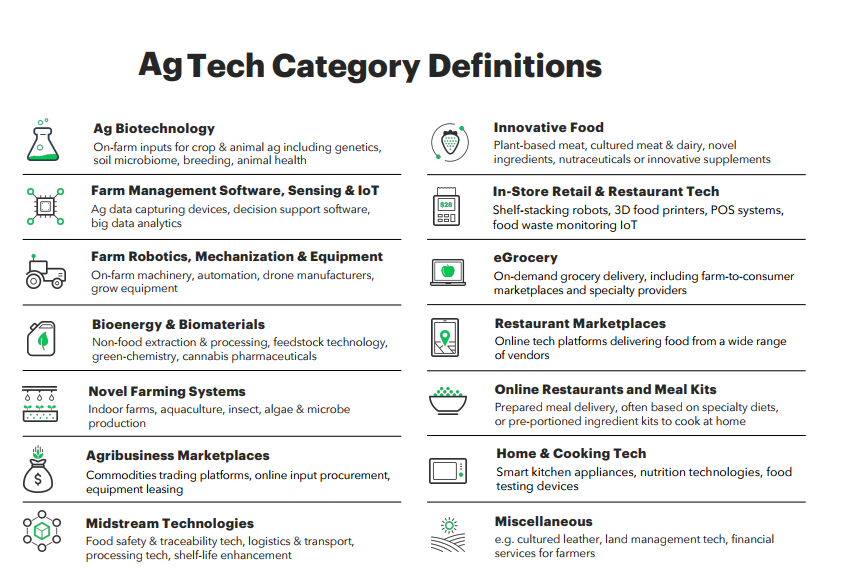
30 Agro and Agtech Venture Ideas – Execution and Commercialization (Videos & Text)

*Adapted from World Bank newsletter.