DD
MM
YYYY

PAGES

DD
MM
YYYY

spot_img

PAGES

Home Blog Page 6952

The Emerging Disruption of Cattle Industry

0

By Nnamdi  Odumody

Recently, Nigeria has turned into a theatre of bloodshed, as the survival of cattle reared by Fulani herdsmen in the predominantly Northern region has led to loss of lives. This paralysis is partly a result of the shrinking Lake Chad, in the Chad Basin Sahel Region, leading to herders migrating down to the fertile plateau of the Middle Belt and the coastal Southern Region. Also, rapid urbanization has led to the loss of previous grazing reserves that were mapped out by colonial administration for cattle farmers.

All over the world, countries that are economically dependent on cattle to an extent like Botswana, Uruguay and Argentina have adopted advanced technologies to boost cattle rearing. But in Nigeria, the reverse is the case here due to the fact that Fulani cattle farmers are not educated to utilize and adopt these methods which have transformed the  sector around the world.

But while we in Nigeria are still dependent on cattle, as our primary source of protein, the future of cattle is bleak, as environmentalists and food technologists concerned about climate change have created a paradigm shift, because if cattle were their own nation, they would be the world’s third largest greenhouse gas emitter. Beef uses 33 percent of all water for farm animal production which is not sustainable in a region threatened by desertification that has led to loss of arable land. Twenty five  percent of earth’s land area is pastureland while the demand for beef is projected to grow by 95 percent in 2050.

A company known as Memphis Meats develops technology to engineer real meat, without animals, by farming animal cells in a lab without the need to feed, breed and slaughter livestock. Its technology requires up to 90 percent less greenhouse gas emissions, land and water than conventionally produced meat.

Also in replacing cattle leather, Modern Meadow applies advances in tissue engineering to produce cultured leather that requires no animal slaughter and much lower inputs of land, water and chemicals than conventional methods. The process is called biofabrication. It uses living cells to grow collagen, the same natural protein found in animal skin, assemble it into a sheet of synthetic leather and finish the aesthetics with a tanning process.

Biofabrication (source: Lexology)

With the two examples above, it is evident that the demand for cattle, globally, will shrink in coming years due to environmental concerns as people are becoming more conscious of practices which are harmful to the environment causing carbon emissions.

The Miyetti Allah Kautal Hore group which is the umbrella body of all the Fulani herdsmen needs to study global developments which are aiding smart cattle rearing using advanced technologies like the Internet Of Things and Blockchain. They technologies help to notify farmers of changes in weather patterns which could affect their cattle from getting access to food and water as they move from one location to the other while tracking their cattle in real time, and responding to threats like cattle rustlers, etc. Government has a role to help these farmers to redesign their processes to ensure the endless killings stop in Nigeria.
Data as Differentiator for Effective Digital Transformation in Oil Industry

0

By Emmanuel Udeh

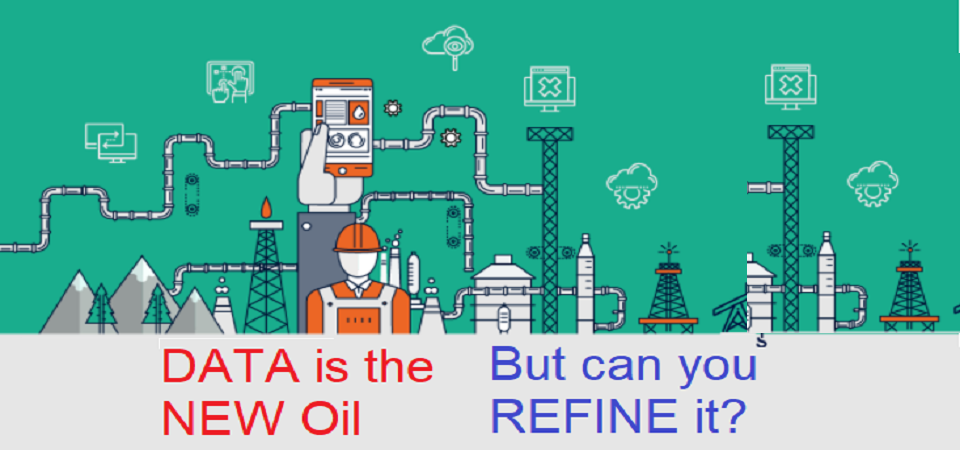
Digital transformation is a predominant trend impacting today’s global business. Historically, the Oil and Gas Industry has always been a leader in the application of technology to achieve business value. However, the implementation of digital solutions has been slow in the oil sector even though it has transformed other sectors like Banking, Healthcare and Sports.

With the decline in oil prices since 2014, the oil industry has aggressively pursued several measures to help the industry return to profitability. Oil and gas companies have started adopting digital solutions to gain operational efficiencies through improved use of technology. This is evident in the increased innovation and collaboration throughout the industry, which has created new revenue opportunities for both operators and service providers alike.

Digitalization has the potential to transform the upstream industry’s fortunes by substantially improving capital efficiency, lowering production costs, and reducing the time it takes to deliver new oil. To effectively capture the value of digitalization, the oil industry needs to look beyond embracing specific digital capabilities but implement a comprehensive roadmap towards digital transformation centered around people, processes, technology and of course data!

Digitalization and Digital Transformation

Digitalization, according to Gartner, Inc., is the process of employing digital technologies and information to transform business operations. Whether by optimizing production rates to improving ultimate recovery factors or by reducing equipment downtown through predictive analytics of data, the industry is already seeing examples of companies that are applying digital solutions in smart, innovative ways to transform and generate tremendous opportunities for their business.

One of this is Chevron’s seven-year strategic partnership with Microsoft. This digitalization initiative aims to leverage Microsoft’s powerful cloud computing and analytics to drive efficiency and streamline production operations.  Another  good example is Equinor’s use of a digital twin to  maximize production, cut costs and ensure safety on its massive Johan Sverdrup field which will account for 20 to 25 % of Equinor’s total offshore production in the plateau period.

To tap transformational benefits, upstream companies need to understand the current challenges they face, decide the potential impact of digitalization on their business and how best to benefit from it. Of course, digital technologies are nothing new to the oil industry. Technology has been used for several decades in our industry in automating and simplifying processes. Sophisticated sensors on drilling and facilities equipment are already standard tools, reservoir modeling and simulation software are used to analyze current and historical data to select the most economic method of developing a field.

Effective implementation of a strategic digital transformation program will help Oil and gas businesses re-align core business processes, which will integrate operations and analytics in a smart and simple approach to accelerate innovation, harness assets and drive real-time insights. This will, in turn, lead to lower costs, greater efficiency and increased collaboration between their partners, suppliers and customers.

A recent study by market research and analytics firm Kimberlite found that offshore oil and gas operators experience, on average, $49 million annually in financial impacts due to unplanned downtime. For the worst performers, the negative financial impact can be upwards of $88 million. The effective use of digital technologies in the oil and gas sector could reduce capital expenditures by up to 20% and cut upstream operating costs by 3-5%, according to a report by consulting group McKinsey

Impact of Data

Data is not just a key part of digital transformation. It remains a constant denominator across the entire process of achieving both specific and enterprise-wide digital transformation goals such as improving operations, innovating or realizing competitive advantages. Whether it’s used to optimize performance forecasts, enhance oil recovery, or implement predictive maintenance, data is required to make critical decisions which can help oil and gas businesses gain a competitive edge over their industry peers.

Just as organizational decision-making requires data, digital transformation needs digital and digitized data. However, Forbes estimates that 7 out of 8 digital transformation programs fail and that may be because they do not start with data. Most organizations begin their digital transformation journey without thinking about the data which is the lifeblood that connects systems, processes and technology. Whether it is workflows improvement, predictive analytics, asset integration and optimization, high-quality data is the critical defining factor for any successful digital transformation.

The oil industry generates and analyses data for numerous specific purposes, most times applications of digital technology on data have been directed in solving specific challenges or optimizing identified opportunities in specific parts of the business. A data centric approach towards digital transformation, which seeks to collect, integrate and utilize vast amount of data in a holistic manner is critical for oil companies to remain profitable and gain operational efficiencies through improved use of technology.

For the oil and gas industry to succeed in its digital transformation journey, it needs to start off by comprehensively defining a data driven roadmap towards digital transformation. This usually requires an in-depth understanding of their current position in the digital value chain, the associated technology critical in this journey and from there, map the data requirements that will potentially impact both internally and externally this organizational change process.

A revised approach that starts with data will ensure that digitization and digital transformation deliver the expected results and help companies streamline, automate and optimize business processes to become smarter, faster, and simpler!

New York Leaders Now Want Amazon HQ2, Begging To Pay The Conglomerate Tax

0

It happened: Amazon cancelled its plan to have HQ2 in New York. The politicians went out on Twitter, public statements, etc lambasting Amazon for its “greed”. Yes, how can you give tax breaks to one of the largest corporations in the world? How can you send dollars from working New Yorkers to ask a company managed by the richest man in the world to come? Why can’t Amazon just make New York home without the “additionals”?

Simple answer: Amazon is a conglomerate and conglomerates tax cities and nations. Yes, because of their accumulated capabilities and the fact they pursue business frictions at the upstream level, doing things few can do, they run the world and no one can write them off via tweets.

New York made a mistake by wasting Amazon time: 100 new startups cannot handle the problems Amazon can fix in New York, just as 1,000 startups, in Nigeria, cannot fix problems Dangote Group (think refinery) can fix in Nigeria. And because of that positioning, enabled by accumulated capabilities, conglomerates tax where they operate: yes, the Conglomerate Tax.

The good news is that New York leaders now want Amazon back and have gone public begging Jeff Bezos to come to New York, and “tax” the city, for the hope of transforming it. Here’s the open full letter, reproduced from The Times:

Dear Mr. Bezos:

New Yorkers do not want to give up on the 25,000 permanent jobs, 11,000 union construction and maintenance jobs, and $28 billion in new tax revenues that Amazon was prepared to bring to our state. A clear majority of New Yorkers support this project and were disappointed by your decision not to proceed. We understand that becoming home to the world’s industry leader in e-commerce, logistics and web services would be a tremendous boost for our state’s technology industry, which is our fastest growing generator of new jobs. As representatives of a wide range of government, business, labor and community interests, we urge you to reconsider, so that we can move forward together.

We know the public debate that followed the announcement of the Long Island City project was rough and not very welcoming. Opinions are strong in New York—sometimes strident. We consider it part of the New York charm! But when we commit to a project as important as this, we figure out how to get it done in a way that works for everyone.

Governor Cuomo will take personal responsibility for the project’s state approval and Mayor de Blasio will work together with the governor to manage the community development process, including the workforce development, public education and infrastructure investments that are necessary to ensure that the Amazon campus will be a tremendous benefit to residents and small businesses in the surrounding communities.

New York attracts the best, most diverse talent from across the globe. We are a dynamic new center of the country’s most inclusive tech economy. We all hope you reconsider and join us in building the exciting future of New York.

Dangote Conglomerate Taxes

The letter was signed by dozens of New York civic and business figures, including religious, education, union, political, and tech leaders.

Cuomo [the NY Governor] has directly spoken with Amazon executives, including Bezos, on multiple occasions over the past two weeks to try to get the company to reconsider, according to The Times.

Amazon has given no indication that it is reconsidering its New York HQ2 decision. Last month, Amazon’s head of policy communications, Jodi Seth, told NBC News that the decision was “pretty firm” and not open to renegotiation.


Lyft Lifts the Veil – Lost Nearly $1 Billion in 2018 at ARPR of $3.56

0

As ride-hailing company, Lyft (yes, the other Uber), begins the journey to the public bourse, we are now seeing its financials: they do not look extremely party-like. The company lost nearly $1 billion last year even as it racked up $2.2 billion, about twice the revenue number for 2017. And the big one – the ARPR (average revenue per ride) is $3.56.  Simply, I do not see how these business models can work in Africa where the profit gestation period is expected to be short; otherwise, the investors will give up. Lyft, from its prospectus, is even telling investors that it may not make money in the next 11 years!

So Lyft is speedy. But like its archrival Uber—which has disclosed performance data publicly ahead of its IPO filing—Lyft’s results are atrocious by any objective standards. Yes, it has proven it can grow. It racked up $2.2 billion in revenue last year, about double the year before. But Lyft lost nearly a billion dollars from operations in 2018. Its cash balance declined by $600 million. And while the number of rides it provides continues to tick up, its average revenue per ride is tiny: $3.56 in 2018.

Lyft makes a virtue of its focus. It only provides transportation, primarily through rides in cars but also through bikes and scooters. Revenue from the latter category wasn’t material last year, however. Lyft’s simpler business model will get chewed over by investors as they compare it to Uber’s. The rap on Uber is that the growth in its core business is anemic, while its hoped-for bright spots are its prepared-food delivery and freight forwarding businesses. Lyft has neither of these product lines.

[…]

In case any of this was a little confusing, let me break it down for you: Lyft is telling prospective investors it might not make money for 11 more years. (Fortune Newsletter)

Because of these loss-happy business models, I return to my old prediction that Uber and Lyft will merge in coming years. Yes, they will just give up after all these losses and decide to start generating income. Because the industry is so young and fragile, regulators will not mind: similar rivalries have ended together:: Elance/Odesk (now UpWork),  Groupon / LivingSocial,  Sirius / XM and  Rover / DogVacay.

Dealing with Long-Profit Gestation in Nigerian Startups

Ndubuisi Ekekwe on Live German TV Station Next Week; German Museum Exhibition of My Design Ends This Month

0

I will be live on Deutsche Welle or DW. DW is Germany’s public international broadcaster with services in 30 languages.

I will speak on Business in Africa on a TV program.

Date: March 14

Time: 5:45 p.m. CET. That is 4:45 p.m. UTC.

Meanwhile, the exhibition of my design in Germany will end this month at ZKM | Center for Art and Media Karlsruhe Germany. If you have not visited and want to see my works, you have the next three weeks to visit.

As always,  I thank the German Federal Cultural Foundation, German Federal Ministry for Economic Cooperation and Development, and the United States USAID for supporting some of my works. (And my beautiful Nigerian Government for subsidizing my undergraduate education in FUT, Owerri, Nigeria).

Exhibition of Ndubuisi Ekekwe Design Opens in a German Museum