DD
MM
YYYY

PAGES

DD
MM
YYYY

spot_img

PAGES

Home Blog Page 6956

Nigerian AR/VR Startups Imisi 3D and StanLab Go to Fix The Education Sector

0

By Nnamdi Odumody

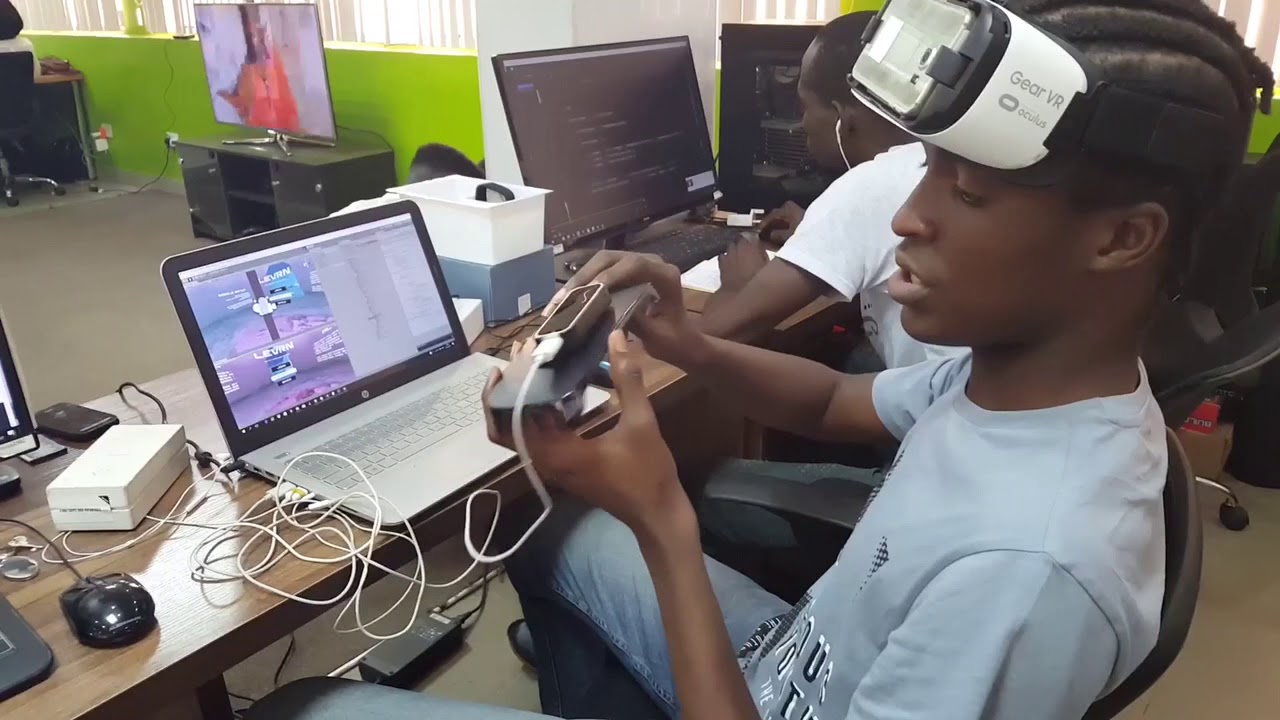
Judith Okonkwo through her startup Imisi 3D, an Extended Reality (XR) creation lab, is focused on building the XR ecosystem in Nigeria, and beyond. Imisi 3D is poised to grow a community of African AR|VR (Augmented Reality | Virtual Reality) creators, seed solution builders using AR|VR, and anchor educational and engagement experiences using AR|VR to learners and students.

We are an Extended Reality (AR/VR) creation lab dedicated to growing a community of AR/VR developers in Nigeria, creating solutions using AR/VR, and providing educational and engagement experiences with AR/VR. We see huge potential for AR/VR as a tool for creating everyday solutions and intend to change the technology narrative so that here we become creators and not just consumers of technology. We are future thinking and committed to being responsible ancestors, creating a better world for today and tomorrow.

The technology narrative of Nigeria has been one of consumption, and not creation, and with the advent of XR in the mass consumer space, an opportunity has been provided to change the narrative, and allow ownership of exponential technologies that allow innovators to define our future.

The educational sector in Nigeria is plagued with lack of access to quality education, crowded schools and out-of-school kids which is estimated at 13.2 million. The technologies and methods of yesterday have not solved these problems, and continuing deployment of these methods will lead to the same results of poor education attainment. Also, lack of funding in the sector, poorly trained teachers, and limited schools remain challenges.

Virtual Reality (VR) offers a promise to leapfrog these problems and offers the hope of more affordable, scalable and better quality education. VR delivers immersive experience on anything imaginable. If you can create VR content, you can create any world, or experience, and place your user in it.

Virtual reality (VR) is an interactive computer-generated experience taking place within a simulated environment. It incorporates mainly auditory and visual feedback, but may also allow other types of sensory feedback. This immersive environment can be similar to the real world or it can be fantastical.

Current VR technology most commonly uses virtual reality headsets or multi-projected environments, sometimes in combination with physical environments or props, to generate realistic images, sounds and other sensations that simulate a user’s physical presence in a virtual or imaginary environment. A person using virtual reality equipment is able to “look around” the artificial world, move around in it, and interact with virtual features or items. The effect is commonly created by VR headsets consisting of a head-mounted display with a small screen in front of the eyes, but can also be created through specially designed rooms with multiple large screens. Other forms of VR include augmented reality and mixed reality systems.

Imisi 3D aims to transform education with levrn3, an open source VR platform, for curriculum based learning modules, that supports both immersive classroom experiences for teachers and students. Its solution aims to provide quality education by designing educational modules that will enrich and deepen learning experiences. Levrn3 places a strong emphasis on designing its VR Content for education with users.

It is important to note that that there are other startups in the African continent using Extended Reality to transform education. Sisanda Technologies, a South African Edtech startup has developed SI Realities, a digital science laboratory leveraging Augmented and Virtual Reality for Grade 4 to Grade 12 learners, which will help scale up learning in the sciences – Physics, Chemistry and Biology.

Also, Job Oyebisi, a Nigerian who runs StanLab, a Virtual Science Lab, also wants to use VR to train Nigerian high school students on STEM subjects.

The immersive connectivity which is expected to happen around 2022 will ensure that these solutions reach the end users at scale, across Nigeria and the continent. We will continue to document how they impact education, a very critical sector for economic development and human wellbeing.
The Bishop TD Jakes’ Testimony – “I’m Igbo, we’re hardworking, industrious and self-sufficient people” [Video]

0

We love you Bishop TD Jakes. I recommend to President Buhari to sign your citizenship documents so that you can become our Ambassador to the United States! Nigerians are “hardworking, industrious and self sufficient people” – just wish someone can put same in all billboards in the beautiful America. Just imagine the shock to many in the audience when Bishop proclaimed to the world that he indeed is a Nigerian (yes, Nigerian Igbo)! Okeosisi, welcome home.

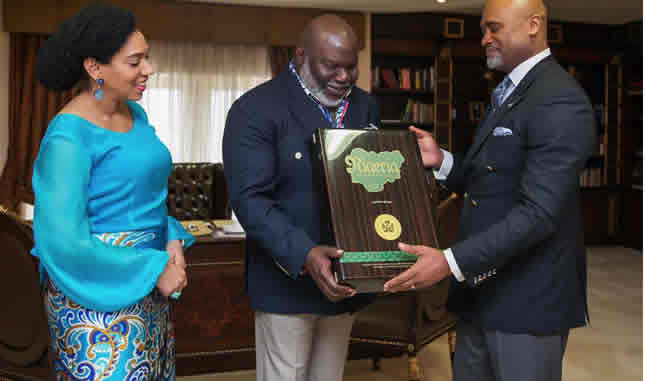
American pastor, author and filmmaker, Bishop Thomas Dexter Jakes, has reportedly traced his roots to Nigeria, where he has discovered that he is actually Igbo.

As posted on her Facebook wall on Friday, Mrs. Ifeanyi Adefarasin of the House on the Rock Church, notes that the bishop of The Potter’s House, a nondenominational American mega church, stepped on Nigerian soil for the first time this week.

In the past, I used to read Okike which Chinua Achebe edited many years ago. Legendary Prof FC Ogbalu, one of the finest scholars on Igbo language and others would descend at Ahiajoku lecture to discuss big stuffs. It was always a beauty to welcome Achebe into the hall. Between electronics in FUTO and Ahiajoku, I had always gone to listen to these men [school could wait!]. Achebe would speak in his own Igbo dialect while Ogbalu would remind all to use Igbo Izugbe (General Igbo) which he contributed extensively.

As a village boy that came to Owerri (Imo State Nigeria) for university education, I used to camp to listen to these legends during the Ahiajoku lecture, then most important academic gathering of Igbo scholars. Prof Chinua Achebe had edited Okike – the journal of creative writing. Reading Okike as a university student was liberating. These men did a lot of work, and there was intellectual rivalry on the harmonization of Igbo language. The scholars continued working until late 1980 when they ratified many things [it never stops, Igbo continues to advance]. Where they could not agree or find a decent local equivalent, they igbonized, spelling English word with Igbo characters.

Achebe was always supremely iconic in Ahiajoku. Ogbalu was eminent. You learn about Pita Nwanna – the author of Omenuko [the man that builds during scarcity]. Omenuko was one of the earliest works on Igbo that chronicled trading, documenting what frameworks which legends like Nnanna Kalu used to build empires in Aba and other cities. Mazi Kalu was the Aliko Dangote of his time, controlling most sectors in eastern Nigeria and beyond

Now, imagine inviting TD Jakes to come and give a lecture in Owerri, connecting the Jewish heritage and the Igbo nation. I promise you that a new Ahiajoku will be as popular as the Carnes Festival.

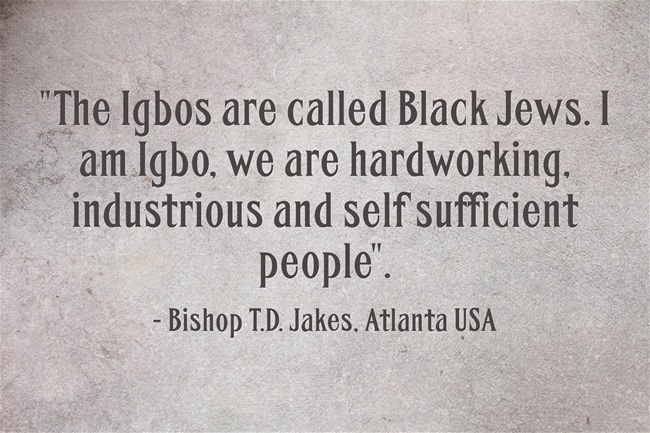
The video and the words from Bishop Jakes: “The Igbos are called Black Jews. I am Igbo, we are hardworking, industrious and self-sufficient people”

The Anniversary – Modern Igbo is 40

MTN Nigeria Makes History – Exceeds N1,000,000,000,000 Revenue

0

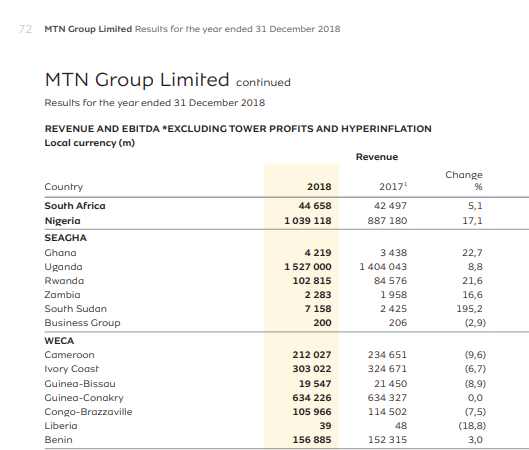
MTN Nigeria had a really great 2018: everything was up, from ARPU to revenue to subscribers. In short, they made history on revenue. From the 2018 full year investor presentation, the mobile giant recorded revenue of N1.03 trillion, the first by a Nigerian company in the broad consumer sector.  That revenue is a 17.1 percent year-on-year increase, from N887 billion in 2017, accounting for 28.2 percent of revenue made by MTN worldwide.

This revenue growth is owing to Data and Voice growth in the country. Data revenue went up 40.1 % from 2017 with data traffic increasing by 56.3%. Voice revenue also rose by 18.7%.

The telco also continues to show its dominance in the Nigerian telco space as it added another 5.9 million subscribers to round off 2018 with 58.1 million subscribers, indicating 11.3% increase from 52.2 million in 2017. This indicates that the telco controls 50.4% of the Nigerian telco market.

MTN Nigeria hence accounts for about 25% of the group’s 232 million subscribers. The highest of all its markets.

MTN Nigeria also recorded a total of 43.9 million data subscribers, an increase of about 4.5 million from the same time in 2017. The company also had an estimated 21.6 million smartphone users on its network.

MTN Unveils WhatsApp Competitor That Works Even Without Data

Awareness and Observation Win Markets

0

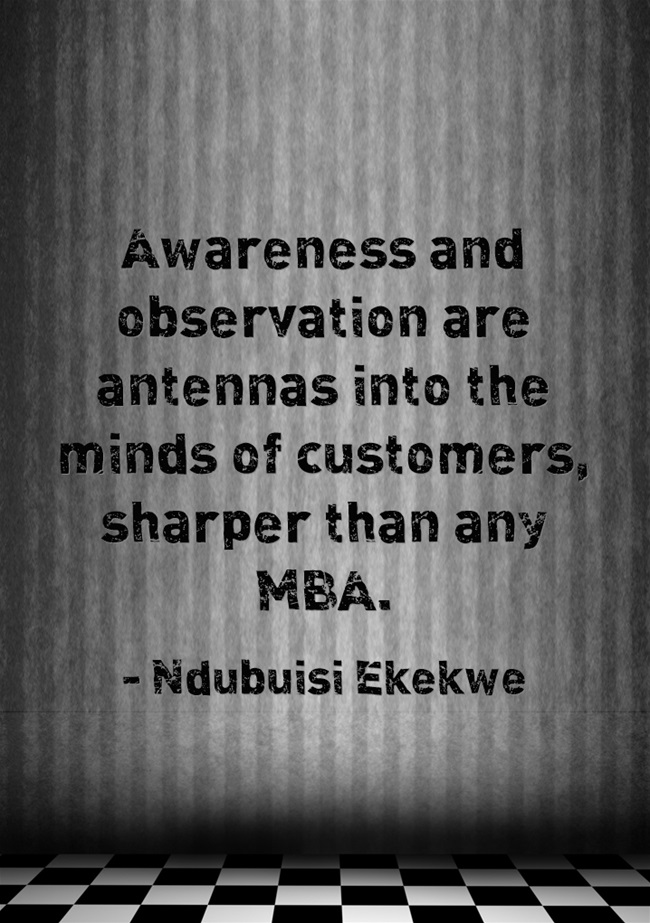
Awareness and observation are antennas into the minds of customers, sharper than any MBA. Some entrepreneurs have used both to make out of chewing stick an organic toothbrush.

To be a successful businessperson, you do not need to be as mathematical as Chike Obi or grammatical as Wole Soyinka. All you need is awareness and observation on market frictions, finding solutions to them, and rapping up in a matching story. If you can get those three in sync, you will experience glory.

Walmart Brands Chewing Stick As “Organic Toothbrush” Selling A Box $15