DD
MM
YYYY

PAGES

DD
MM
YYYY

spot_img

PAGES

Home Blog Page 6965

What Is Information Architecture? Providing Structure to the Digital World

0

We live in a digital era and understanding everything that is happening around us should be everyone’s priority before choosing a system on which they want to depend for today knowledge, data, service and production acquisition. This post helps you get started with your quest by, first of all, defining information architecture, and then breaking it down to what is involved. For a student in need of academic writing help, it is as simple as downloading an academic assignment via a writing App or logging onto a custom service platform to place a paper order. In the process, answers to questions like who can write me a thesis paper become easy to find.

However, that is not as far it goes. We are surrounded by information plethora, and everything we do in the 21st century will always have a strong link with seeking knowledge online, buying a product on web-based retail sites like Amazon or eBay, signing for government services via a web portal or connecting with friends on social networks.

Now, taking note of all these and many others, a little inquisitiveness should get you asking more questions like, who is behind seamless experiences we get on a website, mobile applications or when shopping online? What about security layers that keeps you safe online? Well, there are architectural practices that make all these possible, and in this case, it has everything to do with information experts such as IT project managers, back-end and front-end developers, computer scientists and data analysts. Keep reading to find out more.

Definition of information architecture

With the above prelude at the back of your mind, it is also important to understanding information architecture in definitive terms. Well, different publications may put it differently, but, a basic outlook has everything to do with designing a working and seamless product. Interconnectedness of various components of a complete IT infrastructure, therefore, plays significance.

If, for example, you are asked to design a website,  it is imperative to, first of all, craft a working plan that brings together a host of things such as database, preferred design template, algorithm, programming language, User experience (UX), User interface (UI) and others. With all the above taken care of, the next stage is a carefully planned process and meticulous t decision making. In a nutshell, there is no room for mistakes once you become part of a team working towards developing an information system.

A big team working together

Moreover, it is noteworthy that deployment of an IT infrastructure isn’t something you can realize working alone.  Unless you want things to fall apart midway, you shouldn’t risk such a path. Experts will tell you that it is like building a house. There is someone who comes up with a plan for construction, a plumber, and a mason and roofing specialist.

Now, given that information architecture makes it possible for everyone to access the digital world (Internet of things) via multiple tech gadgets such as smartphones, let’s look at a simple illustration such as developing a shopping App for smartphones.

The following are, therefore, key tasks and responsibilities that would yield forth a working platform/architectural design:

  • Designing steps buyers will take from the time they sign into a shopping application such as viewing different products, reading descriptions, adding items to cart to checkout. It is the responsibility of a professional information architect to make sure such a process is not only seamless, fast and convenient, but also gives buyers unmatched user experience.
  • Ensuring that the application works efficiently without lags. In this regard, technical aspects of a project are another task involved in designing and deployment of information architecture. Here, you must take into account user experience as well. For example, what sort of database will you find by clicking a button? Is everything in order so that whatever information you seek, it is always in the right place, and at the right time?
  • User interface design is another pivotal role undertaken by architects of information.  Think about a website, its navigation buttons, color themes, textual overlay and other elements that would make your visit worthy a good experience. In a nutshell, usability of an IT product is a pivotal aspect of information architecture you can’t afford to ignore.

Key skills for information architects

Thus far, it is clear that becoming a successful information architect is no mean feat. You need proper training on a whole range of things, including how to manage IT projects effectively. The following skills would, therefore, come in handy:

  • UX design and wire framing.
  • SLQ
  • Web development with an emphasis on JavaScript.
  • Data Modeling.
  • Mapping and analysis of business processes.

Final Words

In summary, information architecture is one of today’s indispensable career fields. Every business that runs its activities needs a working system. Specialties in this area also understand that that without having a proper plan for an agile project you want to execute through scrum. Thesisgeek.com can help you with the planning and mapping.

The Facebook’s 1,000,000 – Nigeria’s Immersive Connectivity in 2022

0

MainOne has announced a metro fiber infrastructure project in two states of Nigeria, with support from Facebook. The infrastructure collaboration is part of Facebook’s efforts to connect more people to broadband internet. As part of this project, MainOne is building and operating approximately 750 km terrestrial fiber infrastructure in Edo and Ogun States, two of Nigeria’s fastest growing states.

These open-access transport networks will provide metro fiber connectivity to reach more than 1,000,000 people in Benin City, Abeokuta, Sagamu and 10 other towns by connecting mobile operators’ base stations, Internet Service providers, Points of presence (POPs), and public locations including schools and hospitals. This partnership will leverage MainOne’s strength as a wholesale Telecoms Infrastructure service provider with investment from Facebook and support from local regulatory and state authorities to further deepen broadband penetration in Nigeria.

Speaking on the partnership, Ibrahima Ba, Network Investments Lead for Emerging Markets at Facebook, said: “We are working closely with MainOne and other partners to accelerate broadband deployment. In Nigeria, we are bringing together Facebook’s learnings from scaling our global infrastructure with MainOne’s knowledge of the local environment to develop and test new working models for multiple operators to access common infrastructure.”

Remember my prediction that by 2022 we will have immersive connectivity in Nigeria. This is going to be part of the equation. As providers like MTN battle satellite providers even as global ICT utilities like Google and Facebook enter the fray, customers would see significant drop in prices even as quality improves.

*APO newswire contents are copyright-free – so I used some parts verbatim.

President Buhari’s Victory Speech on 2019 Nigeria Presidential Election

0

President Muhammadu Buhari has delivered an acceptance speech for his victory in the polls. INEC had called the presidential election last night.

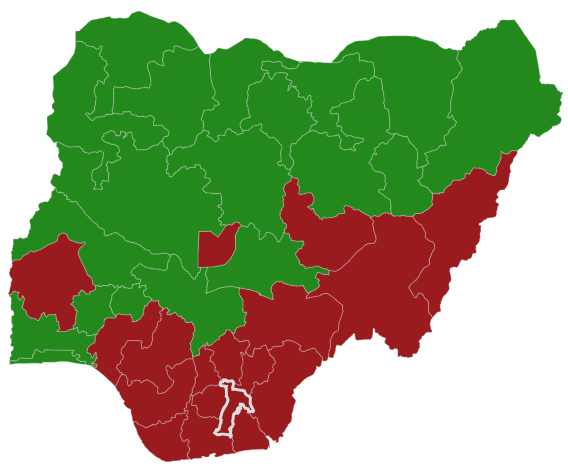
Nigerians voted on 23 February. President Muhammadu Buhari (APC) faced former Vice President Atiku Abubakar (PDP). APC won 19 states while PDP won 18. Also, APC won 15,191,847 votes while PDP picked 11,262,978 votes.

To be declared the winner, an aspirant must win a majority of votes cast, and at least 25% of the votes in 24 or more of the 36 states. Based on these numbers, President Buhari is projected to be re-elected.

The Full statement ….

My Dear Nigerians,

First and foremost, I give thanks to Almighty God Who has spared our lives to witness another victory for Nigerian democracy and victory for our party APC.

2. I thank the millions of Nigerians who voted to re-elect me as your president for the next four years. I am deeply humbled and profoundly grateful to you for judging me worthy of continuing to serve you and for your peaceful conduct.

3. In particular, I would like to thank Asiwaju Bola Tinubu for his masterful leadership as Co-chair of the Campaign Council. I would like to also thank the Party Chairman Adams Oshiomhole, the Director General of the Campaign Council Rotimi Amaechi, all members of the Presidential Campaign Council and other various Support Groups.

4. My grateful thanks to all those who contributed to the logistical expenses of the campaign in such a vast country like Nigeria.

5. I also thank the millions of volunteers, self-appointed overseers, canvassers, agents, escorts and sentries who sacrificed so much of their time and resources to ensure the success of these elections. I do not have the words adequate to thank them.

6. Although Saturday’s elections were relatively peaceful, troublemakers in a handful of states attempted to disrupt an otherwise orderly process. Security agencies will bring to justice all those arrested in the process.

7. I am very sad at the grievous loss of lives during these elections. Security agencies will step up their efforts to protect voters in the forthcoming State elections.

8. I would like to commend our security agencies, as severely overstretched as they are, for handling the difficult task of securing the country during the election period.

9. I will like to make a special appeal to my supporters not to gloat or humiliate the opposition. Victory is enough reward for your efforts.

10. We give thanks also to our Domestic and International observers for contributing to the success of our elections and for their interest in our country and our developing democracy.

11. The new Administration will intensify its efforts in Security, Restructuring the Economy and Fighting Corruption. We have laid down the foundation and we are committed to seeing matters to the end. We will strive to strengthen our unity and inclusiveness so that no section or group will feel left behind or left out.

12. I thank you for your support and may God bless the Federal Republic of Nigeria.

Final Results of Nigeria’s 2019 Presidential Election by States – APC (19), PDP (18)

Final Results of Nigeria’s 2019 Presidential Election by States – APC (19), PDP (18)

3

Nigerians voted on 23 February. President Muhammadu Buhari (APC) faced former Vice President Atiku Abubakar (PDP). APC won 19 states while PDP won 18. Also, APC won 15,191,847 votes while PDP picked 11,262,978 votes.

To be declared the winner, an aspirant must win a majority of votes cast, and at least 25% of the votes in 24 or more of the 36 states. Based on these numbers, President Buhari is projected to be re-elected.

Here are the results on graphics by state

Results for all states

APC PDP AAC YPP ANN
Abia 85,058 219,698 212 720 88
Adamawa 378,078 410,266 282 109 162
Akwa Ibom 175,429 395,832 222 118 95
Anambra 33,298 524,738 124 4,091 45
Bauchi 798,428 209,313 183 112 46
Bayelsa 118,821 197,933 126 50 37
Benue 347,668 356,817 309 557 201
Borno 836,496 71,788 269 78 29
Cross River 117,302 295,737 242 217 88
Delta 221,292 594,068 1,626 497 320
Ebonyi 90,726 258,573 205 192 683
Edo 267,842 275,691 3,106 531 273
Ekiti 219,231 154,032 400 68 88
Enugu 54,423 355,553 219 1,379 141
FCT 152,224 259,997 583 1,083 652
Gombe 402,961 138,484 165 39 78
Imo 140,463 334,923 467 676 119
Jigawa 794,738 289,895 226 67 66
Kaduna 993,445 649,612 243 196 261
Kano 1,464,768 391,593 416 200 114
Katsina 1,232,133 308,056 186 61 82
Kebbi 581,552 154,282 276 53 99
Kogi 285,894 218,207 250 87 89
Kwara 308,984 138,184 401 140 422
Lagos 580,825 448,015 8,910 5,733 6,946
Nasarawa 289,903 283,847 75 44 45
Niger 612,371 218,052 324 113 145
Ogun 281,762 194,655 3,196 553 1,509
Ondo 241,769 275,901 4,414 1,224 311
Osun 347,634 337,377 1,022 189 268
Oyo 365,229 366,690 4,014 1,608 1,896
Plateau 468,555 548,665 268 442 796
Rivers 150,710 473,971 372 415 365
Sokoto 490,333 361,604 181 84 124
Taraba 324,906 374,743 116 80 35
Yobe 497,914 50,763 137 36 37
Zamfara 438,682 125,423 186 44 24
Total: 15,191,847 11,262,978 33,953 21,886 16,779

LIVE UPDATE- Nigeria 2019 General Election Results – President, Senate, House of Representatives


How Data is Enabling Personalization for Immersive Customer Experience

0

By Nnamdi Odumody

Data has been fondly described as the new oil. The organizations which will reap the new oil fields are those which are data-driven, utilizing the vast amounts of data from customers to offer them personalized experiences to suit their unique tastes. From banking to e-commerce and indeed across other sectors like healthcare and entertainment, different organizations across the globe are utilizing big data to create the customer experiences of the future. Below are few examples.

Stitch Fix, an online subscription shopping service, uses images from social media and other sources to track emerging fashion trends and evolving customer experiences. Its process begins with clients answering a detailed questionnaire about their tastes in clothing, and with client permission, the company’s team of data scientists augment that information by scanning images on customers Pinterest boards and other social media sites, analyzing them, and using the resulting insights to develop a deeper understanding of style. Company stylists and algorithms use these profiles to select appropriate items of clothing to be shipped to individual customers at regular intervals.

Pear Deck allows teachers to share interactive slide decks with their students in real time, while enabling students to indicate to teachers when they are having trouble so that the teachers can adjust, creating personalized learning outcomes. Kickboard makes it easy for schools to understand and benefit from the data they collect. The platform helps teachers look at their classes as a whole and track their students across classes to see the big picture.

Capital One Bank mines customers’ data on its platform to select the best financial products that will suit them. Amazon has patented an AI to anticipate what shoppers want and ship it to their location of choice before they even realize they need it. Shoppers will receive the goods they want or need without having to take time to schedule and order themselves. Through predictive modeling, the technology allows for the most cost efficient delivery of goods, capturing incremental sales and revenues.

Habit, a personalized nutrition startup provides consumers with personalized food recommendations tailored to their unique DNAs. Consumers collect bio samples and send them to a processing facility. Habit uses the data to provide biology reports and a personalized eating plan through a mobile app. It also provides one on one nutrition coaching.

For Nigerian and African businesses to play and win in this new area, utilizing the vast amounts of data they have of their customers to deliver personalized experiences for them, is the only way for success or else they will lose out.