DD
MM
YYYY

PAGES

DD
MM
YYYY

spot_img

PAGES

Home Blog Page 7

LayerZero and Keeta Network Bring Tokenized Bank Deposits to Solana

0

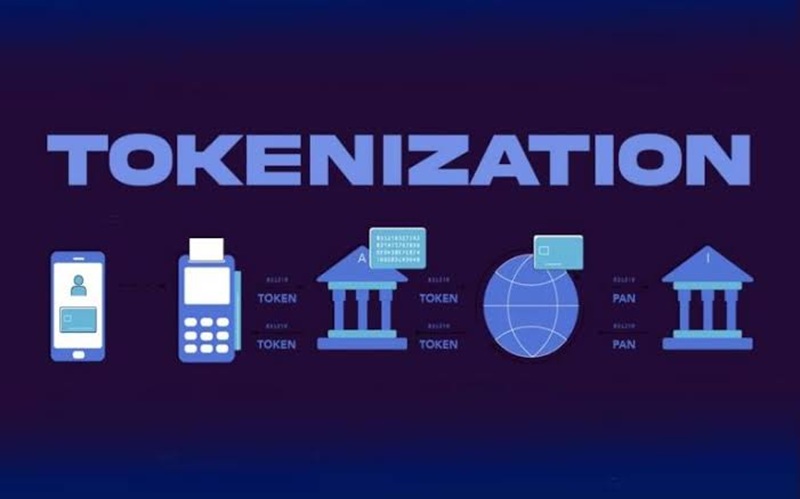
LayerZero and Keeta Network have expanded the scope of real-world assets on Solana by introducing tokenized bank deposits, a development that could significantly reshape how traditional finance interacts with blockchain technology.

Rather than relying solely on stablecoins as digital representations of fiat currency, tokenized bank deposits allow actual commercial bank liabilities to move across blockchain networks while remaining linked to regulated banking infrastructure.

This advancement represents another major step in bridging decentralized finance (DeFi) with the global banking system.

The collaboration combines the strengths of LayerZero, a leading omnichain interoperability protocol, and Keeta Network, a blockchain focused on high-speed financial settlement and real-world asset tokenization.

They enable regulated financial institutions to issue tokenized deposits that can be transferred onto the Solana blockchain, where they can be used for payments, settlement, lending, and other financial applications.

Unlike traditional stablecoins, which are typically backed by reserves held by issuers, tokenized bank deposits are direct digital representations of deposits held within regulated banks.

This distinction is important because tokenized deposits remain integrated with existing banking systems while benefiting from blockchain’s speed, transparency, and programmability. For institutional users, this creates a familiar financial product with significantly improved settlement efficiency.

LayerZero’s interoperability infrastructure plays a central role in this integration. The protocol enables secure communication between multiple blockchain networks, allowing tokenized deposits to move seamlessly across ecosystems without fragmenting liquidity.

Financial institutions can therefore issue assets that are not confined to a single blockchain but instead remain accessible wherever demand exists.

Keeta Network contributes the banking-focused infrastructure required to connect traditional financial institutions with decentralized networks.

Its technology is designed to support compliance requirements such as identity verification, transaction monitoring, and regulatory reporting while preserving the speed and efficiency expected from blockchain-based transactions.

This combination of compliance and interoperability makes the solution particularly attractive to banks exploring digital asset adoption. For Solana, the launch further strengthens its position as one of the leading blockchains for institutional finance.

The network’s high throughput, low transaction costs, and fast finality make it well suited for handling payment systems and tokenized financial products at scale. As more regulated assets migrate on-chain, Solana continues to establish itself as an infrastructure layer capable of supporting both retail and enterprise-grade financial activity.

The introduction of tokenized bank deposits also reflects a broader trend toward tokenizing real-world financial instruments.

Governments, asset managers, and financial institutions worldwide are increasingly experimenting with tokenized treasury securities, money market funds, private credit, and other traditional assets.

Bank deposits represent another major category moving onto blockchain, expanding the range of financial products available within decentralized ecosystems. Institutional adoption could accelerate as tokenized deposits reduce settlement times from days to seconds while lowering operational costs.

Cross-border payments, corporate treasury management, and wholesale financial settlements are among the areas likely to benefit most. Businesses could transfer value globally around the clock without relying on legacy payment rails that operate only during banking hours.

For the broader blockchain industry, the partnership signals continued convergence between traditional finance and decentralized infrastructure. Rather than replacing banks, blockchain is increasingly being used to modernize existing financial systems by improving efficiency, transparency, and interoperability.

As regulatory frameworks mature, collaborations like the one between LayerZero and Keeta Network may become increasingly common, bringing more institutional capital and financial products onto public blockchains.

The arrival of tokenized bank deposits on Solana therefore represents not just another blockchain integration, but a meaningful milestone in the ongoing transformation of global finance through tokenization and interoperable digital infrastructure.


Nigeria Capital Market Masterclass Opens Registrations for Oct 2026 edition

0

Tekedia Nigeria Capital Market Masterclass is a practitioner-led, intensive program designed to deepen the human capabilities needed to power Nigeria’s modern capital market. The Masterclass blends applied knowledge, real-market processes, regulatory frameworks, technology infrastructure, and hands-on case studies covering the entire capital market value chain.

The program will run for 8 weeks, with assignments, simulations, and industry projects. Some participants who complete the program successfully will be provided internship opportunities within capital-market institutions in Nigeria. Our goal is for any person irrespective of location to understand how the capital market works.

Minimum entry requirement: Secondary school education.

Program Date: Oct 5 – Nov 28, 2026

Location and Mode of Delivery: program is completely online, no physical component. It includes 8 weekends of LIVE Zoom sessions by experienced faculty on 8 Saturdays lasting two hours each. The program ssyllabus is below:

Module 1: Introduction to Nigeria’s Capital Market – Foundations & Architecture

Module 2: SEC Nigeria – Registration, Regulations & Market Oversight


Module 3: Market Operators – Roles, Responsibilities & Interdependencies

Module 4: Capital-Raising Instruments – IPOs, Bonds, Commercial Papers & Private Markets


Module 5: Listing Processes, Documentation & Regulatory Compliance

Module 6: Capital-Market Operations – Trading, Settlement & Surveillance


Project 1: A project with relevance in the Nigerian capital market will be assigned for the week.


Module 7: Derivatives, Structured Products & Hedging Instruments

Module 8: Technology & Financial Market Infrastructure (FMI)


Module 9: Digital Assets, Tokenization & ISA 2025 Framework

Module 10: Compliance, Risk Management & Ethics in Capital Markets


Module 11: Careers, Business Opportunities & Promising Regulated Sole Proprietorships

Module 12: Business Development, Market Strategy & Capital-Market Innovation

Project 2: Program Capstone

Contisx Securities Exchange Plc, an upcoming securities exchange in Nigeria, is partnering on this program, and will provide remote internship opportunities.

To learn more, visit Tekedia Institute and register 

Mubadala Capital Launches Alternative Solutions Fund on Solana as Tryramp Introduces 24/7 Stablecoin Payments

0

The Solana ecosystem continues to attract major institutional and financial infrastructure providers, with two significant developments highlighting the network’s growing role in global finance.

Mubadala Capital’s Alternative Solutions Fund has gone live on Solana through KAIO, while Tryramp has introduced 24/7 stablecoin accounts and payment services that settle directly on the blockchain.

These milestones demonstrate how Solana is evolving beyond a cryptocurrency network into a foundation for institutional investing and always-on digital payments.

Mubadala Capital, the asset management arm of Abu Dhabi’s sovereign wealth ecosystem, bringing its Alternative Solutions Fund to Solana via KAIO represents another step in the tokenization of real-world assets (RWAs).

By making investment products accessible on a public blockchain, institutional funds can potentially benefit from faster settlement, enhanced transparency, and broader accessibility.

Rather than relying solely on traditional financial rails that often involve multiple intermediaries and limited operating hours, tokenized fund structures can leverage blockchain technology to streamline ownership records and improve operational efficiency.

KAIO’s infrastructure enables institutional-grade financial products to exist on-chain while maintaining compliance and professional asset management standards. This reflects a broader industry trend in which leading investment firms are exploring blockchain technology to modernize capital markets.

As regulatory frameworks around digital assets continue to mature, tokenized investment funds are increasingly viewed as a bridge between conventional finance and decentralized infrastructure.

Tryramp’s launch of 24/7 stablecoin accounts and payment services on Solana addresses one of the longstanding limitations of traditional banking: restricted operating hours.

Conventional financial systems generally pause settlements during weekends, holidays, and after business hours. Blockchain networks, however, operate continuously, allowing transactions to be processed at any time of the day.

With stablecoin accounts settling on Solana, businesses and individuals gain access to near-instant transfers without waiting for banking windows to reopen. This capability is particularly valuable for international commerce, payroll, remittances, and treasury management, where delays can create unnecessary costs and liquidity constraints.

Stablecoins have already become one of the fastest-growing sectors in digital finance, and infrastructure providers like Tryramp are building practical tools that integrate these digital dollars into everyday financial operations.

The choice of Solana is also significant. The blockchain has established itself as one of the industry’s highest-performance networks, offering low transaction costs, rapid settlement, and high throughput.

These characteristics make it attractive for applications requiring frequent transactions, including payments, tokenized securities, and institutional financial products. As more enterprises seek scalable blockchain infrastructure, Solana continues to position itself as a preferred destination for real-world financial applications.

These announcements also reinforce a larger trend unfolding across global finance. Rather than viewing blockchain solely as a speculative technology, institutions are increasingly using it as financial infrastructure.

Tokenized funds, stablecoin payments, and on-chain settlement systems are gradually becoming practical services with measurable efficiency gains. Financial firms are recognizing that blockchain can reduce friction, improve transparency, and enable new business models that were difficult to implement within legacy systems.

For the broader digital asset industry, the participation of established institutions such as Mubadala Capital and the expansion of payment services through companies like Tryramp add credibility to blockchain adoption.

Each successful deployment demonstrates that public blockchain networks can support enterprise-grade financial operations while serving users across different jurisdictions.

These developments illustrate how Solana’s ecosystem is expanding beyond decentralized finance into mainstream financial services. As tokenized investment products and always-on payment solutions continue to gain traction, the network is strengthening its position as a key layer for the future of digital finance.

If this momentum continues, Solana could play an increasingly important role in connecting traditional capital markets with the next generation of blockchain-powered financial infrastructure.

Tokenized Intel Stock Marks New Era for Blockchain-Based Equity Investing

0

Intel’s tokenized stock ($INTC) has officially gone live through Backpack Securities and Sunrise, marking another significant step in the convergence of traditional finance and blockchain technology.

At the same time, JTX has opened its unified trading platform to the public, allowing users to trade major cryptocurrencies, meme coins, and real-world assets (RWAs) from a single interface.

These developments highlight how tokenization and integrated trading infrastructure are reshaping global financial markets by making investments more accessible, efficient, and interoperable.

The launch of tokenized Intel shares demonstrates the growing demand for blockchain-based representations of publicly traded equities.

Tokenized stocks mirror the value of traditional shares while existing on blockchain networks, enabling faster settlement, greater transparency, and potentially round-the-clock trading.

Instead of relying solely on conventional stock exchanges that operate during fixed market hours, investors can access tokenized assets through digital asset platforms, creating a bridge between traditional capital markets and decentralized finance.

Backpack Securities and Sunrise are positioning themselves at the forefront of this transformation. By offering tokenized Intel shares, they provide investors with exposure to one of the world’s most recognized semiconductor companies while leveraging blockchain infrastructure for ownership records and settlement.

As demand for tokenized securities grows, more publicly traded companies may become available in digital form, expanding investment opportunities for both retail and institutional participants.

The timing is also significant. Interest in real-world asset tokenization has accelerated over the past two years as financial institutions increasingly recognize blockchain’s ability to modernize legacy financial systems.

Tokenized stocks, bonds, treasury products, and private credit instruments are becoming key pillars of the emerging on-chain economy. Analysts believe that tokenization could eventually unlock trillions of dollars in value by improving liquidity and reducing operational inefficiencies across financial markets.

Meanwhile, JTX’s decision to open its unified trading surface to all users represents another milestone in simplifying digital asset investing. Traditionally, traders have needed separate platforms to access blue-chip cryptocurrencies, speculative meme coins, and tokenized real-world assets.

This fragmentation creates unnecessary complexity, requiring users to move capital between exchanges and wallets while navigating different interfaces. By integrating majors, meme tokens, and RWAs into a single trading environment, JTX aims to deliver a more seamless user experience.

Traders can diversify their portfolios without switching platforms, making it easier to respond to rapidly changing market conditions. Unified trading also improves capital efficiency by allowing users to manage multiple asset classes under one account while benefiting from consolidated liquidity and streamlined execution.

The inclusion of real-world assets alongside cryptocurrencies also reflects the industry’s changing priorities. While speculative tokens continue to attract significant attention, investors are increasingly looking for blockchain-based assets tied to tangible economic value.

Tokenized equities like Intel, government securities, commodities, and private credit instruments are helping broaden the appeal of digital assets beyond purely crypto-native participants.

These two announcements also reinforce a broader trend toward financial convergence.

The boundaries separating traditional finance, decentralized finance, and centralized crypto exchanges are becoming increasingly blurred. Financial platforms are evolving into comprehensive ecosystems where users can access stocks, cryptocurrencies, stablecoins, tokenized assets, and DeFi services without leaving a single application.

Tokenized equities and unified trading platforms are expected to play a central role in the next phase of digital finance. As regulatory clarity improves and institutional adoption continues to expand, more global companies could see their shares represented on blockchain networks.

At the same time, integrated trading platforms like JTX may become the standard gateway for accessing a wide spectrum of financial assets. These innovations signal that the future of investing will be increasingly digital, interoperable, and accessible to a global audience.

Porsche Faces Tough Road Ahead with 5,000 Additional Job Cuts in Stuttgart, as Audi Cuts Annual Outlook

0

German luxury sports car manufacturer Porsche has announced another significant round of job cuts, revealing plans to eliminate an additional 5,000 positions in the Stuttgart region as the company grapples with mounting economic and industry pressures.

The latest reduction comes as Europe’s automotive sector faces slowing demand, rising production costs, and the rapid transition toward electric vehicles, forcing even premium brands to rethink their long-term strategies.

Porsche has long been regarded as one of Germany’s most successful automakers, renowned for producing high-performance sports cars and luxury SUVs that command strong global demand.

However, the company has not been immune to the challenges reshaping the global automotive industry.

Weak consumer spending in key markets, increased competition from Chinese electric vehicle manufacturers, and uncertainty surrounding international trade have all placed pressure on profitability.

The additional 5,000 job cuts are expected to affect employees primarily in the Stuttgart region, where Porsche’s headquarters and major production facilities are located.

While the company has emphasized that it remains committed to Germany as its manufacturing base, executives argue that restructuring has become necessary to ensure long-term competitiveness. The workforce reduction follows earlier cost-cutting measures and reflects a broader effort to streamline operations while investing heavily in future technologies.

One of the key drivers behind Porsche’s restructuring is the costly transition to electrification. Governments across Europe continue to tighten emissions regulations, requiring automakers to accelerate investments in battery-powered vehicles.

Developing new electric platforms, battery technology, and advanced software requires billions of dollars in research and development. Sales of electric vehicles have softened in several markets, creating a difficult balance between investment and profitability.

China, once Porsche’s fastest-growing market, has also become a major source of concern.

Sales have weakened as domestic Chinese brands introduce increasingly competitive premium electric vehicles at lower prices. Companies such as BYD, NIO, and Xiaomi have rapidly gained market share by offering advanced technology, attractive pricing, and strong local brand recognition.

This shift has reduced demand for imported luxury vehicles, including Porsche models The job reductions also reflect wider challenges facing Germany’s industrial sector.

Rising energy prices, inflation, and persistent supply chain disruptions have increased manufacturing costs across the country. Many German manufacturers have responded by reducing production, delaying investment, or cutting jobs to preserve financial stability.

Industry analysts warn that the country’s automotive sector is undergoing one of its most significant transformations in decades.

Despite the layoffs, Porsche continues to invest in innovation.

The company remains committed to expanding its electric vehicle lineup while improving battery efficiency, digital services, and autonomous driving capabilities.

It also plans to maintain its reputation for premium engineering by balancing traditional combustion-engine models with next-generation electric performance vehicles. Executives believe these investments will strengthen Porsche’s competitive position over the long term despite the short-term financial strain.

For employees and the Stuttgart community, however, the announcement represents another difficult chapter. Thousands of families will be directly affected, while suppliers and local businesses could also experience reduced economic activity.

Labor unions are expected to push for negotiations aimed at minimizing compulsory redundancies through voluntary retirement programs, retraining opportunities, and internal transfers where possible.

Porsche’s decision underscores the profound transformation taking place across the global automotive industry. As manufacturers race toward electrification while navigating economic uncertainty and intensifying competition, even iconic luxury brands are being forced to make difficult choices.

The latest job cuts highlight that maintaining long-term competitiveness increasingly requires painful restructuring, significant technological investment, and a willingness to adapt to an industry undergoing historic change.

Audi Cuts Annual Outlook as Global Headwinds Pressure Performance

Audi has lowered its financial outlook for the year, citing weakening demand in China and rising geopolitical uncertainty in the Middle East.

The announcement underscores the growing challenges facing global car manufacturers as they navigate economic slowdowns, changing consumer preferences, supply chain risks, and intensifying international tensions.

Audi now expects lower annual revenue and reduced profit margins than previously forecast.

The company attributed the downgrade primarily to a more difficult business environment in China, the world’s largest automotive market, where demand for premium vehicles has weakened considerably.

Chinese consumers have become more cautious with spending due to a slowing economy, ongoing concerns in the property sector, and increased competition from domestic electric vehicle manufacturers that are rapidly gaining market share.

For Audi, China has long been one of its most important markets, contributing significantly to global sales and profitability. However, local brands such as BYD, NIO, XPeng, and Li Auto have transformed the competitive landscape by offering technologically advanced electric vehicles at competitive prices.

These companies have captured growing consumer interest through innovation, software integration, and aggressive pricing strategies, making it increasingly difficult for traditional European manufacturers to maintain their dominance.

Beyond China, Audi also highlighted escalating tensions in the Middle East as another source of uncertainty. Geopolitical conflicts often have widespread economic consequences, particularly through their impact on global energy markets.

Rising oil prices can increase manufacturing and transportation costs while also weakening consumer confidence.

For an industry that relies on complex international supply chains, regional instability introduces additional risks, including shipping delays, higher logistics expenses, and uncertainty in sourcing critical components.

The revised outlook reflects broader pressures affecting the global automotive industry. Automakers are simultaneously investing billions of dollars in the transition to electric mobility while managing slower-than-expected adoption rates in several markets.

Although demand for electric vehicles continues to grow over the long term, the pace has become uneven as consumers weigh affordability, charging infrastructure, and economic uncertainty before making purchasing decisions.

Audi is also competing in an environment where technological innovation has become just as important as traditional engineering excellence. Consumers increasingly evaluate vehicles based on software capabilities, connectivity features, autonomous driving technologies, and digital ecosystems.

This shift requires continuous investment in research and development, placing additional pressure on profitability during periods of slowing sales. Despite these challenges, Audi remains committed to its long-term transformation strategy.

The company continues to expand its electric vehicle portfolio and strengthen its digital capabilities while seeking operational efficiencies to improve competitiveness. Executives believe that sustained investment in innovation will position the brand for future growth once market conditions stabilize.

Industry analysts note that Audi’s revised forecast is not an isolated case. Several global automakers have recently adjusted expectations amid weakening economic growth, persistent inflationary pressures, and changing consumer demand patterns.

Premium manufacturers are particularly exposed because luxury purchases are often among the first expenditures consumers postpone during uncertain economic periods.

Audi’s performance will depend largely on developments in China, the evolution of geopolitical risks, and the recovery of consumer confidence across key markets.

While short-term headwinds remain significant, the company’s strong global brand, engineering heritage, and commitment to electrification provide a foundation for long-term resilience.

The revised outlook serves as a reminder that even established automotive leaders must continually adapt to an increasingly volatile and competitive global marketplace.