DD
MM
YYYY

PAGES

DD
MM
YYYY

spot_img

PAGES

Home Blog Page 7

Stocks Soar as Iran Reopens Strait of Hormuz, Easing Energy Fears and Fueling a Broad Relief Rally

0

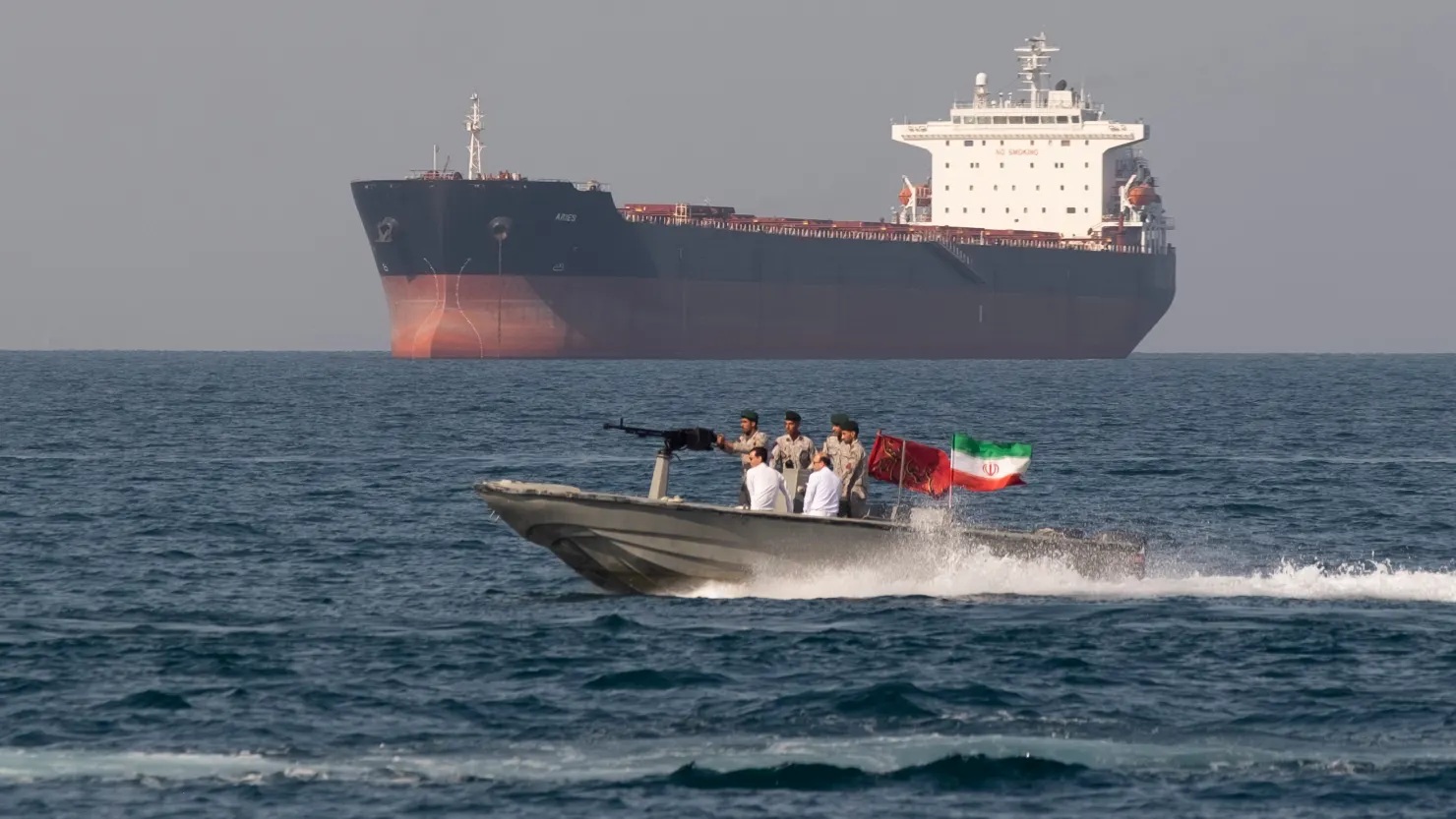
U.S. stocks jumped Friday after Iran declared the Strait of Hormuz “completely open” to commercial shipping, removing one of the biggest overhangs that had weighed on markets for weeks.

The move, announced on X by Iranian Foreign Minister Seyed Abbas Araghchi, came hours after a fragile 10-day ceasefire between Israel and Lebanon took hold and amid fresh signals from President Donald Trump that the wider conflict with Iran could be winding down fast.

The Dow Jones Industrial Average surged 702 points, or 1.5 percent. The S&P 500 rose 0.8 percent, and the Nasdaq Composite climbed 1 percent. At the open, the gains were already solid, with the Dow ahead 515 points (1.1 percent), the S&P 500 up 0.6 percent, and the Nasdaq gaining 0.9 percent. For the full week, the major indexes posted their strongest showing in some time: the Dow added 1.4 percent, the S&P 500 climbed 3.3 percent, and the Nasdaq jumped 5.2 percent.

Smaller companies stole the show. The Russell 2000 punched through to a fresh all-time high early in the session, trading above 2,750 and eclipsing its previous record of 2,735 set back on January 22. The index has now roared back about 14 percent from its March 30 lows, outpacing the broader market and signaling that investors are suddenly far more willing to embrace riskier, domestically focused names now that the immediate threat of prolonged energy chaos has receded.

The diplomatic sequence that triggered the rally unfolded quickly. Trump announced Thursday that Israel and Lebanon had agreed to the ceasefire, effective at 5 p.m. Eastern. He followed up at an event in Las Vegas by saying the Iran conflict “should be ending pretty soon” and describing developments as “going along swimmingly.”

That echoed his earlier comments this week that the fighting was “very close to over” and that Tehran wanted to “make a deal very badly.”

Araghchi’s post on X made it official: “In line with the ceasefire in Lebanon, the passage for all commercial vessels through Strait of Hormuz is declared completely open for the remaining period of ceasefire, on the coordinated route as already announced by Ports and Maritime Organization of the Islamic Rep. of Iran.”

Oil prices reacted violently to the news. U.S. crude for May delivery plunged 9.8 percent to $85.37 a barrel. Brent for June fell 9.1 percent to $90.38. The drop was the clearest sign yet that investors had been pricing in the risk of a sustained blockade in the narrow waterway that normally carries roughly one-fifth of the world’s oil and natural gas.

With that threat lifted, at least temporarily, the market’s focus shifted back toward lower input costs across the economy.

The implications stretch well beyond energy. Airlines, trucking companies, chemical makers, and consumer-goods producers all stand to benefit from cheaper fuel. So do households, where lower gasoline prices could quickly translate into more disposable income. On the policy front, the Federal Reserve now has a little more breathing room; persistent high energy costs had been complicating the inflation picture and keeping rate-cut expectations in check. A sustained drop in oil could help tilt the balance toward easier monetary policy later this year.

The rally also highlights how quickly sentiment can flip in a geopolitically charged market. For weeks, the Middle East flare-up had kept a lid on risk appetite, pushing investors toward defensive sectors and safe-haven assets. Friday’s news flipped the script. Money flowed back into cyclicals, small-caps, and growth names that had lagged during the uncertainty. The fact that the Russell 2000 led the charge is telling: smaller companies tend to suffer most when energy prices spike and global trade routes seize up, so their outsized rebound shows just how much relief is now priced in.

Still, traders are under no illusion that the situation is resolved. The ceasefire is temporary, and the Hormuz opening is explicitly tied to its duration. Any spark, whether a breakdown in Lebanon talks or a new escalation involving Iran, could send oil and volatility right back up. Markets have seen these hopeful moments before, only for them to unravel.

For now, though, the dominant mood is one of cautious optimism. Investors are betting that diplomacy has momentum and that the worst of the supply shock is behind them.

The week’s gains leave the major indexes comfortably in positive territory and close to recent highs. After a period of whipsaw trading driven by Middle East headlines, Friday’s session felt like a release valve. For one day at least, Wall Street could celebrate the simple fact that one of the world’s most critical energy arteries is open again—and the economic clouds that had been gathering are starting to part.

Iran Declares Strait of Hormuz Open Under Ceasefire Terms as Oil Prices Slide and U.S. Pressure Persists

0

Iran on Friday declared the Strait of Hormuz fully open to commercial shipping, marking a significant de-escalation signal in a conflict that has rattled global energy markets and disrupted one of the world’s most critical transit corridors.

Foreign Minister Seyed Abbas Araghchi said the reopening would apply for the duration of the ongoing ceasefire linked to hostilities involving Israel and Lebanon. In a statement posted on social media, Araghchi noted that while traffic would resume, vessels must adhere to a “coordinated route” designated by Iranian maritime authorities, an indication that Tehran intends to retain operational control over movements through the channel.

“In line with the ceasefire in Lebanon, the passage for all commercial vessels through Strait of Hormuz is declared completely open for the remaining period of ceasefire,” Abbas Araghchi said.

The Strait of Hormuz handles roughly a fifth of global oil shipments, making even partial disruptions a trigger for volatility in energy markets. Its near-closure during recent tensions had reduced traffic to a trickle, with only a handful of commercial vessels transiting daily. The announcement of a full reopening immediately eased supply concerns, sending oil prices down by more than 11% in a sharp correction that reflects how tightly markets had priced in geopolitical risk.

The move follows a fragile ceasefire agreement between Israel and Lebanon that came into effect Thursday evening, aimed at halting Israel’s military campaign against Hezbollah, the Iran-aligned group at the center of the confrontation. That front has been a persistent obstacle in broader U.S.-Iran negotiations, with Tehran viewing continued Israeli operations as undermining diplomatic commitments.

In Washington, Donald Trump publicly welcomed Iran’s decision to reopen the strait, framing it as a positive step toward stabilizing global trade flows. At the same time, Trump made clear that U.S. pressure would not be eased, stating that the naval blockade of Iranian ports would remain in place until a broader agreement is reached with Tehran.

The dual-track posture underscores the current U.S. strategy: allowing limited de-escalation to protect global markets while maintaining leverage in negotiations over Iran’s broader conduct. It also reflects lingering distrust between the two sides, which has repeatedly derailed attempts at a durable settlement.

Earlier efforts to secure a more comprehensive arrangement have faltered. A two-week ceasefire brokered on April 7, which included a U.S. demand for full reopening of the strait, quickly became mired in disputes over compliance. Iran’s parliamentary speaker, Mohammad Bagher Ghalibaf, accused Washington of violating the terms by permitting Israel’s continued military operations in Lebanon, reinforcing Tehran’s reluctance to fully normalize maritime access without parallel concessions.

Diplomatic channels remain active but uncertain. Talks last weekend in Pakistan between JD Vance and Ghalibaf failed to produce a breakthrough, though Trump has indicated that a second round of negotiations could take place as early as this weekend. The choice of Pakistan as a venue underlines an effort to maintain neutral ground amid heightened tensions across the Middle East.

For global markets, the reopening of the Strait of Hormuz offers immediate relief but limited clarity. The requirement for coordinated transit routes suggests that Iran retains the capacity to reimpose restrictions quickly if negotiations deteriorate. Meanwhile, the continued U.S. naval presence signals that the broader conflict remains unresolved.

Energy analysts note that the sharp drop in oil prices may prove temporary if the ceasefire fails to hold or if disruptions resume. The underlying risk premium tied to the region has not disappeared; it has merely been recalibrated in response to a short-term easing of constraints.

The situation leaves shipping companies, insurers, and energy traders navigating a narrow window of reduced tension while preparing for the possibility of renewed disruption. In practical terms, the strait may be open, but it is not yet secure in a strategic sense.

CBN Unveils Overnight Financing Rate (NOFR) to Reset Nigeria’s Money Market, Strengthen Policy Transmission

0

Nigeria has taken a decisive step to overhaul how short-term interest rates are determined, with the Central Bank of Nigeria introducing the Nigerian Overnight Financing Rate (NOFR), a transaction-based benchmark designed to bring greater transparency, credibility, and efficiency to the country’s money market.

The new rate, developed in collaboration with the Financial Markets Dealers Association, signals a shift away from indicative pricing toward a system anchored on actual interbank transactions. It practically reflects the cost of secured overnight funds exchanged between banks, offering a clearer and more reliable measure of liquidity conditions in the financial system.

In a statement signed by Hakama Sidi Ali, the CBN framed the move as part of a broader reform agenda aimed at aligning Nigeria’s financial architecture with global standards. The bank said the introduction of NOFR is expected to improve price discovery, promote consistent pricing of money market instruments, and reinforce the transmission of monetary policy decisions.

“It is expected to improve price discovery and transparency while promoting consistent pricing of money market instruments,” the statement said.

“It will enhance the effectiveness of monetary policy, support financial innovation, boost investor confidence, and strengthen risk management across the financial system.”

“It will support financial innovation, boost investor confidence, and improve risk management across the financial system.”

The central bank added that NOFR would serve as a credible benchmark for short-term lending activities, providing a foundation for pricing a wide range of financial instruments.

The reform places Nigeria within a global transition that gathered pace after the dismantling of LIBOR, when regulators moved toward transaction-based benchmarks to reduce manipulation risks and improve market integrity. In the United States, the Secured Overnight Financing Rate has become the primary reference rate for dollar markets. The United Kingdom relies on the Sterling Overnight Index Average, while the euro area uses the Euro Short-Term Rate, and Japan operates the Tokyo Overnight Average Rate. In Africa, South Africa’s Johannesburg Interbank Average Rate offers a regional parallel.

By adopting NOFR, the CBN is attempting to close a long-standing gap in Nigeria’s financial system, where benchmark rates have often been derived from quoted estimates rather than executed trades. That distinction has implications for market confidence. Transaction-based benchmarks are generally seen as more robust, particularly in volatile conditions when indicative rates can diverge from actual funding costs.

Nigeria’s interbank market has recently reflected tight liquidity conditions, with the overnight lending rate rising to 22.9% and the overnight Nigerian Interbank Offered Rate climbing to 22.84%. Across the curve, movements have been uneven. The three-month NIBOR increased by eight basis points, the six-month tenor eased by three basis points, while the one-month rate held steady. The Open Repo rate remained unchanged at 22.50%.

However, signals from the Treasury bill market point in a different direction. At its latest auction, the CBN raised N1.91 trillion at lower stop rates, with yields on longer-dated instruments, particularly the 364-day bill, declining sharply. This divergence between short-term funding costs and sovereign borrowing rates highlights inefficiencies in price formation across the market, a gap NOFR is intended to address.

From a policy perspective, the introduction of a credible overnight benchmark could materially improve transmission mechanisms. In Nigeria, changes to the policy rate have not always translated smoothly into lending and deposit rates, partly due to fragmentation in the money market. A reliable anchor like NOFR can help align short-term rates more closely with policy signals, strengthening the central bank’s ability to influence broader financial conditions.

There are also implications for market development. A transparent benchmark provides a foundation for pricing repo transactions, commercial paper, floating-rate notes, and derivatives. Over time, this could deepen secondary market activity and support financial innovation, areas where Nigeria’s market remains relatively underdeveloped.

For investors, particularly foreign portfolio managers, the reform addresses a key concern around pricing clarity. A benchmark grounded in observable transactions reduces uncertainty and improves comparability with other markets. This becomes more relevant in an environment shaped by elevated inflation, currency pressures, and shifting global capital flows.

The development of NOFR followed a structured engagement process within the financial system. The benchmark was adopted after a stakeholder meeting held on February 27, 2026, with regulatory approvals secured ahead of its official launch. The CBN will act as the benchmark administrator, with responsibility for governance, methodology, and regular publication.

Even so, the effectiveness of NOFR will depend on adoption and market depth. Banks and other financial institutions will need to integrate the rate into contracts, trading systems, and risk models. Transitioning away from existing benchmarks may require adjustments in pricing frameworks and operational processes. More critically, the underlying interbank market must sustain sufficient transaction volumes to ensure the rate remains representative.

However, financial experts note that the introduction of NOFR is, in essence, an infrastructure reform. It does not immediately lower borrowing costs or inject liquidity into the system. Its value lies in improving how prices are discovered and how policy signals are transmitted. But if implementation is consistent and adoption broad-based, it could reduce distortions in Nigeria’s financial markets and position the system on a more credible footing within the global financial industry.

U.S. CFTC Investigating Series of Unusually Timed Trades in Oil Futures 

0
Signage is seen outside of the US Commodity Futures Trading Commission (CFTC) in Washington, D.C., U.S., August 30, 2020. REUTERS/Andrew Kelly

The U.S. Commodity Futures Trading Commission (CFTC) is investigating a series of unusually timed trades in oil futures that occurred minutes before President Donald Trump’s Truth Social posts announcing policy shifts related to the U.S.-Iran conflict.

The investigation focuses on trades executed on platforms operated by CME Group including NYMEX and Intercontinental Exchange (ICE). Regulators have requested trading data from both exchanges, including Tag 50 identifiers that link trades to specific entities. At least two specific instances are under scrutiny: Approximately $500–580 million in oil futures bets were placed about 15 minutes before Trump’s post announcing talks with Iran and a delay and postponement of planned strikes on Iranian energy infrastructure.

Oil prices subsequently dropped sharply reports cite ~6–10%+ moves, while stock futures surged. April 7, 2026: A similar pattern with roughly $950 million in trades ahead of Trump’s announcement of a two-week ceasefire with Iran, which reportedly sent oil and natural gas prices lower (one account cited ~15%).

These trades anticipated the direction of the market reaction to the announcements with unusually precise timing, prompting concerns about potential insider trading or information leaks from within the administration or those with advance knowledge. The events unfolded amid escalating U.S. involvement or tensions in the Iran conflict.

Trump’s Truth Social posts served as the public trigger for significant market moves, with no apparent preceding public news to explain the pre-announcement spikes in volume. Calls for investigation came earlier from lawmakers, including: Sen. Elizabeth Warren (D-MA) and others, who sent a letter to the CFTC on April 9 requesting a probe.

Rep. Ritchie Torres (D-NY), who urged both the CFTC and SEC to examine the activity. The White House has reportedly warned staff against improperly trading on non-public information related to the conflict. CFTC Chairman Michael Selig has signaled the agency will pursue wrongdoers in derivatives markets, though the agency has not publicly confirmed details of this specific probe.

The probe is in early stages, focused on gathering data rather than any charges. Outcomes could range from no action (if trades prove coincidental or based on public analysis) to enforcement actions if evidence of improper information flow emerges. CME Group has stated it monitors trading and supports regulatory scrutiny.

This fits a broader pattern where major policy announcements via social media or official channels can move commodity and equity markets rapidly, drawing regulatory attention to pre-event positioning. Investigations like this are standard when timing and volume appear anomalous, but proving insider trading requires linking the traders to non-public information sources.

As of now, no individuals or specific trading entities have been publicly named. Traders who positioned short on oil (betting on lower prices) or long on stocks in the minutes/hours before the posts likely realized millions in profits from the well-timed bets totaling $500–580 million (March) and ~$950 million (April).

Trading volumes spiked dramatically ~9x average in one pre-announcement window, highlighting how social media policy signals can create rapid, high-stakes swings in commodity and related markets. The CFTC has requested detailed trading data from CME Group (NYMEX) and ICE, including Tag 50 identifiers to trace entities behind the trades.

This is an early-stage data-gathering effort, not yet resulting in charges. CFTC Chairman Michael Selig has publicly vowed stronger enforcement against wrongdoers in derivatives markets, signaling a potential sea-change in scrutiny amid heightened activity.

Bitwise Onchain Solutions Launches AVAX ETP with over $2.5M Trading Volumes in its First Hours

0

Bitwise Asset Management has launched its spot Avalanche ETF (ticker: BAVA) on the NYSE. The fund provides direct exposure to AVAX while incorporating in-house staking through Bitwise Onchain Solutions, targeting roughly 5.4% annualized staking rewards.

Bitwise plans to stake ~70% of the fund’s AVAX holdings (keeping ~30% in a liquidity reserve) to participate in Avalanche’s proof-of-stake validation. Rewards (in additional AVAX) are expected to be distributed periodically to shareholders as net investment income, after Bitwise retains a portion (reportedly ~12% in some coverage) for operational costs.

Fees: 0.34% sponsor fee, waived to 0% for the first month or until the fund reaches $500 million in assets, whichever comes first. This is positioned as competitive and lowest among existing AVAX ETPs. The ETF debuted with modest initial assets reports of ~$2.5 million and saw hundreds of thousands in trading volume in its first hours/days. It started trading around $25.50 in some mentions.

This is the third U.S.-listed AVAX ETP, following products like VanEck’s. Bitwise with ~$11B in client assets as of early 2025 highlights in-house staking for transparency, oversight, and liquidity management as a differentiator. The launch adds a yield component to regulated AVAX exposure, which could appeal to traditional investors seeking passive crypto access plus passive income without direct wallet and staking management.

Bitcoin ETFs have seen positive streaks in 2026, including multi-day inflows like hundreds of millions in a recent week and a March monthly net of ~$1.32B after prior outflows. Daily flows fluctuate—some days positive, others flat or negative—but overall institutional interest has returned at times. Ethereum, Solana, XRP, etc showed mixed results; some days show inflows; ETH seeing notable single-day figures, but not universally positive every day across all products.

Existing U.S. spot AVAX products have recorded zero net inflows since around March 17, 2026, with total assets under management remaining low ~$17M across funds, a tiny fraction of AVAX’s market cap. The new BAVA launch is too recent for meaningful flow data, and early indicators don’t suggest an immediate reversal of that apathy.

Crypto ETF flows aren’t uniformly positive daily; they vary by asset, market sentiment, macro factors, and product-specific appeal. Bitcoin often dominates, while altcoin-linked ETFs like those for AVAX have seen muted demand recently. Trading in the low $9–$10 range around the launch with mentions of resistance near $10. The ETF could provide incremental institutional inflows and liquidity over time, but existing AVAX ETPs haven’t driven big capital yet.

This is another step in crypto’s mainstreaming via ETFs and ETPs, especially with yield-bearing features for proof-of-stake assets. It builds on Bitwise’s broader lineup, they offer multiple crypto products. However, staking in ETFs involves risks e.g., slashing, liquidity trade-offs, regulatory and tax nuances—rewards may be treated as income.

Single-asset ETFs are volatile. Staking yields aren’t guaranteed, they fluctuate with network participation, and the fund warns of potential substantial losses. Early volume is encouraging but doesn’t guarantee sustained flows. Bitwise’s BAVA is an innovative product blending spot exposure with on-chain yield in a regulated wrapper—potentially attractive for yield-seeking allocators—but it launches into a period of subdued demand for AVAX ETFs specifically.

Broader crypto ETF momentum remains uneven, led more by Bitcoin than alts. Keep an eye on upcoming flow reports and AVAX network metrics like staking participation, DeFi/RWA activity for how this plays out.