DD
MM
YYYY

PAGES

DD
MM
YYYY

spot_img

PAGES

Home Blog Page 7

Global Equity Funds Extend Inflow Streak As Easing Inflation And Strong Earnings Revive Risk Appetite

0

Global equity funds attracted fresh inflows for an eighth consecutive week through July 15 as easing U.S. inflation, robust corporate earnings and renewed optimism around artificial intelligence encouraged investors to increase exposure to risk assets, although the pace of buying slowed from the previous week.

According to LSEG Lipper data covering 28,904 funds, investors purchased a net $12.46 billion of global equity funds during the week, following a much stronger $48.35 billion of inflows the previous week.

The continued inflows suggest that investors remain constructive on equities despite elevated valuations and lingering geopolitical risks, including tensions involving Iran and uncertainty surrounding global trade. The moderation in weekly purchases appears to reflect profit-taking after the previous week’s surge rather than a broader deterioration in market sentiment.

Europe Leads Equity Inflows As Investors Rotate Globally

European equity funds emerged as the biggest beneficiaries of global investor flows, attracting $9.49 billion, while Asian funds drew $5.4 billion.

In contrast, U.S. equity funds experienced $4.8 billion in net outflows, indicating investors may be rotating geographically after a prolonged period of U.S. market outperformance.

The shift comes as European equities benefit from improving corporate earnings and relatively attractive valuations compared with U.S. stocks, where technology companies continue to dominate market performance and trade at historically elevated multiples.

The strong start to the second-quarter earnings season also helped reinforce confidence in global equities. Several major Wall Street banks, including Bank of America, JPMorgan Chase, and Morgan Stanley, reported stronger-than-expected results, easing concerns that higher interest rates and slowing economic growth would significantly weaken corporate profitability.

Investor sentiment also received a boost from Dutch semiconductor equipment maker ASML, whose quarterly earnings exceeded expectations. The company raised its 2026 outlook and announced plans to expand manufacturing capacity, boosting confidence that investment in artificial intelligence infrastructure remains robust despite earlier concerns that AI spending had outpaced fundamentals.

Technology remained the most popular sector among investors, attracting $3.37 billion during the week. Although that represented the sector’s smallest weekly inflow in three weeks, it demonstrates that AI-related investments continue to dominate equity allocations globally.

Financial sector funds received $567 million in net inflows, supported by strong earnings from major banks, while healthcare funds attracted $558 million as investors continued to seek defensive growth opportunities alongside cyclical exposure.

A key catalyst behind the improved market sentiment was softer-than-expected U.S. inflation data.

June consumer price figures showed headline inflation falling 0.4%, marking the first monthly decline since the COVID-19 pandemic, while core inflation remained unchanged. The report strengthened expectations that the Federal Reserve may not need to resume interest rate increases in the near term.

Lower inflation expectations pushed Treasury yields and the U.S. dollar lower earlier in the week, improving financial conditions and supporting equity valuations.

Although Federal Reserve policymakers cautioned that a single inflation report was insufficient to declare victory over inflation, investors interpreted the data as reducing the likelihood of additional monetary tightening this summer.

Bond Demand Remains Resilient As Cash Leaves Money Markets

Fixed-income funds also continued to benefit from shifting investor allocations. Global bond funds recorded $16.16 billion in net inflows, extending their buying streak to 15 consecutive weeks, underscoring persistent demand for high-quality fixed-income assets even as equity markets continue to rally.

Government bond funds attracted $3.38 billion, marking their strongest weekly inflow since April 8, as investors increased allocations to sovereign debt amid expectations that interest rates may have peaked in several major economies.

Short-duration bond funds also remained popular, drawing $4.17 billion, reflecting continued investor preference for lower-duration assets that offer attractive yields while limiting exposure to future interest rate volatility.

The bond inflows coincided with a sharp withdrawal from money market funds. Investors pulled $102.53 billion from cash funds, the largest weekly outflow since April 15, suggesting capital is increasingly moving out of defensive cash positions and back into both equities and fixed income as confidence in financial markets improves.

Commodity fund flows painted a mixed picture.

Gold and precious metals funds attracted $376 million, ending an eight-week streak of investor withdrawals. Renewed interest in precious metals likely reflected continued geopolitical uncertainty and a weaker U.S. dollar following the inflation data.

Energy funds, however, recorded $145 million in net outflows despite elevated oil prices, indicating that investors remain cautious about the sector’s longer-term outlook amid uncertainty over global economic growth and energy demand.

Emerging markets also showed signs of renewed investor confidence.

Emerging-market equity funds attracted $2.74 billion, ending an 11-week streak of outflows, while emerging-market bond funds recorded $795 million in fresh inflows.

The turnaround suggests investors are gradually rebuilding exposure to developing economies as expectations grow that the Federal Reserve may adopt a less restrictive monetary stance. Historically, easing U.S. monetary conditions tend to support emerging-market assets by reducing pressure on local currencies, lowering financing costs, and encouraging capital inflows.

Together, the latest fund flow data indicate that investors remain broadly optimistic about global markets. Strong corporate earnings, resilient AI-related investment, moderating inflation and expectations of a less aggressive Federal Reserve continue to underpin demand for both equities and bonds.


Prediction Markets Signal 92% Chance of $4 Gasoline as Strait of Hormuz Crisis Pushes Oil Higher

0

Prediction markets are sending a clear warning to global consumers and policymakers alike.

Traders now assign a 92% probability that gasoline prices in the United States will exceed $4 per gallon before the end of July, reflecting mounting concerns over escalating tensions in the Middle East and the growing disruption of global energy supply chains.

At the center of these fears lies the Strait of Hormuz, one of the world’s most strategically important maritime chokepoints, where declining ship traffic is intensifying concerns about a prolonged supply shock.

Brent crude prices have already climbed toward $86 per barrel as markets react to the possibility that the Strait of Hormuz could remain partially or fully closed. The narrow waterway, situated between Iran and Oman, is responsible for facilitating roughly one-fifth of global oil trade.

Any disruption in this corridor immediately reverberates across energy markets, affecting crude prices, shipping costs, insurance premiums, and ultimately consumer fuel prices. Recent shipping data has heightened these concerns.

Vessel movements through the strait have dropped significantly, with only nine ships reportedly passing through yesterday compared with 13 the previous day. While the decline may appear modest on the surface, financial markets often respond more to expectations than to present realities.

Traders are increasingly pricing in the possibility of extended disruptions, potential military escalation, and a sustained tightening of global oil supplies. Prediction markets have become an increasingly influential tool for gauging market sentiment.

Unlike traditional forecasts, these platforms aggregate the collective expectations of thousands of participants who have financial incentives to accurately predict future outcomes.

A 92% probability of gasoline prices exceeding $4 per gallon suggests that market participants believe the current geopolitical tensions represent more than a temporary disturbance. For consumers, rising fuel prices carry significant economic implications.

Higher gasoline costs act as a hidden tax on households, reducing disposable income and increasing transportation expenses. Businesses dependent on logistics and transportation also face rising operational costs, which often translate into higher prices for goods and services.

This creates broader inflationary pressures at a time when many economies are still attempting to stabilize after years of elevated inflation and aggressive monetary tightening. Financial markets are also reacting to the changing energy landscape.

Energy companies and oil producers have generally benefited from the rally in crude prices, while sectors heavily reliant on consumer spending and transportation have faced increased uncertainty. Airlines, shipping companies, and manufacturing firms may experience margin pressures if elevated energy prices persist through the summer months.

The geopolitical dimension of the crisis remains particularly concerning. Any prolonged closure of the Strait of Hormuz could prompt coordinated responses from major powers seeking to secure global energy flows.

The United States and its allies have historically viewed freedom of navigation through the region as a strategic priority. Consequently, the risk premium currently embedded in oil prices reflects not only supply concerns but also fears of broader regional instability.

Whether gasoline prices ultimately surpass the $4 threshold will depend largely on developments in the coming weeks. If shipping activity normalizes and tensions ease, oil prices could retreat. If disruptions continue and vessel traffic remains constrained, the prediction markets may prove accurate.

For now, the message from traders is unmistakable: global energy markets are entering a period of heightened uncertainty, and consumers should prepare for the possibility of significantly higher fuel costs in the weeks ahead.

Databricks Valuation Soars to $188bn as AI Reinvention Fuels One of Tech’s Fastest Value Creations

0

Databricks has cemented its position among the world’s most valuable private technology companies after announcing a new funding round that values the artificial intelligence and data software company at $188 billion, underscoring how successfully it has reinvented itself from a cloud data platform into a leading enterprise AI provider.

The financing, led by Coatue, comes just months after Databricks closed another multibillion-dollar funding round and highlights investors’ willingness to place larger bets on companies building the software infrastructure that enterprises use to deploy AI. Although Databricks did not disclose the size of the latest raise, the company said the transaction will close later this summer. Multiple media reports have estimated the funding at roughly $3 billion.

The announcement is unusual because companies typically reveal funding rounds only after the capital has been received. In this case, Databricks disclosed the deal before closing, reflecting strong investor demand. According to TechCrunch, investors were competing aggressively for allocations, giving the company little reason to keep its latest valuation confidential.

The latest fundraising continues one of Silicon Valley’s most remarkable valuation trajectories.

In December 2024, Databricks raised what was then a record $10 billion at a $62 billion valuation. That was followed by a $1 billion fundraising in September 2025, valuing the company at $100 billion, before another $5 billion Series L round closed in February 2026 at a $134 billion valuation.

Just five months later, the company’s valuation has surged another 40% to $188 billion, representing more than a threefold increase in less than two years.

The pace of fundraising has become so frequent that it has sparked jokes across the venture capital industry about Databricks eventually exhausting the traditional alphabetical naming convention for financing rounds.

One social media user quipped: “Turning on alerts for when we get a Series AA.”

Behind the soaring valuation is a fundamental transformation of Databricks’ business.

Founded in 2013 by the creators of Apache Spark, the company originally built its reputation during the big data era by helping enterprises store massive datasets in cloud environments while enabling fast analytics. Long before generative AI became mainstream, Databricks had already become deeply embedded in many large organizations’ data infrastructure.

That existing position proved highly advantageous once companies began deploying generative AI.

Unlike startups building frontier AI models, Databricks already sat on the enterprise data that organizations wanted AI systems to access securely. Rather than competing directly with OpenAI or Anthropic, the company positioned itself as the platform enabling businesses to integrate multiple AI models with their proprietary data while maintaining governance, compliance and security.

Its evolution has accelerated over the past two years.

Databricks has introduced a succession of AI-focused products, including Lakebase, a database designed specifically for AI agents, Unity, an AI gateway for enterprise model management, and Omnigent, a “meta-harness” that orchestrates multiple AI agents working together across complex workflows.

Those offerings place Databricks squarely at the center of one of enterprise AI’s fastest-growing markets: helping businesses deploy agentic AI systems capable of performing autonomous tasks.

The company’s transformation also mirrors a broader shift occurring across enterprise AI. Rather than relying exclusively on expensive proprietary models from OpenAI or Anthropic, many enterprises are increasingly adopting powerful open-weight models to reduce operating costs while maintaining flexibility.

Databricks has emerged as one of the industry’s strongest advocates of that strategy. The company has become a prominent supporter of Z.ai’s GLM 5.2, arguing that the Chinese-developed open-weight model delivers competitive coding performance at significantly lower cost than proprietary alternatives.

Last week, Chief Executive Ali Ghodsi published the results of internal benchmarking designed to optimize AI usage across Databricks’ roughly 3,000 software engineers. Instead of relying solely on conventional benchmark scores, the company evaluated AI systems using the real-world programming tasks performed by its own engineering teams.

The results highlighted a rapidly changing competitive industry. According to Databricks, GLM 5.2 successfully handled even the company’s most demanding software engineering tasks while delivering substantially lower inference costs than leading proprietary models from Anthropic and OpenAI.

Perhaps more significant was another finding.

Databricks concluded that selecting the AI model itself is only part of determining overall costs. The company found that the surrounding agentic coding harness—the software layer responsible for managing prompts, context windows and interactions with the underlying model—can have an equally significant effect on efficiency and operating expenses.

Its research identified the open-source harness Pi as one of the strongest performers, demonstrating that effective context management could reduce AI costs without sacrificing output quality.

“The lesson here isn’t that one harness is always cheaper or that native harnesses are worse,” Databricks wrote in its blog post.

“Instead, model choice is only one piece of the puzzle.”

The findings boost one of the defining trends emerging across enterprise AI in 2026. Competitive advantage is increasingly shifting away from simply possessing the largest frontier models toward building sophisticated software platforms that intelligently orchestrate models, agents, enterprise data and workflows.

That positioning has become a major driver of Databricks’ rising valuation. Unlike companies whose fortunes depend on training ever-larger foundation models, Databricks generates recurring enterprise software revenue while benefiting from growing corporate AI adoption regardless of which underlying model customers ultimately choose.

Its platform effectively allows enterprises to mix proprietary and open-weight models based on performance, security and cost considerations, making Databricks relatively insulated from rapid shifts in the foundation model landscape.

The valuation also reveals broader investor enthusiasm for enterprise AI infrastructure. While much public attention has focused on AI chipmakers such as Nvidia and cloud providers building massive data centers, investors are increasingly directing capital toward software companies enabling businesses to operationalize AI at scale.

Databricks’ ability to reinvent itself from a cloud analytics company into a core enterprise AI platform shows that the generative AI boom is reshaping not only technology products but also investor perceptions. What was once viewed primarily as a data engineering company is now valued alongside the world’s most important AI businesses.

The company’s rapid ascent also demonstrates the powerful valuation premium investors continue to assign to firms viewed as central to enterprise AI adoption. As TechCrunch noted, the so-called “AI halo” has become so influential that companies across industries increasingly emphasize artificial intelligence in investor communications. In one notable example, sandwich chain Jersey Mike’s referenced AI 22 times in its IPO filing, highlighting how closely capital markets have tied corporate growth narratives to artificial intelligence.

Databricks’ latest funding round suggests that, for companies able to convincingly position themselves at the center of enterprise AI, investor appetite remains far from exhausted.

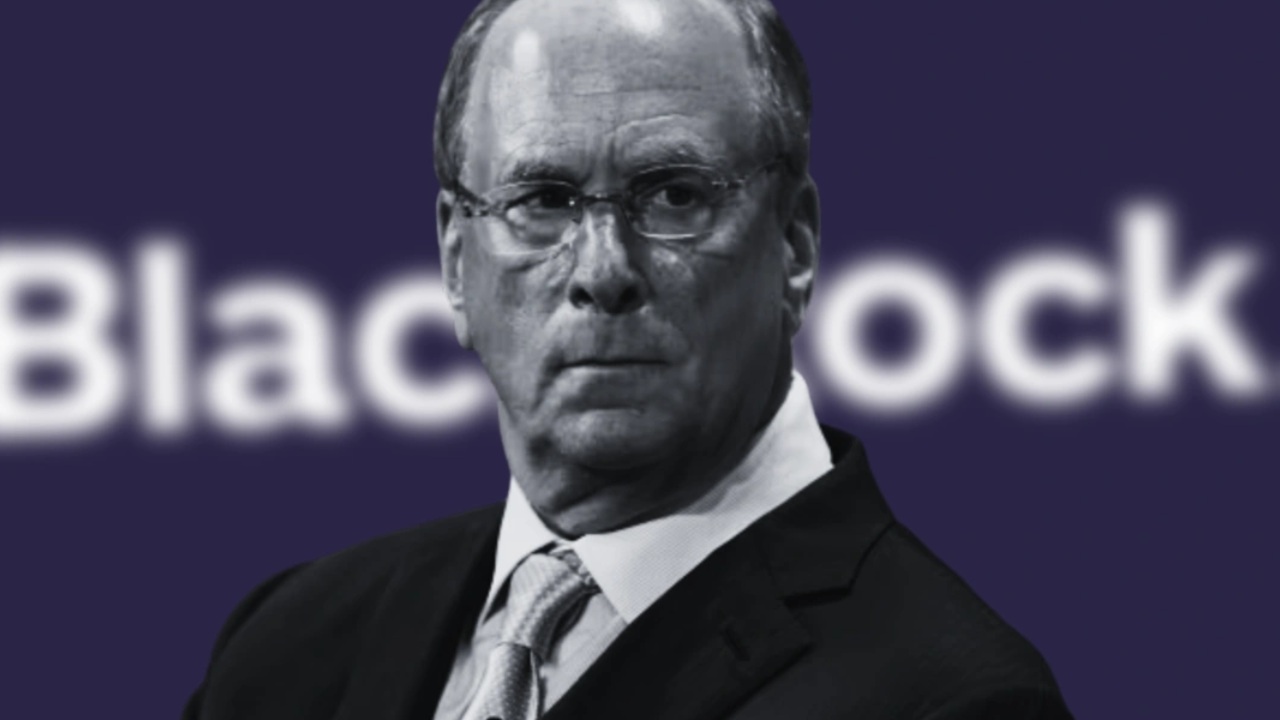
BlackRock’s Massive Growth and the Increasing Concentration of Global Capital

0

BlackRock has reached a historic milestone, becoming the first investment firm in history to surpass $15 trillion in assets under management (AUM).

The achievement marks not only a defining moment for the company itself but also highlights the increasing concentration of global capital in the hands of a few major asset managers that now wield enormous influence over financial markets.

Founded in 1988 by Larry Fink and several partners, BlackRock began as a risk management and fixed-income investment firm.

Over nearly four decades, it transformed into the world’s largest asset manager through a combination of strategic acquisitions, technological innovation, and expanding investor trust.

Crossing the $15 trillion threshold represents extraordinary growth from the firm’s modest beginnings and underscores the increasing demand for professionally managed investment products.

Several factors have contributed to BlackRock’s meteoric rise. The company has become a dominant player in exchange-traded funds (ETFs) through its iShares platform, which remains one of the largest ETF businesses globally.

ETFs have fundamentally changed how investors access financial markets by providing low-cost, diversified exposure to equities, bonds, commodities, and alternative assets. As both institutional and retail investors increasingly favor passive investment strategies over traditional active management.

BlackRock has been one of the greatest beneficiaries of this structural shift.

The firm’s technological edge has also played a crucial role. BlackRock’s Aladdin platform, a sophisticated risk management and portfolio analytics system, has become deeply embedded across the global financial industry.

Governments, pension funds, banks, and competing asset managers rely on Aladdin to assess risk and manage investment portfolios. This technological infrastructure has further strengthened BlackRock’s position as not merely an asset manager but also a critical financial technology provider.

BlackRock’s rise also reflects broader changes in global wealth accumulation. Pension funds, sovereign wealth funds, insurance companies, and individual investors increasingly seek large, stable institutions capable of managing vast pools of capital across multiple asset classes and jurisdictions.

The firm’s global reach, extensive product offerings, and reputation for risk management have positioned it as a preferred destination for these funds. The milestone also raises important questions about concentration and systemic risk.

With more than $15 trillion under management, BlackRock’s investment decisions can significantly influence stock prices, corporate governance, and capital allocation across industries and countries.

The firm’s voting power in thousands of publicly traded companies has sparked debates about whether a handful of asset managers now possess excessive influence over corporate America and global markets.

Critics argue that such concentration could create vulnerabilities during periods of market stress. A sudden shift in investor sentiment, large-scale redemptions, or disruptions in major asset classes could have ripple effects across the financial system.

Regulators worldwide have increasingly examined whether giant asset managers like BlackRock should face additional oversight due to their systemic importance. BlackRock has continued to expand into emerging sectors, including private markets, infrastructure investments, artificial intelligence, and digital assets.

The company has become a significant participant in the growing tokenization and cryptocurrency sectors, signaling its willingness to adapt to changing financial landscapes. Its entry into Bitcoin exchange-traded products and tokenized finance initiatives demonstrates how traditional finance giants are increasingly embracing digital asset infrastructure.

BlackRock surpassing $15 trillion in assets under management is more than a corporate milestone; it is a reflection of the evolving structure of global finance. The achievement highlights the growing dominance of passive investing, the importance of financial technology, and the increasing concentration of capital within a select group of institutions.

As BlackRock continues to expand its influence, its future decisions will likely shape investment trends, corporate governance, and the broader trajectory of global financial markets for years to come.

Mark Rutte Defends Germany’s Missile Plans Amid Rising Russia Concerns

0

NATO Secretary General Mark Rutte has dismissed concerns that Germany’s planned acquisition of United States-made Tomahawk medium-range cruise missiles will unnecessarily escalate tensions with Russia.

His remarks come at a time when European security is undergoing its most significant transformation since the end of the Cold War, driven largely by Russia’s invasion of Ukraine and growing fears of a broader confrontation on the continent.

Germany’s decision to pursue long-range precision strike capabilities reflects a wider shift in European defense thinking. For decades, Berlin maintained a relatively restrained military posture, emphasizing diplomacy, economic engagement, and multilateral cooperation.

The security environment in Europe has changed dramatically since 2022. Russian military actions in Ukraine have convinced many European governments that deterrence and military preparedness are once again essential components of national security.

The Tomahawk cruise missile is one of the world’s most advanced long-range precision weapons systems. Capable of striking targets hundreds of kilometers away with high accuracy, it provides countries with the ability to neutralize strategic military assets while minimizing collateral damage.

Germany’s interest in acquiring such systems is seen by many analysts as part of its broader effort to modernize the Bundeswehr and strengthen NATO’s collective defense capabilities. Critics, argue that deploying medium-range missiles in Europe risks reviving memories of Cold War-era missile confrontations.

During the 1980s, the deployment of intermediate-range nuclear forces sparked widespread protests across Europe and heightened tensions between NATO and the Soviet Union.

Some observers fear that Russia may interpret Germany’s acquisition of Tomahawk missiles as a direct threat, potentially triggering an arms buildup or prompting Moscow to deploy additional missile systems near NATO borders.

Mark Rutte rejects this interpretation. According to the NATO chief, deterrence should not be confused with provocation. From NATO’s perspective, strengthening defensive capabilities is a response to an increasingly unpredictable security environment rather than an attempt to escalate conflict.

Rutte has repeatedly emphasized that Russia itself has significantly altered the European strategic balance through its actions in Ukraine and its continuous military modernization.

Supporters of Germany’s decision argue that credible deterrence reduces, rather than increases, the likelihood of conflict. The logic is straightforward: if potential adversaries understand that NATO members possess the capability to respond effectively to aggression, they may be less inclined to take destabilizing actions.

In this view, military weakness, not strength, often creates opportunities for miscalculation. Germany’s move also aligns with broader efforts by European states to reduce dependence on the United States for security while simultaneously deepening transatlantic cooperation.

European governments have significantly increased defense spending, invested in new technologies, and sought to enhance interoperability among allied forces.

The acquisition of advanced missile systems represents another step toward building a more resilient and capable European defense architecture. The political and diplomatic implications cannot be ignored. Russia has consistently criticized NATO’s military expansion and modernization efforts, portraying them as threats to its national security.

The Kremlin is likely to condemn Germany’s missile plans and may use the development to justify its own military deployments or strengthen anti-Western narratives domestically. The debate surrounding Germany’s planned purchase of Tomahawk missiles reflects a larger question facing Europe.

How can the continent maintain peace in an era of renewed great-power competition? Mark Rutte’s position suggests that deterrence and preparedness are indispensable to preserving stability.

Whether this strategy succeeds in preventing future conflict or contributes to deeper geopolitical divisions will depend on the actions of both NATO and Russia in the years ahead.