


If you have capabilities with the gifts of building forward-thinking team, there may be another call. In this video, I explain how one can build an advisory business in Nigeria and Africa.
Fintech Nigeria – 2018 Summary, 2019 Forward Look
There is a new publication on Fintech Nigeria, covering policy, technology, innovation, investment and more. It began by summarizing key 2018 activities in the broad fintech sector in Nigeria, and then went ahead to offer a look in 2019. It was authored by Damilola Salawu, a Partner (Technology, Innovation and Fintech) in Olaniwun Ajayi LP.
Over the course of 2018, the Fintech ecosystem has grown in many respects, particularly in terms of investments, policy developments/regulations, product offerings and new market opportunities. The issue of the oversight functions and the regulatory activities of the Central Bank of Nigeria (CBN) seems to be at the front-burner within the space in the year under review, and we speak to some of the relevant regulations that would significantly impact the way Fintech companies, particularly, payment system operators, operate in 2019 and beyond.
This Report is in two (2) parts; Part A which is a wrap-up of 2018 looks at some of the trends we had highlighted in last year’s report (the Forward Look 2018) and how they played out as well as other high points of 2018. Part B looks forward to 2019 highlighting some of our expectations for the year and what we think the key indicators for the ecosystem would be.
Download the publication here.
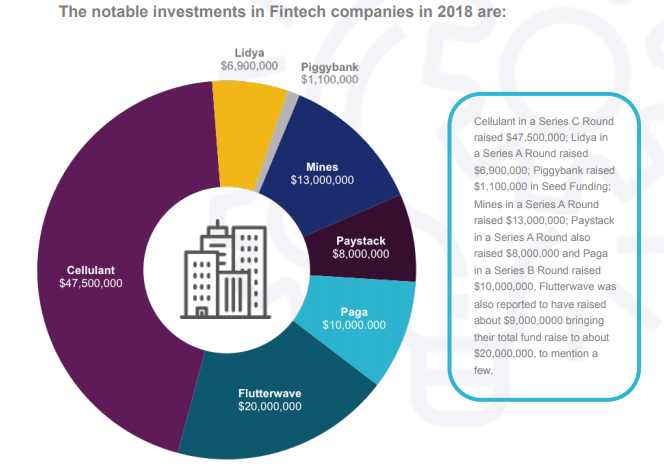
The African Universities Thesis Project
A Nigerian newspaper, and a Harvard Business Review partner in Nigeria, republished one of my Harvard Business Review articles – The Leadership Lessons of Ants. My community manager has received emails from people asking for partnerships on a project I had mentioned in the piece.
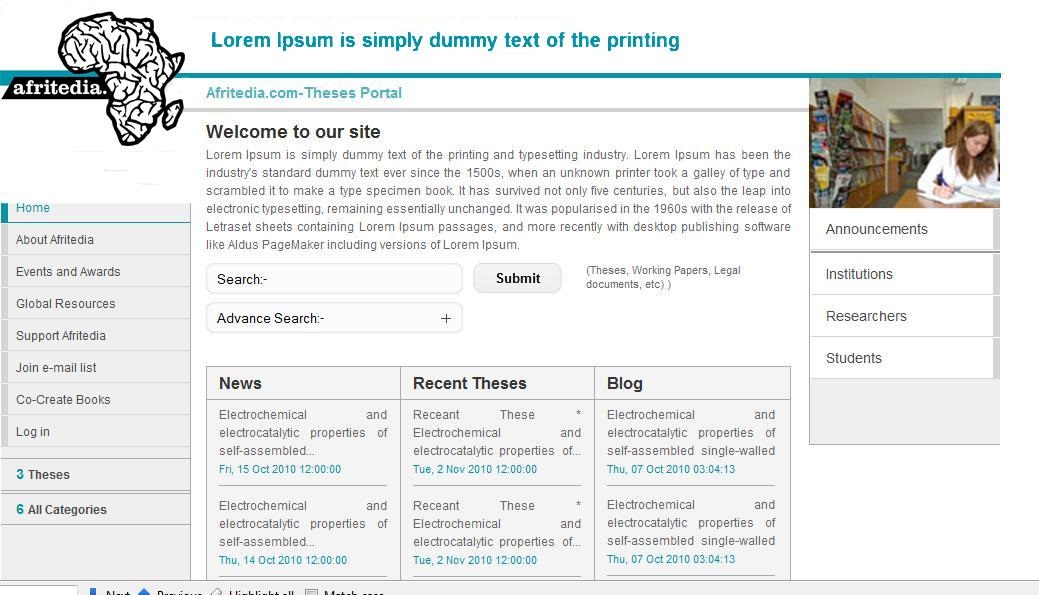
Let me address it here: that 2010 project – Networked Digital Library of African Theses and Dissertations – did not work out. We encountered a huge challenge: most universities did not cooperate across Africa.
In short, for many we contacted, largely South African universities were open to work with us. Schools in most other countries were afraid of publishing the dissertations online. Some explained a major concern we could not address – the possibility of a high flying alumnus who might have “innocently” plagiarized his/her thesis being scandalized because of an old document. With that kind of feedback, my U.S. 501(c)(3) non-profit, African Institution of Technology, abandoned the project. I had funded the project via income, transferred from royalty on a book, which I wrote as I was concluding my Johns Hopkins University doctoral program.
The website codes, certainly not a mobile-ready site, should be somewhere for any person who may like to continue it. Yet, my suggestion would be to ensure you have buy-ins from schools before you start coding. Imagine the possibility of a current president being accused of plagiarism. Yes, he can close the university, and fire the management for the embarrassment. Africa cannot afford that! Lol.
DStv Nigeria Explains, Would Not Offer Pay As You View (PAYV); Telcos Should Learn
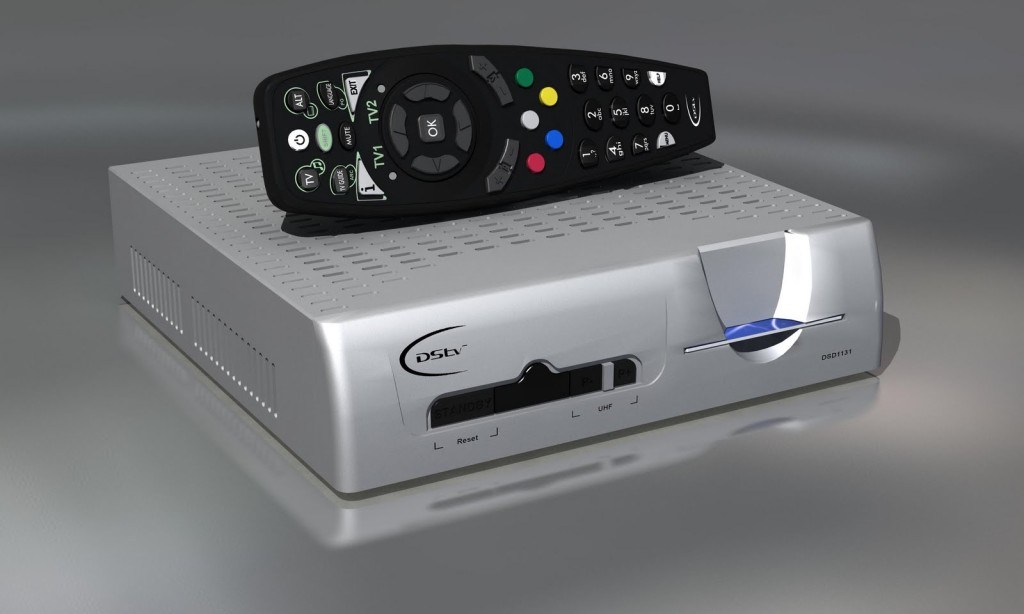
MultiChoice, the parent company of DStv, continues to amaze on its understanding of the Nigerian market: the company made it clear today that it would not introduce pay as you view (PAYV). It continues to prefer the monthly plan pricing model.
Multichoice, the digital satellite television operator announced on Friday that the company would not operate the “pay as you view’’ tariff system in Nigeria, in spite of demands for such.
The Chief Customer Officer of Multichoice, Martin Mabutho, made the statement in an interview with the News Agency of Nigeria (NAN) in Lagos.
Mr Mabutho’s stance comes against the backdrop of persistent clamour by the company’s teeming subscribers for the introduction of a pay as you view tariff plan in Africa’s most populous nation.
“We are not going to introduce pay as you view system. Our contract with our suppliers is on month to month basis,’’ he stated
Yet, in the same country, telecom operators do not think the monthly plan is promising, choosing PAYG (pay as you go). Sure, these are different business sectors. Nonetheless, it is not hard to understand why DStv continues to do well: once it has collected that monthly payment, it is in the books, whether you have light or time to watch that show.
And for the telco, once it has sold that N500 PAYG data, you can use it to indulge hours on WhatsApp, making all the calls while the telco gets nothing more. You would have thought that a monthly plan, using the SIM card registration data the telco has would have made sense.
LinkedIn Comment on Feed
In my honest opinion, monthly payments for DSTV is ripping Nigerians off, knowing very well that if they go on pay-as-you-view, they would run losses. Those who can afford DSTV regularly rarely watch it. They probably buy for family members because they are usually too busy working. Those irregular users cannot afford buying fuel regularly to watch when they want because power failure is more regular than power supply. So, DSTV can never stop their monthly plan until strong competitors come in. Knowing the Nigerian government and the penchant for bribes, they will rather keep bribing the regulators to ensure that entry requirements are too stringent for potential entrants, thereby monopolizing the market. Any day they have serious competitors, this crazy rip off will stop.
As for telecom companies, they should by now have tried out the two plans. Locking people into a deal is one sure way of making money because it at least guarantees a certain percentage of revenue. Despite Amazon’s success, there is Amazon Prime which ensures that once you sign up, there is a monthly fee. Although I am no expert in strategy, I would have suggested a pilot project on monthly payments and compare the results with the current Pay-As-You-Go.
However, in fairness to consumers, pre-paid and post-paid plans should be available in both sectors so that consumers decide which they want based on convenience. Finally, DSTV is a premium product, so its target market is the rich!
Computer Coding Locations for Children in Nigeria
I wrote a piece where I argued that Nigeria should prioritize the “language” of Coding over another foreign language in our schools. Scanning through comments and InMails, many want to know where their kids, students, etc can learn this “language”. My understanding is that CCHub offers something in that space, but that is Lagos.
Sure – there are many elements besides speaking that come in learning new languages. Nonetheless, I will suggest for Nigeria to prioritize coding to Nigerian kids over new foreign language as Coding in the 21st Century Global Language.
Please if you know locations where decent coding training is done across Nigeria, share below. We are not talking of Oracle (who wants to understand oracle in his life? Haha) or Python (who wants to learn snake movements? Lol); simply, we want the basics for school kids.
I know there are places banks, etc send their staff; those are not the focus. Here, I think guardians and parents are looking for kids-focused coding organizations.
If you know, share below. You could connect a kid to a greater tomorrow.
{I will be updating this piece as I get updates from Linkedin)