DD
MM
YYYY

PAGES

DD
MM
YYYY

spot_img

PAGES

Home Blog Page 7033

Rethinking Education in Southeast Nigeria

0

by Nnamdi Odumody

One of the UN’s Millennium Development Goals is the provision of quality education for everyone. The United Nations Educational Scientific and Cultural Organization(UNESCO) set a benchmark of 26 percent of national or state budget to fund education. Sadly in the developing world like Africa this directive is not adhered to which is why African states are lagging behind in Human Development Indices index. Quality relevant education is the key to the sustainable development of any nation or state. Singapore’s success as an Asian economic miracle without natural mineral resources is due to the high emphasis its government places on education which has made its educational system the best in Asia.

Singapore has had a consistent educational policy sustained over decades. The first and  main strategy was to invest heavily in the quality of its teaching force. The objective was to raise the prestige and status of teaching to attract the best graduates to teaching positions. Today teachers are recruited from the top five percent of graduates in a highly centralized system. All teachers are trained at the National Institute of Education to ensure quality control.

Finland which has the best school system in the world was able to come up with a strategy which ensures that Finnish kids have bright futures tailored to their strengths and interests, 93 percent of students graduate from either a vocational or academic high school. At age 16, children choose between a vocational programme which prepares them for work in different fields or to go on to a polytechnic or an academic programme which prepares them for university. Whether they go on to university or polytechnic, study is paid for by the government. No wonder they are a world leader in High Technology with success stories like Nokia.

In Nigeria, the federal government and states don’t spend up to 26 percent of their budget on education which is why graduates who cannot compete with their peers across the globe in terms of practical knowledge and workplace skills.

The South Eastern region which is known for having a highly entrepreneurial populace is not preparing its young population for the future. The emphasis on education does not take into cognizance the technology revolution which is sweeping across the globe disrupting various industries and creating exponential value.

How the South East can redesign her education strategy to create globally competitive youths who will transform the region and make it a 21st century global African success story.

1. Increased Investment in Education By State Governments and the Private Sector in The South East: The five states in the South East should declare a state of emergency in the educational sector in the region and allocate not less than 30 percent of her annual budget to education. Also private organizations and philanthropists can also support by investing in transforming education in South Eastern Nigeria. This is important if the South East must lead the continent of Africa in the Human Capital Development indices of the 21st century and experience socio-economic transformation.

2. Compulsory Foundation in STEM Education and The Arts: Science Technology Engineering and Mathematics education is important for making the youths of the South East relevant for the challenges of the 21st century. It should be made compulsory for every Igbo young child before the age of 10 years old to know how to write computer programmes and also exposed to liberal arts. This will give them sound analytical minds and make them come up with creative solutions to problems they face.

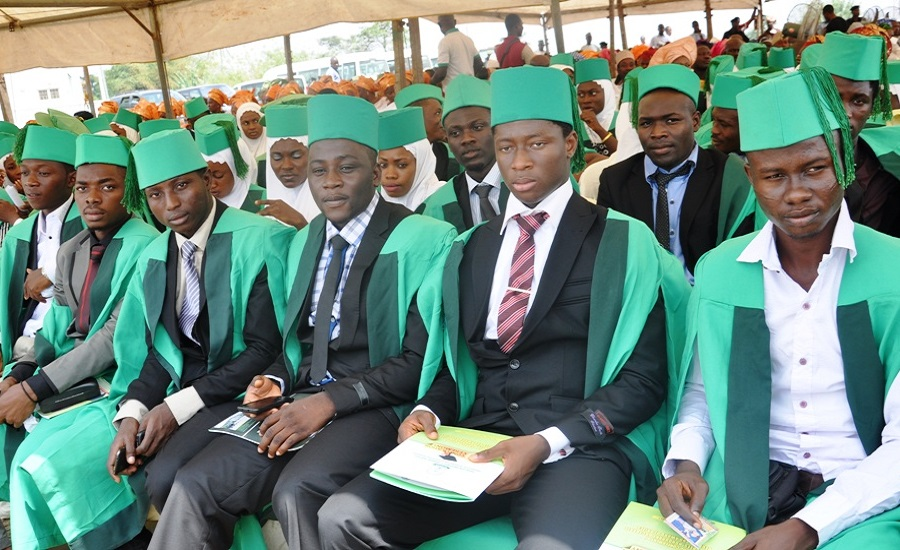
SE Nigeria needs stronger education systems

3. Emphasis on Pedagogy: A pedagogical approach which emphasizes both knowledge and practical skills acquisition by exposing both the teaching staff and students to state of art information and communication technology. Tertiary Institutions in the South East should invest more in training their staff and undergraduates to become 21st Century and Fourth Industrial Revolution skilled who will be employable and able to solve problems in the workplace as intrapreneurs or create ventures as entrepreneurs.

4. Using Digital Tools to Transform Education: The Classrooms of the future are smart and connected offering personalized learning and generating real time analytics on learning outcomes which will predict the likelihood of academic performance of students in the classroom. Public schools can be adopted by organizations and wealthy philanthropists   in the South East and retrofitted with latest technology tools to make them smart schools that will train the young ones to become digitally relevant.  A Smart Learning platform should be developed to train all public and private school students in the South East with the latest courses and subjects which will make them have in demand skills and prepare them for a digital future in English and Igbo so that they don’t lose their identity. Gamification can also be used to transform education in public and private schools in the East as game based learning provides a fun experience which can make the kids learn faster.

Using Virtual Reality can make public schools offer quality accessible education as the technology can aggregate lots of students at the same time learning courses and subjects from a remote tutor who might be based abroad. Augmented Reality is being used in medical schools abroad to train medical students. This will aid in the production of knowledgeable and skilled graduates, thinkers, researchers, scholars and leaders of tomorrow.

5.Establishment of Digital Skills Acquisition Centers in all local governments in the South East: Digital Skills Acquisition Centers should be established in all the local government areas to train the youths in 3D Printing, Artificial Intelligence, Robotics, Embedded Electronics, Blockchain, Data Analytics. These skills will make them to solve their everyday problems with technology and transform their communities too and also they could get employed from reputable foreign organizations.

In Nnewi due to the automotive cluster there a Digital Skills Centre can be established there to train the youths on how to use 3D Printing to manufacture automotive parts for the automotive companies based there. They can also be trained to be digital mechanics with a digital mechanic workshop established there for them.

In Awka and other towns in Igbo land with a history in skilled blacksmithing, fashion and metalworks, 3D Workshops can be established to train the youths on how to become digital craftsmen and creative artists using 3D design and printing technology.

6. Engaging in Industry and Society Relevant Research from Tertiary Institutions in The South East: Universities and Polytechnics should ensure that they engage more in R and D which will solve the immediate needs of the South East and also they should be industry relevant to make them engage in technology transfer and earn revenues from their inventions or establish startup companies to commercialize them and nurture them to scale as success stories.


Audition for the Best Job; Get an Ikenga

0

I woke up and it was an email from the Vice Chancellor: “On behalf of the University Senate, Faculty, Staff and Students, I write to invite you to deliver the 15th Public Lecture of Federal University of Technology, Owerri, Nigeria”.  The University Public Lecture is a celebrated ceremony in university systems where scholars present topical issues; a real festival of scholarship. Within seconds, I replied, partly, “I accept”.

I had left FUTO years ago. I could not understand how my professors could vote for me to return in this special way. Every faculty would like to mount that podium for the rarity of UPL: one lecture per two years.

Then, the day came and the lecture was adjudged by the University Orator as “the best in history”. He was not factual because I listened to a better one while in FUTO delivered by former MIT professor, Prof. Joseph Chike Edozien, who is now Asagba of Asaba.

FUTO gave me the Ikenga – the university symbol of strength, valor and excellence. As one of Nigeria’s leading technical universities, alumni and students treasure the university, and Ikenga is revered (a life version welcomes all to FUTO).

Now, the big message: How can you move from overlooked to overbooked, and given an “Ikenga”? The simple answer:  you have to audition through everything you do; getting the best jobs happens when there is no job available! Unless people can make a case for you in your absence, your career will not go far, and to get people to do that, you must be predictable.

Audition always – get an “Ikenga”.

Eight Facts About iPhone [Infographic]

0

Courtesy of IOTransfer, the creator of iPhone Manager, here are awesome eight fun facts about iPhone. Since its first release in 2007, Apple iPhone has brought countless revolution in the Smartphone market, obsoleting every other smartphone on the planet in every way that mattered. It changed the way how people used a cell phone, from the way we text/take a photo/view pictures, to the way we play games and listen to music. So far, iPhone’s evolution is connected with more than 200 registered patents, which is quite remarkable for just one single phone.

Amazon Taxes Virginia and New York on HQ2, The Power of Conglomerate Tax

0
SEATTLE, WA - JUNE 16: A visitor checks in at the Amazon corporate headquarters on June 16, 2017 in Seattle, Washington. Amazon announced that it will buy Whole Foods Market, Inc. for over $13 billion. (Photo by David Ryder/Getty Images)

I have explained Conglomerate Tax using Dangote Group: governments pay taxes to conglomerates to have them in their domains. Simply, with the power vested on conglomerates by markets, they get governments to support their future ambitions in ways no other entity could. They have that ability because they focus on fixing the upstream challenges in economies where they operate because they have accumulated more capabilities than anyone. Yes, as Dangote Group builds a refinery, it could extract more goodies from governments than a man building petrol filling stations since government can easily find builders of petrol filing stations over people with capacity to invest billions of dollars on refineries.

The Kogi state scheme will be launched in more states soon. As noted in the press release, the Basing Authority will provide the land. That means Dangote Group will not have to pay for it. There is nothing wrong with that. He is investing to provide food security, provide youth employment and also improve the communities. That is what conglomerates do because they are the best creators of jobs, at least in short terms. While the state can plan to sell the land and invest the proceeds in startups, it may take years before those startups can generate the kind of employment and economic activity a conglomerate like Dangote can deliver in a year. For having that capacity, conglomerates tax nations. In other words, you have to subsidize their businesses through government supports for them to help you fix your pain points like unemployment as a government. They operate at the upstream level where the pain points are massive in the operations of governments. Their reward is Conglomerate Tax: the subsidization of their business operations due to their capabilities to help support government initiatives at scale.

Amazon with the selection of its HQ2 has proven that Conglomerate Tax is global: US cities are going to pay Amazon to come and stay in their communities. You cannot get the deal they are giving Amazon because you are not a conglomerate. Irrespective of what people may write about Amazon, Amazon has not invented anything new: the world has been like that for ages. You cannot expect a firm to put $5 billion in a place without expecting governments to give incentives in a world where cities compete against one another. If a businessman does not understand that, it means it is not handling its fiduciary responsibility very well.

Shieber sees essentially three problems with Amazon’s  HQ2 process and announcement:

  1. Amazon’s wealth drives its corporate power, which forces governments to do its bidding by applying to its reverse RFP process.

  2. The incentive packages lined up by NYC and Northern Virginia are a form of corporate welfare that would be better used for everyday citizens, plus Amazon would have come anyway.

  3. Amazon is not-transparent about its data or process, even while it collected data from hundreds of city governments.

Do not cry about it when your government is giving out incentives to conglomerates; they have reversed many things as the quoted TechCrunch article brilliantly noted thus: ‘Increasingly though, companies have learned that cities will come far and wide to fight for jobs. In fact, rather than bidding for projects and having city governments or their economic development agencies select winners, companies can propose projects, have cities bid and then the CEO can make the call. I call this a “reverse RFP.”’

Nigeria Enters Banking 3.0 Era

0

Before the golden decade (1990s) of Nigerian entrepreneurship, there were banks. Those banks became known as old generation banks because new ones emerged in 1990s, disrupting the then banking order with superior customer experiences. During the 1990s, some of the elite banking institutions we have in Nigeria today were established, from Zenith Bank to GT Bank to UBA (nee Standard Trust Bank).

Unlike the golden decade (the 1990s) of Nigerian entrepreneurship when amalgams of new generation banks were born, seeding a new age in the nation’s financial system, this moment cuts across sectors.

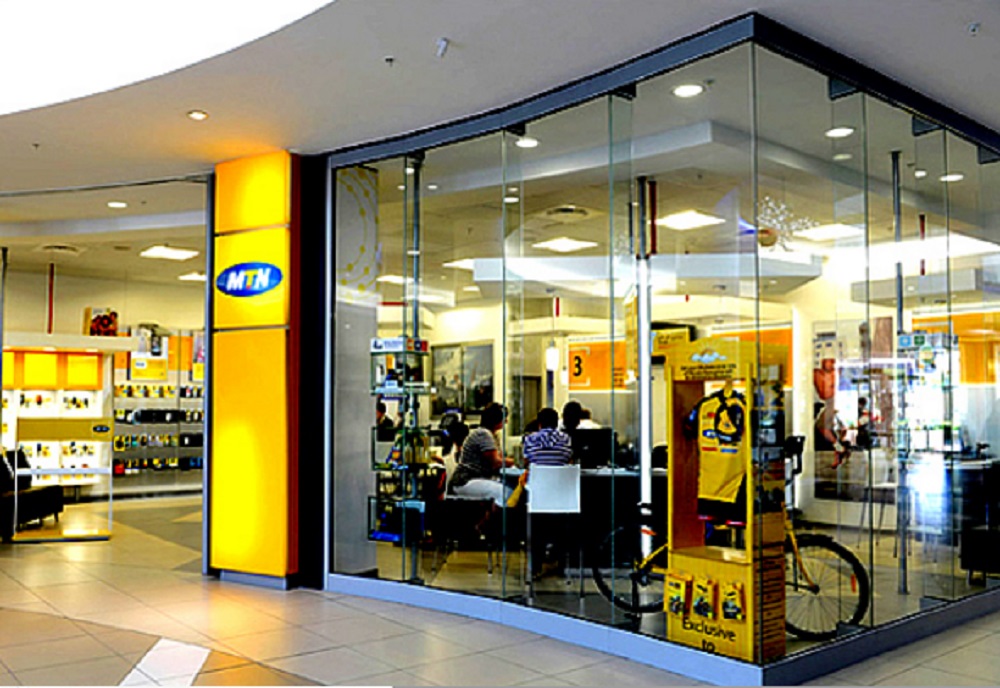
The old generation banks made up Banking 1.0 era for Nigeria; the new generation banks gave us Banking 2.0. Now, the Banking 3.0 era is here as MTN pursues a Mobile Banking license. This is a very huge redesign in the industry as if you have telcos like MTN coming into the financial sector when fintechs in all different forms are already enabling dislocations, new bases would be established. Flutterwave and Paystack are threats because most fees earned by the fintechs are largely lost revenues to the banks. I make this statement since the fintechs are not necessarily expanding the customer base by going to the unbanked or underbanked. Yes, they are focusing on the upper middle class which has been the engine that supports the fat bank profits for years.

MTN Group will apply for a mobile banking license in Nigeria and launch a service there next year, its CEO said on Tuesday, further embedding the South African telecoms company in its biggest but increasingly problematic market.

“We will be applying for a payment service banking license in Nigeria in the next month or so, and if all goes according to plan, we will also be launching Mobile Money in Nigeria probably around Q2 of 2019,” Rob Shuter told a telecoms conference in Cape Town.

Yet, even in this notice, we can see a glimmer of positives: MTN Group remains committed to Nigeria despite the recent challenges. By next year when MTN Nigeria launches the mobile banking service, it would be the largest “banking institution” in Nigeria by customer base since on day one, MTN Nigeria may have excess of 55 million “banking” customers compared with about 15 million First Bank, the largest in that category, commands. This is not a surprise: I have noted that 2022 would be the year of convergence (see video above) in Nigeria. We are going to see all kinds of redesigns as our Cambrian Moment elevates.

1990s was the decade of banking.

2000s was the decade of voice telephony.

2010s is the decade of broadband.

2020s would be awesome. From technology to agriculture, finance to entertainment, entrepreneurs would hit it big. There is a convergence happening right now and most of the pieces would sync. Our payment infrastructure would mature, the connectivity would improve and investors would come to party.

Payment Service Banks

MTN Nigeria is taking advantage of the new CBN policy: Payment Service Banks.