DD
MM
YYYY

PAGES

DD
MM
YYYY

spot_img

PAGES

Home Blog Page 7042

The World’s Reigning Business Model – UBER $120 Billion

2

One thing unites all leading modern technology companies: they are platforms. From Google to Facebook, platforms drive competitiveness through near-zero marginal cost which practically triggers the winner-takes-all outcome, as I noted recently in Harvard Business Review. Platforms create moats which ensure these ICT utilities are not easily disrupted because once a platform takes off, its inherent mutability makes it better, through a positive continuum in an amazing digital virtuoso circle. Yes, once that platform gets a separation, it attracts more users, and more people join, and that process makes it even better that after many circles, it conquers its territory as the undisputed category-king.

Uber’s $120 billion

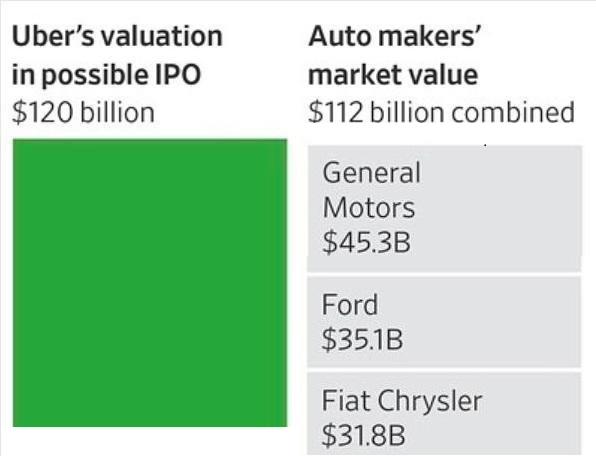
Uber is projected to hit the market at $120 billion valuation, WSJ reports. That is more than the total market values of Ford, GM and Fiat Chrysler.

Uber Technologies Inc. recently received proposals from Wall Street banks valuing the ride-hailing company at as much as $120 billion in an initial public offering that could take place early next year, according to people familiar with the matter.

That eye-popping figure is nearly double Uber’s valuation in a fundraising round two months ago and more than General Motors Co. , Ford Motor Co. and Fiat Chrysler Automobiles NV are worth combined.

Uber’s plans now set up a race with rival Lyft Inc., which is also eyeing a debut in the first half of the year, The Wall Street Journal separately reported Tuesday. Lyft’s valuation is expected to top the $15.1 billion it sold shares at privately this year.

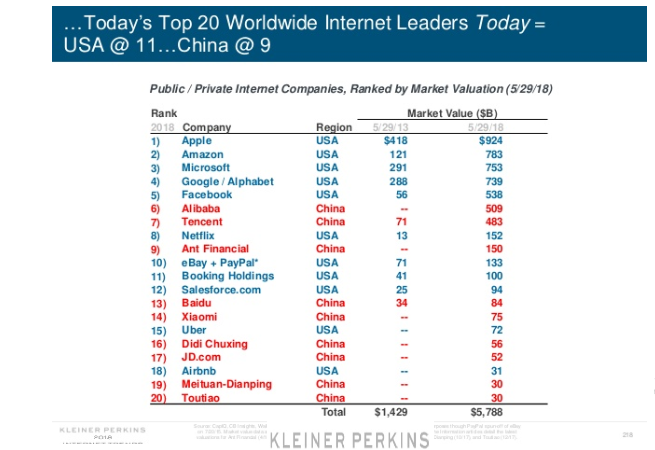
The business model which Uber has deployed in the logistics sector is called Aggregation – a key component of that platform business system. It is the winning business model of the 21st century in the technology space where Internet has enabled the scaling of many things through an unconstrained distribution, enabling near-zero marginal cost. Nearly all companies in the top 20 digital technology companies have some elements of this business model. If your business model cannot incorporate this, it is possible you are missing something strategically, as a technology company.

2018 Internet Trends â?? Top 20 Global Internet Firms; US 11, China 9

World Bank’s IFC Plans to Invest $3 Million in Nigeria’s Kobo360 Logistics, IFC Filing Shows

0

World Bank’s IFC Plans to Invest $3 Million in Nigeria’s Kobo360 Logistics, IFC Filing Shows.

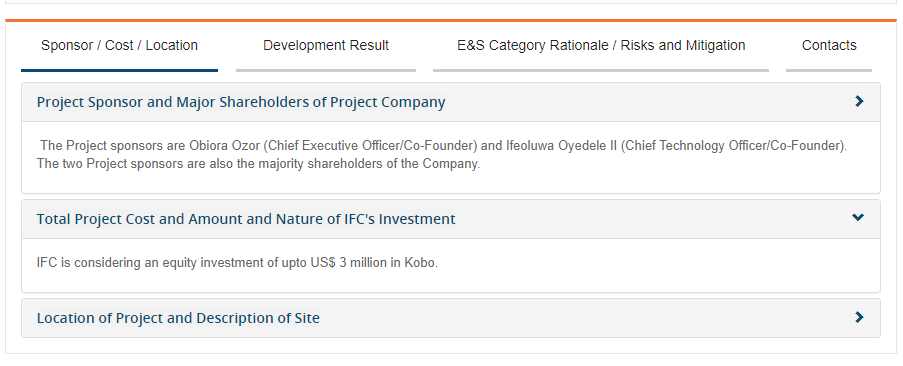
IFC is considering an equity investment of up to US$ 3 million in Kobo360 Inc (“Kobo”).

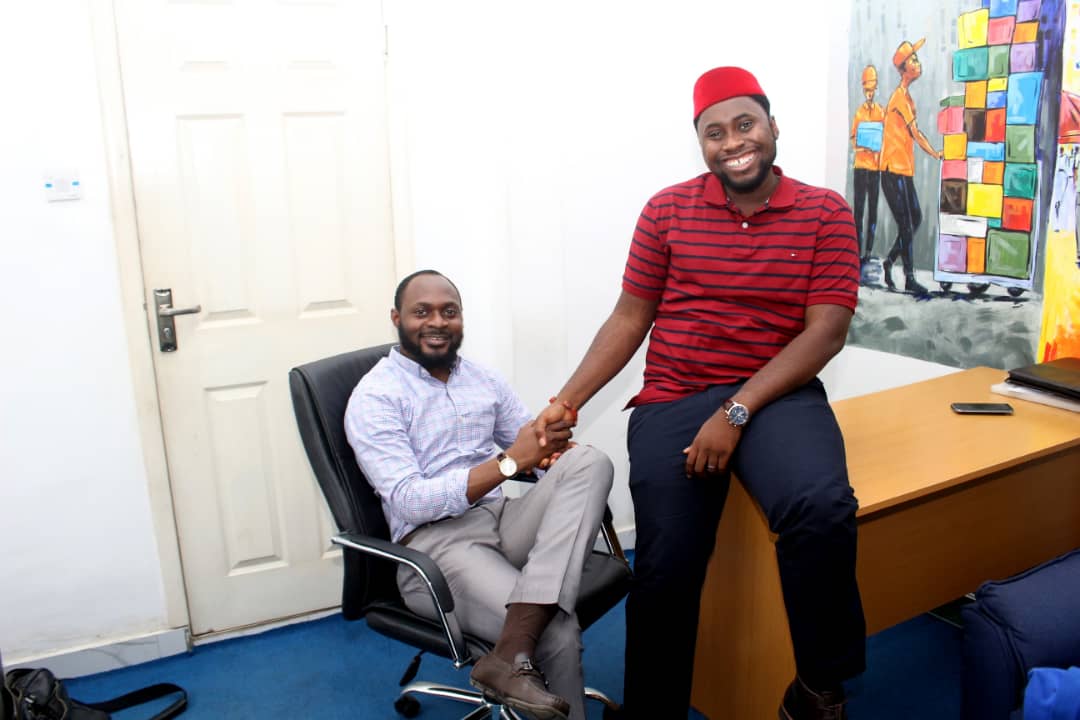
Kobo is a long-haul e-logistics B2B platform utilizing an “Uber for trucks” model to develop a marketplace matching cargo owners with long-haul freight needs and truck owners who are able to service them.

Through its internally-developed digital platform, Kobo is disrupting the transportation and logistics market in Nigeria offering a strong value proposition to key stakeholders in the sector including cargo owners, transporters (and drivers) and cargo recipients.

Kobo optimally matches demand and supply of trucks, providing predictability, reliability, price transparency, and increased utilization of otherwise idle assets in the highly fragmented trucking market in Nigeria.

Given the strong population growth expected (Nigeria will be the third largest country in the world by 2050), logistics will become even more important to support booming sectors such as manufacturing, agriculture, commodities, fast moving consumer goods (FMCG), etc.

Is Your Name On The AMCON List?

0

Nigeria’s AMCON (Asset Management Corporation of Nigeria) has released a list. It is a list of 105 people who (largely) owe the corporation. The list is unfortunate because AMCON is hoping that by publishing these names, the people would be shamed, and then pay their debts. What a strategy! Let me spare you the details (you can click here to see the roll call).

The Asset Management Corporation of Nigeria (AMCON) on Monday released the list of debtors it claimed have failed to negotiate successfully with the corporation.

The list, which contains about 105 names, came months after the asset management company said it would need the support of other relevant agencies to ensure that obligors pay up their debts.

The managing director and chief executive of AMCON, Ahmed Kuru, had in July promised to publish the list of delinquent debtors and directors who have failed to reach or refused to reach settlement resolution with the corporation.

Mr Kuru said after failed negotiations, AMCON would name, shame and embark on take-over of properties of delinquent debtors.

The big issue is the unbelievable nation we have: you have a man with a solid contact in a bank, takes loans beyond his capacity with yo-yo collateral, fails to pay and then the bank alerts the government through AMCON. AMCON rushes to the scene, takes over the loan and pays the bank. And then magically thinks it can manage the dying company which has been unable to service its debts obligations. In most cases, after years, the Nigerian people will lose money because AMCON cannot recover what it has put to “save” the private company.

Two things are happening:

  1. The bank did not do a good job by closing the flanks. They gave out a lousy loan, got the fees and when the markets could have punished them for not being thorough, government steps in to “save” the bank from its mistakes. The implication is evident: head or tail, the bank will win because no matter what happens, it will make money. If the loan goes well, it makes money. But when it does not, government takes over and pays it. As that happens, massive distortion happens in the market because the equilibrium point has been shifted for demand and supply to engage. If this is isolated and occasional, we could say it is a necessary way to save our financial system, but when you see this happening regularly, you would understand that even the banks are getting away with this.
  2. When AMCON arrives, it takes over the poorly performing company, after paying off the debts to the bank. But if you look critically, the businessman has moved billions of naira out of the company to buy houses in New York, London and beyond. AMCON leaves that guy alone, threatening it with a public shaming publication while leaving all those assets for that person. Tell me why the next person will not try to repeat this dubious way of transferring the commonwealth into personal purses. They know they can divert the money to other sources, and those companies they have funded with diverted monies will remain for them.

Simply, if banks know that bad loans can be taken over by AMCON easily, and the yo-yo businessmen know they can divert funds to other companies, without losing the secondary firms even though the original loan recipient firm is taken over by AMCON, there is no way this vicious circle will stop.  Nigeria will keep bailing bad habits until we get serious. Yes, the nation will keep paying Big Man Tax where everyone is paying to fund fake business deals in the economy. Nonetheless, I do agree that AMCON is adding value but it must be reformed to avoid this massive transfer of commonwealth into private purses!

Absolutely – AMCON is working but it needs to have a clause that if it comes and takes over, the bank will pay it on behalf of the Nigerian people 25% of the agreed sum while the loan recipients will lose rights to all global assets until everything has been regularized. By doing it this way, banks will have pains to deal with, and businessmen will think twice before putting our economy on risks.

My Response: Voice Payment and Banking for Northern Nigeria

2

Since I wrote the piece on moving startups including fintechs to northern part of Nigeria where BVN penetration rates are about a factor of 10 below what Lagos has, many have commented explaining why the move would be a bad strategy. Of course, no one said it would be easy, and without any risk. As I explained in the free-range chicken analogy, opportunities come in uncontested markets for pioneers who have the visions and capacities to unlock them.

Let me quote this comment which largely summarizes most of the points

I don’t agree with you. The most important consideration for any business is the market need for it’s products or services. First off, is there a considerable need for my products/services in a particular market? Is the market ready and sophisticated enough for my kind of business offerings? Who are the people that make up my potential customer base? Are they willing and able to buy or afford my products/services? Will my products be too advanced or simplistic for them? When it comes to Fintech, not sure northern Nigeria qualifies as a viable market (at least not for now). That region is still struggling to embrace basic financial & banking services not to talk of more advanced digital financial services like that which fintech offers. How many of the FG & CBNs financial inclusion initiatives have succeed in northern Nigeria till date? $mart businessmen and investors follow the money and the viable markets when it comes to locating or building their business structures and models. Northern Nigeria doesn’t present such an attractive offer or potential worth all the inherent risks (security & socio-economic) therein. Just several days ago, over 100 persons were killed in Kaduna out of nowhere without any warning. That’s a disaster. (edited)
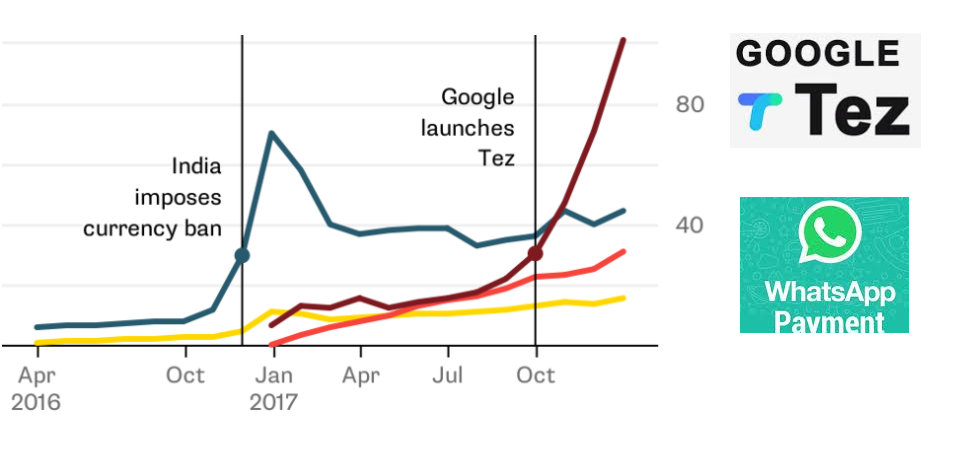
How WhatsApp Payment and Google Tez Would Impact African Banking

My response: The commenter is right on all the points noted. Yet, he is making this comment based on the present technology he is aware. If we do believe that innovation can bring disruption through a new basis of competition, it is fair to expect that one can build a financial service technology company in Northern Nigeria at scale. That we have text-based payment system does not mean that is the final state, and what is desirable in Nigeria. Even literacy should not be a barrier if we make that product to be delivered via voice. Our challenge here is the limitation of what we read on Silicon Valley which defines what we expect to deliver to customers in Nigeria. Provided one does not need a high level of literacy to use a mobile phone, it is fair game that one can do banking via voice while being an illiterate. MPESA has not been slowed down because people are not literate. Typically, within weeks, non-educated people pick some key enablers to do their MPESA without any help – how to send money and how to receive money. Then, know the amount!

I had noted that Google Tez would also cause disruption with its potential voice banking capabilities. Possibly, Google Tez would come first to Northern Nigeria before our entrepreneurs.

Voice banking will be presented as secure and convenient and will open new vistas for a really brilliant startup to set a new basis of competition in the fintech world. 2018 is the year of Voice Banking in Nigeria, and Africa. If you have the capabilities, go for it.

Simply, I told him “Voice Banking” but it may not be a bank product, but likely from a fintech. We have experienced ecommerce, journeying on mobile commerce, and right now, this is the age of voice-commerce. For Africa, there is no emerging financial technology that is coming in 2018 that will be bigger than voice, and banking (not necessarily banks) is going to be the clear beneficiary in Africa

Voice banking will be key in places like Northern Nigeria

On security, provided you have MTN and Glo in those areas, you do not need to be in villages to deliver your services. At the end, everything comes down to how you create that product. Yet, no one said it is going to be easy but I am very confident that Northern Nigeria is ready if the right products arrive for the citizens in ways they can use them.

LinkedIn Comment On this Piece

There’s really no argument/misunderstanding on what needs to be done or how it should be done; the only thing remaining is having the capacity to deliver, the market is already there in the north.

Some people are still stuck in the traditional way of product design, whereby a business entity comes up with what it likes, or what it thinks the consumers would like, and then force it on them. But the construct of digital platform has changed all of that. Now, you need to go out and find out what the people want, and how best to deliver it, in order to suit their limitations and other challenges they may have. When you learn to develop products with this kind of mindset, obviously the things you highlight as impediments will vanish.

As for security issues, I am sure many who worry much about security have not travelled to the north before, they rely mostly on what they read and hear. The way you hear about boko haram and bombing, you might be tempted to believe that Maiduguri is a deserted town by now, interestingly there’s still over a million people within the city. If you travel to Kano or Kaduna and spend some time, you will appreciate that there’s so much economic activities happening, with billions of naira exchanging hands.

Nigeria’s 115th Position

0

The World Economic Forum (WEF) ranked Nigeria as the 115th country out of 140 on global competitiveness. If you attended the same secondary school I attended (Secondary Technical School Ovim, Abia State), and came anywhere that far, you would get the principal time. When that happens, it means you are in real trouble because you are failing irrespective of your scores. So, Nigeria did not do well. That is not news: the big issue is that the city that makes Nigeria look great is going through big  major structural redesign. Lagos is chronically sick with the traffic congestion and if that is not fixed, Africa’s 5th largest economy may experience severe diminishing returns by 2030. The solutions put to address the traffic problems have been largely transient and ephemeral.

Nigeria has been ranked 115th out of 140 countries assessed in the 2018 Global Competitiveness Report (GCR) of the World Economic Forum (WEF), an official has said.

A statement issued by Jumoke Oduwole, senior special assistant to the president on industry, trade and investment, office of the vice president, on Monday in Abuja said that the report was released on October 17.

She said that the report showed improved performance across key enabling business environment indicators and suggested an overall improvement in the country’s competitiveness.

The GCR is an annual ranking which compares the national competitiveness environment of 140 countries based on 12 pillars – four grouped under basic requirements, six under efficiency enhancers and two under innovation and sophistication factors.

Yes, Lagos needs help – everyone wants to move to Lagos. It is the ultimate center of excellence where a boy comes with a nylon bag and returns to village with a car. It has something for everyone, and any person can find value in Lagos. This system has created a challenging situation where Lagos has become extremely overpopulated and there is no tangible model to manage this paralysis.

That brings me to this question: What can be done? I have noted a solution.

I propose for Lagos state government to begin immediate discussions with neighboring states to move some of the business hubs therein. Do not bank on that though, as doing so will mean that Lagos will lose some tax revenues to the states. So, for Lagos state government, that would not be a good idea, even though it may help the region!

Yet, what we have in Lagos is not sustainable – this city will crash under severe traffic, in ten years, if nothing strategic is done. The Atlantic City should have been built in Ogun State to re-distribute traffic from the Island to the Mainland. All that Lagos State needs to do is to work out a tax revenue sharing formula with the neighboring states.

But that is easier said than done since Nigerian law is still primitive in that space on where earnings or incomes are taxed. Afterall, Nasarawa State houses most people that work in Abuja, and most of those Abuja workers living in Nasarawa state do not pay taxes to Nasarawa state government.

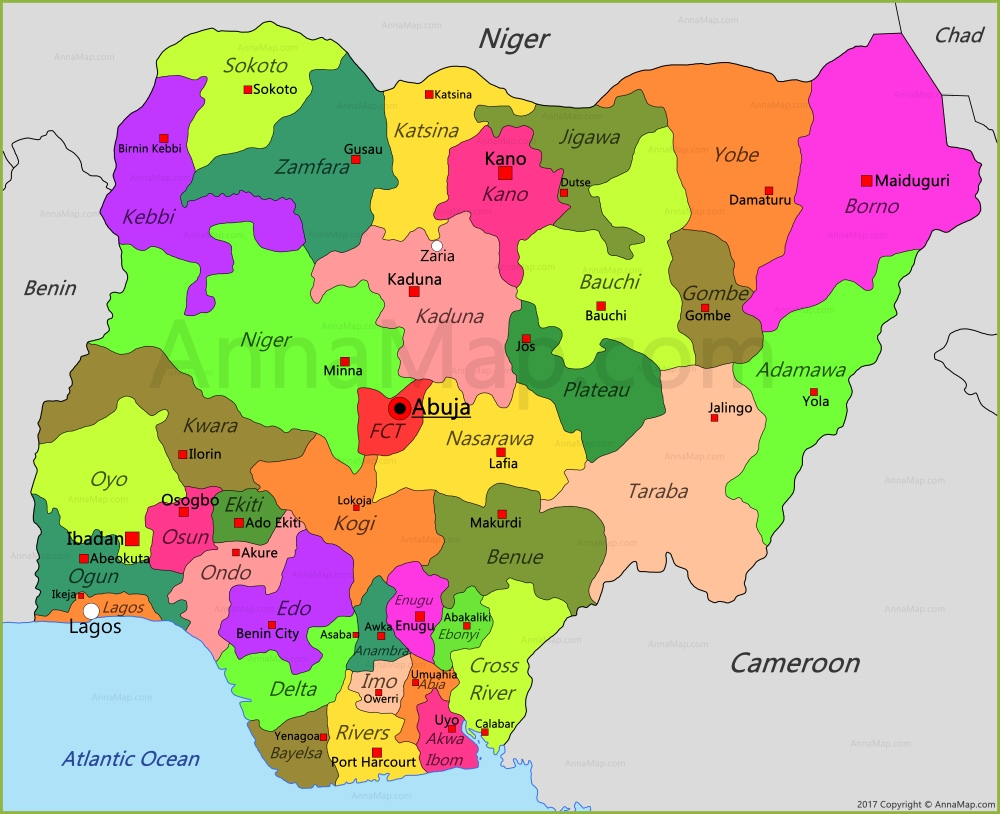
Map of Nigeria (source: World Map)

I wish we have free cash in Nigeria – we do not. But where that is possible, I think it is time to add one more new city, stimulated with massive government funding. Uyo would be a natural choice. Yes, if you have Uyo and a deep seaport running, within five years, the traffic in Lagos ports and overall Lagos traffic will drop by at least 20%. All the traffics from Onitsha and Aba will move to Uyo, and some from the North diverted to Uyo, and magically Lagos would become more livable. Of course, interests and shenanigans do not allow sensible things to happen in Nigeria. But anyone that tells you that Lagos would continue to grow without a surgical roadmap by 2030 does not live in Lagos! Of course, it takes efforts to see that since people are indeed celebrating that they made progress, coming 115th out of 140.