DD
MM
YYYY

PAGES

DD
MM
YYYY

spot_img

PAGES

Home Blog Page 7059

Snapchat Advances vCommerce – Konga, Jumia Should Consider

0

The present model of ecommerce was built on text. Of course, we know that it has many limitations. If you see a product but you cannot figure out the name or how to describe it, you would be out of luck. Never take for granted that it requires a certain level of skill to design search queries. So, the news that Snapchat is moving into the space, to use visuals to drive and anchor the search is interesting. Simply, you can visually search for most things and that will help the discovery process at scale. This is visual commerce (vCommerce) at infancy when ecommerce  integrates visuals over text-based descriptions.

Users can use Snapchat’s camera to scan a physical object or barcode, which brings up a card showing that item and similar ones along with their title, price, thumbnail image, average review score and Prime availability. When they tap on one, they’ll be sent to Amazon’s app or site to buy it. Snapchat determines if you’re scanning a song, QR Snapcode or object, and then Amazon’s machine vision tech recognizes logos, artwork, package covers or other unique identifying marks to find the product. It’s rolling out to a small percentage of U.S. users first before Snap considers other countries.

This is very fascinating but it would be a long time before it can find applications in many things we use in Africa. Our main challenge is that our products, usually in open markets, are not barcoded, making them difficult to be “tagged”. But if we do fix that, this could be a solution for our ecommerce companies: when you have a largely big customer base with digital literacy issues, improving product discovery could be catalytic.

Yes, the lady sees the shoe in a party, and needs one, but the shoe has no name. What does she do? She takes a photo and magically she sees that product in Konga, positioned for her to hit BUY button. That has reduced a huge amount of discovery friction.

Visual Commence is promising indeed and Diamandis in a newsletter explained it clearly.

By pointing your Snapchat camera at a barcode or object and pressing on the camera screen, users are taken to an Amazon link showing them the object or similar ones that can be purchased via Amazon. The idea here is to make it easier to find and buy objects that you either don’t know the name of or find difficult to describe. At a tactical level, this is a boon for Snapchat as it looks to turn around recent losses and keep users engaged.

President Buhari Accepts APC Presidential Ticket for 2019 Election (Full Text)

0

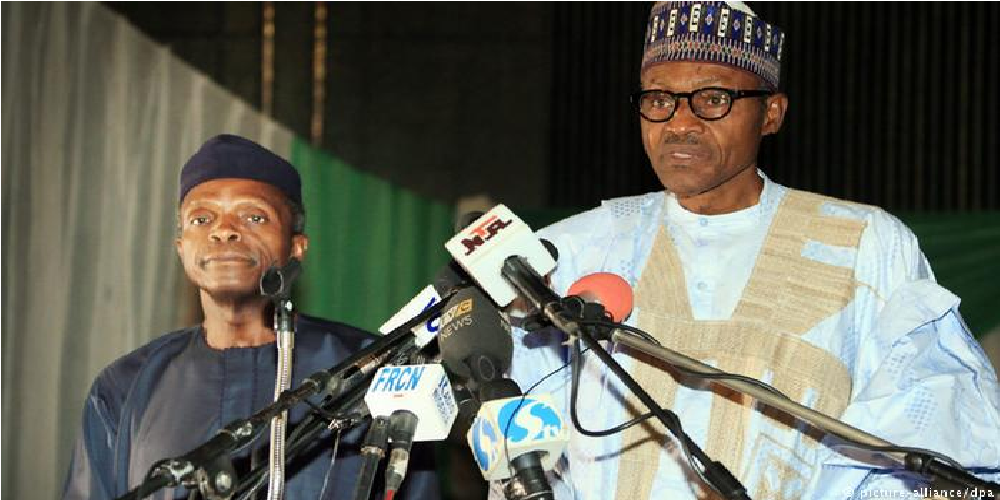
This is the full acceptance speech of President Buhari as he becomes the nominee of the ruling party for the presidential election next year (some noted accomplishments, according to Mr. President, from the speech, summarized below).

  • Our currency has stabilised. Our reserves are now $44 billion, a lot higher than we had in 2015.
  • Power generation capacity has reached 8,000 megawatts against less than 4,600 when we came into office.
  • We are executing Independent Power Projects in 9 Federal Universities to deliver uninterrupted power supply
  • The Government through its Anchor Borrowers Programme and other incentives has empowered more than 2 million farmers to go back to the land. We now produce 80% of our rice requirements.

PROTOCOLS:

I wish to express my sincere gratitude to the Chairman and members of the Convention Committee for planning and conducting this convention. The same appreciation goes to the chairmen of National and State Executive Committees of our party. Thank you very much for doing a difficult job well.

2. I would like to pay tribute to Chief Bola Ahmed Tinubu, Chief Bisi Akande the first chairman of our great Party and to Chief John Oyegun who led the party until this year and all the APC Governors.

3. The result of the presidential primaries of the All Progressives Congress this time is different because I am the only candidate. I thank all other eligible candidates who deferred to me in the interest of our party unity and over-all national stability.

4. Fellow party members, it is with a deep sense of humility that I stand before you today to accept the nomination of our party, the All Progressives Congress to be its candidate and flag-bearer in the 2019 presidential elections.

5. As I stand today before you, there is no honour greater than the confidence given to me by all of you when you affirmed my nomination. I thank you for your support. I thank you for your guidance. I thank you for staying committed to the CHANGE agenda.

6. I accept this honour as a tribute and mark of confidence to carry the responsibility as we all join hands to continue the good work of the APC government to 2023 and beyond.

7. We are very proud of our record from 2015 to date:

We have arrested and checked the slide to anarchy on the security and economic fronts.

Boko Haram is reduced to dastardly attacks on soft targets. Normalcy has returned to much of North East and neighbouring North West states.

Our currency has stabilised. Our reserves are now $44 billion, a lot higher than we had in 2015.

Power generation capacity has reached 8,000 megawatts against less than 4,600 when we came into office. As we invest in new power generation infrastructure we are strenuously working to address the legacy deficiencies and challenges of transmission and distribution networks across the country.

We are executing Independent Power Projects in 9 Federal Universities to deliver uninterrupted power supply and we intend to expand to a total of 37 Universities

We have revived most of our capacity to produce fertilisers locally.

The Government through its Anchor Borrowers Programme and other incentives has empowered more than 2 million farmers to go back to the land. We now produce 80% of our rice requirements. Many farmers who nearly lost hope are now millionaires.

We have introduced primary school feeding programmes to encourage attendance and enrolment. We also have introduced the conditional cash transfer to help small and medium businesses, the men, the women and young people who drive our economy.

We have repaired and are repairing major arterial roads and starting major railway projects with the aim of linking the 36 states with efficient road and rail transportation systems.

We are attacking corruption head-on. With international support we are recovering Nigerian stolen assets and applying them to infrastructural developments.

Today the corrupt are facing the wrath of law and leakages have been generally blocked.

Mr. Chairman, Your Excellencies, Members of the APC.

8. We can be proud of our achievements. CHANGE has come. Ladies and Gentlemen, fellow Nigerians, think how much PDP Governments earned between 1999 to 2015. Think what they did with it.
Infrastructure down!

Security down! 18 local governments of Nigeria under control of a hostile army of insurgents,

Reserves depleted!

Bankruptcy around the corner.

9. What did they do with your money?

10. Internationally, Nigeria is now respected. My inter-action with foreign heads of state and government has been very encouraging. The international community is very supportive of our efforts to put our country in order.

11. Ladies and gentlemen, Members of APC. I thank you deeply for your support and confidence in me. I will not let you or the people of Nigeria down.

On to victory in 2019!
Long live APC!
Long live the Federal Republic of Nigeria!

Domain Registration and Web Hosting – N5,000

0

It is simple: we will register your domain and host it at N5,000. Here are the steps:

  1. Visit Fashostit and search for available domain domains
  2. Paying in NAIRA: Make payment of N5,000 to any of the bank accounts noted here
  3. Paying in USD: Make payment of $15 via this Paypal link for Fasmicro
  4. Email tekedia@fasmicro.com with the domain name and note on your payment
  5. Registration will be completed immediately and cpanel credentials will be emailed to you. You can then create company emails and manage your account independently.
  6. If you want WordPress basic setup, add N5,000 and a website will be ready. You can add contents like you are typing on Microsoft Word.

We have been registering and hosting web sites for years. We would like to get you going. For questions, contact Nky at Tekedia@Fasmicro.com


In Consumer Web Business, Focus On Controlling Demand, NOT Supply

2

I discussed the mechanism of Internet business this week in a company retreat. It was more of economics than technology. A client is redesigning business systems and needed deeper insights on the fundamental constructs on what drives growth in digital firms, especially Internet ones. The whole elemental pillars and anchors which Adam Smith postulated, via the lens of industrial-age economies of the past, cannot necessarily work at optimum in modern digital economies. Yes, the factors of production and comparative advantages of nations remain but their impacts are largely marginal – knowledge has since emerged as the most impactful factor in modern economies. A man with knowledge is a FACTOR.

In the past, business was about controlling supply to move prices. Manufacturers had control of supply but they had limited direct control on the consumers [you can control how many newspapers you produce but you have no definite control on how many people would buy]. So, winning markets was really about managing and controlling distribution as most businesses were bounded and constrained by geography, creating advantages which were largely localized [the largest newspaper in a region controlled the top news of the day].

What is Price Elasticity? If a small change in price is accompanied by a large change in quantity demanded, the product is said to be elastic (or responsive to price changes). On the other hand, a product is deemed inelastic if a large change in price is accompanied by a small amount of change in quantity demanded

Price Elasticity

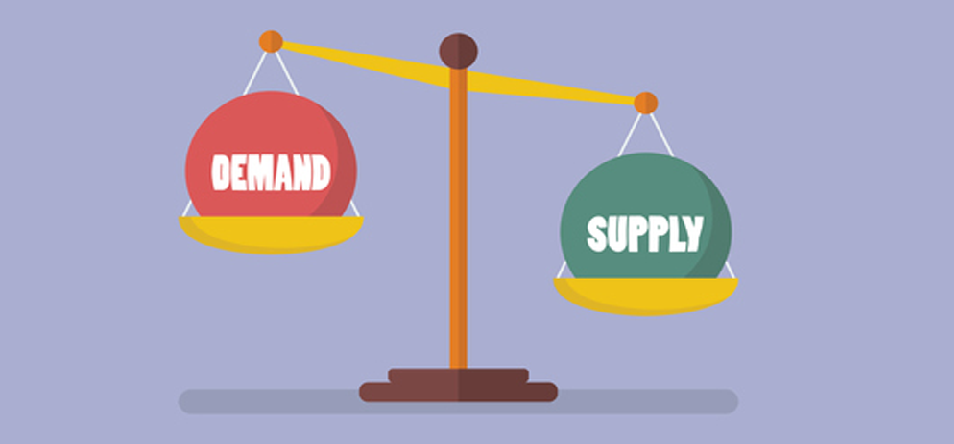
Consider an electricity utility in your neighborhood. The electricity company has absolute control on distribution, making it possible for it to control many aspects of the engagements with consumers. The local newspaper managed distribution, not just on the physical newspaper, but also the contents in the newspaper. Where you have great contents and the editors did not like the ideas, the contents die because the distribution of contents was controlled by the gatekeepers of media. If the few newspapers in town rejected the contents, there was no alternative path to get them to Demand (the readers). So, under that regime, the great power in commerce lied on supply because that was the only thing conglomerates and huge companies could control, assuming a free society.

No industry was excluded in this construct: educational systems controlled supply of available spaces in programs, turning down many qualified applicants. Cement companies, oil companies and banks controlled supplies of services and products, using that control to improve margins.

The Internet Age of Demand-Control Strategy

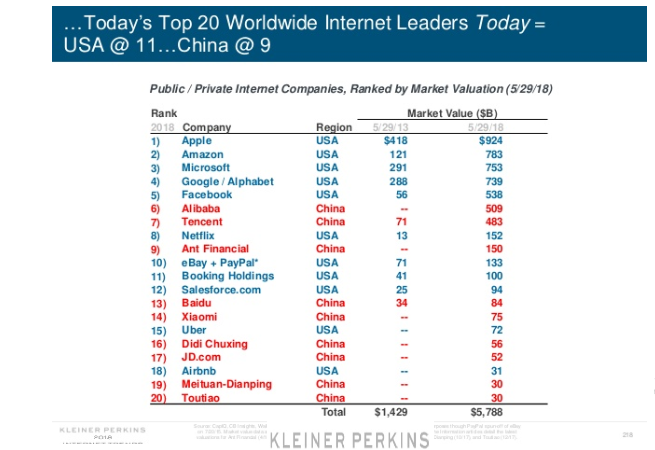
But today, the game has shifted from control of supply to control of demand for web-anchored consumer firms. And only companies with capabilities to control demand are going to win big. As shown in the table below, most of the greatest internet companies are simply controlling demand and that means controlling how supplies reach users and consumers.

2018 Internet Trends â?? Top 20 Global Internet Firms; US 11, China 9

A newspaper in the online space cannot have the old dominant impact it had which was possible because it controlled local distribution, creating scarcity of the product. A movie chain with theaters cannot have its old impact because unlike the physical theatres, the digital ones are unbounded and unconstrained. In other words, you cannot control supply because the web has made supply largely infinite. Because supplies of digital products are largely infinite, the game shifted from being driven by supply to one dictated by demand. There is an infinite copy of a digital movie unlike a disc version. So, when that supply is infinite, distribution loses the edge since anyone can have it. That infinite state happens because in the digital space, marginal cost goes to near-zero.

Simply, if the top five (print) Nigerian newspapers stop publishing online, not many will notice. But if they had done a similar thing, say twenty years ago, there would be serious upheavals. Then, they controlled the flow of information and were very powerful. Today, posting things online is largely unbounded, from Facebook to online blogs to digital native newspapers.

It comes down to aggregation: if the suppliers of local news are many, the challenge moves from the scarcity of the news to sorting out the supplier that adds value, since no person can technically visit all the individual websites before arriving at the most valuable one. Welcome Google which now becomes a gatekeeper, helping to make sense of the whole thing by guiding users to the right contents once they search. This is an evolution, shifting power from the old suppliers to a new set of entities which control access to demand.

Yes, the old companies which used to control distribution lose power [Google decides what content it shows users based on its algorithm]. Magically within the relationships, aggregators like Google and Facebook which make the unbounded supply manageable become the kingmakers. In the process, Google becomes more important to users than the newspapers (the suppliers of news) since Google helps to discover the papers. Because advertisers were all interested in access to demand (the users), the papers are cut-off (yes, disintermediated) as advertisers now spend more money advertising in Google.

All Together

If you plan to run an internet business, think about how you can control demand. You have already lost the power and capacity to control supply. Yes, anyone can use a credit card, irrespective of geography to buy anything online. The quantity you bring will not have material impact in the total pool in the market.

Nonetheless, you still need to find ways to create a separation. That could be by creating perception demand or simply by building massive data ecosystems which will give you access to be the digital kingmaker in a specialized sector since the ICT utilities like Google and Facebook, as I noted in a recent Harvard Business Review piece, have control of the broad internet.

30 Farming Business Ideas And Three Reasons Why I Am A Farmer

0

Few days ago, I received an invitation to attend a Central Bank of Nigeria (CBN) event. When I got to the event, I was asked to check a list. Under profession, I crossed what they had there for me, and wrote “Farmer”.

A lady said “We did not have you here as a farmer?” I responded “I understand, but I am a farmer.” In our farming business, we have done everything to avoid the temptation of thinking that technology is more important than the agriculture we are working to improve. (There are many opportunities in the broad agricultural sector; I have presented 30 farming business ideas below. If you are a subscriber, the text version is here. In the subscription area, we have some mechanisms on the executions).

Yes, if our technology becomes the goal, instead of the improved farming productivity, we have failed in our missions. For us to serve farmers, technology must disappear, and agriculture must rise. Even though our technology must not just run agriculture but transform it, my goal is that having the spirit of a “farmer” will ensure we do not become unfocused, building technology solutions without any relevance to agricultural frictions.

Amid the resounding growth, African agriculture faces many challenges. The absence of standardized product grades, proof of ownership for commodities, and proper storage facilities limits agricultural potential. Access to markets and finance also pose significant barriers. We see these challenges as tremendous opportunities and intend to invest in Africa’s smallholder farmers over the long term to overcome them together

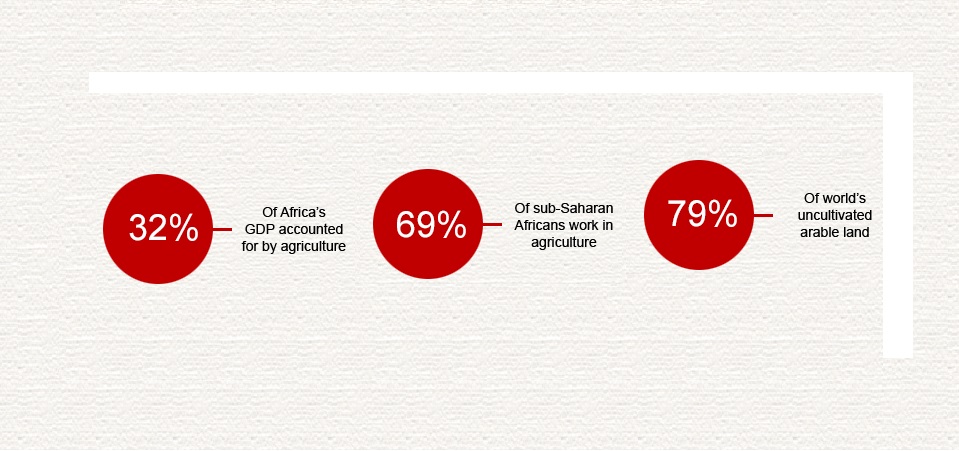
For all we do, these three stats remind us that provided we stay as Farmers, the vision will live on.

Broadly, in your business, is technology becoming the business or are you making sure it is kept in its position which is to run, improve and accelerate strategic corporate objectives?