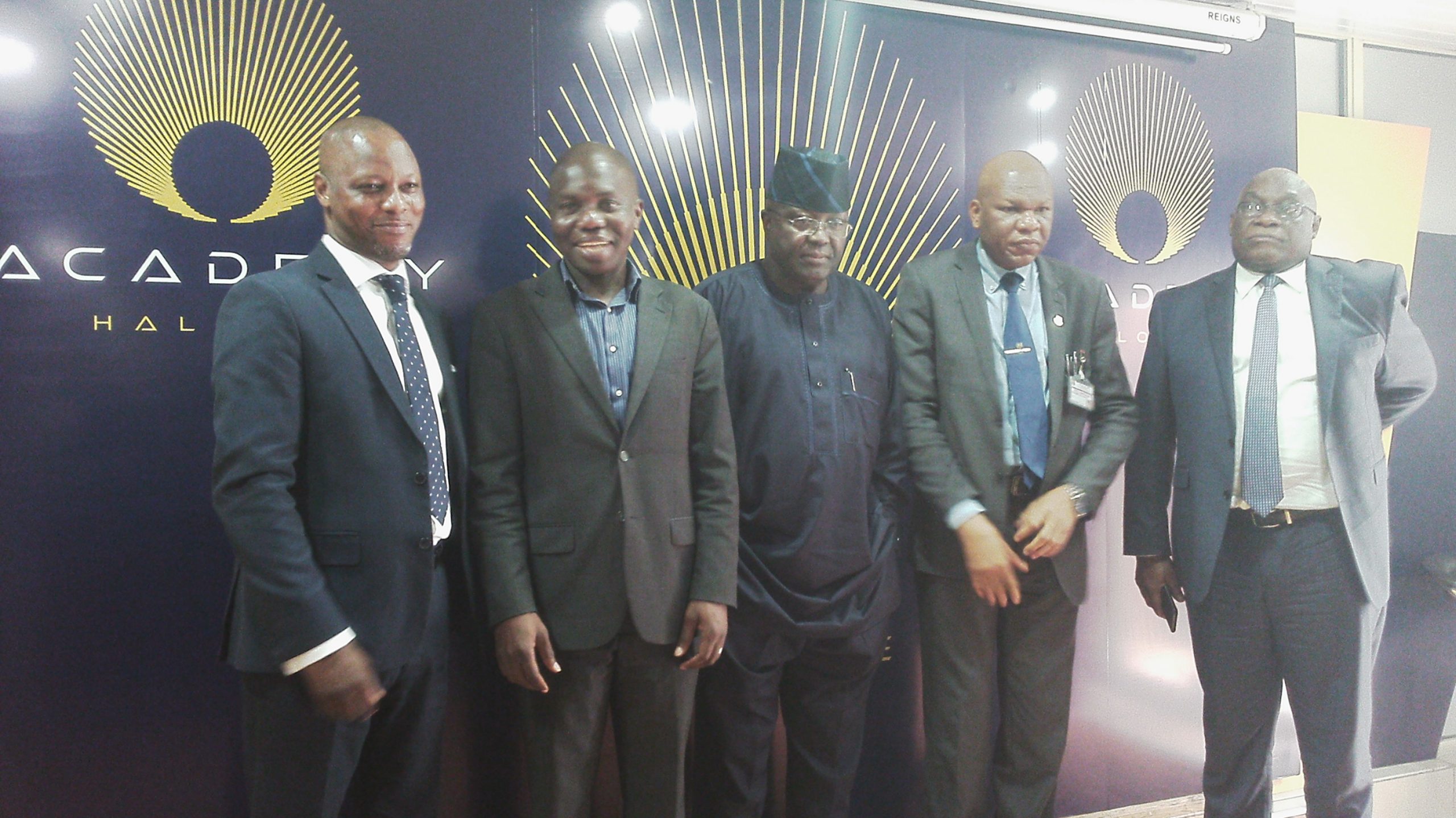
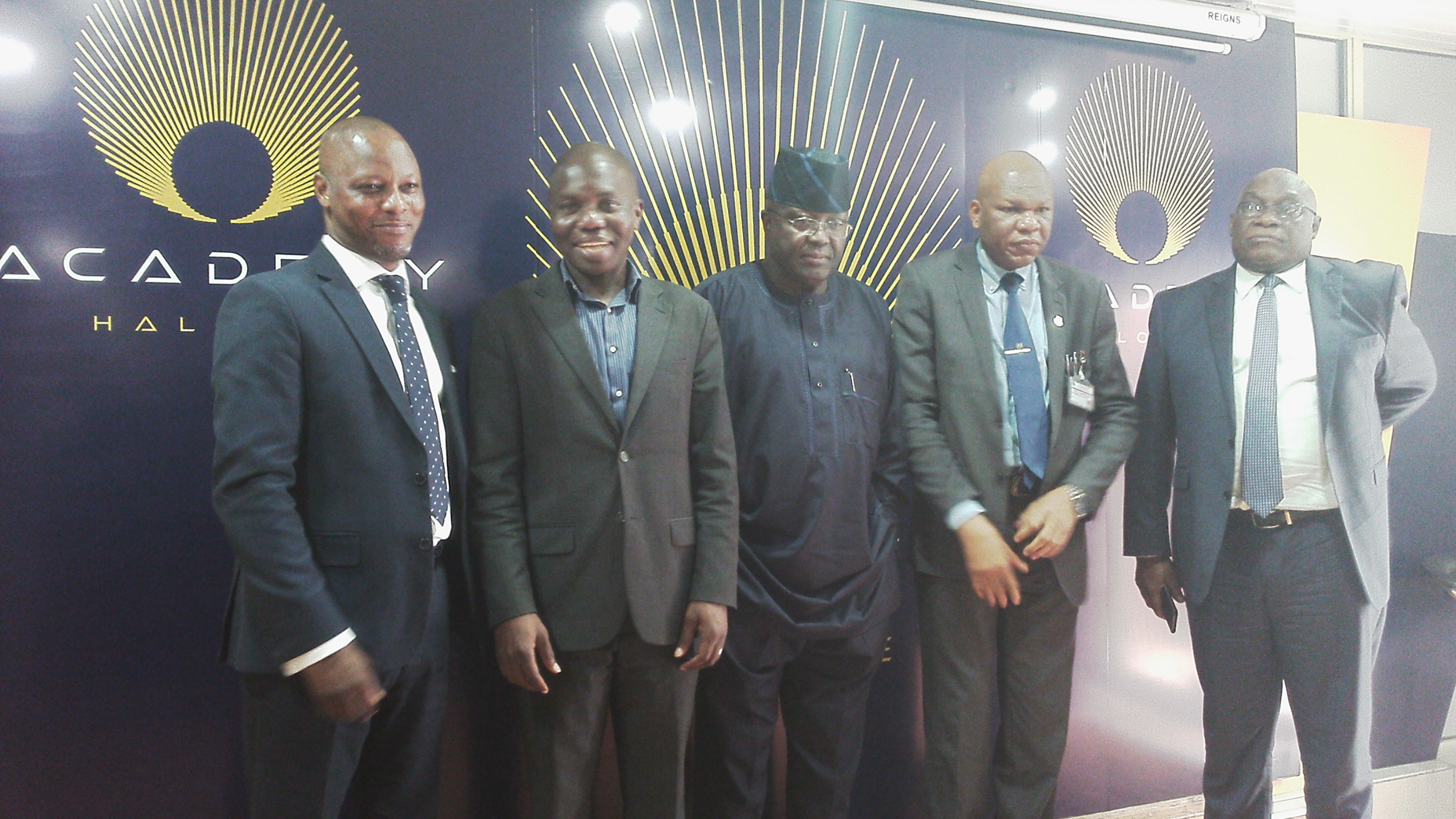
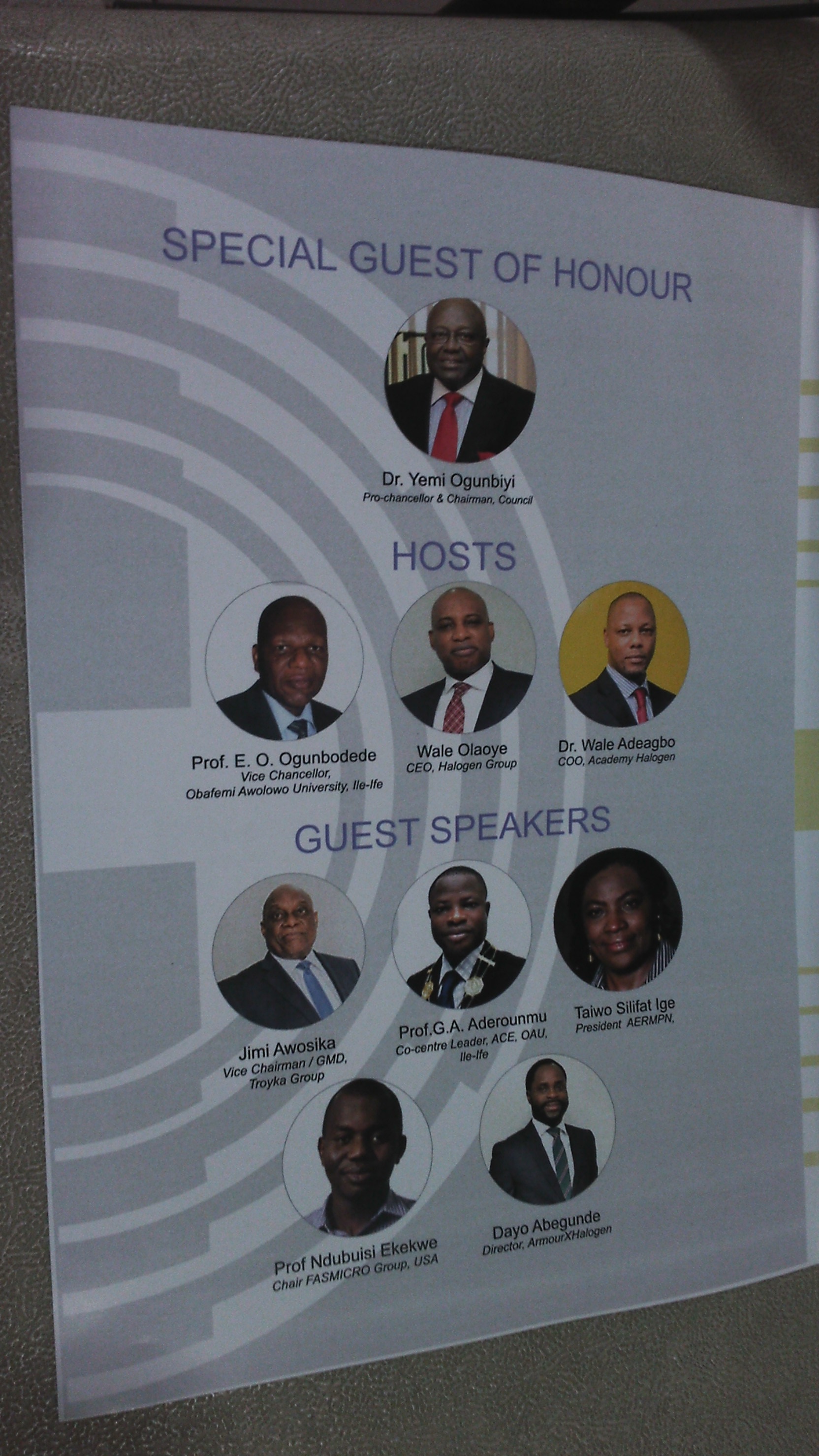
Today, Prof Ndubuisi Ekekwe (Chairman, Fasmicro Group) with the Pro Chancellor & Chairman of Council, Obafemi Awolowo University (Dr Yemi Ogunbiyi); Vice Chancellor, OAU (Prof EO Ogunbodede); GMD Troyka Group (Jimi Awosika); COO Academy Halogen (Dr Wale Adeagbo).
It was a moment having a small company I created few years ago becoming part of history. And the good Lord continuing His promise that favor comes unbounded.
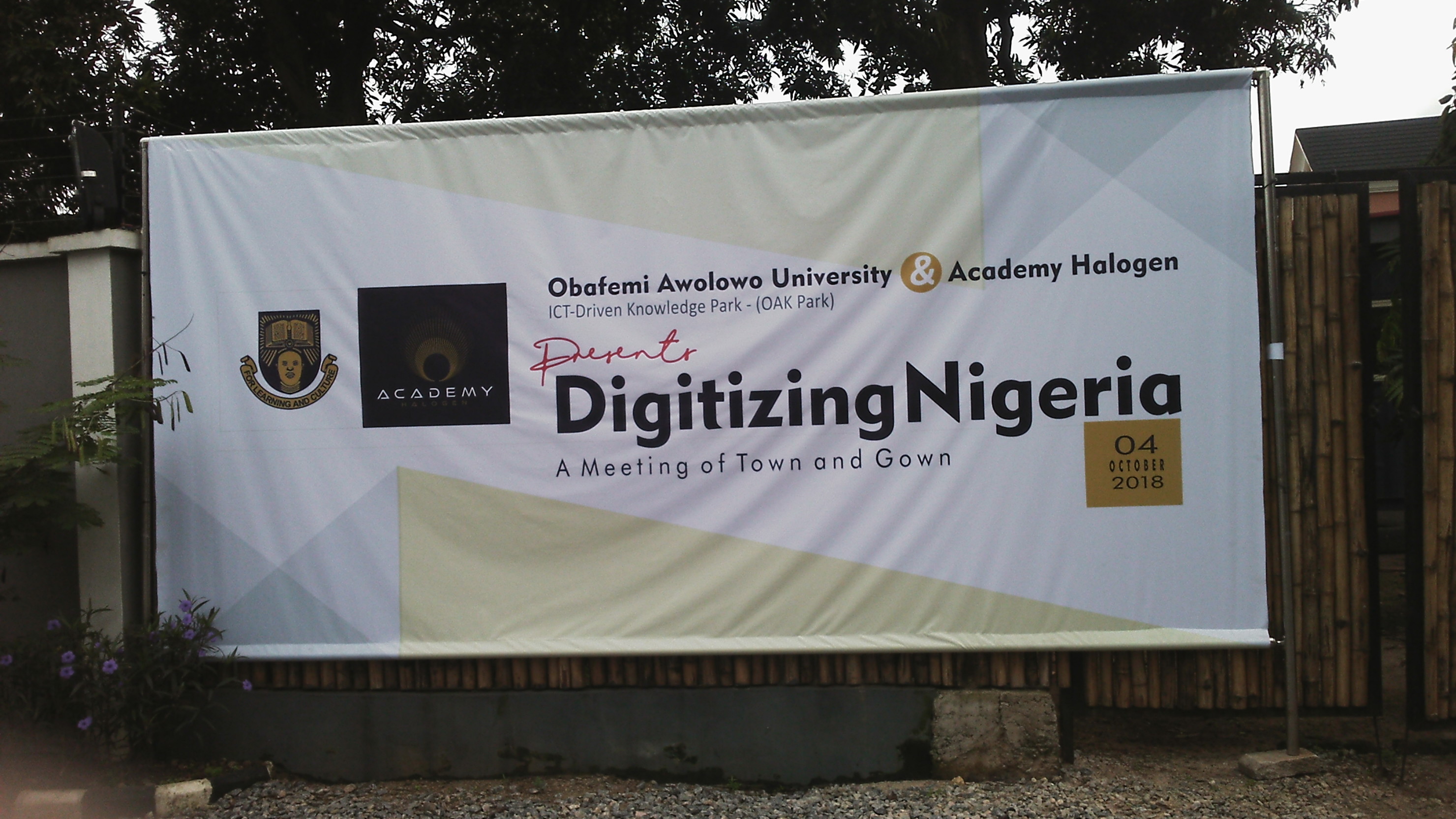
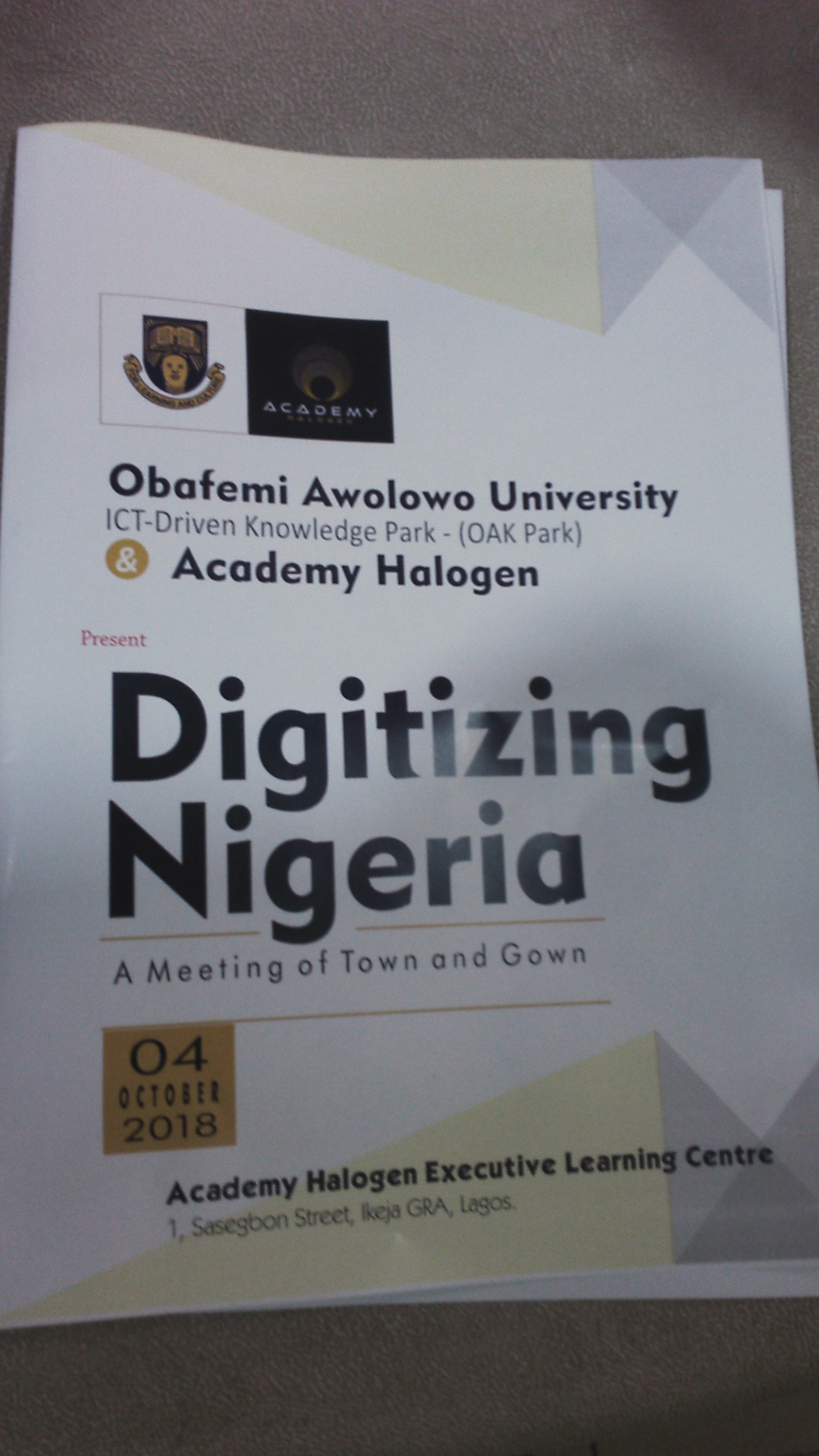
I just arrived at Halogen Academy, Ikeja Lagos. Here are some photos from Obafemi Awolowo University Center of Excellence program at Halogen Academy. The event is geared towards reaching the industry under the World Bank Center of Excellence initiative. Facyber (First Atlantic Cybersecurity Institute) is a solution partner to Halogen Academy and I will be speaking in coming hours. The press is here and the drums are beating. It is a cyber-party here.
The weather looks great today. I am wishing you a wonderful day at work. Go out there and fix a core market friction not just by focusing on meeting the needs of your customers but their expectations and perceptions. Make them Customers and not just consumers. By elevating the game of meeting their perceptions, you would create a category-king business, creating a new basis of competition which could potentially transform our nation via disruptions. Make it Happen and create a Perception Demand.
Perception Demand is very risky: you think without much learning curves decoupled from aligning scaling and market demand. But when you add “Stimulating” before it, you have a construct, Stimulating Perception Demand, which focuses on existing trajectories in the markets and how to take them to the next level, and around there massively get many fans to connect. Here, you have seen how the products in the markets are doing. You just want to take them to the next level. The product operates at perception level, but even with that, you must stimulate demand at new heights
In a piece last year, I explained the illusive demand from the Academic Staff Union of Universities (ASUU) to expect the federal and state governments to fund major components of public universities while having no say. In other words, ASUU wanted 100% autonomy even as it wanted more government funding. In our contemporary Nigerian scene, that would not happen if you understand that Vice Chancellors are quasi government appointees. If you expect a Nigerians state governor to send $10million to a university and allow the professors to spend as they want, you are not real.
The Academic Staff Union of Universities (ASUU), a union of university academic staff, is a great institution which continues to ensure that Nigeria has the manpower to compete locally and globally, besides producing graduates that will handle the affairs of the nation. We respect ASUU and certainly commend some of the most brilliant people, in their generations, who have stayed to teach in our schools.
Yet, ASUU is not blameless. The evidence-based and empirical constructs the professors teach in our universities do not apply to how they agitate, against the Federal Government of Nigeria. They make bold demands without examining the basis of such demands.
[…]
If you check these five items, there is no way they could be in our sentence or paragraph, realistically. Why? You cannot have university autonomy and expect the government to be funding you nearly 100%. So, the governor or the President will always like to run the university as a “business” because the school is part of the line cost item. If you think a governor will fund a state university and leave ASUU to appoint the Governing Council, which provides a good avenue to settle political associates, you are dreaming. If you think a Vice Chancellor will adhere to ASUU when the governor is the one that ratifies anything he does, you are wasting your time. The Vice Chancellor, largely, is a political appointee disguised on an academic robe.
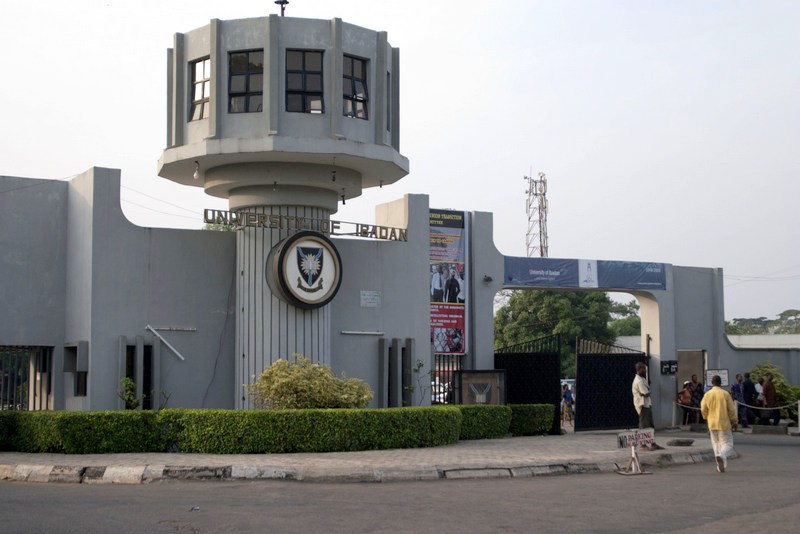
University of Ibadan, a federal university
Sure, you can argue that most U.S. state universities have a high level of autonomy despite funding from the states. But that is America where even without the public funding most professors can fund their salaries through grants. The supports from states are largely to help reduce tuitions and scale things that help the local economies.
So, the news that government is planning to ask students to pay N350,000 per year in public schools in Nigeria is scary [N350 is $1]. Government should not do that as the only thing Nigeria offers the common man is largely free public university education. If you remove that benefit, the system has been rigged across generations as social mobility will be stunted. I am not sure up to 5% of Nigerian households can afford that kind of money when the Nigerian Labour Congress is still agitating to increase minimum wage beyond N18,000 per month. The implication is a huge dislocation that a father’s annual salary cannot even pay for a child’s school fees in a public university. It would be unfair to all citizens who salute the Nigerian flag.
The National President of the Academic Staff Union of Universities (ASUU), Biodun Ogunyemi, has reiterated the stance of his colleague that the federal government is planning to force students in public universities to pay N350,000 tuition fee per session.
Punch newspaper earlier reported the allegation. According to the report, ASUU’s Ibadan Zonal Coordinator, Ade Adejumo, said this when he was addressing reporters at the Oyo State Correspondents’ Chapel of Nigeria Union of Journalists (NUJ) in Ibadan, the state’s capital.
Mr Adejumo said the objection of the union to the proposed tuition fee increase led to the collapse of 2017/2018 renegotiation of the 2009 FGN/ASUU agreement.
We need to learn from Malaysia which is heavily subsidizing education. As Bill Gates noted many months ago, infrastructure does not mean only roads, airports and bridges. Yes, there is human capital infrastructure which is even more catalytic to the wealth of nations. Without educating the young people, the roads will add only marginal value. So, if we need to increase school fees in order to have the capacity to service loans we are taking to build roads, I will prefer we stop road projects and educate our citizens. If the citizens are educated, they would build the nation. That is a better option than building roads and having a generation that will rise in agitations.
This is a bad policy and Mr. President, I do expect, will not approve it. Nigeria should be looking at how to make education more accessible
The federal government has denied the N350k school fees increase but ASUU is yet to give up on the accusation though. Possibly, government floated it as part of ways to raise money to pay whatever ASUU was demanding. ASUU is fascinatingly ingenious to bring it up few months to election. Do not bet that this is the last word: wait for the election to pass.
The Federal Ministry of Education on Wednesday denied that the federal government planned to increase tuition fees in Nigerian universities to N350,000.
PREMIUM TIMES reported the allegation by the lecturers’ union, ASUU, that such was being considered by the government.
If you made 2.2 after working hard, you would be fine in your career. But if you made 3rd class because you did not have discipline or work hard, nothing will change in your life until you fix that process issue. Your problem is not the grade but the Process that resulted to the grade.
Until the process is changed, in your life, nothing will likely work. So, 2.2, 3rd Class or Pass, is not your main problem. The problem is you have NOT fixed what resulted to them where you think they are bad.
Sure – the bank is not interested in the job part. Rather, the focus will be on process. The HR Director quoted this statement “Your problem is not the grade but the Process that resulted to the grade” as they explained what they are expecting. My job is to get the bank team to think deeper beyond outcomes but rather the processes which determine outcomes.
Largely, how can you get the staff to examine processes post-failures over just fixating on the actual failures? And how can we build the right processes to avoid even having failures? And when failures do happen, how do you ensure they cannot repeat?
Last year, I led a team that set up a Process Center of Excellence in a bank. But that was just on the ICT organization, focusing on building ICT systems which do not just Run (the bank) but also can TRANSFORM it. But increasingly, we have been zeroing on human elements and things which lead to failures.
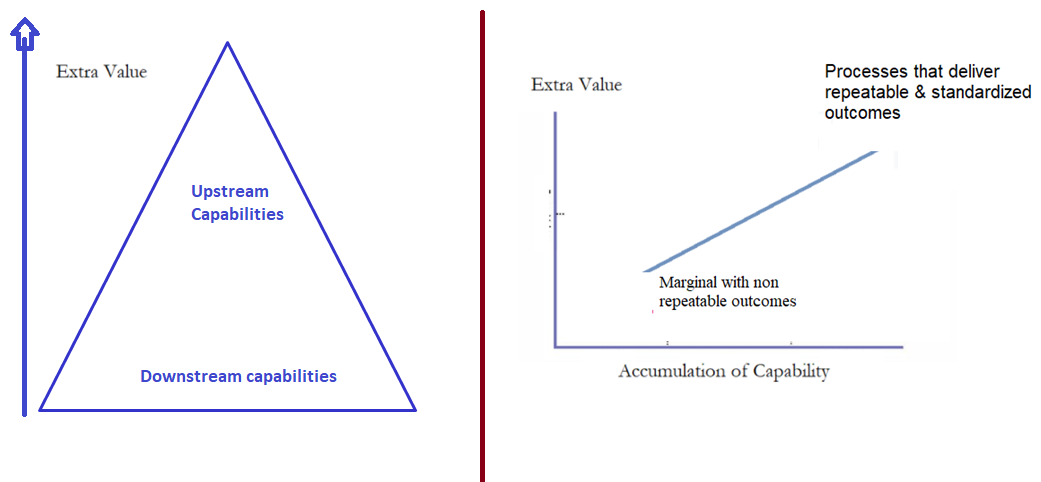
Move towards upstream capabilities to deliver higher value
It is very important to understand one thing: whether in our personal lives or in a big bank, unless we begin to fix unproductive processes, we cannot have predictable positive outcomes.
Do not make grade to be your god irrespective of what the banks, telcos, and oil firms will tell you when you apply for a job. The key success will come when you begin to fix systemic problems that resulted to those poor grades where you think you could have done better. But self-pity instead of focusing on fixing unproductive processes in your career will not yield anything.
Yes, as I explained in the accumulation of capabilities construct, there is more value in the upstream part of any endeavour: From Google to Dangote Group, when companies accumulate capabilities, they see themselves operating in the segments of markets with higher value (usually upstream) compared with where their competitors operate (usually downstream). It applies in careers, not just in companies. Yes, when you improve your processes and focus on upstream capabilities, you would get huge exponential results in whatever you do.